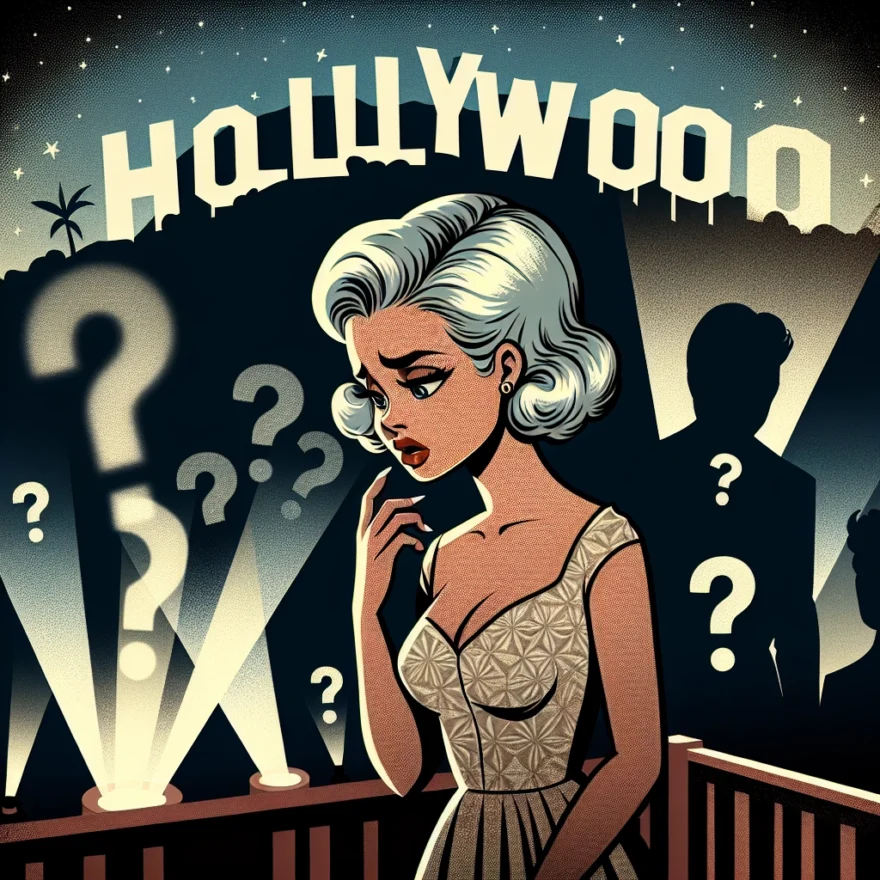
Introduction: The Mysterious Death of Marilyn Monroe
On August 5, 1962, the world was stunned by the tragic news of the death of one of Hollywood’s most beloved icons, Marilyn Monroe. The blonde bombshell, who captured the hearts of millions with her beauty, talent, and charisma, was found lifeless in her Los Angeles home. Monroe’s untimely demise at the young age of 36 has since become one of the most enduring and enigmatic mysteries in the annals of Hollywood history.
Over the years, numerous theories and speculations have emerged, attempting to shed light on the circumstances surrounding Marilyn Monroe’s death. Was it a simple case of an accidental overdose, or was there something more sinister at play? As we delve into the various aspects of this perplexing case, we will explore the official story, the alleged connections to the Kennedys, the possible involvement of the Mafia and the CIA, and the myriad of other intriguing elements that have fueled countless conspiracy theories for nearly six decades.
Through an examination of the evidence, the inconsistencies, and the controversies, we will seek to answer some of the most pressing questions about Marilyn Monroe’s suspicious death. What role did her housekeeper play in the events of that fateful night? What happened to the missing diary that Monroe allegedly kept? And who were the unidentified visitors who were reportedly seen at her home in the hours leading up to her death?
As we attempt to unravel the tangled web of Hollywood’s darkest conspiracy, we will also explore the media’s role in shaping public perception, the psychological impact of Marilyn’s mental health on her tragic end, and the influence of drugs in her life. Furthermore, we will examine the aftermath of Monroe’s death, how Hollywood reacted to the loss of one of its brightest stars, and whether we might ever truly know what happened on that fateful summer night in 1962.
Join us as we embark on a journey into the heart of one of the most captivating and enigmatic mysteries in the history of show business – the suspicious death of Marilyn Monroe.
Table of contents
- Introduction: The Mysterious Death of Marilyn Monroe
- The Official Story: An Alleged Overdose
- The Kennedy Connection: A Political Affair?
- The Mafia Involvement: A Deadly Retaliation?
- The CIA Theory: Silencing a Security Risk?
- The Housekeeper’s Role: A Witness or an Accomplice?
- The Missing Diary: Lost Evidence or Cover-up?
- The Mysterious Phone Calls: A Cry for Help or a Threat?
- The Autopsy Report: Inconsistencies and Controversies
- The Unidentified Visitors: Who Were They?
- The Lost Tapes: What Did Marilyn Really Know?
- The Conspiracy Theorists: What Do They Believe?
- The Official Investigations: A Closer Look
- The Media’s Role: Sensationalism or Truth-seeking?
- The Legacy of Marilyn Monroe: A Tragic End for a Hollywood Icon
- Common Questions and Answers About Marilyn Monroe’s Suspicious Death
- The Psychological Impact: How Did Marilyn’s Mental Health Affect Her Demise?
- The Influence of Drugs: How Did Prescription Medication Contribute to Monroe’s Death?
- The Aftermath: How Did Hollywood React to Marilyn’s Death?
- Conclusion: Will We Ever Know the Truth?
The Official Story: An Alleged Overdose
On August 5, 1962, the world was shocked by the news of the untimely death of Hollywood’s most iconic star, Marilyn Monroe. The official story, as reported by the Los Angeles County Coroner’s Office, stated that Marilyn had died from an acute barbiturate poisoning due to an overdose of prescription medications. The death was ruled a probable suicide, and the case was closed. However, this explanation left many questions unanswered, and the circumstances surrounding her death have been the subject of speculation and conspiracy theories ever since.
According to the official account, Marilyn’s lifeless body was discovered in her bedroom at her Brentwood home by her housekeeper, Eunice Murray, in the early hours of August 5. Murray had noticed that the light in Marilyn’s room was still on and, after failing to get a response from her, called Marilyn’s psychiatrist, Dr. Ralph Greenson. Upon arriving at the scene, Dr. Greenson broke the window to gain entry and found Marilyn lying face down on her bed, clutching a telephone receiver in one hand. Empty pill bottles were scattered around the room, and the cause of death seemed apparent.
However, the official story has been challenged by various inconsistencies and unanswered questions. For instance, why did it take several hours for Monroe’s death to be reported to the authorities? Why were there no traces of pill capsules in her stomach during the autopsy? And why did her housekeeper wash Marilyn’s bedsheets before the police arrived at the scene?
Moreover, some of Marilyn’s closest friends and colleagues have disputed the suicide theory, claiming that she was in good spirits and had been making plans for her future just days before her death. This has led to alternative theories, suggesting that Marilyn’s death might not have been a suicide but rather a result of foul play, orchestrated by powerful forces with a vested interest in silencing the star.
As the years have passed, the official story of Marilyn Monroe’s alleged overdose has been increasingly scrutinized, and the quest for the truth behind her mysterious death has become a fascinating and enduring topic of interest for conspiracy theorists, true crime enthusiasts, and fans of the legendary actress alike.
The Kennedy Connection: A Political Affair?
One of the most popular theories surrounding Marilyn Monroe’s death involves her alleged affair with President John F. Kennedy and his brother, Attorney General Robert F. Kennedy. Monroe had reportedly been involved with both men, and some speculate that her death was a result of her knowledge of their political secrets.
Monroe’s close relationship with the Kennedy brothers was well-known in Hollywood circles, and she had even sung “Happy Birthday” to President Kennedy at a public event in 1962. However, their involvement with her was not publicized at the time, and many believe that they may have played a role in her death.
According to some theories, Monroe threatened to reveal her relationship with the Kennedys and their involvement in illegal activities, such as the Bay of Pigs invasion and organized crime. Some even claim that she was planning to hold a press conference to expose these secrets, which would have been a major scandal for the Kennedy administration.
However, there is little concrete evidence to support these claims, and many experts believe that they are simply rumors and speculation. The official investigations into Monroe’s death did not find any evidence of foul play or political involvement, and the Kennedys themselves have denied any involvement in her death.
Despite this, the Kennedy connection remains one of the most popular theories surrounding Monroe’s death, and it continues to intrigue and fascinate conspiracy theorists and true crime enthusiasts alike.
The Mafia Involvement: A Deadly Retaliation?
One of the most popular conspiracy theories surrounding Marilyn Monroe’s death involves the Mafia. Some believe that Monroe’s association with the Kennedy brothers put her in a dangerous position, as she knew too much about their political and personal affairs. According to this theory, the Mafia was hired to silence her.
Monroe was known to have had relationships with several powerful men, including the Kennedy brothers and mob boss Sam Giancana. It is speculated that the Mafia had a hand in Monroe’s death as a way to retaliate against her for her involvement with the Kennedys. Some believe that the Mafia was angry with Monroe for her decision to cut ties with them, and saw her as a liability.
There are several pieces of evidence that suggest Mafia involvement in Monroe’s death. For example, it is rumored that Giancana had a personal vendetta against Monroe, and that he ordered her murder as a way to get back at the Kennedys. Additionally, there are reports of suspicious men seen around Monroe’s home in the days leading up to her death, who are believed to have been connected to the Mafia.
However, there is no concrete evidence to support the Mafia theory. While it is true that Monroe had connections to the mob, there is no definitive proof that they were involved in her death. Furthermore, the official investigations into her death did not uncover any evidence of Mafia involvement.
Despite this, the Mafia theory remains a popular one, and continues to be discussed and debated by conspiracy theorists and true crime enthusiasts alike.
The CIA Theory: Silencing a Security Risk?
One of the most controversial theories surrounding Marilyn Monroe’s death is the involvement of the Central Intelligence Agency (CIA). According to this theory, Monroe was killed because she had become a security risk due to her alleged affair with President John F. Kennedy and his brother, Attorney General Robert Kennedy.
There are several pieces of evidence that support this theory. For example, it is known that Monroe was under surveillance by the CIA due to her association with left-wing activists. In fact, the agency had a file on her that was over 100 pages long. Additionally, it is believed that Monroe had threatened to hold a press conference to reveal her affairs with the Kennedy brothers, which could have potentially compromised national security.
Some conspiracy theorists believe that the CIA used a combination of drugs and psychological manipulation to cause Monroe’s death. They suggest that the agency may have arranged for her to receive a lethal dose of barbiturates, which were then covered up to make it look like an overdose.
However, there are also many skeptics of this theory. Some argue that there is no concrete evidence linking the CIA to Monroe’s death, and that it is simply a product of wild speculation. Others point out that the CIA’s primary mission is intelligence gathering, and that it is unlikely that they would resort to assassinating a Hollywood actress.
Despite the lack of conclusive evidence, the CIA theory remains one of the most intriguing and controversial aspects of the Marilyn Monroe case. It is a testament to the enduring fascination with the life and death of one of Hollywood’s most iconic stars.
The Housekeeper’s Role: A Witness or an Accomplice?
Marilyn Monroe’s housekeeper, Eunice Murray, played a crucial role in the events leading up to and following the actress’s death. Murray was the last person to see Monroe alive and was present at the scene when her body was discovered. Her actions and statements have been the subject of much speculation and controversy.
According to Murray’s testimony, she discovered Monroe’s lifeless body in her bedroom on the morning of August 5, 1962. She immediately called Monroe’s psychiatrist, Dr. Ralph Greenson, who arrived on the scene shortly thereafter. Murray also called Monroe’s personal physician, Dr. Hyman Engelberg, who pronounced her dead.
However, Murray’s version of events has been called into question by some who believe she may have been involved in Monroe’s death. Some have suggested that Murray was a willing participant in a plot to silence the actress, while others have speculated that she may have inadvertently contributed to Monroe’s demise.
One theory suggests that Murray may have administered a fatal dose of barbiturates to Monroe at the behest of someone else. This theory is supported by the fact that Murray had access to Monroe’s medication and was known to have administered it to her in the past.
Another theory suggests that Murray may have been coerced into keeping quiet about what she knew. Some have suggested that she may have been threatened or bribed by individuals with something to hide.
Despite these theories, there is no concrete evidence to suggest that Murray was anything other than a witness to Monroe’s death. She cooperated fully with the official investigation and was never charged with any wrongdoing.
However, Murray’s behavior in the aftermath of Monroe’s death has raised some eyebrows. She was seen removing items from Monroe’s home before the police arrived, including a bottle of pills and a diary. She also made conflicting statements about her interactions with Monroe in the days leading up to her death.
Some have suggested that Murray may have been attempting to cover up evidence of foul play, while others believe that she may have been trying to protect Monroe’s privacy. Whatever the case may be, Murray’s actions have only added to the mystery surrounding Monroe’s death.
The Missing Diary: Lost Evidence or Cover-up?
One of the most intriguing aspects of Marilyn Monroe’s death is the missing diary that she allegedly kept. According to some sources, Marilyn kept a diary in which she recorded her innermost thoughts and feelings, as well as details about her relationships with powerful men in Hollywood and Washington D.C.
Many people believe that the diary could have shed light on the circumstances of Marilyn’s death, and that its disappearance was not a coincidence. Some theories suggest that the diary was stolen by someone who wanted to cover up the truth about Marilyn’s death, while others believe that it was destroyed to prevent it from being used as evidence.
There are several possible explanations for the missing diary. One theory is that it was taken by the Kennedy family, who feared that its contents could damage their reputation. Marilyn’s alleged affairs with John F. Kennedy and his brother Robert have long been the subject of speculation, and some believe that the diary contained evidence of these relationships.
Another theory is that the diary was taken by the Mafia, who were angry with Marilyn for her association with the Kennedys. Some sources claim that Marilyn was involved with organized crime figures, and that her death was a result of a power struggle between the Mafia and the Kennedys.
Yet another possibility is that the diary was taken by the CIA, who were concerned about Marilyn’s rumored involvement with communist sympathizers. Some sources claim that Marilyn was under surveillance by the CIA, and that her death was part of a government conspiracy to silence her.
Despite numerous searches and investigations, the missing diary has never been found. Some believe that it was destroyed to prevent it from being used as evidence, while others think that it is still out there, waiting to be discovered.
Regardless of the fate of the missing diary, its absence has only added to the mystery surrounding Marilyn Monroe’s death. Without it, we may never know the full truth about what happened on that fateful night in August 1962.
The Mysterious Phone Calls: A Cry for Help or a Threat?
One of the most intriguing aspects of Marilyn Monroe’s death is the mysterious phone calls she received in the days leading up to her demise. According to some reports, Monroe had been receiving threatening phone calls from unknown individuals who warned her to stay away from certain people or else she would face dire consequences.
Some believe that these phone calls were a cry for help from Monroe, who may have been in danger and trying to reach out to someone for assistance. Others speculate that the calls were a threat, meant to intimidate Monroe and silence her from revealing sensitive information.
There are also theories that the phone calls were a part of a larger conspiracy to orchestrate Monroe’s death. The callers may have been involved in the plot to ensure that Monroe would not reveal any damaging information about powerful individuals or organizations.
Despite the numerous accounts of these phone calls, their authenticity and actual content remain unclear. Some believe that the calls were never made and were simply a fabrication to add to the mystery surrounding Monroe’s death. Others argue that the calls did occur, but their details have been distorted or suppressed over time.
Regardless of the truth behind the phone calls, they remain a significant piece of the puzzle in the investigation into Marilyn Monroe’s death. They add to the complexity and intrigue of the case, and continue to fuel speculation and conspiracy theories.
The Autopsy Report: Inconsistencies and Controversies
One of the most controversial aspects of Marilyn Monroe’s death is the autopsy report. According to the official version, Monroe died of an overdose of barbiturates, which she allegedly ingested orally. However, the autopsy report has been subject to numerous inconsistencies and controversies over the years.
For instance, the time of death indicated in the report is inconsistent with the testimonies of several witnesses who claimed to have seen Monroe alive after the estimated time of death. Moreover, the toxicology report showed high levels of barbiturates in Monroe’s blood, but no traces of the pills were found in her stomach, which raises questions about the route of administration.
Furthermore, the autopsy report failed to mention bruises and contusions on Monroe’s body, which some believe could indicate foul play. In addition, the report did not specify the type of barbiturates found in Monroe’s system, which could be crucial in determining the cause of death.
Another controversial aspect of the autopsy report is the handling of the evidence. Some claim that the original report was altered or tampered with, while others believe that important evidence, such as Monroe’s stomach contents, was lost or destroyed.
Despite these inconsistencies and controversies, the official version of Monroe’s death has never been officially challenged or overturned. However, many conspiracy theories have emerged over the years, suggesting that Monroe’s death was not accidental, but rather the result of a sinister plot.
In the next section, we will examine one of the most popular conspiracy theories regarding Monroe’s death: the alleged involvement of the CIA.
The Unidentified Visitors: Who Were They?
One of the most intriguing aspects of Marilyn Monroe’s death is the presence of unidentified visitors in her home on the night of her death. According to some reports, there were several people who visited Marilyn’s home on the day of her death, but their identities remain unknown.
Some witnesses claimed to have seen a man leaving Marilyn’s house in the early hours of the morning, but no one has been able to identify him. There were also reports of a car parked outside her home that night, but no one knows who it belonged to.
One theory suggests that the unidentified visitors were connected to the Kennedy brothers. It is believed that Marilyn had an affair with both John and Robert Kennedy, and that they may have been involved in her death. Some people believe that the unidentified man seen leaving Marilyn’s home was Robert Kennedy, who may have been trying to cover up the affair and protect his political career.
Another theory is that the visitors were connected to the mafia. It is believed that Marilyn had relationships with several high-ranking members of the mafia, including Sam Giancana and Johnny Roselli. Some people believe that the mafia may have been involved in her death as a way to silence her or to send a message to others.
However, there is no concrete evidence to support either of these theories. It is also possible that the unidentified visitors were simply friends or acquaintances of Marilyn’s, and that their presence had nothing to do with her death.
Despite numerous investigations and inquiries over the years, the identities of the unidentified visitors remain a mystery. It is just one of the many unanswered questions surrounding Marilyn Monroe’s death.
The Lost Tapes: What Did Marilyn Really Know?
One of the most intriguing aspects of Marilyn Monroe’s death is the possibility that she had knowledge of sensitive information that could have compromised powerful individuals. This theory is supported by the existence of lost tapes that allegedly contained conversations between Monroe and President John F. Kennedy.
According to some sources, Monroe had an affair with Kennedy and was privy to confidential information about his administration. The lost tapes were said to contain evidence of this affair and possibly incriminating information about the Kennedy brothers. Some conspiracy theorists believe that Monroe’s death was orchestrated to prevent her from revealing this information.
However, the existence and content of these tapes remain a mystery. Some claim that they were destroyed or lost over time, while others believe that they are being kept hidden by powerful individuals who do not want their secrets exposed.
Even if the lost tapes do exist, their authenticity and accuracy are also in question. It is possible that they could have been doctored or manipulated to serve a particular agenda.
Regardless of the truth behind the lost tapes, they add another layer of intrigue to the already complex and controversial death of Marilyn Monroe.
The Conspiracy Theorists: What Do They Believe?
Many conspiracy theorists believe that Marilyn Monroe’s death was not accidental or a suicide but rather a premeditated murder orchestrated by powerful people in Hollywood and politics. They argue that there is a lot of evidence to support their claims, including the inconsistencies in the official story, the involvement of the Kennedys and the Mafia, and the suspicious behavior of some of the key players in the investigation.
One of the most popular theories is that Marilyn was killed by the CIA because she knew too much about their involvement in the Bay of Pigs invasion and other covert operations. Some believe that Marilyn was having an affair with JFK and that the CIA saw her as a security risk who could potentially reveal sensitive information to the public.
Others point to the involvement of the Mafia, who allegedly had a vendetta against Marilyn because of her relationship with the Kennedys and their efforts to crack down on organized crime. They argue that the Mafia had the motive and the means to carry out the murder and that Marilyn’s death was part of a larger power struggle between the government and the criminal underworld.
Another theory is that Marilyn was killed by the Kennedys themselves, either as part of a political cover-up or as a way to silence her after she became a liability to their careers. Some believe that Robert Kennedy, who was the Attorney General at the time, was directly involved in the plot and that he used his connections to cover up the crime.
There are also those who believe that Marilyn’s death was the result of a larger conspiracy involving multiple players in Hollywood and politics. They argue that Marilyn was a threat to the status quo and that her death was orchestrated to send a message to others who might challenge the establishment.
Despite the many theories and claims surrounding Marilyn’s death, there is still no definitive proof to support any one theory. The case remains one of the most enduring mysteries in Hollywood history, and it is likely that we will never know the full truth about what happened on that fateful night in August 1962.
The Official Investigations: A Closer Look
The official investigations into Marilyn Monroe’s death have been the subject of much scrutiny and controversy. The Los Angeles County Coroner’s Office conducted an autopsy on Monroe’s body on August 5, 1962, the day after her death. The official cause of death was listed as “acute barbiturate poisoning,” and the manner of death was ruled as “probable suicide.”
However, many people have questioned the validity of these findings. Some have suggested that the investigation was rushed and that important evidence was overlooked or ignored. Others have pointed to inconsistencies in the autopsy report and the official narrative surrounding Monroe’s death.
One of the main issues with the official investigation is the lack of a thorough crime scene investigation. The police did not arrive at Monroe’s home until several hours after her body was discovered, and by that time, many potential pieces of evidence had already been disturbed or removed. There were also no photographs taken of the scene, which could have provided valuable information about the circumstances of Monroe’s death.
In addition, there have been questions raised about the conduct of the investigators themselves. Some have suggested that they were influenced by powerful individuals who wanted to ensure that the official narrative of Monroe’s death supported their own interests. Others have suggested that the investigators were simply incompetent and failed to conduct a proper investigation.
Despite these concerns, the official investigation remains the most widely accepted explanation for Monroe’s death. However, many people continue to question the validity of the official findings and believe that there is more to the story than what has been officially reported.
The Media’s Role: Sensationalism or Truth-seeking?
The media played a significant role in shaping the public’s perception of Marilyn Monroe’s death. From the moment news of her passing broke, the story dominated headlines and captivated audiences worldwide. However, the media’s coverage of the event was not always objective or accurate. Instead, it was often sensationalized and fueled by speculation and rumors.
Some journalists and tabloids were quick to jump on the conspiracy bandwagon, offering outlandish theories and unsubstantiated claims. They portrayed Monroe as a victim of a vast and sinister plot, involving powerful political figures, organized crime, and intelligence agencies. The media’s coverage helped to fuel the public’s fascination with the case and contributed to the enduring mystery surrounding Monroe’s death.
However, not all media outlets were guilty of sensationalism and yellow journalism. Some journalists and publications sought to uncover the truth behind Monroe’s death and provide a more nuanced and balanced perspective. They conducted interviews with witnesses and experts, analyzed official reports and documents, and presented their findings in a thorough and objective manner.
One of the most notable examples of responsible journalism was the investigation conducted by Life magazine in 1962. The publication assigned a team of reporters to look into Monroe’s death and spent months gathering evidence and conducting interviews. The resulting article, “The Case of Marilyn Monroe,” was a comprehensive and detailed account of the events leading up to Monroe’s death and the subsequent investigation.
Despite the media’s mixed record in covering Monroe’s death, it played a crucial role in keeping the case in the public eye and raising awareness of the many unanswered questions surrounding her passing. Today, the media continues to report on new developments in the case and offer fresh perspectives on the enduring mystery of Marilyn Monroe’s death.
The Legacy of Marilyn Monroe: A Tragic End for a Hollywood Icon
Marilyn Monroe’s death has had a lasting impact on Hollywood and popular culture. Her legacy as a talented actress and sex symbol has endured, but her untimely demise has added a layer of tragedy to her story.
Monroe’s death has been the subject of countless books, films, and TV shows, and it continues to captivate the public’s imagination. Many people are drawn to the mystery and intrigue surrounding her final days, and the various conspiracy theories that have emerged over the years.
Despite the controversy surrounding her death, Monroe’s impact on the entertainment industry is undeniable. She was a trailblazer for women in Hollywood, breaking down barriers and challenging the status quo. Her performances in films like “Gentlemen Prefer Blondes” and “Some Like It Hot” are still celebrated today.
Monroe’s image and persona have also had a lasting impact on popular culture. Her iconic look, with her platinum blonde hair and red lipstick, is still emulated by fans around the world. Her famous quote, “I’m selfish, impatient and a little insecure. I make mistakes, I am out of control and at times hard to handle. But if you can’t handle me at my worst, then you sure as hell don’t deserve me at my best,” has become a mantra for self-empowerment.
Despite her enduring popularity, Monroe’s death remains a tragic reminder of the darker side of fame and the toll it can take on those in the spotlight. Her struggles with mental health and addiction are a cautionary tale, and serve as a reminder that even the most glamorous and successful people can be vulnerable.
Ultimately, Monroe’s legacy is a complex one. She was a talented actress, a cultural icon, and a victim of circumstances beyond her control. Her death will always be shrouded in mystery, but her impact on Hollywood and popular culture will continue to be felt for generations to come.
Common Questions and Answers About Marilyn Monroe’s Suspicious Death
Many questions have arisen since the death of Marilyn Monroe in 1962. Here are some of the most common ones:
- Was Marilyn Monroe murdered?
- Did Marilyn Monroe have a relationship with John F. Kennedy?
- Did Marilyn Monroe have a drug problem?
- Why was Marilyn Monroe’s housekeeper involved in her death?
- What happened to Marilyn Monroe’s diary?
- Why were there unidentified visitors at Marilyn Monroe’s house on the day of her death?
- What do conspiracy theorists believe about Marilyn Monroe’s death?
- Why have there been so many official investigations into Marilyn Monroe’s death?
- Will we ever know the truth about Marilyn Monroe’s death?
The official cause of death was listed as a drug overdose, but many people believe that she was murdered. There are several theories about who might have been responsible for her death, including the Kennedy family, the Mafia, and the CIA.
There is evidence to suggest that Marilyn Monroe had affairs with both John F. Kennedy and his brother Robert Kennedy. Some people believe that her death was related to her involvement with the Kennedy family.
Marilyn Monroe had a history of prescription drug use and struggled with anxiety and depression. She was known to take sleeping pills and barbiturates to help her sleep.
Eunice Murray, Marilyn Monroe’s housekeeper, was the last person to see her alive. Some people believe that Murray was involved in Monroe’s death, either as a witness or as an accomplice.
Marilyn Monroe kept a diary that contained personal thoughts and details about her relationships with men, including the Kennedys. The diary has never been found, leading some people to believe that it was destroyed to protect the people mentioned in it.
Several people were seen entering and leaving Marilyn Monroe’s house on the day that she died, but their identities have never been revealed. Some people believe that these visitors were involved in her death.
Conspiracy theorists believe that Marilyn Monroe’s death was part of a larger conspiracy involving the Kennedy family, the Mafia, and the CIA. They believe that there is evidence to support these theories, but that the truth has been covered up.
There have been several official investigations into Marilyn Monroe’s death, including a grand jury investigation in 1982. These investigations were launched in response to public pressure and new evidence that suggested foul play.
It is unlikely that we will ever know the full truth about Marilyn Monroe’s death. Many of the people involved are now deceased, and much of the evidence has been lost or destroyed. However, new information may come to light in the future that sheds more light on this mysterious case.
The Psychological Impact: How Did Marilyn’s Mental Health Affect Her Demise?
Marilyn Monroe’s psychological state has been a topic of fascination for decades, and many have speculated that her mental health played a role in her untimely death. Monroe had a tumultuous childhood and struggled with mental health issues throughout her life, including depression, anxiety, and substance abuse.
Monroe’s fame and success did not shield her from the pressures and expectations of Hollywood. She was often typecast as a sex symbol and struggled to be taken seriously as an actress. This constant objectification took a toll on her self-esteem and contributed to her struggles with anxiety and depression.
Monroe’s relationships with men were also complicated and often tumultuous. She was married three times, and her marriages were marked by infidelity, abuse, and emotional turmoil. Her affairs with high-profile men, including President John F. Kennedy and his brother Robert Kennedy, only added to the scrutiny and pressure she faced.
Monroe’s mental health issues were exacerbated by her use of prescription medication. She struggled with insomnia and was often prescribed sleeping pills and other sedatives. These medications can be highly addictive and can have dangerous side effects, particularly when combined with alcohol.
Some have speculated that Monroe’s mental health and substance abuse issues contributed to her death. It’s possible that she accidentally overdosed on medication or that her mental state made her more susceptible to suicidal thoughts or impulsive behavior.
However, it’s important to note that there is no concrete evidence to support these theories. The exact circumstances of Monroe’s death remain a mystery, and it’s impossible to say for certain how her mental health may have played a role.
Regardless of the cause of her death, it’s clear that Monroe’s struggles with mental health and substance abuse had a profound impact on her life and career. Her legacy as an icon of Hollywood glamour and tragedy continues to fascinate and captivate audiences to this day.
The Influence of Drugs: How Did Prescription Medication Contribute to Monroe’s Death?
One of the factors that contributed to Marilyn Monroe’s death was her dependence on prescription medication. Monroe had a history of mental health issues, including depression and anxiety, and she often turned to pills to manage her symptoms.
Monroe’s drug use was well-known in Hollywood, and she had a reputation for being difficult to work with on set. She was often late or absent from filming due to her drug use, and her behavior was erratic and unpredictable.
According to the official autopsy report, Monroe’s cause of death was acute barbiturate poisoning. The report stated that she had ingested a lethal amount of sleeping pills, which caused her to slip into a coma and ultimately die.
However, some experts have questioned the accuracy of the autopsy report, pointing out that the levels of drugs found in Monroe’s system were inconsistent with the amount of pills that were reportedly found in her stomach.
Furthermore, some conspiracy theorists have suggested that Monroe’s death was not accidental, but rather a deliberate overdose administered by someone else. They point to the fact that Monroe was allegedly receiving injections from her housekeeper in the days leading up to her death, and speculate that these injections may have contained a lethal dose of drugs.
Regardless of the cause of Monroe’s death, it is clear that her dependence on prescription medication played a significant role in her demise. Her tragic story serves as a cautionary tale about the dangers of drug addiction and the importance of seeking help for mental health issues.
The Aftermath: How Did Hollywood React to Marilyn’s Death?
After Marilyn Monroe’s death, Hollywood was in shock. The news of her passing spread quickly, and many of her colleagues and fans were devastated by the loss of such a talented and beautiful actress.
Monroe’s death was a huge blow to the film industry, and it left a void that could not be easily filled. Her death was a reminder of the darker side of Hollywood, and it raised questions about the pressures that celebrities face in the public eye.
Many of Monroe’s colleagues and friends were deeply affected by her death. Actors like Frank Sinatra and Tony Curtis mourned her passing, and directors like Billy Wilder and John Huston spoke out about the tragedy of losing such a talented actress.
However, not everyone in Hollywood was sympathetic to Monroe’s plight. Some critics and commentators suggested that her death was a result of her own choices, and that she had brought it upon herself by becoming involved with powerful men like the Kennedys and the Mafia.
Despite the controversy surrounding her death, Monroe’s legacy as an actress and cultural icon has endured. She remains one of the most beloved and celebrated figures in Hollywood history, and her films continue to be watched and admired by audiences around the world.
Ultimately, the aftermath of Monroe’s death revealed the complex and often troubling nature of the entertainment industry. Her passing was a reminder that even the most talented and beautiful stars can be vulnerable to the pressures and demands of fame, and that the price of success can sometimes be too high to bear.
Conclusion: Will We Ever Know the Truth?
After examining all the evidence and theories surrounding the death of Marilyn Monroe, it’s clear that the truth may never be fully known. The official story of an overdose has been called into question by numerous inconsistencies and controversies, leading many to believe that foul play was involved.
The Kennedy connection, mafia involvement, and CIA theory all offer plausible explanations for why someone would want Monroe silenced. The housekeeper’s role, missing diary, mysterious phone calls, and unidentified visitors all add to the intrigue and mystery surrounding her death.
However, despite the numerous investigations and media coverage, the truth remains elusive. The conspiracy theorists continue to offer their own interpretations of what happened, while the official investigations have failed to provide a conclusive answer.
One thing is for certain, though: the death of Marilyn Monroe marked the tragic end of a Hollywood icon, and her legacy continues to fascinate and captivate people to this day. Her struggles with mental health and drug addiction have also shed light on the darker side of fame and the pressures that come with it.
Whether we will ever know the truth about what happened on that fateful night in August 1962 remains to be seen. But one thing is certain: the mystery surrounding Marilyn Monroe’s death will continue to intrigue and captivate people for generations to come.