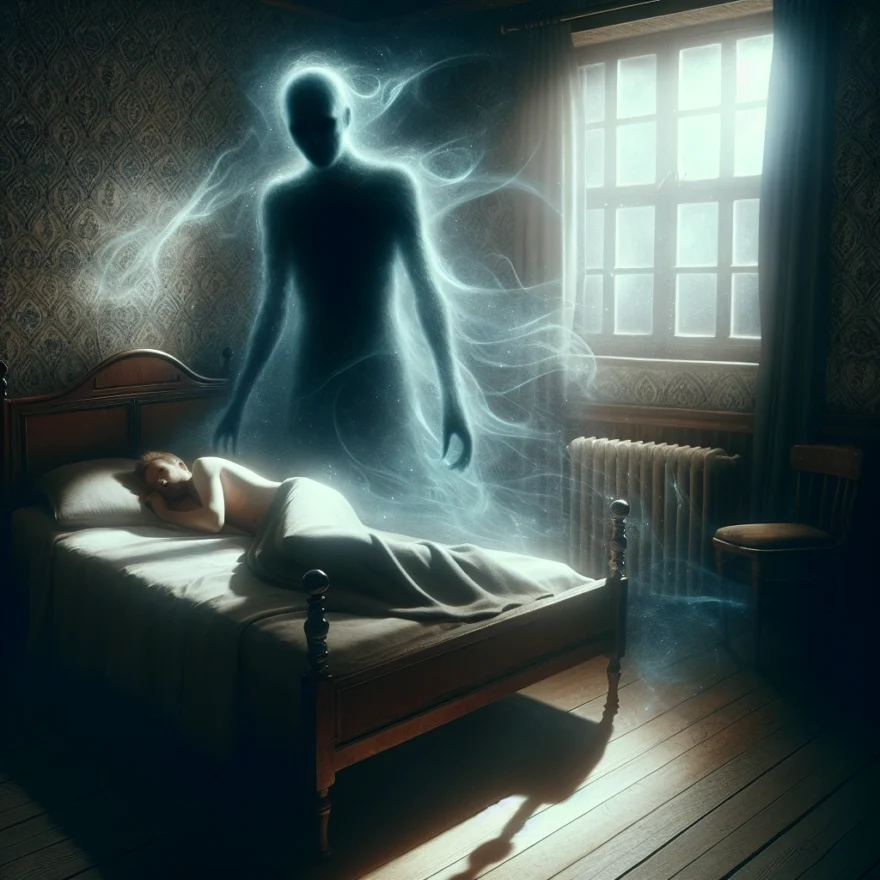
Introduction to Incubus Encounters
The mysterious and often terrifying phenomenon of Incubus encounters has been a topic of intrigue, fear, and speculation throughout human history. These experiences, characterized by the sensation of a malevolent presence during sleep, often accompanied by physical pressure, and sometimes even sexual assault, have been reported across diverse cultures, religions, and eras.
The term ‘Incubus’ originates from Latin, where it means ‘nightmare’. Derived from the word ‘incubare’ which translates to ‘to lie upon’, it is used to describe a male demon believed to visit and have sexual intercourse with sleeping women. The female counterpart of an Incubus is known as a ‘Succubus’. While these terms are rooted in medieval folklore and superstition, the experiences they describe bear striking resemblance to modern accounts of sleep paralysis and nocturnal hallucinations.
Incubus encounters have often been associated with an intense feeling of fear and dread. Victims report being unable to move or speak, with the sensation of an unseen entity pressing down on them. In some cases, these experiences include vivid and horrifying hallucinations of demonic figures or entities. The sexual nature of many Incubus experiences has led to theories of suppressed sexual desires or trauma, further complicating the understanding of this phenomenon.
Despite the fear and confusion these experiences often cause, it’s important to remember that they are not uncommon. Many people around the world have reported similar encounters, leading to a wealth of research and a range of theories, both scientific and supernatural, attempting to explain these events. This article aims to delve into the mystery of Incubus encounters, exploring their historical context, scientific explanations, personal accounts, psychological interpretations, and paranormal perspectives.
Table of contents
- Introduction to Incubus Encounters
- Historical Perspective of Incubus Encounters
- Scientific Explanations for Incubus Encounters
- Personal Accounts of Incubus Encounters
- Psychological Interpretations of Incubus Encounters
- Paranormal Perspectives on Incubus Encounters
- Common Questions and Answers about Incubus Encounters
- Conclusion: Nightmares or Paranormal Activity?
Historical Perspective of Incubus Encounters
Tracing back through the annals of history, the concept of the incubus, a malevolent nocturnal entity known for its sexual advances towards sleeping women, can be found in various cultures across the globe. The term “incubus” is derived from the Latin “incubare” which translates to “to lie upon”, aptly describing the entity’s reported behavior.
The earliest mentions of such entities can be traced back to Ancient Mesopotamia, where the entity was referred to as “Lilu”. The Lilu was believed to be a male demon that seduced women in their sleep, while its female counterpart, the “Lilitu”, preyed on men. These entities were believed to be responsible for unexpected pregnancies, sexual dreams, and nocturnal emissions.
In Medieval Europe, the concept of the incubus became more defined, often depicted as a demon that could shape-shift into a man to seduce women and impregnate them. It was believed that the children born from these encounters would possess supernatural abilities or demonic traits. Some of the most famous individuals alleged to have been sired by an incubus include Merlin, the legendary wizard from Arthurian folklore, and Alexander the Great, one of history’s most successful military commanders.
Interestingly, the incubus phenomenon was not restricted to the Old World. Across the Atlantic, in the indigenous cultures of the Americas, similar entities were described. The “Tikoloshe” of Zulu mythology, for instance, was a dwarf-like water sprite that could become invisible by swallowing a pebble, and was known to sexually assault women.
Despite the geographical and cultural differences, the characteristics attributed to the incubus remain strikingly similar across these diverse historical accounts. This consistency lends a certain credibility to the phenomenon, suggesting that these encounters may be more than mere figments of the imagination. However, it also raises the question: Are these accounts a reflection of a universal human experience, or are they the result of a deeply ingrained cultural narrative? The answer to this question may lie in the realms of science and psychology, which offer intriguing explanations for these mysterious encounters.
Scientific Explanations for Incubus Encounters
Scientific Explanations for Incubus Encounters
While the phenomenon of incubus encounters has long been associated with the supernatural, there are several scientific explanations that can shed light on these experiences. These explanations provide a rational perspective on what is often perceived as paranormal activity.
1. Sleep Paralysis: One of the most common scientific explanations for incubus encounters is sleep paralysis. Sleep paralysis occurs when a person is temporarily unable to move or speak while falling asleep or waking up. During this state, individuals may experience hallucinations and a feeling of pressure on their chest, which can be interpreted as the presence of an incubus. The hallucinations are often vivid and can involve terrifying images or sensations.
2. REM Sleep Disorder: Another scientific explanation is related to REM (Rapid Eye Movement) sleep disorder. During REM sleep, our brains are highly active and we often experience dreams. However, individuals with REM sleep disorder may physically act out their dreams, leading to a sense of being attacked or held down by an unseen force. This can mimic the sensations associated with incubus encounters.
3. Hypnagogic and Hypnopompic Hallucinations: These hallucinations occur during the transitional states between wakefulness and sleep. Hypnagogic hallucinations happen as a person is falling asleep, while hypnopompic hallucinations occur upon awakening. These hallucinations can be vivid and include tactile sensations, such as the feeling of being touched or held down by an entity. They can contribute to the belief in incubus encounters.
4. Stress and Anxiety: Stress and anxiety can also play a significant role in incubus encounters. High levels of stress can disrupt sleep patterns and contribute to the likelihood of experiencing sleep paralysis or vivid dreams. Stress-induced hallucinations can intensify the feeling of a presence in the room and lead to the belief in paranormal activity.
5. Cultural Influences: Cultural beliefs and folklore surrounding incubus encounters can shape individuals’ interpretations of their experiences. If a person grows up in a culture that believes in supernatural entities or demons, they may be more likely to attribute their encounters to paranormal activity rather than considering scientific explanations.
It is important to note that while these scientific explanations provide logical reasoning for incubus encounters, they do not discount the personal experiences and emotions associated with such encounters. Each individual’s perception and interpretation of their experiences may vary, and it is essential to approach these encounters with empathy and understanding.
Personal Accounts of Incubus Encounters
Personal accounts of incubus encounters provide a firsthand glimpse into the terrifying experiences that individuals have had with these mysterious entities. While some dismiss these encounters as mere nightmares, those who have experienced them often describe a distinct feeling of a presence in their room, making it difficult to believe that it was simply a figment of their imagination.
One such account comes from Sarah, a 35-year-old woman who had a series of disturbing encounters with an incubus. She recalls waking up in the middle of the night, paralyzed and unable to move. Sarah felt an intense pressure on her chest, as if someone or something was sitting on top of her. She described the entity as a dark, shadowy figure with glowing red eyes. Despite her attempts to scream or fight back, she was completely immobilized until the entity finally disappeared.
Another account comes from Mark, a 28-year-old man who experienced recurring incubus encounters for several months. He described feeling a heavy weight on his body and a sensation of being strangled. Mark would often wake up gasping for air, unable to shake off the feeling of being watched. These encounters left him emotionally drained and fearful of falling asleep.
These personal accounts are not isolated incidents. Many individuals have shared similar experiences, describing the same sensations of pressure, paralysis, and a malevolent presence. While it is easy to dismiss these encounters as mere nightmares, the consistency of these accounts across different cultures and time periods raises intriguing questions about their nature.
It is important to note that personal accounts can vary in intensity and duration. Some individuals may only experience a single encounter, while others may have recurring episodes over an extended period. The impact of these experiences on individuals’ mental and emotional well-being cannot be overlooked.
While personal accounts provide valuable insight into the phenomenon of incubus encounters, they do not provide definitive proof of their paranormal nature. The next section will explore the various psychological interpretations that attempt to explain these encounters from a scientific standpoint.
Psychological Interpretations of Incubus Encounters
When it comes to understanding the phenomenon of incubus encounters, psychological interpretations play a significant role in providing insights into these unsettling experiences. While some may attribute these encounters to paranormal activity, others believe that they can be explained by various psychological factors.
One psychological interpretation suggests that incubus encounters may be a manifestation of sleep paralysis. Sleep paralysis occurs when the body is temporarily immobilized during the transition between sleep and wakefulness. During this state, individuals may experience vivid hallucinations and a sense of pressure on their chest, which can be interpreted as the presence of an incubus. This explanation aligns with the common experience of feeling paralyzed and unable to move during an encounter.
Another psychological perspective posits that incubus encounters could be linked to repressed sexual desires or fears. Dreams and nightmares often serve as a way for the subconscious mind to process and express hidden emotions. In this context, an incubus encounter could symbolize unresolved sexual conflicts or anxieties relating to intimacy. This interpretation views the incubus as a symbolic representation of these inner struggles.
Furthermore, some psychologists suggest that cultural beliefs and societal conditioning may influence the interpretation of incubus encounters. In societies where supernatural entities are deeply ingrained in folklore and mythology, individuals may be more likely to attribute their experiences to paranormal entities. This cultural lens can shape the way people perceive and interpret their encounters, leading to beliefs in incubi and other supernatural beings.
It is important to note that psychological interpretations do not negate the validity of individuals’ experiences. Rather, they offer alternative explanations that can help individuals make sense of their encounters from a psychological perspective.
Paranormal Perspectives on Incubus Encounters
Paranormal Perspectives on Incubus Encounters
While scientific and psychological explanations attempt to rationalize the phenomenon of incubus encounters, there are those who believe that these experiences have a paranormal origin. These perspectives delve into the realm of the supernatural and explore the possibility of otherworldly entities being responsible for these unsettling encounters.
1. Demonic Entities:
One paranormal perspective suggests that incubus encounters are the result of demonic entities. According to this belief, these entities are malevolent spirits or demons that target individuals during their vulnerable state of sleep. They are said to feed off the energy or life force of their victims, causing physical and emotional distress. Some paranormal investigators claim to have encountered these entities during their investigations, further supporting the notion of a demonic presence.
2. Astral Projection and Interdimensional Beings:
Another paranormal explanation for incubus encounters revolves around the concept of astral projection and interdimensional beings. Proponents of this theory argue that during sleep, individuals may unknowingly project their consciousness into different dimensions or astral planes. In these alternate realms, they may come into contact with entities that exist outside of our normal perception of reality. These beings, which could include incubi, might interact with the individual in a variety of ways, including causing the sensation of a nocturnal assault.
3. Supernatural Curses and Witchcraft:
Some individuals attribute incubus encounters to supernatural curses or witchcraft. According to this perspective, a person may become the target of a curse or hex, resulting in repeated encounters with an incubus. These curses are believed to be cast by individuals with knowledge of dark magic or by practitioners of witchcraft. The motive behind such curses can vary, ranging from personal vendettas to the summoning of dark forces for malevolent purposes.
4. Haunted Locations:
Paranormal enthusiasts also propose that incubus encounters may be more likely to occur in haunted locations. These places are believed to have a higher concentration of spiritual energy or entities, making them more susceptible to supernatural occurrences. It is suggested that the presence of these entities in haunted locations may increase the likelihood of encountering an incubus during sleep.
It is important to note that these paranormal perspectives are based on anecdotal evidence, personal beliefs, and subjective experiences. While they offer alternative explanations for incubus encounters, they lack scientific validation and are often met with skepticism from the scientific community.
Common Questions and Answers about Incubus Encounters
Common Questions and Answers about Incubus Encounters
When it comes to the mysterious phenomenon of incubus encounters, people often have a multitude of questions. Here, we address some of the most common queries to shed light on this enigmatic experience:
1. What is an incubus?
An incubus is a malevolent spirit or demon that is believed to visit individuals, usually during sleep, and engage in sexual activity or assault. It is often described as a male demon with a seductive and sinister presence.
2. Are incubus encounters real?
The reality of incubus encounters is a subject of debate. While many people claim to have experienced such encounters, there is no scientific evidence to prove the existence of supernatural entities. However, the psychological and physiological effects reported by those who believe they have encountered an incubus cannot be easily dismissed.
3. Can incubus encounters be explained by sleep paralysis?
Yes, sleep paralysis is often associated with incubus encounters. During sleep paralysis, a person is temporarily unable to move or speak while transitioning between sleep and wakefulness. This state can be accompanied by vivid hallucinations and a feeling of pressure on the chest, which may be interpreted as an incubus attack.
4. Are incubus encounters just nightmares?
While some incubus encounters can be attributed to nightmares, others involve a distinct sense of physical presence and sexual assault. These experiences can be deeply traumatic and have a lasting impact on the individuals who go through them.
5. Can medical conditions or medications cause incubus encounters?
There are certain medical conditions, such as sleep disorders or hormonal imbalances, that can contribute to the likelihood of experiencing sleep paralysis and vivid dreams, which may be associated with incubus encounters. Additionally, certain medications or substances can affect sleep patterns and potentially trigger these experiences.
6. Do incubus encounters have any cultural or historical significance?
Yes, incubus encounters have been documented in various cultures throughout history. In folklore and mythology, these encounters were often attributed to demons, spirits, or supernatural entities. The accounts and interpretations vary across different cultural contexts.
7. How can one protect themselves from incubus encounters?
While there is no foolproof method to prevent incubus encounters, some individuals find comfort in religious or spiritual practices, such as prayer or meditation. Creating a soothing sleep environment and maintaining a regular sleep schedule may also help minimize the likelihood of experiencing sleep disturbances associated with incubus encounters.
8. Are there any documented cases of incubus encounters?
There are numerous personal accounts of incubus encounters, but due to the subjective nature of the experiences, they cannot be considered as concrete evidence. These encounters are often shared through personal anecdotes, online forums, or paranormal investigation reports.
9. Can incubus encounters be explained by psychological factors?
Psychological factors, such as stress, anxiety, or past trauma, can contribute to the occurrence of incubus encounters. Sleep disturbances and nightmares are often associated with psychological issues, and these experiences can manifest in various forms, including encounters with incubi.
10. Is seeking professional help necessary for those who have experienced incubus encounters?
If someone has been deeply affected by an incubus encounter or is experiencing distressing psychological symptoms as a result, it is advisable to seek professional help. Mental health professionals can provide support, guidance, and potential therapeutic interventions to cope with the aftermath of such experiences.
Conclusion: Nightmares or Paranormal Activity?
After exploring the various perspectives and evidence surrounding incubus encounters, it is clear that there is no definitive answer to whether they are nightmares or paranormal activity. The phenomenon is shrouded in mystery, with historical accounts, scientific explanations, personal testimonies, psychological interpretations, and paranormal perspectives all offering different insights.
From a historical perspective, incubus encounters have been documented for centuries, with similar stories appearing across different cultures and time periods. These accounts often describe a malevolent entity visiting individuals during sleep, causing feelings of fear, suffocation, and sexual assault. While some may dismiss these stories as mere folklore, the prevalence and consistency of such accounts cannot be easily ignored.
Scientifically, there are several explanations for incubus encounters that focus on sleep disorders and hallucinations. Sleep paralysis, for instance, is a condition where the body is temporarily immobilized during sleep, and some individuals may experience vivid hallucinations during this state. These hallucinations can involve the sensation of an oppressive presence, which may align with the experiences described in incubus encounters. Additionally, sleep disorders like sleep apnea and narcolepsy can also contribute to the occurrence of vivid and disturbing dreams.
Personal accounts of incubus encounters are varied, with individuals sharing their own experiences of being visited by a malevolent entity during sleep. These testimonies often describe a sense of helplessness and terror, with some individuals reporting physical sensations and even marks on their bodies after the encounters. While these personal accounts cannot be scientifically proven, they provide a glimpse into the subjective experience of those who claim to have encountered an incubus.
Psychological interpretations of incubus encounters suggest that they may be manifestations of repressed desires, fears, or traumas. Dreams, including nightmares, can serve as a way for the subconscious mind to process and express these hidden emotions. In this view, incubus encounters may be symbolic representations of unresolved psychological issues, rather than literal paranormal encounters.
On the other hand, paranormal perspectives propose that incubus encounters are indeed interactions with supernatural entities. Believers in the paranormal argue that these entities exist in a realm beyond our understanding, and they have the ability to interact with humans, particularly during vulnerable states like sleep. These perspectives often draw upon spiritual or religious beliefs to explain the presence of these entities.
Given the range of explanations and perspectives, it is ultimately up to the individual to decide whether incubus encounters are nightmares or paranormal activity. The lack of concrete evidence makes it difficult to reach a definitive conclusion. It is important to approach these experiences with an open mind, considering both scientific and paranormal explanations, while also acknowledging the subjective nature of personal accounts.
Whether incubus encounters are the result of sleep disorders, psychological manifestations, or supernatural entities, they continue to intrigue and unsettle those who experience them. The mystery surrounding these encounters adds to the allure and fascination of the unexplained, reminding us that there are still aspects of the human experience that elude rational explanation.