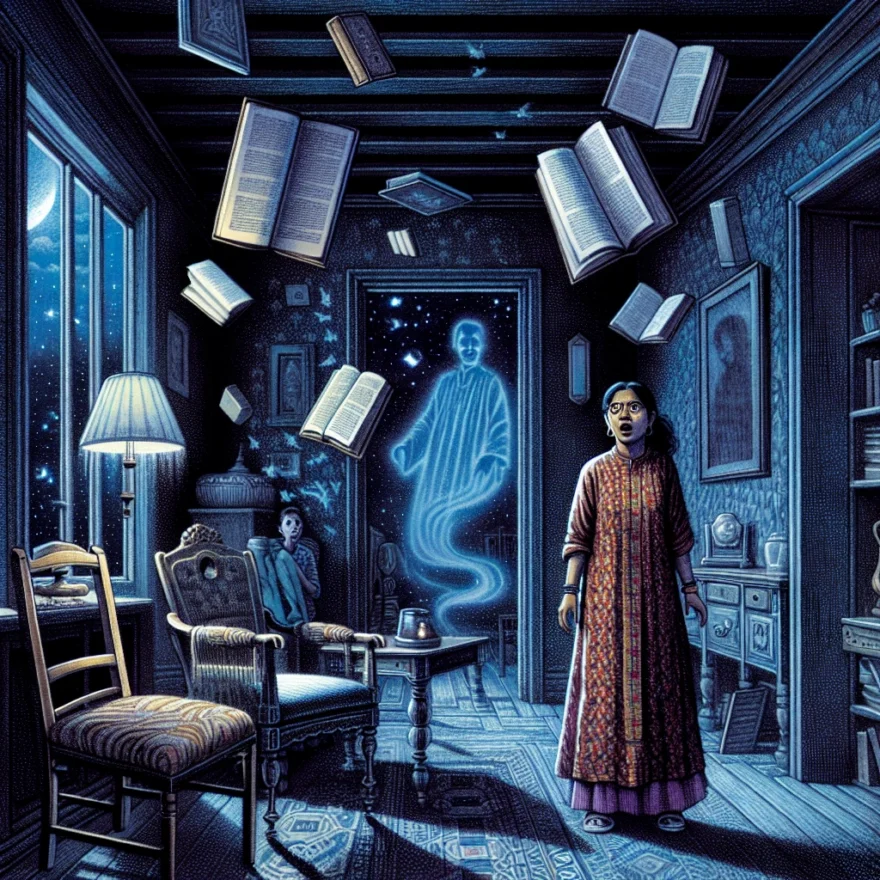
Introduction to Poltergeist Activity
The term ‘Poltergeist’ originates from German words, ‘poltern’, meaning ‘noisy’, and ‘geist’, meaning ‘ghost’. It is a term that has been widely used in the realm of paranormal studies to describe a particular type of supernatural activity characterized by strange and often disruptive occurrences. Poltergeist activity is often associated with loud noises, objects being moved or thrown around without any visible cause, mysterious knocking sounds, and sometimes even physical attacks on individuals present.
Poltergeist phenomena have been reported across different cultures and throughout history, leading to a wealth of stories and accounts that have both fascinated and terrified people. These occurrences have been the subject of countless investigations, both scientific and metaphysical, in an attempt to understand and explain the unexplainable. Theories abound, ranging from noisy ghosts trying to communicate with the living, to psychic phenomena triggered by subconscious human energy.
The debate on the true nature of poltergeist activity is ongoing and controversial. Some firmly believe in the ghostly origin of these disturbances, citing historical and cultural beliefs in spirits and afterlife. Others lean towards the psychic explanation, suggesting that these phenomena are manifestations of intense emotional or psychological states. However, neither side has been able to provide definitive proof to fully support their claims, leaving the mystery of poltergeist activity as one of the most intriguing unexplained phenomena in the world.
This article aims to delve into the heart of this mystery, exploring the different theories and explanations, the famous cases, and the common questions surrounding poltergeist activity. Whether you’re a skeptic seeking scientific explanations or a believer in the supernatural, this comprehensive look at poltergeist activity promises to be an enlightening journey into the unknown.
Table of contents
- Introduction to Poltergeist Activity
- Poltergeist Activity: Noisy Ghosts
- Poltergeist Activity: Psychic Phenomena
- Scientific Explanations for Poltergeist Activity
- Famous Cases of Poltergeist Activity
- Common Questions about Poltergeist Activity
- Poltergeist Activity and the Media
- Conclusion: Poltergeist Activity – Noisy Ghosts or Psychic Phenomena?
Poltergeist Activity: Noisy Ghosts
When it comes to the supernatural, few phenomena are as unsettling as poltergeist activity. The term ‘poltergeist’ comes from German words ‘poltern,’ meaning to make sound or to rumble, and ‘geist,’ meaning ghost or spirit. Thus, poltergeist translates to ‘noisy ghost,’ a term that aptly describes the phenomenon’s characteristics.
Poltergeist activity is often associated with a variety of unexplained physical disturbances. These disturbances can range from subtle, such as unexplained noises and objects moving seemingly on their own, to more dramatic occurrences, like furniture being thrown around or even fires starting spontaneously. The reported incidents often start mildly, then escalate over time, causing distress and fear among those who witness them.
Poltergeists differ from typical hauntings in that they are often associated with a particular individual, rather than a specific location. This individual, known as the ‘agent,’ is typically undergoing a period of emotional or psychological stress. Interestingly, the agent is often a teenager or a pre-adolescent, leading some to speculate a connection between poltergeist activity and the tumultuous energy of adolescence.
Historically, many cultures have stories and folklore about noisy, mischievous spirits. From the ‘boggarts’ of English folklore, known for their disruptive behavior, to the ‘trickster’ spirits of various Indigenous cultures, the concept of a noisy, disruptive spirit is a common theme. These stories often depict the spirits as being mischievous or malevolent, causing harm or discomfort to those they target.
Despite the fear and uncertainty they cause, poltergeists rarely cause physical harm to people. However, the psychological impact of experiencing such phenomena can be significant. The fear, stress, and anxiety caused by poltergeist activity can have serious effects on an individual’s mental health and overall well-being.
In conclusion, the noisy ghost aspect of poltergeist activity is characterized by unexplained physical disturbances, often escalating in intensity and associated with a specific individual. The phenomena can cause significant distress and fear, despite rarely causing physical harm. The concept of a noisy, disruptive spirit is a common theme in many cultures, further adding to the intrigue and mystery surrounding poltergeist activity.
Poltergeist Activity: Psychic Phenomena
Poltergeist activity has long been associated with paranormal phenomena, but there is another perspective that suggests it could be linked to psychic abilities. Psychic phenomena refer to the occurrence of events or experiences that cannot be explained by conventional scientific understanding.
When it comes to poltergeist activity, some researchers believe that it may be a manifestation of psychokinesis, the ability to influence objects or events with the power of the mind. This theory suggests that individuals experiencing poltergeist activity may unknowingly be causing the disturbances themselves through their own psychic energy.
Psychic phenomena are often characterized by the ability to move objects, create loud noises, and even cause physical harm. These occurrences are believed to be a result of the individual’s subconscious mind exerting control over their environment.
Psychic mediums and clairvoyants are often consulted in cases of poltergeist activity to help understand and potentially resolve the disturbances. These individuals claim to have heightened psychic abilities, allowing them to communicate with spirits or tap into the energy responsible for the poltergeist phenomena.
Some argue that psychic phenomena are not limited to individuals, but can also be influenced by the collective energy of a group. In cases where multiple people experience poltergeist activity in the same location, it is believed that their combined psychic energy is amplifying the disturbances.
While the concept of psychic phenomena offers an alternative explanation for poltergeist activity, it is important to note that scientific evidence supporting these claims is limited. The nature of psychic abilities and their connection to poltergeist activity remains a subject of debate in the scientific community.
Scientific Explanations for Poltergeist Activity
Poltergeist activity has long fascinated and perplexed both believers in the supernatural and skeptics alike. While some attribute these phenomena to restless spirits or psychic abilities, others seek scientific explanations to understand the strange occurrences associated with poltergeists.
One scientific explanation for poltergeist activity is the concept of the “psychokinetic effect.” Psychokinesis refers to the alleged ability of the mind to influence physical objects without any physical contact. According to this theory, individuals experiencing high levels of emotional distress or undergoing hormonal changes may unknowingly manifest their emotions through psychokinetic energy, resulting in the movement of objects or other paranormal phenomena.
Another scientific perspective on poltergeist activity involves infrasound. Infrasound refers to low-frequency sound waves that are below the threshold of human hearing. Studies have shown that exposure to infrasound can induce feelings of unease, anxiety, and even hallucinations in some individuals. It is believed that these sensations may contribute to the perception of paranormal activity, including poltergeist phenomena.
Furthermore, electromagnetic fields (EMFs) have been proposed as a potential explanation for poltergeist activity. It is well-known that certain individuals are more sensitive to EMFs than others, and exposure to high levels of electromagnetic radiation can cause hallucinations, feelings of being watched, and even physiological symptoms. These effects may be mistakenly attributed to supernatural causes, leading to the belief in poltergeist activity.
Additionally, some researchers suggest that poltergeist activity may be linked to the psychological phenomenon known as “ideomotor response.” Ideomotor response refers to the unconscious muscle movements that occur in response to thoughts or suggestions. In the case of poltergeists, it is proposed that individuals experiencing high levels of stress or emotional turmoil may unknowingly trigger these movements, leading to the perception of objects being moved or manipulated by unseen forces.
While these scientific explanations offer alternative perspectives on poltergeist activity, it is important to note that they do not completely dismiss the possibility of supernatural or paranormal phenomena. The nature of poltergeist activity remains a subject of debate, and further research is needed to fully understand the complex interplay between the mind, the environment, and the unexplained.
Famous Cases of Poltergeist Activity
Throughout history, there have been numerous reported cases of poltergeist activity that have captivated the public’s imagination. These cases have often involved unexplained phenomena such as objects moving on their own, strange noises, and even physical assaults. While skeptics may dismiss these incidents as mere hoaxes or psychological disturbances, there are several famous cases that have left investigators and witnesses baffled.
One of the most well-known cases of poltergeist activity is the Enfield Poltergeist, which occurred in the late 1970s in Enfield, England. The Hodgson family, particularly their two young daughters, claimed to experience a series of disturbances in their home. These included furniture being thrown, toys being levitated, and even the girls themselves being dragged out of bed by an unseen force. The case garnered significant media attention and was investigated by various paranormal researchers, including members of the Society for Psychical Research.
Another famous case is the Bell Witch haunting, which took place in Tennessee, USA, in the early 19th century. The Bell family reported encounters with a malevolent entity that tormented them for years. The poltergeist, known as the Bell Witch, was said to have communicated with the family, predicted future events, and even caused the death of John Bell, the patriarch of the family. The case remains one of the most chilling and well-documented instances of poltergeist activity in American history.
The Rosenheim Poltergeist is yet another intriguing case that occurred in Rosenheim, Germany, in the 1960s. The office of lawyer Sigmund Adam was plagued by unexplained phenomena, including flickering lights, malfunctioning electrical devices, and objects being thrown across the room. The activity was so intense that it attracted the attention of scientists and journalists, who witnessed the disturbances firsthand. Despite extensive investigations, no rational explanation was ever found for the events that took place in the Rosenheim law office.
These famous cases, along with many others, continue to puzzle both paranormal enthusiasts and skeptics alike. While some attribute poltergeist activity to mischievous spirits or psychic energy, others argue that these incidents may be manifestations of unconscious psychokinetic abilities in certain individuals. The debate surrounding the true nature of poltergeist activity remains unresolved, leaving room for speculation and further investigation.
Common Questions about Poltergeist Activity
As with any mysterious phenomenon, poltergeist activity raises a lot of questions. Here are some common questions that people may have about poltergeist activity:
1. What is poltergeist activity?
Poltergeist activity refers to the unexplained and often disruptive paranormal phenomena that are commonly associated with mischievous or noisy spirits. It typically involves objects moving or being thrown, loud noises, unexplained electrical disturbances, and even physical attacks on individuals.
2. Are poltergeists real?
The existence of poltergeists is a topic of debate among paranormal researchers and skeptics. While some believe that poltergeists are supernatural entities or spirits, others argue that poltergeist activity can be attributed to psychological factors or even natural phenomena.
3. Can poltergeist activity be explained by science?
Scientists have attempted to explain poltergeist activity through various theories. Some suggest that it could be the result of psychokinesis, a phenomenon where individuals unknowingly manipulate objects with their minds. Others propose that poltergeist activity may be caused by electromagnetic fields, infrasound, or even hallucinations.
4. Are poltergeists dangerous?
While poltergeist activity can be frightening and disruptive, there is no concrete evidence to suggest that poltergeists are inherently dangerous. However, individuals who experience poltergeist phenomena may feel threatened or distressed by the events occurring around them.
5. Can poltergeist activity be stopped or controlled?
There is no foolproof method to stop or control poltergeist activity. Some paranormal investigators suggest that addressing any underlying emotional or psychological issues within the household can help alleviate the disturbances. Others recommend seeking the assistance of experienced mediums or paranormal experts to investigate and potentially resolve the situation.
6. Are there any famous cases of poltergeist activity?
Yes, there have been numerous well-documented cases of poltergeist activity throughout history. Some of the most famous cases include the Enfield Poltergeist in England, the Bell Witch haunting in Tennessee, and the Rosenheim Poltergeist in Germany.
7. Can poltergeist activity be captured on video or audio recordings?
While there have been claims of capturing poltergeist activity on video or audio recordings, the authenticity of such evidence is often disputed. Some skeptics argue that these recordings may be the result of hoaxes or misinterpretations, while believers argue that they provide valuable proof of paranormal activity.
8. How does the media portray poltergeist activity?
Poltergeist activity has been a popular subject in books, movies, and television shows. The media often sensationalizes these phenomena, portraying them as terrifying and malevolent. However, it is important to remember that the media’s portrayal may not always accurately reflect the reality of poltergeist activity.
While poltergeist activity continues to baffle and intrigue individuals around the world, the true nature and origins of these phenomena remain elusive. Whether they are the result of noisy ghosts or psychic phenomena, poltergeist activity continues to be a fascinating subject of exploration for paranormal enthusiasts and skeptics alike.
Poltergeist Activity and the Media
Poltergeist activity has been a subject of fascination for many, and it has not escaped the attention of the media. The mysterious and often sensational nature of poltergeist phenomena has made it a popular topic in movies, books, and television shows.
One of the most famous movies about poltergeist activity is the 1982 film “Poltergeist.” Directed by Tobe Hooper and produced by Steven Spielberg, the movie tells the story of a family haunted by a malevolent poltergeist in their new home. The film was a commercial success and spawned several sequels, solidifying the image of poltergeists as noisy, mischievous spirits.
Television shows have also explored the topic of poltergeist activity. One notable example is the long-running series “Ghost Hunters,” which aired from 2004 to 2016. The show followed a team of paranormal investigators as they explored reportedly haunted locations, including cases of poltergeist activity. The investigations often included capturing audio and video evidence of unexplained noises and objects moving on their own.
Books and documentaries have delved into the subject as well. Authors and researchers have documented famous cases of poltergeist activity, providing detailed accounts and analysis. These works often aim to present a balanced perspective, exploring both the paranormal and scientific explanations for the phenomena.
While the media has certainly contributed to the popular perception of poltergeist activity, it is important to approach these portrayals with a critical eye. Movies and television shows often dramatize and sensationalize the phenomena for entertainment purposes. Real-life cases of poltergeist activity may be far less dramatic and may have alternative explanations.
It is essential to remember that the media’s portrayal of poltergeist activity should not be taken as definitive proof of the existence of noisy ghosts or psychic phenomena. Instead, it serves as a reflection of society’s enduring fascination with the unexplained and the supernatural.
Conclusion: Poltergeist Activity – Noisy Ghosts or Psychic Phenomena?
After exploring the various aspects of poltergeist activity, it is clear that there is no definitive answer to whether it is caused by noisy ghosts or psychic phenomena. The phenomenon of poltergeist activity has been observed throughout history, with countless reports of unexplained and often disruptive occurrences.
One school of thought suggests that poltergeist activity is the result of noisy ghosts. These entities are believed to be the spirits of deceased individuals who are trapped between the physical and spiritual realms. They are said to manifest their presence through loud and disruptive actions, such as moving objects, banging on walls, or creating unexplained noises.
On the other hand, there is a growing body of evidence that suggests poltergeist activity may be linked to psychic phenomena. Some researchers argue that certain individuals, often adolescents or individuals experiencing emotional distress, unknowingly channel their own psychic energy, causing objects to move or creating disturbances in their environment.
While both explanations offer interesting perspectives, it is important to consider scientific explanations for poltergeist activity as well. Some scientists propose that poltergeist phenomena can be attributed to natural phenomena such as electromagnetic fields, infrasound, or even psychological factors like suggestibility and hallucinations.
Despite the lack of a definitive explanation, there have been several famous cases of poltergeist activity that have captured public attention. From the Enfield Poltergeist case in the 1970s to the more recent case of the Black Monk of Pontefract, these incidents have been extensively studied and debated by paranormal researchers.
Common questions about poltergeist activity often revolve around the authenticity of the phenomenon. Skeptics argue that many reported cases can be explained by hoaxes, misinterpretations, or psychological factors. However, believers maintain that there are genuine cases of poltergeist activity that defy conventional explanations.
It is also worth noting the impact of the media on our perception of poltergeist activity. Movies, books, and television shows have sensationalized the phenomenon, often portraying it as malevolent or terrifying. This portrayal has shaped public opinion and contributed to the fascination and fear surrounding poltergeist activity.
In conclusion, the question of whether poltergeist activity is caused by noisy ghosts or psychic phenomena remains unanswered. The phenomenon continues to defy scientific explanation, leaving room for speculation and debate. Whether it is the result of restless spirits or the manifestation of psychic energy, poltergeist activity continues to captivate our imagination and challenge our understanding of the paranormal.