Introduction to Synchronicity
Have you ever experienced a series of events that, although seemingly random, held a significant meaning for you? Perhaps you thought of someone you hadn’t spoken to in years, and then, out of the blue, they called you. Or maybe you stumbled upon a book that seemed to address the exact problem you were grappling with at that moment. These experiences, often brushed off as mere coincidences, may actually be examples of a fascinating phenomenon known as synchronicity.
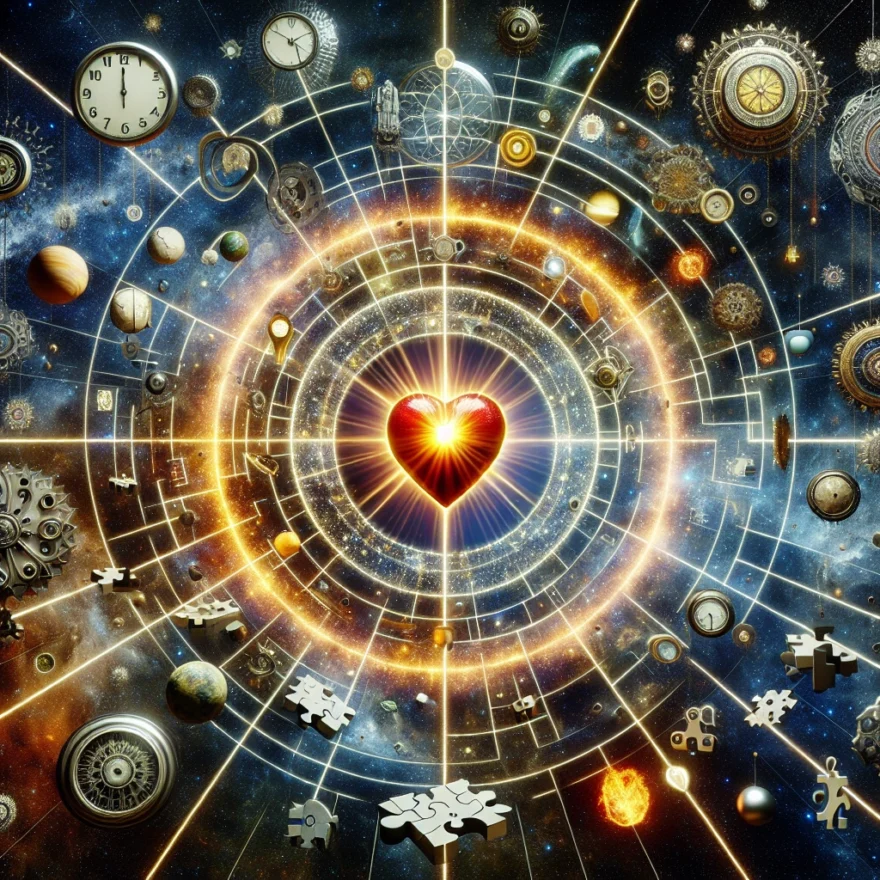
Coined by the famed Swiss psychiatrist Carl Jung, the term ‘synchronicity’ refers to the occurrence of meaningful coincidences that are not connected by cause and effect. These events are often so striking and personally significant that they defy conventional explanations. They seem to suggest an underlying pattern or a hidden network that connects everything and everyone.
While the concept of synchronicity can be difficult to grasp, it has intrigued and inspired thinkers, scholars, and ordinary people alike for decades. It has found a place in various fields, from psychology and quantum physics to spirituality and popular culture. The exploration of synchronicity prompts us to question the nature of reality and our place within it, leading us to ponder the mysteries of the universe and our existence.
In this article, we will delve into the intriguing world of synchronicity, exploring its meaning, origins, and implications. We’ll look at examples of synchronicity, its relationship with psychology and quantum physics, and its significance in our everyday lives. We’ll also address common misunderstandings about synchronicity and answer some frequently asked questions. So, let’s embark on this fascinating journey and uncover the hidden patterns that connect us all.
Table of contents
- Introduction to Synchronicity
- Understanding the Concept of Synchronicity
- Examples of Synchronicity Events
- Synchronicity and Psychology
- Synchronicity and Quantum Physics
- Common Misunderstandings about Synchronicity
- Synchronicity in Everyday Life
- The Significance of Synchronicity
- Synchronicity and Spirituality
- Common Questions about Synchronicity
- Conclusion: Embracing Synchronicity
Understanding the Concept of Synchronicity
The term synchronicity was first coined by Swiss psychiatrist Carl Gustav Jung in the 1950s. Jung, a student of Freud, was a pioneer in the field of depth psychology, which seeks to understand the deep, often unconscious, elements of the psyche. Synchronicity, according to Jung, is an “acausal connecting principle” that links mind and matter, and it is seen in events that are not connected by causality, but by meaning. In other words, synchronicity is the occurrence of two or more events that appear significantly related but have no discernible causal connection.
Jung’s concept of synchronicity goes beyond traditional cause-and-effect relationships. It suggests that our minds are intertwined with the universe in a mysterious, inexplicable way, allowing for the possibility of unrelated events to hold deep, symbolic significance. Jung believed that these synchronistic events could guide people in their lives, helping them to make decisions or leading them on a particular path.
It’s important to note that synchronicity doesn’t rely on the laws of probability for its explanation. A synchronistic event is not just a highly unlikely incident that happens by chance. Rather, it’s an event that holds a particular meaning for the person who experiences it. This meaning often seems to be tailored specifically to the individual’s circumstances, personal history, or inner state.
For instance, you might be thinking of a friend you haven’t seen in years, and then you suddenly run into them on the street. Or perhaps you’ve been grappling with a difficult decision, and then a book falls off the shelf at the library, opening to a page with a quote that seems to provide the exact guidance you need. These are examples of synchronistic events: they’re not connected in a cause-and-effect way, but they hold a deep, personal significance that goes beyond mere coincidence.
Overall, the concept of synchronicity challenges our conventional understanding of the world. It suggests that there’s more to our universe than the physical laws we know, and that our inner thoughts and feelings can somehow interact with the external world in meaningful, albeit mysterious, ways.
Examples of Synchronicity Events
Synchronicity events, also known as meaningful coincidences, occur in various forms and can be experienced by anyone at any time. These events often leave individuals feeling amazed and questioning the underlying meaning behind them. Here are some examples of synchronicity events that have been reported:
A Chance Encounter
Imagine walking into a coffee shop and bumping into an old friend whom you haven’t seen or spoken to in years. You were just thinking about them the other day, and now here they are, standing right in front of you. This unexpected meeting feels like more than just a coincidence; it feels like the universe has orchestrated this encounter for a reason.
Thinking of Someone and Receiving a Message
Have you ever experienced the phenomenon of thinking about someone you haven’t spoken to in a while, only to receive a phone call or a text message from them shortly after? It’s as if your thoughts have somehow transmitted to that person, prompting them to reach out to you. These instances of synchronicity can leave you feeling connected to something greater than yourself.
Finding the Right Information at the Right Time
Imagine you’re struggling with a problem or seeking answers to a particular question. You decide to pick up a book randomly from your shelf, and as you flip through the pages, you stumble upon a passage that directly addresses your concerns. It’s as if the universe has guided you to the exact information you needed in that moment. This synchronistic event can provide a sense of guidance and reassurance.
Recurring Numbers or Symbols
Many people report seeing certain numbers or symbols repeatedly in their daily lives. For example, you might constantly notice the number 11:11 on digital clocks, license plates, or street signs. These recurring patterns can hold personal significance and may be interpreted as messages or signs from the universe. They can serve as reminders to pay attention to the present moment or to follow a certain path.
Shared Thoughts or Feelings
Have you ever experienced a moment where you and someone else say the exact same thing at the same time? Or perhaps you were thinking about a specific topic, and someone else brings it up out of the blue. These instances of shared thoughts or feelings can create a profound sense of connection and unity, as if you and the other person are in sync on a deeper level.
These examples of synchronicity events illustrate how meaningful coincidences can manifest in our lives. While they may seem extraordinary, they remind us that there is a mysterious and interconnected nature to the universe that goes beyond our logical understanding.
Synchronicity and Psychology
Synchronicity, the occurrence of meaningful coincidences, has long fascinated psychologists and researchers. While some skeptics may dismiss synchronicity as mere chance, others believe that it holds deeper psychological significance.
Psychology explores the intricate workings of the human mind, including how we perceive and interpret the world around us. When it comes to synchronicity, psychologists delve into the psychological processes that occur when individuals experience these meaningful coincidences.
One psychological perspective on synchronicity is that it arises from our innate need for patterns and meaning. Humans have a natural tendency to look for connections and seek out meaning in their experiences. Synchronicity events, with their seemingly improbable connections, can provide a sense of order and purpose in an otherwise chaotic world.
Interestingly, Carl Jung, the Swiss psychiatrist and founder of analytical psychology, played a significant role in popularizing the concept of synchronicity. Jung believed that synchronistic events were not mere coincidences but rather meaningful occurrences that reflected the interconnectedness of the human psyche and the external world.
Jung suggested that synchronicity could be understood through the concept of the collective unconscious, a shared reservoir of universal symbols and archetypes that influence our thoughts, feelings, and behaviors. According to Jung, synchronicity events occur when an individual’s personal unconscious aligns with the collective unconscious, resulting in meaningful coincidences.
Psychologists also explore the role of perception and attention in synchronicity experiences. Our perception is influenced by our beliefs, expectations, and past experiences. When we are open to the possibility of synchronicity, we may be more likely to notice and interpret events as meaningful coincidences. This phenomenon is known as confirmation bias, where we selectively focus on information that confirms our preexisting beliefs.
Furthermore, synchronicity can have a profound impact on an individual’s psychological well-being. Experiencing synchronistic events can evoke feelings of awe, wonder, and a sense of being connected to something greater than oneself. These experiences can provide individuals with a renewed sense of purpose, meaning, and spirituality.
Psychologists also study the potential therapeutic benefits of synchronicity. Some therapists incorporate the exploration of synchronicity into their practice, using it as a tool for self-reflection, personal growth, and understanding the deeper aspects of the human experience. By exploring the connections between seemingly unrelated events, individuals can gain insights into their own thoughts, emotions, and behaviors.
It is important to note that while synchronicity is a fascinating area of study, it is not without its skeptics. Some psychologists argue that synchronicity is simply a result of chance and the human tendency to find patterns in random events. They suggest that attributing meaning to these coincidences may be a form of cognitive bias.
Despite the debate, synchronicity remains a topic of interest and exploration within the field of psychology. Whether seen as a psychological phenomenon or a spiritual experience, synchronicity continues to captivate the minds of researchers and individuals alike.
Synchronicity and Quantum Physics
Quantum physics, the branch of science that deals with the behavior of particles at the atomic and subatomic level, has often been associated with the concept of synchronicity. This connection stems from the idea that at the quantum level, particles can exist in multiple states simultaneously and can exhibit non-locality, meaning they can influence each other instantaneously regardless of the distance between them.
One of the key principles of quantum physics is the concept of entanglement, where two particles become linked in such a way that the state of one particle is dependent on the state of the other, regardless of the distance between them. This phenomenon has been described as “spooky action at a distance” by Albert Einstein.
Some researchers and theorists believe that synchronicity events could be explained through the lens of quantum physics. They propose that just as entangled particles can influence each other instantaneously, events or experiences that seem coincidental or meaningful may be connected at a quantum level.
According to this perspective, synchronicity events could be seen as a manifestation of the underlying interconnectedness of the universe. The idea is that there is a deeper level of reality beyond our everyday experiences, where meaningful coincidences occur as a result of the entangled nature of the quantum world.
However, it is important to note that the connection between synchronicity and quantum physics is still a topic of debate and speculation. While some researchers find the parallels intriguing, others argue that synchronicity is a psychological phenomenon that does not require a quantum explanation.
Nevertheless, exploring the potential links between synchronicity and quantum physics can offer a fascinating perspective on the nature of reality and the interconnectedness of events in the universe.
Common Misunderstandings about Synchronicity
When it comes to synchronicity, there are several common misunderstandings that can cloud our understanding of this phenomenon. Let’s debunk some of these misconceptions:
1. Synchronicity is just a coincidence: One of the most common misunderstandings about synchronicity is that it is merely a random coincidence. However, synchronicity events go beyond chance occurrences. They involve meaningful connections between seemingly unrelated events, often carrying personal significance or messages.
2. Synchronicity can be explained by rational reasoning: While we can try to rationalize synchronistic events, they often defy logical explanations. Synchronicity operates outside the realm of cause and effect, making it difficult to attribute these events to rational reasoning alone.
3. Synchronicity is a form of psychic or supernatural power: Although synchronicity can sometimes feel mystical or otherworldly, it is not necessarily a result of psychic abilities or supernatural powers. It is a natural occurrence that can happen to anyone, regardless of their beliefs or spiritual practices.
4. Synchronicity is a rare phenomenon: Contrary to popular belief, synchronicity is not as rare as one might think. In fact, synchronistic events happen more frequently than we realize. It is often a matter of being open and aware of the signs and connections that surround us.
5. Synchronicity is a product of wishful thinking: Some may dismiss synchronicity as wishful thinking or a result of confirmation bias. However, synchronistic events often occur unexpectedly and can be validated by the undeniable significance they hold for individuals involved.
6. Synchronicity is a new-age concept: While the term “synchronicity” was coined by Swiss psychologist Carl Jung in the 20th century, the concept itself is not limited to the new-age movement. Synchronistic experiences have been reported throughout history and across various cultures.
7. Synchronicity is always positive: Although synchronicity events often bring about positive outcomes or insights, they can also be challenging or unsettling. Synchronicity serves as a mirror of our inner world, reflecting both the light and shadow aspects of our lives.
8. Synchronicity can be controlled or manipulated: Synchronicity is not something that can be controlled or manipulated at will. It is a spontaneous occurrence that arises organically. However, being open to synchronicity and cultivating awareness can increase the likelihood of experiencing meaningful coincidences.
By dispelling these common misunderstandings, we can better appreciate the true nature and significance of synchronicity events in our lives.
Synchronicity in Everyday Life
Everyday life is filled with numerous instances of synchronicity events, often without us even realizing it. These meaningful coincidences can occur in various aspects of our lives, providing us with a sense of wonder and connection to the world around us.
One common area where synchronicity can be observed is in relationships. Have you ever thought of someone you haven’t spoken to in a while, only to receive a call or message from them shortly after? Or perhaps you meet someone new and discover that you have an uncanny number of shared interests and experiences. These instances of synchronicity in relationships can create a sense of serendipity and can often lead to deeper connections and meaningful friendships.
Another realm where synchronicity can manifest is in our daily routines and activities. For example, you may be thinking about a particular book or movie, and suddenly you come across it while browsing through a bookstore or flipping through channels on TV. These synchronistic encounters can feel like the universe is sending you a message or guiding you towards something significant.
Synchronicity can also be observed in our decision-making processes. Have you ever been faced with a difficult choice and found yourself torn between two options, only to have a synchronistic event occur that helps you make up your mind? It could be a chance encounter with a stranger who offers you advice or stumbling upon an article or quote that resonates with your dilemma. These synchronicities can provide clarity and guidance, helping us make decisions that align with our highest good.
Furthermore, synchronicity often appears in the form of repeating numbers or patterns. You may frequently glance at the clock and notice that it’s always the same time, such as 11:11 or 3:33. These repetitive number sequences can hold personal significance and may serve as gentle reminders or messages from the universe.
It’s important to note that synchronicity events in everyday life are not mere coincidences. They carry a deeper meaning and purpose, inviting us to pay attention and be more aware of the interconnectedness of all things. By recognizing and embracing synchronicity, we can cultivate a greater sense of trust in the universe and allow ourselves to be guided by the flow of life.
The Significance of Synchronicity
One of the most intriguing aspects of synchronicity events is their significance. These meaningful coincidences hold a deeper meaning and can have a profound impact on our lives. Understanding the significance of synchronicity requires us to delve into the interconnected nature of the universe and the role it plays in shaping our experiences.
Synchronicity events are not random occurrences. They are purposeful and meaningful, serving as guideposts along our life journey. These events often act as signposts, pointing us in the right direction or offering us valuable insights. They can help us make important decisions, provide clarity in confusing situations, or offer comfort and reassurance during challenging times.
When we experience synchronicity, it is a reminder that there is a greater force at play in the universe. It suggests that there is a hidden order and intelligence that goes beyond our understanding. Synchronicity events can serve as reminders that we are part of something much larger than ourselves and that there is a deeper purpose to our existence.
Furthermore, synchronicity events can also serve as validation of our thoughts, feelings, and actions. They can confirm that we are on the right path or provide confirmation of our intuition. These meaningful coincidences can offer a sense of validation and encouragement, boosting our confidence and trust in ourselves.
Synchronicity events also highlight the interconnectedness of all things. They show us that everything in the universe is intricately connected, and that there are no coincidences or accidents. Each synchronicity event is like a thread in the tapestry of life, weaving together seemingly unrelated events and experiences.
By recognizing and embracing synchronicity, we open ourselves up to a world of limitless possibilities. We become more attuned to the signs and messages that the universe is sending our way. We start to notice the subtle connections and patterns that exist in our lives, allowing us to navigate through life with greater clarity and purpose.
Ultimately, the significance of synchronicity lies in its ability to deepen our understanding of ourselves and the world around us. It invites us to explore the mysteries of the universe and encourages us to trust in the unfolding of our own unique journey. By embracing synchronicity, we can tap into a wellspring of wisdom and guidance that can enrich our lives in ways we never thought possible.
Synchronicity and Spirituality
Throughout history, humans have sought to understand the deeper meaning of life and the interconnectedness of events. This quest for spiritual enlightenment has led many to explore the concept of synchronicity and its relationship to spirituality.
Synchronicity events, often seen as meaningful coincidences, are believed to be more than just random occurrences. They are seen as signs or messages from a higher power, guiding individuals on their spiritual journey.
Many spiritual traditions and practices embrace the idea of synchronicity as a way to connect with the divine and gain insight into the mysteries of the universe. It is believed that when we are open to receiving these messages, we can align ourselves with the greater flow of life and experience a sense of harmony and purpose.
In spiritual contexts, synchronicity is often viewed as a form of divine intervention or guidance. It is seen as a way for the universe or a higher power to communicate with us, offering guidance, support, and reassurance along our spiritual path.
Some spiritual teachers and practitioners believe that synchronicity events are not mere coincidences, but rather manifestations of our own thoughts, beliefs, and intentions. They suggest that our inner world is reflected in the outer world, and by paying attention to synchronicities, we can gain insights into our own subconscious desires and fears.
For example, if you repeatedly encounter the same symbol or meet people who share similar characteristics, it may be a sign that you need to pay attention to certain aspects of your life or work on specific areas of personal growth.
Synchronicity can also be seen as a way to validate our spiritual practices and beliefs. When we experience synchronistic events that align with our spiritual beliefs or affirm the teachings we follow, it can strengthen our faith and deepen our connection to the spiritual realm.
It is important to note that synchronicity events are subjective experiences and can be interpreted in different ways by individuals. What may be a meaningful coincidence for one person may not hold the same significance for another. Therefore, it is essential to approach synchronicity with an open mind and trust your own intuition when deciphering its messages.
Ultimately, synchronicity and spirituality are deeply intertwined. By recognizing and embracing synchronistic events, we can tap into a greater sense of purpose, expand our spiritual awareness, and cultivate a deeper connection with the divine.
Common Questions about Synchronicity
Conclusion: Embracing Synchronicity
Throughout history, humans have been fascinated by the unexplained mysteries of the universe. One such phenomenon that continues to captivate our curiosity is synchronicity – the occurrence of meaningful coincidences that seem to defy logical explanation. As we have explored in this article, synchronicity events can be found in various aspects of life, from personal experiences to the realms of psychology, quantum physics, and spirituality.
By delving into the concept of synchronicity, we have come to understand that these events are not mere chance occurrences, but rather meaningful connections that hold significance in our lives. They serve as reminders that there is a greater order to the universe, beyond what our rational minds can comprehend.
Examples of synchronicity events, such as unexpectedly meeting someone who shares the same name as a long-lost friend or receiving a phone call from a loved one just as you were thinking about them, remind us that there is a deeper interconnectedness at play. These occurrences often leave us in awe, sparking a sense of wonder and curiosity about the mysteries of the world.
Psychology has also shed light on the significance of synchronicity. Carl Jung, the renowned Swiss psychiatrist, believed that synchronistic events were not mere coincidences, but rather manifestations of the collective unconscious. He suggested that these events could provide insights into our inner selves and guide us towards personal growth and self-discovery.
Quantum physics has further deepened our understanding of synchronicity. The interconnected nature of the quantum world, where particles can instantaneously communicate with each other regardless of distance, aligns with the concept of synchronicity. It suggests that there may be underlying forces at work that go beyond our current scientific understanding.
However, misconceptions about synchronicity often arise. Some may dismiss these events as mere chance or coincidence, failing to recognize the deeper meaning they hold. Others may try to rationalize synchronicity, attributing it to confirmation bias or selective attention. While it is important to approach synchronicity events with a critical mindset, it is equally important to remain open to the possibility that there may be more to them than meets the eye.
Synchronicity is not limited to extraordinary or supernatural experiences; it can be found in our everyday lives. Paying attention to the synchronicities that occur around us can help us navigate our paths with greater awareness and alignment. It encourages us to trust our intuition and follow the signs that the universe presents to us.
Embracing synchronicity means embracing the unknown and embracing the interconnectedness of all things. It invites us to cultivate a sense of wonder and curiosity about the mysteries of life. By recognizing and appreciating synchronicity, we can tap into a deeper level of consciousness and find meaning in the seemingly random events that occur in our lives.
Ultimately, synchronicity serves as a reminder that we are part of something greater than ourselves. It encourages us to trust in the unseen forces that guide us and to embrace the serendipitous moments that unfold in our lives. So, the next time you experience a meaningful coincidence, take a moment to pause, reflect, and embrace the synchronicity that surrounds you.