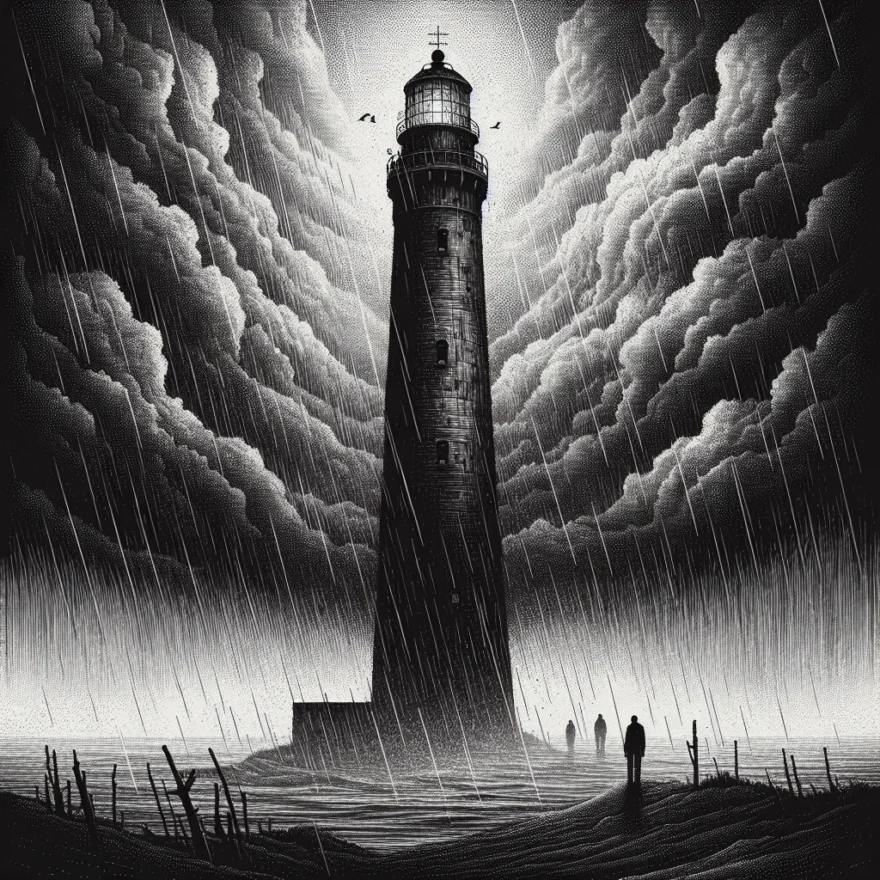
Introduction to the Flannan Isles Mystery
Perched on the edge of the Atlantic Ocean, off the west coast of Scotland, lies a cluster of remote islands known as the Flannan Isles. These islands are home to one of the most enduring mysteries of the 20th century: the unexplained disappearance of three lighthouse keepers in December 1900. This event has since been the subject of numerous investigations, theories, and even popular culture references, yet the fate of the three men remains shrouded in mystery.
The Flannan Isles Lighthouse was a critical beacon for maritime navigation, its light piercing through the often foggy and stormy weather to guide ships safely along their course. Staffed by a team of three lighthouse keepers, their duty was to ensure the light never failed. However, on a seemingly ordinary December day, the light went out, and the lighthouse keepers vanished without a trace.
The lighthouse keepers’ disappearance was not immediately noticed. The Flannan Isles, also known as the Seven Hunters, are uninhabited except for the occasional lighthouse keepers. The isolation of the islands, combined with the harsh winter weather, meant that it was several days before anyone realized that something was amiss. This delay in discovery only added to the mystery and speculation surrounding the event.
The Flannan Isles Lighthouse was automated in 1971, and the islands have been uninhabited since then. However, the memory of the three missing lighthouse keepers lives on, their story echoing in the lonely winds that sweep across the desolate landscape. The mystery of their disappearance continues to captivate imaginations around the world, a chilling reminder of the power of the sea and the fragility of human life.
Table of contents
- Introduction to the Flannan Isles Mystery
- The Discovery of the Disappearance
- Who Were the Missing Lighthouse Keepers?
- Theories: Accident or Foul Play?
- The Investigation and its Challenges
- The Flannan Isles in Popular Culture
- Common Questions and Answers
- Conclusion: The Enduring Enigma of the Flannan Isles
The Discovery of the Disappearance
On December 26, 1900, a small ship made its way towards the Flannan Isles in the remote Outer Hebrides. Its destination was the lighthouse at Eilean Mor, a remote island which (apart from its lighthouse keepers) was uninhabited. Although uninhabited, the island was part of the Flannan Isles, named after St. Flannan, a 6th-century Irish Bishop who later became a saint. The islands had a long history of supernatural folklore and tales of hauntings, adding an eerie backdrop to the unfolding mystery.
The ship carried supplies for the lighthouse keepers, but as it neared the landing platform, the crew noticed something was amiss. There was no sign of the keepers, James Ducat, Thomas Marshall, and Donald McArthur. The flagstaff was bare, and none of the usual provision boxes had been left out for restocking.
Upon landing, the ship’s captain, James Harvey, sent a replacement lighthouse keeper, Joseph Moore, ashore to investigate. The island was silent, save for the sounds of the wind and waves. As Moore made his way up the narrow, winding path towards the lighthouse, he recalled feeling an overwhelming sense of foreboding.
Upon reaching the lighthouse, Moore noticed something else that was strange. The door to the lighthouse was unlocked. He entered the living quarters, only to find them in a state of disarray. The beds were unmade, and the clock had stopped. The lamp was ready for lighting, and two of the three oilskin coats belonging to the men were gone. The third one, presumably belonging to Donald McArthur, was still on its peg.
There was no sign of a struggle, and all the lighthouse records were up to date. The last entry was made on December 15, a full eleven days before the ship arrived. The entry noted that the men had been disturbed by severe winds, the likes of which they had never seen before in all their years of service. But there were no storms reported in the area on or around that date. The weather had been calm, and the sea was tranquil.
Moore ran back to the ship to report his findings. The captain promptly sent a telegram to the mainland, which read: “A dreadful accident has happened at the Flannans. The three keepers, Ducat, Marshall and the occasional have disappeared from the Island…”. Thus began one of the most enduring mysteries in maritime history: the disappearance of the Flannan Isles lighthouse keepers.
Who Were the Missing Lighthouse Keepers?
The Flannan Isles Lighthouse, located off the coast of Scotland, was manned by a team of three lighthouse keepers. These individuals were responsible for maintaining the lighthouse, ensuring the safety of passing ships, and keeping a watchful eye over the treacherous seas.
The missing lighthouse keepers were James Ducat, Thomas Marshall, and Donald MacArthur. James Ducat, the principal keeper, was an experienced sailor who had previously served in the Royal Navy. Thomas Marshall, the second assistant, was a seasoned lighthouse keeper who had worked on various other lighthouses before joining the Flannan Isles team. Donald MacArthur, the third assistant, was the youngest member of the team and had recently started his career as a lighthouse keeper.
These three men were chosen for their knowledge of the sea and their ability to withstand the isolation and harsh conditions of the Flannan Isles. They were expected to work in shifts, ensuring that the lighthouse was always operational and the light was visible to passing ships.
Life on the Flannan Isles was not easy. The keepers had to endure long periods of solitude, battling against the relentless winds and waves. They relied on each other for companionship and support, forming a tight-knit team that was essential for their survival.
Despite the challenges they faced, the lighthouse keepers were dedicated to their duty. They understood the importance of their role in guiding ships safely through the treacherous waters surrounding the Flannan Isles.
Unfortunately, their dedication would ultimately lead to their mysterious disappearance.
Theories: Accident or Foul Play?
The mysterious disappearance of the Flannan Isles lighthouse keepers has captivated the imaginations of people for over a century. As investigators delved into the case, various theories emerged to explain what might have happened on that fateful day. Two prevailing theories have dominated discussions: accident and foul play.
The Accident Theory
According to the accident theory, the lighthouse keepers met an unfortunate end due to a series of unforeseen events. One possibility is that a violent storm hit the island, causing massive waves to crash against the lighthouse. This could have resulted in the keepers being swept away by the powerful currents or even being knocked off the cliffside.
Another accident theory suggests that a tragic mishap occurred within the lighthouse itself. It is speculated that one of the keepers may have fallen from a height, suffered a severe injury, or even died as a result. This could have led to panic among the remaining keepers, causing them to venture outside in search of help, only to meet a similar fate.
The Foul Play Theory
The foul play theory proposes that the disappearance of the lighthouse keepers was not an accident but the result of a deliberate act. Some believe that one or more of the keepers may have been involved in a conflict or altercation that turned deadly. This could have been due to personal disputes, hidden secrets, or even a case of insanity.
Another possibility is that outsiders, such as smugglers or pirates, arrived on the island and encountered the keepers. In this scenario, the keepers may have stumbled upon illegal activities, prompting the intruders to take drastic measures to ensure their secrecy.
Debate and Speculation
The debate between the accident and foul play theories has persisted for decades, with no definitive evidence to support either claim. Some argue that the lack of a distress signal or any signs of struggle points towards an accident, while others believe that the strange circumstances surrounding the disappearance indicate foul play.
Despite extensive investigations and countless theories put forth over the years, the truth behind the Flannan Isles mystery remains elusive. Theories continue to be debated, and new perspectives are constantly emerging as technology advances and new evidence is uncovered.
Ultimately, the question of whether the lighthouse keepers’ disappearance was an accident or foul play may never be conclusively answered. The Flannan Isles mystery continues to intrigue and fascinate, leaving us with an enduring enigma that has stood the test of time.
The Investigation and its Challenges
After the mysterious disappearance of the Flannan Isles lighthouse keepers, a thorough investigation was launched to uncover the truth behind their vanishing. However, the investigation itself was not without its challenges and complexities.
One of the main challenges faced by the investigators was the lack of concrete evidence or any clear indication of what had happened to the missing keepers. The only clue they had was an overturned chair in the lighthouse, suggesting that something unexpected had occurred. The absence of any bodies or personal belongings made it difficult to determine whether foul play was involved or if it was simply a tragic accident.
Another obstacle faced by the investigators was the remote location of the Flannan Isles. Situated off the coast of Scotland, the islands were known for their treacherous weather conditions and rough seas. This made it challenging to access the site and conduct a thorough search of the area. The harsh weather conditions also hampered the collection of any potential evidence that may have been left behind.
Furthermore, the passage of time proved to be a hindrance to the investigation. By the time the authorities were alerted to the disappearance, several days had already passed. This delay meant that any potential evidence could have been washed away by the sea or destroyed by the elements. The investigators had to rely heavily on witness testimonies and the limited information available to them.
Additionally, the Flannan Isles lighthouse was not equipped with any advanced communication systems at the time of the incident. This meant that the keepers had no means of contacting the mainland for help or to report any unusual occurrences. The lack of communication made it challenging for the investigators to establish a timeline of events leading up to the disappearance.
Despite these challenges, the investigation into the mysterious disappearance of the Flannan Isles lighthouse keepers continued. Various theories were explored, ranging from natural accidents, such as a rogue wave, to more sinister possibilities, including murder and abduction. However, due to the limited evidence and the remote nature of the islands, no definitive conclusion could be reached.
Over the years, the investigation has been revisited multiple times, with new theories and speculations emerging. However, the truth behind the disappearance remains elusive, adding to the enduring enigma of the Flannan Isles.
The Flannan Isles in Popular Culture
Throughout the years, the mysterious disappearance of the Flannan Isles lighthouse keepers has captivated the imagination of people around the world. This intriguing story has not only been the subject of intense speculation and investigation but has also made its way into popular culture, inspiring various forms of artistic expression.
One notable example of the Flannan Isles mystery’s influence in popular culture is the song “Flannan Isle” by Wilfrid Wilson Gibson. Published in 1912, just a few years after the disappearance, the poem-turned-song beautifully captures the eerie atmosphere surrounding the event. The haunting lyrics and melancholic melody serve as a poignant tribute to the lost lighthouse keepers.
In addition to music, the Flannan Isles mystery has also found its way into the literary world. Several authors have drawn inspiration from the enigmatic disappearance, weaving it into their stories. One such example is the novel “The Lighthouse” by P.D. James. This gripping mystery novel incorporates elements of the Flannan Isles incident, exploring themes of isolation, paranoia, and the unexplained.
The Flannan Isles mystery has also made its mark in the world of film and television. In 2002, a short film titled “The Vanishing” was released, inspired by the events at the lighthouse. This atmospheric and suspenseful film delves into the psychological toll of isolation and the unknown, leaving viewers on the edge of their seats.
Furthermore, the Flannan Isles incident has been featured in various documentaries and television programs, further perpetuating its place in popular culture. These visual adaptations not only recount the events but also delve into the various theories and speculations surrounding the disappearance. They serve as a platform for further exploration and discussion of this enduring enigma.
The Flannan Isles mystery has also found its way into the world of art. Paintings and illustrations depicting the lighthouse and its vanished keepers have been created, capturing the eerie beauty and intrigue of the story. These visual representations serve as a reminder of the human fascination with the unexplained and the enduring impact of the Flannan Isles incident.
Overall, the Flannan Isles mystery has left an indelible mark on popular culture. From music to literature, film to art, this enigmatic event continues to captivate and inspire. Its enduring presence in various forms of artistic expression serves as a testament to the power of a compelling mystery and the human desire to unravel the unexplained.
Common Questions and Answers
As the mystery of the Flannan Isles lighthouse keepers’ disappearance continues to captivate the minds of people around the world, numerous questions arise. Here, we aim to answer some of the most common queries surrounding this perplexing case.
1. What exactly happened to the lighthouse keepers?
The exact fate of the three lighthouse keepers, James Ducat, Thomas Marshall, and Donald MacArthur, remains unknown. They vanished without a trace, leaving behind a partially eaten meal, an overturned chair, and an unlocked door.
2. Was foul play involved?
The possibility of foul play has been a subject of speculation for over a century. Some theories suggest that the keepers may have been murdered by an unknown assailant, while others propose that they were victims of piracy or an attack by foreign spies. However, no concrete evidence supporting foul play has ever been discovered.
3. Could it have been an accident?
Accidental explanations include the keepers being swept away by a rogue wave, falling from the cliffs, or being struck by lightning. These theories are plausible, given the harsh and unpredictable conditions of the Flannan Isles, but they are purely speculative and lack conclusive evidence.
4. Were there any supernatural or paranormal elements involved?
Various supernatural theories have emerged, ranging from alien abductions to the intervention of mythical creatures. However, there is no substantial evidence to support these claims, and they are largely considered to be products of imagination and folklore.
5. What challenges did the investigation face?
The investigation into the disappearance was hindered by the remote location of the Flannan Isles and the limited resources available at the time. Additionally, the lack of witnesses and the absence of any concrete evidence made it difficult to draw definitive conclusions.
6. Has the case ever been reopened?
Despite numerous theories and speculations over the years, the case has never been officially reopened. The mystery of the Flannan Isles lighthouse keepers remains an unsolved enigma.
7. What is the significance of the Flannan Isles mystery?
The Flannan Isles mystery has captured the imagination of people worldwide and has become a symbol of the unexplained. It continues to be a topic of fascination for researchers, historians, and enthusiasts interested in unsolved mysteries and maritime history.
8. Are there any lessons learned from this incident?
The disappearance of the Flannan Isles lighthouse keepers serves as a reminder of the unpredictable and dangerous nature of the sea. It highlights the importance of safety protocols, communication systems, and regular checks in isolated locations to prevent similar incidents from occurring.
9. Is there any hope of ever solving the mystery?
While it is unlikely that the truth behind the Flannan Isles mystery will ever be fully uncovered, advancements in technology and future discoveries may shed new light on the case. Until then, it will continue to intrigue and perplex those who delve into its enigmatic depths.
Conclusion: The Enduring Enigma of the Flannan Isles
The disappearance of the Flannan Isles lighthouse keepers remains one of the most enduring enigmas in maritime history. Despite extensive investigations and numerous theories put forth over the years, the truth behind their disappearance continues to elude us.
The Flannan Isles mystery captures the imagination and curiosity of people around the world. The eerie circumstances surrounding the vanishing of the three lighthouse keepers have sparked countless debates, speculations, and fictionalized retellings.
While the official investigation concluded that the men were swept away by a powerful wave, some questions remain unanswered. The lack of a distress signal, the untouched meal on the table, and the mysterious logbook entries all contribute to the lingering sense of intrigue and uncertainty.
One of the most perplexing aspects of this mystery is the absence of any concrete evidence pointing to either an accident or foul play. Without the discovery of the bodies or any significant clues, it is challenging to definitively determine what transpired on that fateful day in December 1900.
Various theories have emerged over the years, ranging from natural disasters to extraterrestrial encounters. Some believe that the men met their demise due to treacherous weather conditions, while others suspect foul play, possibly involving a passing ship or even a supernatural force.
The investigation into the Flannan Isles mystery faced numerous challenges. The remote location of the lighthouse, the limited resources available at the time, and the lack of witnesses all hindered the efforts to uncover the truth. Despite the best efforts of the authorities, the case ultimately remained unsolved.
Over the years, the Flannan Isles mystery has captured the attention of artists, writers, and filmmakers. The story has been adapted into various forms of media, further perpetuating the fascination surrounding the unsolved disappearance. This enduring enigma continues to inspire new interpretations and theories.
As with any unexplained mystery, there are common questions that arise. People often wonder why the lighthouse keepers did not send a distress signal or why they left the lighthouse unattended. These questions, along with many others, contribute to the ongoing intrigue and speculation surrounding the Flannan Isles mystery.
In conclusion, the enduring enigma of the Flannan Isles lighthouse keepers’ disappearance remains a captivating and perplexing tale. Whether the men met their fate through an unfortunate accident or fell victim to foul play, we may never know for certain. The mystery continues to captivate our imaginations, reminding us of the vastness and unpredictability of the sea and the enduring power of unsolved mysteries.