Introduction to Underwater Crop Circles
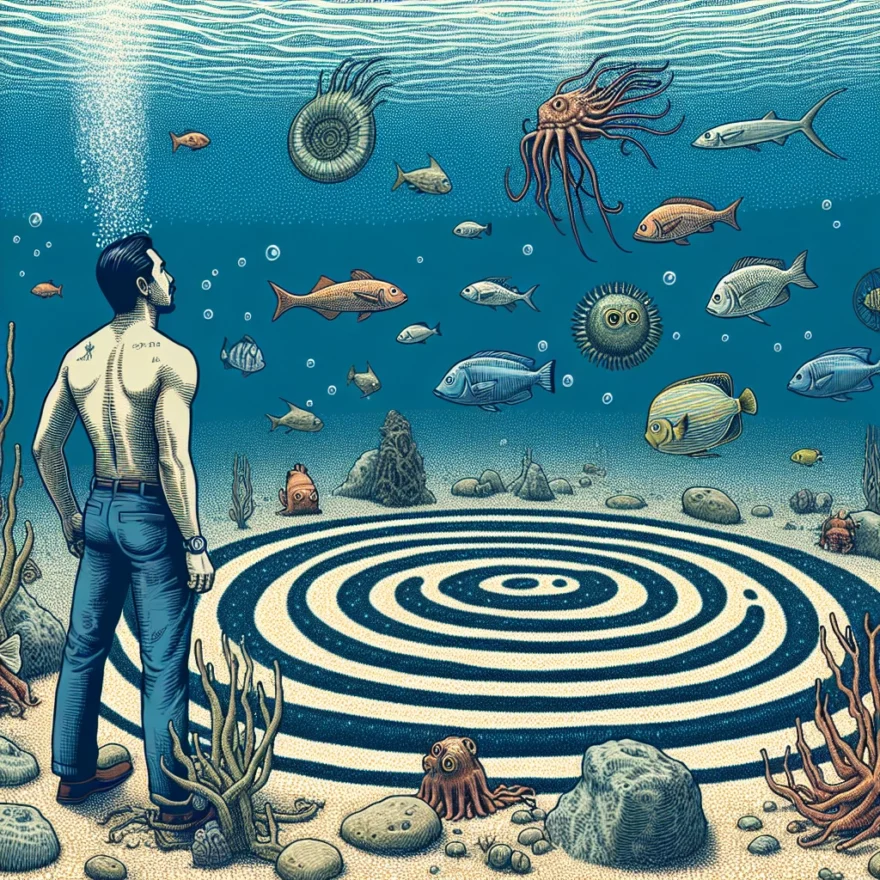
Imagine diving into the azure depths of the ocean, expecting to encounter the usual array of vibrant corals, schools of tropical fish, and perhaps an elusive sea turtle or two. Suddenly, you stumble upon something unexpected: a perfectly symmetrical, intricately designed pattern etched into the sandy seabed, reminiscent of the mysterious crop circles that occasionally pop up in rural farmlands. Welcome to the enigmatic world of underwater crop circles.
Underwater crop circles are a relatively recent discovery, having first been documented in the 1990s off the coast of Japan. These fascinating formations can reach up to seven feet in diameter and often feature intricate radial designs that are strikingly similar to their terrestrial counterparts. They are found at depths of around 80 to 100 feet, where light is scarce and the underwater world is largely shrouded in mystery.
The existence of these underwater formations has sparked a great deal of interest and speculation among scientists, divers, and enthusiasts alike. Are they the result of some natural phenomenon, a form of marine life behavior previously unknown to science? Or could they be the work of human artists, seeking to express their creativity in an unusual and challenging medium?
Over the years, the quest to unravel the enigma of these underwater crop circles has led to a number of theories, some more plausible than others. The journey to understanding these mysterious formations is as intriguing as the circles themselves, inviting us all to dive deeper into the ocean’s depths and the mysteries they hold.
Table of contents
- Introduction to Underwater Crop Circles
- The Discovery of Underwater Crop Circles
- Scientific Explanation for Underwater Crop Circles
- The Role of Pufferfish in Creating Crop Circles
- Other Theories Surrounding Underwater Crop Circles
- Underwater Crop Circles as Artistic Creations
- The Impact of Underwater Crop Circles on Marine Ecosystem
- Common Questions About Underwater Crop Circles
- Conclusion: The Enigma of Underwater Crop Circles
The Discovery of Underwater Crop Circles
It was during the summer of 1995 when divers off the coast of Japan first stumbled upon a peculiar sight. Nestled on the ocean floor were intricate geometric patterns, perfectly symmetrical, with a design that was both complex and beautiful. These patterns, which came to be known as underwater crop circles, were unlike anything the divers had ever seen. At first, the origin of these underwater formations was shrouded in mystery, sparking numerous theories and much speculation.
The circles were found at depths of 60 to 80 feet, and measured approximately 6.5 feet in diameter. Their design consisted of a series of ridges and valleys, radiating out from a central point in a pattern reminiscent of a sunflower. Each circle was meticulously crafted, with every ridge and valley perfectly aligned, creating a stunning visual display that left the divers in awe.
Underwater photography was used to document these formations, and the images quickly spread through the scientific community, sparking intrigue and curiosity. Theories about their origin ranged from underwater currents to alien activity. However, despite the many theories, the true origin of these underwater crop circles remained a mystery for almost two decades.
It was not until 2012, when a team of scientists led by Hiroshi Kawase of the University of Tokyo decided to conduct an in-depth study of these formations. The team set up underwater cameras and spent countless hours observing the circles, hoping to finally unravel the mystery. Their findings, which were published in the journal ‘Nature’, would forever change our understanding of these underwater crop circles.
Scientific Explanation for Underwater Crop Circles
One of the most intriguing aspects of underwater crop circles is the scientific explanation behind their formation. Researchers have dedicated significant time and effort to unravel the mystery surrounding these intricate patterns found on the seabed. While some initially believed that these formations were the result of extraterrestrial activity or supernatural forces, a more plausible scientific explanation has emerged.
Underwater crop circles are now believed to be the result of natural phenomena, specifically the mating behavior of a particular species of pufferfish known as the white-spotted pufferfish (Arothron hispidus). These small, round fish are found in tropical and subtropical waters around the world and are known for their unique courtship rituals.
During mating season, male pufferfish create these mesmerizing patterns on the seabed using their fins and bodies. They tirelessly swim in circles, creating intricate designs in the sand or silt. These patterns serve as a way for the males to attract females and demonstrate their fitness as potential mates.
The scientific explanation for underwater crop circles lies in the meticulous nature of the pufferfish’s courtship ritual. These fish meticulously select the perfect location for their creation, often in areas with calm currents and sandy or silty substrates. They use their bodies and fins to dig into the sediment, creating circular patterns with radial ridges and furrows.
Research has shown that pufferfish are highly skilled at creating these underwater crop circles. They carefully select the appropriate size and shape of the circle, ensuring it is visually appealing to potential mates. The precision and symmetry of these patterns are truly remarkable.
It is important to note that not all underwater crop circles are created by pufferfish. There have been instances where other factors, such as tidal currents or geological processes, have contributed to the formation of similar patterns. However, the majority of these formations can be attributed to the courtship behavior of pufferfish.
Scientists have conducted numerous studies and experiments to further understand the process behind underwater crop circle formation. By observing and documenting the behavior of pufferfish in controlled environments, researchers have been able to shed light on this fascinating phenomenon.
While the scientific explanation for underwater crop circles may debunk the notion of extraterrestrial or supernatural involvement, it does not diminish the awe-inspiring beauty of these formations. The intricate patterns created by pufferfish serve as a testament to the wonders of the natural world and the remarkable behaviors exhibited by marine species.
The Role of Pufferfish in Creating Crop Circles
One of the most fascinating theories surrounding the creation of underwater crop circles involves the role of pufferfish. These small, intricately patterned fish are known for their unique behavior of creating circular formations on the ocean floor.
Scientists have observed that male pufferfish construct these circular patterns in order to attract a mate. Using only their fins, the male pufferfish tirelessly work to create these intricate designs, which can range from a few feet to several meters in diameter.
The process begins with the pufferfish using its fins to dig small trenches in the sandy ocean floor. It then swims in a circular motion, continuously flapping its fins to create a swirling pattern. This motion stirs up the sand and creates a visible circular shape. The pufferfish repeats this process over and over, meticulously refining the pattern until it is satisfied with the final result.
But what motivates the pufferfish to go through such elaborate lengths to create these underwater crop circles? It is believed that these patterns serve as a form of courtship display. Female pufferfish are attracted to males who can construct the most symmetrical and well-defined circles. The circular patterns are a sign of the male’s strength, skill, and ability to provide a safe environment for their potential offspring.
While the pufferfish theory provides a plausible explanation for the creation of underwater crop circles, it is important to note that not all underwater crop circles can be attributed to these fish. There have been instances where the patterns are too large or complex to be created by pufferfish alone.
Furthermore, pufferfish are not found in all regions where underwater crop circles have been discovered. This raises the question of whether other marine creatures or natural forces could also contribute to the formation of these mysterious patterns.
Scientists continue to study the behavior of pufferfish and their role in creating underwater crop circles. By understanding the intricate relationship between these fish and their environment, researchers hope to unravel the enigma behind these captivating underwater phenomena.
Other Theories Surrounding Underwater Crop Circles
While the scientific explanation involving pufferfish may be the most widely accepted theory, there are alternative explanations and theories surrounding the enigma of underwater crop circles. These theories offer different perspectives and add to the intrigue surrounding this phenomenon.
Alien Involvement
One popular theory suggests that underwater crop circles are the result of extraterrestrial activity. Some believe that advanced beings from other planets or dimensions create these intricate patterns as a form of communication or artistic expression. Proponents of this theory argue that the precision and complexity of the designs are beyond the capabilities of any known earthly creature.
Natural Geologic Processes
Another theory proposes that underwater crop circles are formed through natural geologic processes. It suggests that underwater currents, tides, or even underwater volcanic activity may be responsible for creating these patterns. This theory argues that the circular formations are a result of the movement of sediments and the interaction between water and the seabed.
Unknown Marine Organisms
Some researchers speculate that underwater crop circles could be the work of undiscovered marine organisms. They propose that certain species, yet to be identified, possess the ability to manipulate sand and create intricate patterns. This theory suggests that these organisms may use the crop circles as a means of communication, mating rituals, or territorial markings.
Underwater Energy Vortexes
One intriguing theory suggests that underwater crop circles are formed by powerful energy vortexes located beneath the ocean’s surface. These vortexes are believed to create swirling patterns in the water, which in turn shape the sand and create the circular formations. Proponents of this theory argue that the energy vortexes may be connected to ley lines or other energetic phenomena.
Human Pranksters
While the majority of underwater crop circles are believed to be naturally occurring, there is a possibility that some are the result of human intervention. It is conceivable that divers or underwater artists may create these patterns as a form of artistic expression or simply as a prank. However, this theory does not explain the presence of underwater crop circles in remote and unexplored areas.
These alternative theories surrounding underwater crop circles contribute to the ongoing mystery and fascination with this phenomenon. While scientific explanations provide a plausible understanding, the possibility of otherworldly involvement or undiscovered natural processes adds an element of wonder and intrigue to the enigma of underwater crop circles.
Underwater Crop Circles as Artistic Creations
One of the most intriguing aspects of underwater crop circles is the possibility that they are not natural phenomena, but rather artistic creations. While it may seem unlikely that creatures in the depths of the ocean would possess the ability to create such intricate patterns, there is evidence to suggest that this may indeed be the case.
Some researchers believe that certain species of marine creatures, particularly the pufferfish, are responsible for the creation of these underwater crop circles. The pufferfish is known for its unique behavior of creating intricate patterns on the ocean floor by flapping its fins and using its body to stir up sediment. These patterns, often resembling crop circles, are believed to serve as a form of courtship display to attract mates.
The pufferfish meticulously selects the location for its creation, usually a sandy or muddy area, and then begins the process of creating the pattern by swimming in a circular motion. It uses its fins and body movements to displace the sediment, creating a circular shape with intricate designs. The result is a stunning underwater crop circle that can span several meters in diameter.
While the pufferfish theory provides a plausible explanation for the existence of underwater crop circles, there are also other theories that suggest human involvement. Some believe that these intricate patterns are the result of human divers or underwater artists who create them as a form of underwater art. These individuals may use specialized tools or techniques to create the patterns, leaving behind a mesmerizing display for others to discover.
However, the idea of human involvement in creating underwater crop circles is highly debated. Critics argue that the depths of the ocean are incredibly challenging and dangerous for humans to navigate, making it unlikely that someone would go through the trouble of creating these patterns underwater. Additionally, the intricate nature of the patterns suggests a level of precision and skill that would be difficult to achieve in the underwater environment.
Whether created by pufferfish or human artists, underwater crop circles serve as a testament to the beauty and mystery of the ocean. These intricate patterns not only captivate the imagination but also provide a unique insight into the behaviors and capabilities of marine creatures. The enigma surrounding the origins of underwater crop circles continues to fascinate researchers and enthusiasts alike, reminding us of the wonders that lie beneath the surface of our planet.
The Impact of Underwater Crop Circles on Marine Ecosystem
Underwater crop circles have not only captivated the attention of researchers and enthusiasts, but they also have a significant impact on the marine ecosystem. The intricate patterns created by these underwater formations can have both positive and negative effects on the surrounding environment.
1. Shelter and Habitat
The creation of underwater crop circles provides shelter and habitat for various marine organisms. The intricate structures and patterns of the circles create nooks and crannies where small fish, crustaceans, and other marine creatures can seek refuge from predators. These formations also offer a safe environment for the eggs and larvae of many species, contributing to their survival and population growth.
2. Biodiversity
The presence of underwater crop circles can enhance biodiversity in the surrounding area. The unique structures attract a diverse range of marine species, including different types of fish, crustaceans, and even sea turtles. This increased biodiversity can have positive effects on the overall health and balance of the marine ecosystem.
3. Altered Currents and Sedimentation
One of the potential negative impacts of underwater crop circles is the alteration of ocean currents and sedimentation patterns. The creation of these formations can disrupt the natural flow of water, leading to changes in the distribution of nutrients and sediment. This disruption may have consequences for the surrounding marine ecosystem, affecting the growth and survival of certain species.
4. Interaction with Marine Life
Underwater crop circles can also influence the behavior and interaction of marine organisms. The presence of these formations may attract certain species, leading to increased competition for resources or territorial disputes. Additionally, some marine creatures may use the circles as a hunting ground, further impacting the dynamics of the local ecosystem.
5. Research and Conservation
The study of underwater crop circles provides valuable insights into the marine ecosystem and its inhabitants. Researchers can observe and analyze the species that are attracted to these formations, helping to expand our understanding of marine biodiversity and behavior. Furthermore, the conservation of underwater crop circles and their surrounding habitats can contribute to the preservation of fragile marine ecosystems.
Overall, the impact of underwater crop circles on the marine ecosystem is a complex and multifaceted phenomenon. While these formations offer shelter and habitat for marine organisms and enhance biodiversity, they can also alter currents, disrupt sedimentation, and influence the behavior of marine life. Further research is needed to fully comprehend the long-term effects of underwater crop circles and their role in the delicate balance of the marine environment.
Common Questions About Underwater Crop Circles
As the enigma of underwater crop circles continues to captivate the imagination of researchers and enthusiasts alike, it is only natural for questions to arise. Here, we explore some of the common questions surrounding these mysterious formations:
1. How are underwater crop circles formed?
The formation of underwater crop circles is still a subject of debate. While some believe that natural phenomena, such as ocean currents or geological processes, may be responsible, others propose that certain marine creatures, like pufferfish, play a role in creating these intricate patterns.
2. What purpose do underwater crop circles serve?
The purpose of underwater crop circles remains uncertain. Some theories suggest that these formations could serve as a means of communication or courtship display among marine species. Others speculate that they may be a result of instinctual behavior or territorial markings.
3. Are underwater crop circles exclusive to certain locations?
Underwater crop circles have been observed in various locations around the world, including Japan, Indonesia, and Australia. However, their occurrence is relatively rare and unpredictable, making it challenging to pinpoint specific regions where they are more likely to appear.
4. Can underwater crop circles be man-made?
While the majority of underwater crop circles are believed to be naturally occurring, there have been instances where human intervention has been suspected. Some divers and artists have attempted to recreate these formations, blurring the line between natural and artistic creations.
5. Do underwater crop circles have any ecological impact?
The ecological impact of underwater crop circles is still not fully understood. However, studies have shown that these formations can provide shelter and spawning grounds for various marine organisms, contributing to the overall biodiversity of the surrounding ecosystem.
6. Can underwater crop circles be studied in controlled environments?
Due to the unpredictable nature of underwater crop circle formations, studying them in controlled environments is challenging. Researchers often rely on underwater photography, remote sensing techniques, and observations made during diving expeditions to gather data and gain insights into this phenomenon.
7. Are there any ongoing research projects dedicated to underwater crop circles?
While research on underwater crop circles is limited, there are ongoing projects aimed at unraveling the mysteries surrounding these formations. Scientists, marine biologists, and conservationists continue to explore various aspects, including the formation process, ecological significance, and potential implications for marine life.
8. Can underwater crop circles be considered a form of art?
The artistic value of underwater crop circles is a subject of debate. While some view them as nature’s artwork, others argue that the intentional creation of these formations by humans blurs the line between natural and artistic creations, raising questions about the definition of art itself.
9. How can the general public contribute to the understanding of underwater crop circles?
Individuals interested in underwater crop circles can contribute to the understanding of this phenomenon by supporting ongoing research efforts, sharing observations and photographs, and participating in citizen science initiatives focused on marine conservation and exploration.
10. What does the future hold for the study of underwater crop circles?
As technology advances and scientific curiosity grows, the study of underwater crop circles is likely to expand. With increased collaboration between researchers, divers, and technology developers, we may uncover more answers and shed further light on the enigma of these captivating underwater formations.
Conclusion: The Enigma of Underwater Crop Circles
After exploring the various aspects of underwater crop circles, it is clear that the enigma surrounding them is still largely unresolved. While there is scientific evidence pointing towards natural phenomena and the involvement of pufferfish, there are also theories suggesting artistic creations by unknown entities.
The discovery of underwater crop circles has opened up a realm of possibilities and ignited the curiosity of scientists, researchers, and enthusiasts alike. The intricate patterns and precision found in these formations continue to baffle experts, leaving many questions unanswered.
The scientific explanation for underwater crop circles provides a plausible theory, highlighting the role of male pufferfish in creating these formations. The meticulous process of nest construction and the use of their bodies to create designs in the sand offer a convincing argument for the natural origin of these underwater wonders.
However, there are alternative theories that propose the involvement of other factors. Some believe that underwater crop circles could be the result of extraterrestrial activity or the work of highly advanced civilizations. These theories, although lacking concrete evidence, add to the mystery and intrigue surrounding these formations.
Another perspective suggests that underwater crop circles could be artistic creations by humans. The idea that these formations are deliberately crafted by divers or underwater artists adds an element of human ingenuity to the enigma. Whether it is a form of underwater art or a form of communication, the intention behind these creations remains unknown.
One of the less explored aspects of underwater crop circles is their impact on the marine ecosystem. The construction of these formations alters the underwater landscape, creating habitats for various marine species. The presence of these structures also attracts marine life, potentially influencing their behavior and interactions.
Despite the growing interest and research surrounding underwater crop circles, there are still many unanswered questions. Are these formations purely natural phenomena or the result of artistic expressions? Could there be other factors at play that we have yet to discover?
As we delve deeper into the enigma of underwater crop circles, it becomes evident that there is much more to uncover. Further scientific research, exploration, and collaboration are necessary to unravel the mysteries behind these intricate underwater formations. Only then can we hope to truly understand the enigma of underwater crop circles.