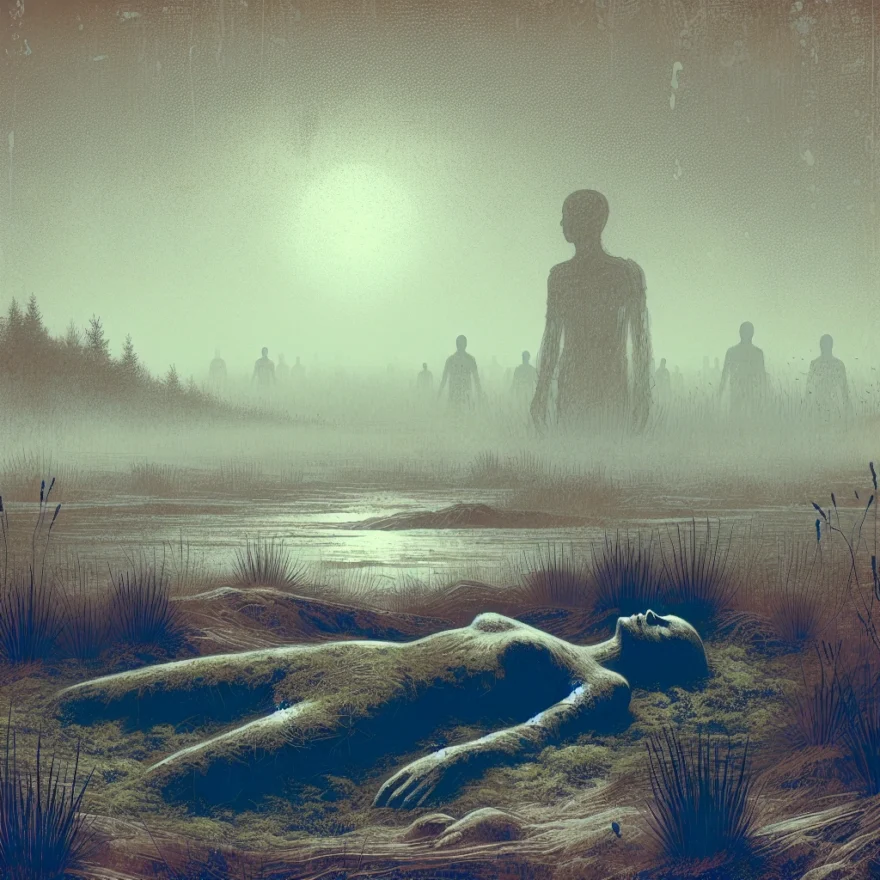
Introduction to the Bog Bodies
Submerged in the sphagnum bogs across Northern Europe, lie some of the world’s most perplexing archaeological finds – the Bog Bodies. These eerily well-preserved human remains, some dating back to 8000 BC, offer a startling glimpse into the past. But their existence is shrouded in mystery, sparking debates among historians, archaeologists, and forensic scientists.
These bodies, often found with skin, hair, and clothing remarkably intact, are not your typical archaeological finds. The unique conditions of the bogs, with their cold, acidic, and oxygen-free environment, act as a natural mummifier, preserving the bodies for thousands of years. The damp, peaty soil halts the process of decay, leaving behind hauntingly detailed remains that allow us to see facial expressions, tattoos, and even the contents of their last meal.
But it’s not just their state of preservation that makes bog bodies fascinating. It’s the stories they carry, the unanswered questions they pose. Who were these people? How did they end up in the bogs? Were they victims of a ritualistic sacrifice or were they murdered? The answers to these questions are not easily found, and the enigma of the bog bodies continues to captivate our curiosity.
The discovery of these bodies has opened a window into the Iron Age and early medieval periods, offering insights into ancient societies’ customs, beliefs, and practices. Yet, they also challenge our understanding of the past, forcing us to reconsider our interpretations of ancient cultures. The bog bodies are indeed an enigma, a puzzle that continues to intrigue us as we delve deeper into their secrets.
Table of contents
The Science of Bog Bodies
Peering into the depths of history, we find a mystery that has puzzled scientists for centuries. They are the bog bodies, human remains naturally mummified within the anaerobic and acidic environment of peat bogs. These bodies offer a unique window into the past, providing us with an astonishing level of detail about our ancestors’ physical appearance, clothing, diet, health, and even their last meals.
How is it possible that these bodies, some of which date back to the Iron Age, are so well preserved? The answer lies in the unique conditions of the peat bogs. These waterlogged environments are low in oxygen, which inhibits the growth of bacteria that cause decay. The cold, acidic water also helps to preserve the bodies, tanning their skin and soft tissues into a leather-like substance. The sphagnum moss that grows in bogs also plays a crucial role in preservation. This moss releases a type of acid that not only helps to preserve the bodies, but also causes the breakdown of DNA, making it difficult for scientists to extract and study the genetic material of these ancient people.
While the preservation of bog bodies is a natural process, it is not a perfect one. Over the centuries, the pressure of the peat can flatten the bodies, and the bones often dissolve due to the acidity of the water. However, the soft tissues, hair, and clothing can remain remarkably intact, allowing us to see the faces of individuals who lived thousands of years ago.
Scientific study of these bodies has evolved over the years. Early ‘bogologists’ relied on basic observation and dissection, but today’s researchers use a variety of sophisticated techniques. Radiocarbon dating is used to determine the age of the bodies, while isotopic analysis of teeth and bones can provide information about diet, migration, and weaning practices. CT scans and X-rays are used to examine internal structures and to identify any signs of disease or injury. Pollen analysis can even give us a glimpse of the environment in which these individuals lived.
Despite the wealth of information that bog bodies can provide, they also present a number of challenges for scientists. The preservation process can distort the bodies, making it difficult to determine cause of death or to identify signs of disease. The breakdown of DNA also makes genetic analysis difficult, although recent advances in technology have made it possible to extract and sequence DNA from some bog bodies, providing new insights into these ancient individuals and their societies.
While the science of bog bodies has come a long way, there is still much to learn. Each new discovery provides a new piece of the puzzle, adding to our understanding of our ancient ancestors and the world in which they lived.
Famous Bog Bodies
The bog bodies have captivated the attention of archaeologists and historians for centuries. These remarkably preserved human remains, dating back thousands of years, provide valuable insights into ancient civilizations and their practices. Among the numerous bog bodies discovered, some have gained significant fame due to their unique characteristics and intriguing stories. Let’s explore some of the most famous bog bodies:
- Tollund Man: Discovered in Denmark in 1950, Tollund Man is one of the most well-known bog bodies. Dating back to the 4th century BCE, his well-preserved body and serene expression have made him an iconic figure. It is believed that Tollund Man was hanged as a sacrificial offering.
- Grauballe Man: Also found in Denmark, Grauballe Man was discovered in 1952. Dating back to the late 3rd century BCE, his body was remarkably preserved, allowing researchers to study his features in great detail. Grauballe Man is believed to have been a victim of a ritualistic sacrifice.
- Lindow Man: Unearthed in England in 1984, Lindow Man is another famous bog body. Dating back to the 1st century CE, his discovery caused a sensation due to the level of preservation and the violent nature of his death. Lindow Man was found with evidence of a severed throat and a blow to the head, suggesting he may have been a victim of murder.
- Old Croghan Man: Found in Ireland in 2003, Old Croghan Man is one of the most well-preserved bog bodies ever discovered. Dating back to the early 4th century BCE, his body was found with extensive injuries, including severed arms and a cut throat. The cause of his death is still debated, with theories ranging from sacrifice to punishment for a crime.
- Yde Girl: Discovered in the Netherlands in 1897, Yde Girl is a unique bog body due to her young age. Dating back to the 1st century BCE, she was only around 16 years old at the time of her death. Yde Girl’s body showed signs of violence, including a slit throat, leading to speculation that she may have been a victim of ritual sacrifice.
These famous bog bodies are just a few examples of the intriguing discoveries made over the years. Each one offers a glimpse into the past and raises questions about the ancient cultures that practiced such rituals or suffered from violent deaths. The study of these bodies continues to provide valuable insights into our history and the mysteries that still surround them.
Theories of Sacrifice
Throughout history, the discovery of bog bodies has sparked intense speculation and debate regarding their purpose and origin. One of the prevailing theories surrounding these ancient remains is that they were sacrificial offerings made by ancient civilizations.
Proponents of the sacrifice theory argue that the meticulous placement of the bodies in the bogs, often accompanied by elaborate rituals and offerings, suggests a religious or ceremonial significance. These individuals believe that the bog bodies were intentionally placed in the peat bogs as offerings to appease gods or spirits, or as part of fertility rituals.
Supporters of this theory point to the fact that many bog bodies exhibit signs of violent deaths, such as broken bones, severed limbs, or evidence of strangulation. They argue that these injuries indicate that the individuals were killed as part of a sacrificial ritual, possibly to ensure a good harvest, success in battle, or to ward off evil spirits.
Additionally, the presence of valuable artifacts found alongside some bog bodies further supports the sacrificial theory. These artifacts, such as weapons, jewelry, or clothing, are believed to have been offerings or symbols of status and importance.
However, it is important to note that the sacrifice theory is not without its critics. Skeptics argue that the evidence is circumstantial and open to interpretation. They propose alternative explanations for the presence of bog bodies, such as accidental deaths, natural disasters, or even murder victims disposed of in the bogs to conceal their crimes.
Some researchers suggest that the placement of the bodies in the bogs may have been a form of punishment or execution, rather than a religious sacrifice. They argue that the bogs served as a natural and effective means of disposing of criminals or enemies, as the acidic and oxygen-deprived environment would preserve the bodies, making it difficult for them to be discovered.
Ultimately, the question of whether bog bodies were ancient sacrifices or unsolved murders remains a mystery. The available evidence offers tantalizing clues but falls short of providing definitive answers. As researchers continue to study these enigmatic remains, new discoveries and advancements in forensic science may shed further light on the true nature and purpose of the bog bodies.
The Unsolved Murders Hypothesis
One of the most intriguing aspects of the bog bodies is the unsolved murders hypothesis. While some experts believe that these ancient corpses were the result of ritualistic sacrifices, others argue that they may have been victims of unsolved murders from the past.
When examining the bog bodies, archaeologists and forensic experts have discovered evidence of violent injuries, such as broken bones, stab wounds, and strangulation marks. These findings have led some to question whether these individuals met their demise through foul play.
One famous example is the Tollund Man, discovered in Denmark in 1950. The Tollund Man was found with a rope around his neck, indicating that he was hanged. This suggests that he may have been the victim of a homicide rather than a sacrifice.
Similarly, the Grauballe Man, also found in Denmark, had his throat slit and his head nearly severed. The severity of his injuries raises suspicions of a violent murder rather than a ritualistic sacrifice.
These cases, along with others like them, have sparked debates among experts. Some argue that the injuries found on the bog bodies are consistent with the methods used in ancient executions, suggesting that they were sacrifices. Others contend that the injuries indicate acts of violence and murder.
Advancements in forensic science have allowed researchers to analyze the bog bodies in greater detail. Through DNA analysis, experts have been able to determine the identities of some of these individuals and even trace their lineage. This has opened up new possibilities for solving these ancient mysteries.
However, it is important to approach the unsolved murders hypothesis with caution. The bog bodies date back thousands of years, and the circumstances surrounding their deaths may never be fully known. Without concrete evidence or eyewitness accounts, it is challenging to definitively conclude whether these individuals were victims of murder or sacrifices.
Nevertheless, the unsolved murders hypothesis adds another layer of intrigue to the enigma of the bog bodies. It raises questions about the violent pasts of these ancient civilizations and the mysteries that still surround them.
Bog Bodies and Forensic Science
One of the most fascinating aspects of the bog bodies is the intersection between archaeology and forensic science. These ancient remains have provided valuable insights into the lives and deaths of people who lived thousands of years ago.
Forensic science techniques have played a crucial role in analyzing the bog bodies and unraveling the mysteries surrounding their deaths. Through the use of advanced technologies and meticulous examination, scientists have been able to piece together information about the individuals’ age, gender, cause of death, and even their last meals.
One of the key techniques used in studying bog bodies is radiocarbon dating. By analyzing the levels of carbon-14 in the remains, scientists can determine the approximate age of the bodies. This helps establish the timeline and historical context of these ancient individuals.
In addition to dating the remains, forensic scientists also employ various methods to determine the cause of death. Autopsies and CT scans allow them to examine the bodies in detail, looking for signs of trauma, injuries, or any other evidence that may shed light on how these individuals met their fate.
Interestingly, the bog’s unique conditions often preserve the bodies so well that even soft tissues and internal organs are intact. This exceptional preservation allows scientists to conduct detailed analyses, such as examining the stomach contents to determine the person’s last meal or using DNA analysis to identify genetic markers and potential familial relationships.
Forensic scientists also study the bog’s environment to understand how it contributes to the preservation of the bodies. The acidic, oxygen-deprived conditions of the bogs create an environment that hinders decomposition and acts as a natural preservative. This knowledge helps explain why the bog bodies have survived for thousands of years.
By combining archaeological findings with forensic techniques, researchers have been able to gain a deeper understanding of the bog bodies and the circumstances surrounding their deaths. This multidisciplinary approach has allowed them to reconstruct the lives of these ancient individuals and shed light on the societies in which they lived.
Furthermore, the collaboration between archaeologists and forensic scientists has led to advancements in both fields. The study of bog bodies has provided valuable insights into forensic anthropology, taphonomy (the study of how organisms decay and fossilize), and the preservation of human remains.
Overall, the use of forensic science in studying bog bodies has not only helped unravel the mysteries surrounding these ancient remains but has also contributed to our understanding of human history, ancient cultures, and the science of death investigation. It showcases the power of interdisciplinary research and the importance of applying modern techniques to unravel the enigmas of the past.
Ancient Cultures and the Bog Bodies
The discovery of bog bodies has provided valuable insights into the ancient cultures that existed thousands of years ago. These well-preserved remains have allowed archaeologists and historians to learn more about the rituals, beliefs, and practices of these ancient civilizations.
One of the most fascinating aspects of the bog bodies is their connection to ancient cultures. These bodies have been found in various regions across Europe, including Ireland, Denmark, Germany, and the Netherlands. Each of these regions had its own distinct culture and religious beliefs, which are reflected in the way the bodies were treated and buried.
For example, in Ireland, the bog bodies are believed to be associated with the ancient Celtic culture. The Celts had a deep reverence for nature and believed that bogs were sacred places. It is speculated that the bodies found in Irish bogs were likely sacrifices to appease the gods or to serve as offerings for fertility and prosperity.
In Denmark, the bog bodies are closely linked to the Iron Age culture. The Iron Age people believed in a complex system of gods and goddesses and practiced various rituals and sacrifices. The bodies found in Danish bogs are often accompanied by artifacts such as weapons, jewelry, and clothing, suggesting that they were important individuals within their society.
Similarly, in Germany and the Netherlands, the bog bodies are associated with the ancient Germanic tribes. These tribes had their own unique religious beliefs and rituals, which involved offerings and sacrifices to the gods. The bodies found in these regions often show signs of violent deaths, leading to theories that they could have been victims of human sacrifice or executions.
Studying the ancient cultures in relation to the bog bodies has also shed light on the social structures and power dynamics of these societies. The presence of high-status individuals among the bog bodies suggests that there was a hierarchical system in place, where certain individuals held significant positions of authority.
Furthermore, the careful preservation and burial of the bog bodies indicate a deep respect for the deceased and a belief in an afterlife. The fact that these bodies were placed in bogs, which were considered sacred and liminal spaces, suggests a belief in the transformative power of the bog environment.
Overall, the discovery of bog bodies has provided valuable insights into the ancient cultures that existed thousands of years ago. Through the study of these well-preserved remains, we have been able to unravel the beliefs, rituals, and social structures of these ancient civilizations, shedding light on the enigma of the bog bodies.
Controversies and Ethical Considerations
One of the most intriguing aspects of the bog bodies is the controversies and ethical considerations surrounding their study and display. These issues arise due to the unique nature of the bog bodies as both archaeological artifacts and human remains. Let’s explore some of the key controversies and ethical considerations associated with the bog bodies:
1. Ownership and Repatriation:
One major controversy surrounding the bog bodies is the question of ownership and repatriation. Many of these bodies were discovered in modern-day countries such as Ireland, Denmark, and the Netherlands. As a result, there are debates about whether these remains should be returned to the local communities or kept in museums for scientific study and public display.
2. Display and Sensationalism:
The public display of the bog bodies has also sparked controversy. Some argue that the exhibition of these ancient remains can be seen as sensationalizing violence and death, turning them into mere spectacles for entertainment. Others argue that displaying the bog bodies can educate the public about our shared history and the mysteries of the past.
3. Destructive Analysis:
In order to learn more about the bog bodies, scientists have conducted various analyses, including DNA testing, radiocarbon dating, and detailed forensic examinations. However, these studies often require destructive sampling, which raises ethical concerns. Balancing the need for scientific knowledge with the preservation of these unique archaeological finds is a delicate matter.
4. Cultural Sensitivity:
Another ethical consideration is the need for cultural sensitivity when studying the bog bodies. These remains are often associated with ancient religious or ritual practices, and it is important to approach their analysis and interpretation with respect for the beliefs and traditions of the cultures that created them.
5. Conservation and Preservation:
Preserving the bog bodies for future generations is a challenging task. The unique conditions of the bogs that preserved these remains can also cause rapid deterioration once exposed to the air. Finding the balance between scientific investigation and long-term preservation is crucial to ensure the continued study and understanding of the bog bodies.
Overall, the controversies and ethical considerations surrounding the bog bodies highlight the complex nature of studying ancient human remains. Balancing scientific inquiry, cultural sensitivity, and preservation is essential in order to unravel the mysteries of these enigmatic figures from the past.
Common Questions about Bog Bodies
Common Questions about Bog Bodies
As the enigma of the bog bodies continues to captivate the imaginations of people around the world, it is natural for numerous questions to arise. Here are some common questions that often come up:
1. How were the bog bodies preserved for so long?
The unique preservation of bog bodies can be attributed to the anaerobic, acidic, and waterlogged conditions of the bogs. These conditions create a chemical reaction that slows down the decomposition process, allowing the bodies to be remarkably well-preserved for thousands of years.
2. How were the bog bodies discovered?
Bog bodies have been discovered in various ways, including by peat cutters, archaeologists, and even accidental encounters by hikers or farmers. The bodies are often found buried deep within the peat, and their discovery can be quite unexpected.
3. How old are the bog bodies?
The age of bog bodies varies, with some dating back as far as 8,000 years. However, the majority of bog bodies are believed to be from the Iron Age, around 2,500 to 2,000 years ago.
4. Why were the bog bodies killed?
The exact reasons for the deaths of the bog bodies remain uncertain. While some theories suggest they were victims of ritual sacrifices or executions, others propose that they may have been victims of violent crimes. The true motivations behind their deaths continue to be debated among researchers.
5. Were all bog bodies sacrifices?
While some bog bodies are believed to have been sacrificial offerings, not all bodies found in bogs were necessarily sacrifices. Some individuals may have ended up in the bogs due to accidental deaths, natural disasters, or even murders.
6. Can we determine the cause of death?
Forensic techniques have advanced significantly in recent years, allowing researchers to gain insights into the cause of death for some bog bodies. However, due to the limited evidence and the challenging preservation conditions, determining the exact cause of death for all bog bodies remains a complex task.
7. Are there any female bog bodies?
Yes, there have been several female bog bodies discovered. While the majority of bog bodies are male, there are notable examples of female remains, such as the famous Tollund Woman and the Grauballe Man’s possible female counterpart, the Elling Woman.
8. What can bog bodies tell us about ancient cultures?
Bog bodies provide valuable insights into the beliefs, rituals, and practices of ancient cultures. They offer clues about their clothing, hairstyles, diet, and even the weapons or tools they used. By studying bog bodies, archaeologists can gain a deeper understanding of the past.
9. Are there any ethical concerns surrounding the study of bog bodies?
There are ethical considerations when it comes to studying bog bodies, particularly regarding the display and treatment of human remains. Balancing the scientific value of the research with respect for the deceased and the cultural sensitivities of modern communities is an ongoing challenge.
10. Can we expect more discoveries of bog bodies in the future?
Given the vast number of bogs around the world, it is highly likely that more bog bodies will be discovered in the future. As technology and research methods continue to advance, these discoveries may provide us with even greater insights into the mysteries surrounding the bog bodies.