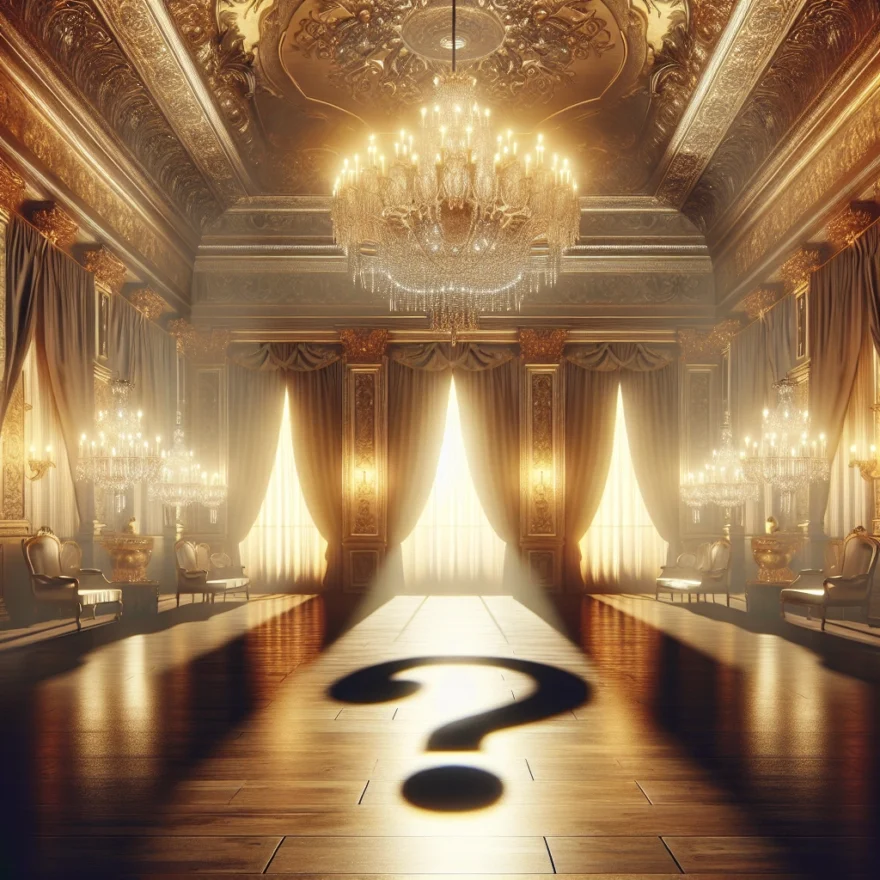
The Majestic Amber Room: A Brief History
Known as the “Eighth Wonder of the World,” the Amber Room was a world-renowned masterpiece of baroque art. Its construction started in 1701 in Prussia. The room was initially intended for the Charlottenburg Palace, home of Friedrich I, the first King of Prussia. However, it was later installed in Berlin’s City Palace.
The Amber Room was truly a sight to behold. It was a magnificent chamber decorated with over six tons of amber panels backed with gold leaf and mirrors. The amber, which took on a variety of warm, golden hues, was arranged in three-dimensional patterns, creating an awe-inspiring spectacle that shimmered in the candlelight. The room was adorned with gilded moldings, mosaics of semi-precious stones, and wall panels inlaid with amber. The entire room covered more than 590 square feet and contained over 13,000 pounds of amber.
In 1716, the Amber Room was given by Prussian King Friedrich Wilhelm I to his then ally, Tsar Peter the Great of Russia, as a symbol of their alliance. It was moved several times before it found its home in the Catherine Palace of Tsarskoye Selo near Saint Petersburg. Over the next century, the Amber Room underwent several renovations to enhance its splendor.
During World War II, the Amber Room was targeted by the Nazi regime. Despite efforts to hide the room behind mundane wallpaper, German soldiers, led by two experts in art crime, discovered and dismantled the Amber Room in just 36 hours. The panels were packed into 27 crates and shipped to Königsberg in Germany, where they were displayed in the city’s castle.
However, as the war progressed and it became apparent that Germany might lose, the Amber Room was dismantled and packed away, disappearing from the public eye. Its fate remains one of the most enduring mysteries of World War II, captivating historians, treasure hunters, and art lovers alike.
Table of contents
The Disappearance of the Amber Room
As World War II raged across Europe, the Amber Room did not escape its destructive path. The room, once a symbol of peace and artistic brilliance, became a casualty of the war’s devastating effects. In 1941, when the German Army invaded the Soviet Union, the curators at the Catherine Palace attempted to disassemble and hide the Amber Room. However, the amber had become brittle over time and when they tried to remove it, it began to crumble. Left with no choice, the curators attempted to hide the room behind mundane wallpaper.
Despite their best efforts, the German soldiers discovered the hidden treasure. Under the orders of their superiors, they dismantled the Amber Room within 36 hours. The panels were packed into 27 crates and transported to Königsberg in Germany (now Kaliningrad, Russia), where they were displayed in the city’s castle. In 1943, with the Allied bombing campaign intensifying and the tide of war turning, the Amber Room was packed away, presumably for protection.
However, in 1945, Königsberg was heavily bombed by the Allies and subsequently captured by the Soviet Army. The castle where the Amber Room had been displayed was severely damaged, but some sections remained intact. When the dust settled, the Soviets began their search for the Amber Room, but it was nowhere to be found. The crates that once held the precious panels had vanished, leaving behind only a mystery. The Amber Room, often referred to as the ‘Eighth Wonder of the World’, had disappeared without a trace.
The disappearance of the Amber Room remains one of the greatest unsolved mysteries of the Second World War. Despite numerous investigations and extensive searches, the Amber Room has never been recovered. Its disappearance has sparked a multitude of theories, ranging from its destruction during the bombing of Königsberg to its secret preservation in a hidden location. The uncertainty surrounding its fate has only added to the Amber Room’s legendary status as a lost masterpiece.
Theories Surrounding the Amber Room’s Disappearance
Throughout history, the mysterious disappearance of the Amber Room has given rise to numerous theories and speculations. The enigma surrounding its vanishing has captivated the minds of treasure hunters, historians, and conspiracy theorists alike. Let’s delve into some of the most intriguing theories surrounding the Amber Room’s disappearance:
Nazi Plunder Theory: One of the prevailing theories suggests that the Amber Room was looted by the Nazis during World War II. As the German army advanced into Soviet territory, they allegedly dismantled the room and transported it to a secret location, possibly in Germany. Some believe that Adolf Hitler intended to display the Amber Room in his planned Führermuseum in Linz, Austria.
Hidden in a Bunker: Another theory proposes that the Amber Room was hidden in a secret bunker to protect it from destruction during the war. According to this theory, the room was concealed in a remote location, possibly in the depths of a mountain or underground complex. It is speculated that the Soviet government, aware of the impending German invasion, took precautionary measures to safeguard the priceless treasure.
Lost at Sea: There is a theory that suggests the Amber Room was loaded onto a ship and transported across the Baltic Sea. However, due to the chaotic nature of the war, the ship may have been sunk or lost, resulting in the Amber Room being forever lost at the bottom of the sea. This theory is supported by reports of German naval activity in the Baltic Sea during the final stages of the war.
Destroyed in Allied Bombings: Some believe that the Amber Room was destroyed during Allied bombings of the city of Königsberg (now Kaliningrad) in 1944. The city, which was the original location of the Amber Room, suffered extensive damage during the war. It is possible that the room was consumed by fire or buried under the rubble, making its recovery nearly impossible.
Smuggled to a Secret Location: This theory suggests that the Amber Room was smuggled out of Königsberg before the bombings and transported to a secret location. It is speculated that individuals or organizations with knowledge of the impending destruction orchestrated a covert operation to preserve the treasure. The exact whereabouts of this alleged secret location remain unknown.
Hidden in a Russian Castle: Some theorists believe that the Amber Room was hidden in a Russian castle or palace to protect it from the advancing German army. According to this theory, the room was carefully concealed within the walls or floors of a prominent Russian estate. However, despite extensive searches and excavations, no concrete evidence has been found to support this claim.
These are just a few of the many theories that have emerged over the years regarding the disappearance of the Amber Room. While each theory presents its own compelling narrative, the truth behind the room’s fate remains elusive. The mystery continues to captivate the imagination of treasure hunters and historians, fueling the ongoing search for this lost masterpiece.
The Replication of the Amber Room
The Amber Room, renowned for its exquisite beauty, has captivated the world for centuries. Despite its mysterious disappearance, efforts have been made to replicate this masterpiece, allowing future generations to experience its grandeur. The replication of the Amber Room is a testament to its enduring legacy and the fascination it continues to inspire.
Artisans and craftsmen have dedicated themselves to recreating the Amber Room, meticulously studying historical records, photographs, and surviving fragments. While it is impossible to replicate the exact original, these skilled individuals have strived to capture the essence of its splendor.
The process of replicating the Amber Room involves careful selection of high-quality amber, which is then meticulously carved and polished to mimic the intricate designs of the original. Skilled artisans work tirelessly to recreate the room’s ornate panels, amber mosaics, and gilded decorations.
One of the most challenging aspects of replicating the Amber Room is recreating its unique lighting effects. The original room was illuminated by hidden candles, creating a warm and ethereal glow. Modern replicas often incorporate innovative lighting techniques to recreate this magical ambiance.
Replicas of the Amber Room can be found in various museums and exhibitions around the world, allowing visitors to marvel at its beauty and immerse themselves in its rich history. These recreations serve as a testament to the enduring allure of the Amber Room and the ongoing quest to unravel its mysteries.
While the replicas may not possess the same historical significance as the original, they provide an opportunity for art enthusiasts and history lovers to experience a glimpse of the Amber Room’s opulence and grandeur.
It is important to note that the replicas serve as a tribute to the lost masterpiece, rather than a replacement for the original. The search for the authentic Amber Room continues, and efforts are still underway to uncover its whereabouts.
Whether lost forever or hidden away, the Amber Room remains an enigma, captivating the imagination of treasure hunters, historians, and art enthusiasts alike. The replicas offer a tangible connection to this elusive masterpiece, allowing us to appreciate its beauty and keep the legend of the Amber Room alive.
The Ongoing Search for the Amber Room
The search for the Amber Room has been ongoing for decades, captivating the imaginations of treasure hunters, historians, and enthusiasts alike. Despite its disappearance during World War II, countless efforts have been made to locate and recover this legendary masterpiece.
One of the primary challenges in the search for the Amber Room is the lack of concrete evidence or reliable leads. The circumstances surrounding its disappearance remain shrouded in mystery, leaving investigators with little to go on. However, this has not deterred those who are determined to unravel the truth.
Over the years, numerous expeditions and investigations have been conducted in various locations across Europe. Some have focused on historical records and eyewitness accounts, while others have relied on advanced technology and scientific methods to aid in the search.
One popular theory suggests that the Amber Room was hidden or secreted away by the Nazis towards the end of the war. This theory is supported by reports of German soldiers being seen transporting large crates, potentially containing the dismantled Amber Room, in the final days of the conflict. As a result, many search efforts have concentrated on former Nazi strongholds and underground bunkers.
Another line of inquiry revolves around the possibility that the Amber Room was smuggled out of Germany and hidden in a different country. This theory is fueled by rumors of clandestine deals and the involvement of various international networks. Some believe that the treasure may have ended up in Russia, Poland, or even as far as South America.
Despite the numerous leads and theories, the search for the Amber Room has yet to yield definitive results. The sheer scale of the operation, spanning multiple countries and involving complex historical and political dynamics, adds to the complexity of the search.
However, the quest for the Amber Room continues to inspire hope and intrigue. The allure of discovering a lost treasure of such historical and cultural significance is a driving force for many dedicated individuals and organizations.
Today, advancements in technology, such as ground-penetrating radar and satellite imaging, offer new possibilities for locating hidden chambers or underground structures. These tools, combined with the relentless determination of treasure hunters and researchers, provide a glimmer of hope that the Amber Room may one day be found.
In recent years, there have been reported sightings and alleged discoveries of the Amber Room, but none have been substantiated. Despite the setbacks and false leads, the ongoing search for the Amber Room remains a testament to the enduring fascination with this enigmatic masterpiece.
As long as the mystery of the Amber Room remains unsolved, the search will persist. The allure of lost treasure, coupled with the historical and cultural significance of the Amber Room, ensures that the quest for its recovery will continue to captivate the hearts and minds of people around the world.
Common Questions About the Amber Room
Throughout history, the mysterious disappearance of the Amber Room has left many people with lingering questions. Here are some common questions and answers about this enigmatic treasure:
1. What is the Amber Room?
The Amber Room was a magnificent chamber decorated with panels of amber, gold leaf, and mirrors. It was originally constructed in the 18th century in the Catherine Palace of Tsarskoye Selo near St. Petersburg, Russia.
2. How did the Amber Room disappear?
The Amber Room was looted and taken by the German army during World War II. It was dismantled, packed into crates, and transported to Königsberg Castle in what is now Kaliningrad, Russia. After that, its whereabouts remain unknown.
3. Was the Amber Room destroyed?
There is no definitive evidence to suggest that the Amber Room was destroyed. While some speculate that it was destroyed during the war, others believe it may still exist and be hidden away somewhere.
4. What are some theories about the Amber Room’s disappearance?
There are several theories surrounding the fate of the Amber Room. Some believe it was destroyed in the bombing of Königsberg Castle, while others think it was hidden by the Nazis or even smuggled out of the country.
5. Has the Amber Room ever been found?
No, the Amber Room has never been found. Despite numerous searches and investigations, its location remains a mystery.
6. Could the Amber Room still be intact?
It is possible that the Amber Room could still be intact. Amber is a durable material, and if properly preserved, it could have survived the test of time.
7. Has any replica of the Amber Room been created?
Yes, a replica of the Amber Room has been created and is on display in the Catherine Palace in Russia. The replica was painstakingly reconstructed using historical photographs and descriptions.
8. Why is the Amber Room so significant?
The Amber Room is significant not only for its stunning beauty but also for its historical and cultural value. It represents a unique blend of art, craftsmanship, and history.
9. Are there any ongoing efforts to find the Amber Room?
Yes, there are ongoing efforts to find the Amber Room. Treasure hunters, historians, and researchers continue to search for clues and investigate leads in the hopes of unraveling the mystery of its disappearance.
10. Could the Amber Room ever be found?
While the chances of finding the Amber Room may seem slim, history has shown that remarkable discoveries can be made even after many years. It is possible that one day the Amber Room will be located, bringing an end to its enduring mystery.