Introduction to Gobekli Tepe
Nestled in the southeastern region of modern-day Turkey, Gobekli Tepe rises mysteriously from the rugged landscape, captivating the imagination of archaeologists, historians, and enthusiasts of the unexplained. This ancient site, whose name translates to “Potbelly Hill” in Turkish, is considered to be one of the world’s oldest known megalithic structures, predating Stonehenge by a staggering 6,000 years.
Discovered in 1963 during a survey conducted by Istanbul University and the University of Chicago, Gobekli Tepe remained largely ignored until German archaeologist Klaus Schmidt took interest in the mid-90s. His extensive excavations revealed an intriguing complex of massive stone pillars arranged in circles, a sight that would challenge conventional theories about the rise of civilization.
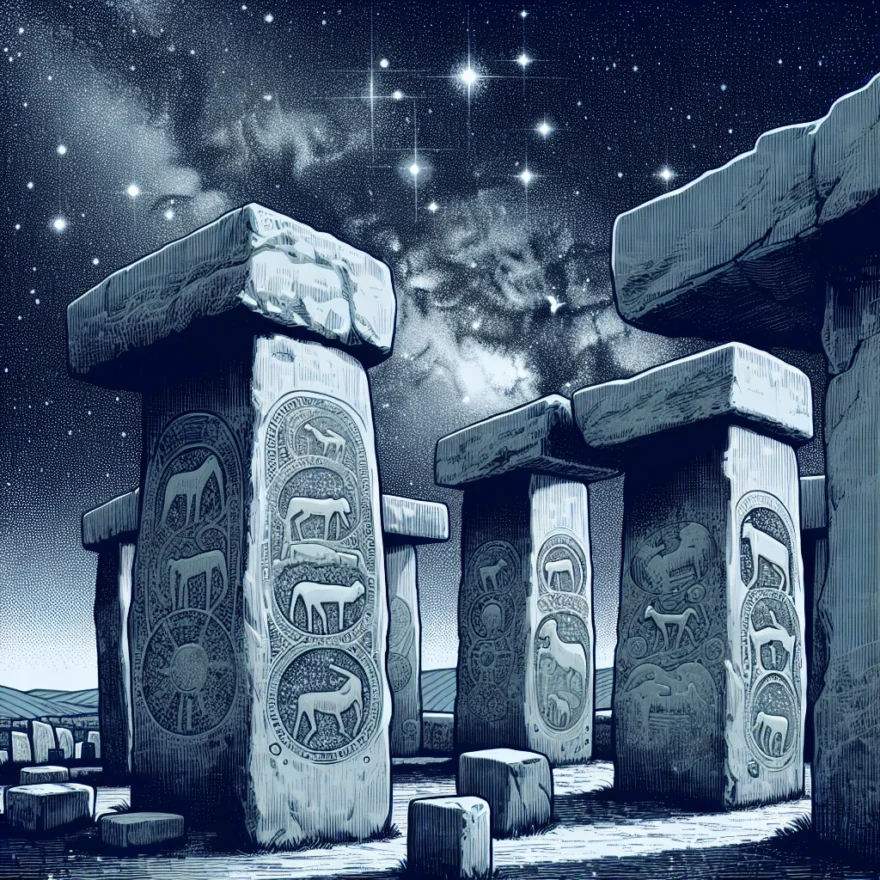
The mystery of Gobekli Tepe lies not only in its age, which is estimated to be around 12,000 years old, but also in the sophistication of its construction. The site is filled with massive T-shaped stone pillars, some reaching up to 20 feet in height and weighing up to 10 tons. Intricately carved with a variety of animal motifs, these pillars are thought to have been erected without the use of metal tools or the wheel, a feat that leaves many baffled.
The enigma deepens when considering the purpose of Gobekli Tepe. Unlike other ancient sites, it does not appear to have been a settlement. There are no signs of habitation, such as houses, hearths, or trash pits. Instead, it seems to have been a place of gathering, a ceremonial site of some sort, but its exact purpose remains shrouded in mystery.
As we delve deeper into the enigma of Gobekli Tepe, we will explore its historical significance, marvel at its architectural prowess, and ponder over its possible function. We will also investigate the intriguing theory of extraterrestrial involvement and the skepticism surrounding it. Join us on this fascinating journey into the past, as we unravel the mysteries of Gobekli Tepe.
Table of contents
- Introduction to Gobekli Tepe
- The Historical Significance of Gobekli Tepe
- The Architectural Marvel of Gobekli Tepe
- Gobekli Tepe: A Temple or a Calendar?
- The Alien Theory: Extraterrestrial Involvement at Gobekli Tepe
- Skeptics’ View: Debunking the Alien Theory
- The Role of Gobekli Tepe in Popular Culture
- The Future of Gobekli Tepe
- Common Questions About Gobekli Tepe
The Historical Significance of Gobekli Tepe
Unearthed in the late 20th century, Gobekli Tepe has challenged and redefined our understanding of the ancient world. Located in present-day Turkey, this archaeological site dates back to approximately 9600 to 7300 B.C., making it older than the famed Stonehenge and the Great Pyramids of Egypt. Gobekli Tepe, which translates to “Potbelly Hill,” is considered the world’s oldest known temple, predating the advent of metallurgy, pottery, and the invention of writing.
Constructed during the Pre-Pottery Neolithic period, Gobekli Tepe is a testament to the capabilities of hunter-gatherer societies, contradicting the long-standing belief that large-scale monuments could only be built by complex, agrarian societies. This site, therefore, poses a significant question: How could hunter-gatherers, who were primarily concerned with survival, construct such an elaborate and massive structure?
Moreover, the site’s location adds to its historical significance. It’s situated in the Fertile Crescent, often referred to as the “Cradle of Civilization.” This region is known for its rich, fertile soil and was the birthplace of various technological advancements and societal structures, including agriculture, writing, and the wheel.
The discovery of Gobekli Tepe has prompted archaeologists and historians to reconsider the timeline of social development. The intricate carvings on the T-shaped pillars, depicting a variety of animals and abstract symbols, indicate a level of sophistication and a symbolic world that was previously thought to be beyond the capabilities of hunter-gatherer societies.
Furthermore, the intentional burial of Gobekli Tepe adds another layer of intrigue to its historical significance. Around 8200 B.C., for reasons unknown, the site was deliberately covered with soil, preserving it in a time capsule for millennia. This act suggests a level of societal organization and collective effort that challenges our understanding of early human societies.
In conclusion, the historical significance of Gobekli Tepe lies in its age, location, and the questions it raises about early human societies. Its discovery has forced us to reconsider the narrative of human history, blurring the lines between the hunter-gatherers of old and the architects of the ancient world.
The Architectural Marvel of Gobekli Tepe
Nestled in the southeastern Anatolia region of modern-day Turkey, Gobekli Tepe stands as a testament to the architectural marvels of our ancient ancestors. This archaeological site, dating back over 12,000 years, has captivated researchers and historians alike, raising numerous questions about its purpose and significance.
The most striking feature of Gobekli Tepe is its monumental stone pillars, some of which reach heights of up to 18 feet. These pillars are intricately carved with detailed reliefs of animals, including foxes, snakes, and birds. The precision and craftsmanship displayed in these carvings are astounding, considering the tools and technology available during that era.
The arrangement of the pillars also adds to the architectural wonder of Gobekli Tepe. They are arranged in circular formations, forming several enclosures within the site. Each enclosure consists of multiple pillars, often arranged in pairs, with a larger central pillar known as a monolith. The purpose behind this specific arrangement remains a subject of debate among researchers.
Another intriguing aspect of Gobekli Tepe’s architecture is the presence of T-shaped pillars. These pillars, with a distinct T-shape when viewed from the side, are believed to have served a symbolic or ritualistic purpose. Some researchers speculate that they may represent human figures or even ancient deities, while others suggest they could be markers for celestial events.
The construction techniques employed at Gobekli Tepe are also remarkable. The massive stone pillars were carved from local limestone and transported to the site from nearby quarries. The precision in fitting the pillars together without the use of mortar is a testament to the skill and knowledge possessed by the ancient builders.
The intricate carvings, the circular enclosures, and the T-shaped pillars all contribute to the architectural marvel that is Gobekli Tepe. The site’s construction and design reflect a level of sophistication and planning that challenges our understanding of early human civilizations. It is a testament to the ingenuity and creativity of our ancient ancestors, who were capable of creating structures that continue to astound us to this day.
Gobekli Tepe: A Temple or a Calendar?
The ancient site of Gobekli Tepe has long fascinated archaeologists and historians due to its remarkable structures and intricate carvings. One of the biggest mysteries surrounding Gobekli Tepe is whether it was primarily a temple or a calendar.
At first glance, the massive stone pillars and intricate reliefs found at Gobekli Tepe do resemble a temple complex. The structures, dating back over 11,000 years, consist of circular enclosures with multiple pillars arranged in a concentric pattern. These pillars, some standing over 16 feet tall and weighing several tons, are adorned with detailed carvings of animals, including lions, snakes, and birds.
Many researchers believe that these carvings and the overall design of Gobekli Tepe suggest a religious or ceremonial purpose. They argue that the site was used for rituals and gatherings, possibly as a place of worship or a sacred space for ancient communities.
However, another intriguing theory suggests that Gobekli Tepe was actually a sophisticated calendar. This theory is based on the alignment of the stone pillars with celestial events, such as solstices and equinoxes. Some researchers argue that the positioning of the pillars and the carvings on them represent astronomical symbols and markers.
According to this theory, Gobekli Tepe could have served as an ancient observatory, allowing early humans to track the movements of celestial bodies and mark important dates in the agricultural calendar. The site’s location on a hilltop also provides a clear vantage point for observing the sky.
While the debate between the temple and calendar theories continues, it is important to note that Gobekli Tepe could have served multiple purposes. It is possible that the site was both a religious center and a place for astronomical observations.
Further research and excavations at Gobekli Tepe may provide more insights into its true function. As more evidence is uncovered, archaeologists and scientists will continue to piece together the puzzle of this enigmatic site, shedding light on the ancient civilizations that once thrived there.
The Alien Theory: Extraterrestrial Involvement at Gobekli Tepe
As we delve deeper into the mysteries of Gobekli Tepe, one theory that has captured the imaginations of many is the idea of extraterrestrial involvement. Some enthusiasts believe that the advanced architectural design and intricate carvings found at the site could not have been accomplished by ancient humans alone. They argue that Gobekli Tepe may have been a landing site or a communication hub for ancient aliens.
Proponents of the alien theory point to several intriguing aspects of Gobekli Tepe. One of the most compelling is the sheer sophistication of the structures. The precise alignment of the massive stone pillars and the intricate carvings of animals and symbols suggest a level of craftsmanship beyond what would be expected from a primitive society. Some even argue that the depictions on the pillars resemble extraterrestrial beings or spacecraft.
Another aspect that fuels the alien theory is the sheer age of Gobekli Tepe. The site is estimated to be over 12,000 years old, predating the invention of agriculture and the rise of civilization as we know it. This has led some to speculate that advanced beings from other worlds may have visited Earth during this time and played a role in the construction of Gobekli Tepe.
Furthermore, the alignment of the pillars at Gobekli Tepe with certain astronomical events has also been cited as evidence of extraterrestrial involvement. Some argue that the site was intentionally designed as an astronomical observatory, potentially for the purpose of communicating with beings from other planets.
While the alien theory certainly captures the imagination, it is important to approach it with a critical mindset. Skeptics argue that the advanced architecture and carvings at Gobekli Tepe can be attributed to the ingenuity and creativity of ancient humans. They point to other ancient sites, such as Stonehenge, which also exhibit remarkable construction techniques without the need for extraterrestrial intervention.
Additionally, the lack of concrete evidence linking Gobekli Tepe to aliens raises doubts about the validity of the theory. Although the carvings may resemble otherworldly beings, they could also be symbolic representations or artistic expressions of the ancient culture that built the site.
It is also worth noting that the alien theory surrounding Gobekli Tepe is not widely accepted by mainstream archaeologists and historians. The majority of experts attribute the site’s construction to early human civilizations and view it as a significant milestone in the development of complex societies.
Nevertheless, the alien theory continues to fascinate many, and it has found a place in popular culture. Books, documentaries, and even movies have explored the idea of ancient aliens influencing human history, with Gobekli Tepe often featuring prominently in these narratives.
As we continue to uncover more about Gobekli Tepe through ongoing research and excavations, it is essential to keep an open mind while critically evaluating the evidence. While the alien theory adds an intriguing layer to the enigma of Gobekli Tepe, it is essential to approach it with caution and consider alternative explanations based on scientific evidence.
Skeptics’ View: Debunking the Alien Theory
While the idea of extraterrestrial involvement at Gobekli Tepe may capture the imagination of some, skeptics argue that there is no concrete evidence to support such claims. They propose alternative explanations for the enigmatic site, debunking the alien theory. Here are some of the key arguments put forth by skeptics:
Lack of Physical Evidence
One of the primary reasons skeptics dismiss the alien theory is the lack of physical evidence. No artifacts, writings, or depictions found at Gobekli Tepe directly point to extraterrestrial involvement. The absence of any clear indications of advanced technology or non-human entities suggests that the construction of the site was a human endeavor.
Human Capabilities
Skeptics argue that ancient humans possessed the necessary knowledge and skills to build structures like Gobekli Tepe without the need for extraterrestrial assistance. They suggest that humans, driven by their innate curiosity and ingenuity, were capable of creating such architectural marvels using simple tools and techniques that have been lost to time.
Symbolism and Spirituality
Another perspective put forth by skeptics is that Gobekli Tepe was primarily a religious or spiritual site, rather than an alien landing site. They argue that the intricate carvings and symbols found on the stone pillars at the site are consistent with ancient religious practices and belief systems. The presence of animal depictions and the emphasis on hunting rituals suggest a connection to early agricultural societies.
Historical Context
Skeptics emphasize the importance of considering the historical context in which Gobekli Tepe was built. The site dates back to a time when humans were transitioning from hunter-gatherer societies to settled agricultural communities. It is believed that the construction of Gobekli Tepe was a significant milestone in this transition, representing the emergence of complex social structures and organized religion.
Archaeological Consensus
It is worth noting that the majority of archaeologists and experts in the field do not support the alien theory. The prevailing consensus among professionals is that Gobekli Tepe was a human-built structure with deep cultural and historical significance. The site is seen as a testament to the remarkable capabilities and achievements of our ancient ancestors.
While the alien theory may continue to intrigue some, skeptics argue that a closer examination of the evidence and a consideration of the broader historical context provide more plausible explanations for the mysteries surrounding Gobekli Tepe.
The Role of Gobekli Tepe in Popular Culture
Throughout the years, Gobekli Tepe has captured the imagination of people around the world, leading to its prominent role in popular culture. This ancient archaeological site has been featured in various forms of media, including books, documentaries, and even video games.
One of the ways Gobekli Tepe has made its mark in popular culture is through literature. Many authors have been inspired by the mystery and intrigue surrounding the site, incorporating it into their novels. From historical fiction to science fiction, Gobekli Tepe has become a backdrop for thrilling adventures and mind-bending theories.
Documentaries have also played a significant role in bringing Gobekli Tepe to the forefront of popular culture. These films explore the history, significance, and possible interpretations of the site, captivating viewers with stunning visuals and expert insights. Through these documentaries, Gobekli Tepe has reached a wider audience, sparking curiosity and fascination.
In addition to literature and documentaries, Gobekli Tepe has found its way into the world of video games. Some game developers have integrated the site into their narratives, allowing players to explore and uncover the mysteries of Gobekli Tepe firsthand. These virtual experiences provide a unique opportunity to engage with the ancient site in an interactive and immersive way.
Furthermore, Gobekli Tepe has become a popular topic of discussion in online forums, conspiracy theories, and alternative history communities. The enigmatic nature of the site has given rise to numerous speculations and debates, fueling the interest of those who are intrigued by ancient mysteries and unconventional theories.
As Gobekli Tepe continues to captivate the world, its role in popular culture is likely to expand. Whether it’s through new books, documentaries, or even further integration into entertainment mediums, the site will undoubtedly remain a fascinating subject for years to come.
The Future of Gobekli Tepe
As we delve into the enigma of Gobekli Tepe, it becomes evident that this ancient site holds many secrets yet to be unraveled. While we have made significant discoveries and gained valuable insights into its historical significance and architectural marvel, the future of Gobekli Tepe remains uncertain.
One of the main challenges in preserving and studying Gobekli Tepe lies in its exposure to the elements. The site is susceptible to erosion, and efforts are being made to protect and conserve the ancient structures. As technology advances, new methods may be developed to better safeguard the site and its delicate carvings from further deterioration.
Another aspect of the future of Gobekli Tepe lies in ongoing archaeological research. Excavations have been carried out intermittently since its discovery, and it is likely that further discoveries will be made in the coming years. These findings could shed more light on the purpose and significance of the site, providing us with a deeper understanding of the ancient civilization that built it.
Additionally, the study of Gobekli Tepe continues to attract the attention of scholars, researchers, and enthusiasts from around the world. The site’s mysterious nature and its potential to rewrite our understanding of human history make it a focal point for ongoing research and exploration. This interest ensures that Gobekli Tepe will remain a subject of study for years to come.
Furthermore, the future of Gobekli Tepe is closely tied to its role in tourism and cultural heritage. As more people become aware of its significance, the site has the potential to attract a growing number of visitors. This influx of tourism can provide the necessary resources for further preservation efforts and facilitate the sharing of knowledge about this ancient wonder.
It is important to note that the future of Gobekli Tepe is not solely dependent on its archaeological and historical value. The site has also captured the imagination of popular culture, appearing in books, documentaries, and even video games. This continued exposure in various media forms ensures that Gobekli Tepe will remain a topic of fascination and intrigue for years to come.
In conclusion, the future of Gobekli Tepe holds both challenges and opportunities. As we strive to protect and understand this ancient marvel, advancements in technology, ongoing research, and increased tourism can all contribute to unraveling the mysteries that surround this extraordinary site. The enigma of Gobekli Tepe will continue to captivate our collective curiosity, ensuring that its story endures for generations to come.
Common Questions About Gobekli Tepe
What is the significance of Gobekli Tepe?
Gobekli Tepe is considered one of the most significant archaeological discoveries in recent times. Its importance lies in the fact that it challenges our understanding of human civilization and the development of complex societies. The site predates other known ancient structures by thousands of years, suggesting that organized religious or communal activities may have played a crucial role in human history much earlier than previously believed.
Who built Gobekli Tepe?
The exact identity of the builders of Gobekli Tepe remains a mystery. As the site predates the invention of writing, there are no historical records or texts that provide direct evidence. However, based on the complexity and scale of the structures, it is believed that a highly organized and skilled group of people, possibly hunter-gatherer communities, were responsible for its construction.
What was the purpose of Gobekli Tepe?
The purpose of Gobekli Tepe is still a subject of debate among researchers. Some believe that it served as a religious or ceremonial site, possibly a temple, where rituals and communal gatherings took place. Others propose that it may have been a complex astronomical observatory or a site for tracking celestial events. The presence of intricately carved stone pillars depicting animals and symbols further supports the idea of a religious or symbolic function.
How was Gobekli Tepe discovered?
Gobekli Tepe was discovered in 1994 by German archaeologist Klaus Schmidt. He was conducting surveys in the area when he came across large stone pillars sticking out of the ground. Recognizing the significance of the find, Schmidt and his team began excavations, revealing the remarkable structures that had been buried for thousands of years.
Why is Gobekli Tepe considered an architectural marvel?
Gobekli Tepe is considered an architectural marvel due to its advanced construction techniques and the sheer scale of the site. The stone pillars, some weighing up to 50 tons, were carefully carved and positioned to create circular enclosures. The precision and craftsmanship displayed in the carvings, which feature intricate animal motifs, are also remarkable considering the lack of advanced tools during that time.
Is there evidence of extraterrestrial involvement at Gobekli Tepe?
The theory of extraterrestrial involvement at Gobekli Tepe is highly speculative and lacks concrete evidence. While some proponents of the alien theory suggest that the site’s advanced construction and the presence of mysterious symbols could be indications of extraterrestrial influence, the mainstream archaeological community remains skeptical. The prevailing view is that the site was built by ancient humans using their knowledge and skills.
What is the future of Gobekli Tepe?
Gobekli Tepe continues to be a subject of ongoing research and excavation. Efforts are being made to uncover more of the site and gain a deeper understanding of its purpose and significance. Preservation and conservation measures are also being implemented to protect the delicate structures from natural elements and human activity. As more discoveries are made, our understanding of Gobekli Tepe and its place in history will likely continue to evolve.
How has Gobekli Tepe influenced popular culture?
Gobekli Tepe has captured the imagination of people around the world and has been featured in various forms of popular culture. It has been referenced in books, documentaries, and even inspired fictional works. The enigmatic nature of the site and its potential to rewrite human history make it a fascinating subject for exploration and speculation.