Introduction to The Devil in the White City
Unveiling the curtains of the past, we find ourselves immersed in the intriguing narrative of ‘The Devil in the White City’, a non-fiction book penned by Erik Larson. The narrative intertwines the true tales of two men – Daniel H. Burnham, the architect behind the 1893 Chicago World’s Fair, and H.H. Holmes, a cunning serial killer who used the fair to lure his victims to their untimely demise.
The book, set against the backdrop of the 1893 World’s Fair, also known as the Columbian Exposition, is a vivid exploration of the juxtaposition of beauty and horror, of progress and depravity. It’s a tale that showcases the dual nature of mankind, embodied in the characters of Burnham and Holmes.
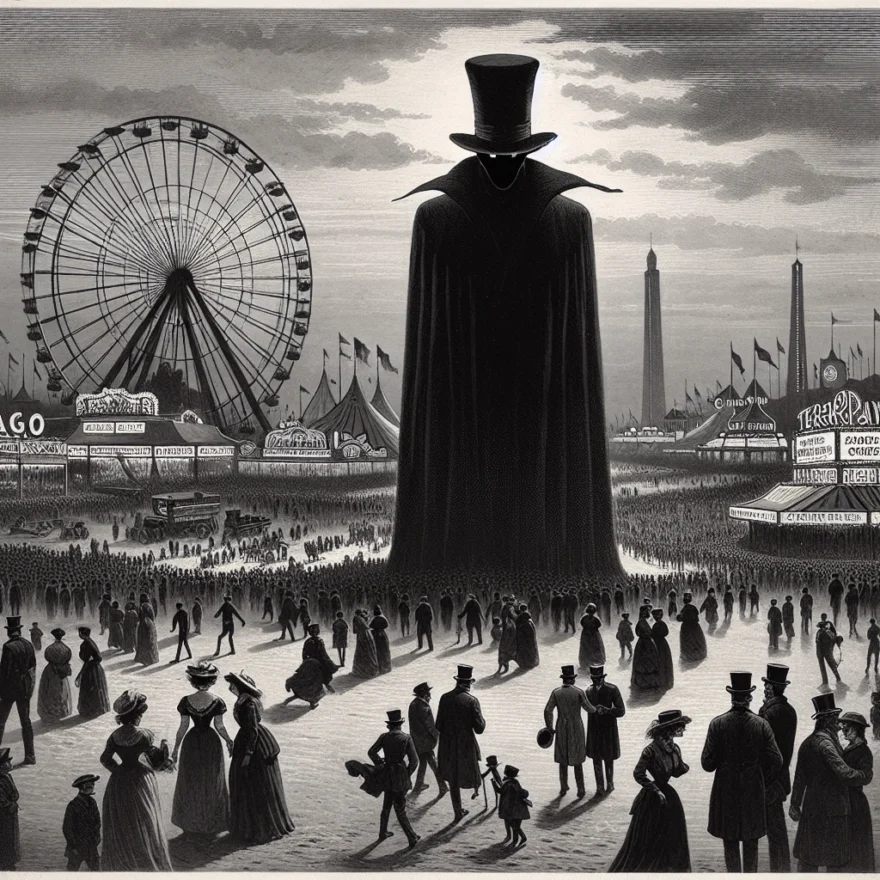
As we delve into the narrative, we are transported back to a time of great innovation and progress, a time when the ‘White City’ – a nickname for the World’s Fair – stood as a beacon of hope and a testament to human ingenuity. Yet lurking in the shadows of this radiant city was a darkness that was equally breathtaking in its audacity – the chilling reality of H.H. Holmes and his ‘Murder Castle’.
The Devil in the White City not only offers a gripping tale of murder and madness but also provides an in-depth look at the society and culture of late 19th century America. It is an exploration of the human condition, a study of ambition and evil, and a reflection on the thin line that separates the two.
As we unravel the mystery of The Devil in the White City, we will explore the lives of its protagonists, the symbolism of the White City, the historical accuracy of the narrative, and the legacy it leaves behind. So let’s embark on this journey, a journey that takes us back to a time when the promise of progress was marred by the presence of evil, to a city that was as white as it was devilish.
Table of contents
- Introduction to The Devil in the White City
- The Architect and the Killer
- The 1893 World’s Fair: A Beacon of Progress
- H.H. Holmes: America’s First Serial Killer
- The Symbolism of the ‘White City’
- Fact vs Fiction: The Historical Accuracy of The Devil in the White City
- The Legacy of The Devil in the White City
- Common Questions and Answers about The Devil in the White City
The Architect and the Killer
Interwoven in the narrative of The Devil in the White City are two distinct yet equally fascinating figures: Daniel H. Burnham, the master architect behind the 1893 Chicago World’s Fair, and H.H. Holmes, a psychopathic serial killer who used the fair to lure his victims. Their stories, though running on parallel tracks, provide a haunting juxtaposition of ambition and malevolence, progress and perversion.
Daniel H. Burnham, a renowned architect of his time, was tasked with the monumental challenge of designing the World’s Fair, also known as the Columbian Exposition. He was to create a spectacle that would not only celebrate the 400th anniversary of Christopher Columbus’s arrival in the New World, but also showcase America’s cultural and technological advancements. Burnham’s vision was to construct a ‘White City’, a shining beacon of progress and innovation, adorned with grand buildings and beautiful landscapes. Despite numerous challenges, including labor strikes, financial constraints, and the death of his partner, Burnham persevered, eventually creating a city of dreams that left an indelible mark on American architecture and urban planning.
On the other side of this tale is H.H. Holmes, a man whose name would become synonymous with horror and depravity. Holmes arrived in Chicago in 1886 and built a hotel, later known as the ‘Murder Castle’, near the site of the World’s Fair. The hotel, with its labyrinthine layout and hidden rooms, was a death trap designed to ensnare unsuspecting victims, many of whom were young women drawn to the city by the fair. Holmes would charm his victims, only to later kill them in a variety of gruesome ways. His cold-blooded murders, carried out in the shadow of the dazzling White City, shocked the nation and earned him the notorious title of America’s first serial killer.
The contrasting figures of Burnham and Holmes embody the dual nature of the era in which they lived – an age of progress and enlightenment marred by darkness and depravity. The Devil in the White City masterfully captures this dichotomy, unraveling the mystery and madness of the 1893 World’s Fair, one captivating story at a time.
The 1893 World’s Fair: A Beacon of Progress
The 1893 World’s Fair, also known as the World’s Columbian Exposition, was a monumental event held in Chicago to celebrate the 400th anniversary of Christopher Columbus’ arrival in the New World. Spanning from May 1 to October 30, 1893, the fair showcased the achievements and advancements of the time, making it a true beacon of progress.
The fairgrounds, spread over 600 acres in Jackson Park, featured magnificent neoclassical buildings, canals, lagoons, and beautifully landscaped gardens. The most iconic of these structures was the Court of Honor, which included the dazzling centerpiece known as the “White City.” This architectural marvel, with its gleaming white facades and grand colonnades, symbolized the triumph of human ingenuity and progress.
The fair was a showcase for technological innovations that were transforming the world. Visitors marveled at the first Ferris wheel, a colossal engineering feat that stood 264 feet tall and carried 36 cars, each capable of holding 60 passengers. This invention, designed by George Ferris, revolutionized amusement park rides and became a symbol of the fair itself.
Another groundbreaking achievement on display was the introduction of alternating current (AC) electricity by George Westinghouse and Nikola Tesla. This allowed for the illumination of the fairgrounds, including the mesmerizing display of thousands of electric lights that adorned the buildings and walkways.
The fair also featured exhibits from countries around the world, showcasing their cultures, industries, and artistic achievements. It was a melting pot of ideas and innovations, fostering international cooperation and understanding.
One of the most significant events during the fair was the Congress of Women, which brought together leading female activists and suffragettes from around the world. This gathering highlighted the progress of women’s rights and set the stage for future advancements in gender equality.
Overall, the 1893 World’s Fair was a transformative event that captured the spirit of progress and innovation of the late 19th century. It showcased the achievements of human civilization and laid the groundwork for future advancements in technology, culture, and social change.
H.H. Holmes: America’s First Serial Killer
The Devil in the White City: Murder and Madness at the Fair is a captivating book that unravels the mysterious story of H.H. Holmes, who is often referred to as America’s first serial killer. Holmes, whose real name was Herman Webster Mudgett, was a charismatic and intelligent man who used his charm to lure unsuspecting victims into his deadly trap.
H.H. Holmes was born in New Hampshire in 1861 and later moved to Chicago, where he would commit his heinous crimes. He built a hotel near the site of the 1893 World’s Fair, which became infamously known as the “Murder Castle.” This building was designed to be a maze of secret rooms, hidden passages, and trapdoors, making it nearly impossible for anyone to escape once they entered.
Inside the Murder Castle, Holmes carried out his gruesome acts of murder and torture. He would often target young, vulnerable women who were seeking employment or a place to stay. Once they fell into his clutches, Holmes would subject them to unspeakable horrors, including suffocation, dismemberment, and even experiments on their bodies.
One of the most chilling aspects of Holmes’ crimes was his ability to manipulate and deceive those around him. He presented himself as a successful businessman and a pillar of the community, which allowed him to gain the trust of his victims. He would often take out life insurance policies on his victims and then stage their deaths to collect the money.
It is estimated that Holmes may have killed as many as 200 people, although the exact number remains unknown. His crimes went undetected for years, as he was able to dispose of the bodies in various ways, including cremation, dissection, and even selling their skeletons to medical schools.
The story of H.H. Holmes and his Murder Castle captivated the nation during the late 19th century. It revealed the dark underbelly of the seemingly progressive and prosperous era of the World’s Fair. Holmes’ crimes highlighted the dangers that lurked beneath the surface of society, reminding people that evil could be hiding in plain sight.
While The Devil in the White City provides a gripping account of Holmes’ crimes, it is important to note that there are some discrepancies between the book and historical records. Author Erik Larson took some creative liberties in order to craft a compelling narrative, which has led to debates about the accuracy of certain events and details.
Despite these discrepancies, The Devil in the White City remains a fascinating exploration of the mind of a serial killer and the dark side of one of America’s most celebrated historical events. It serves as a reminder that even in the midst of progress and innovation, evil can still find a way to thrive.
The Symbolism of the ‘White City’
The 1893 World’s Fair, also known as the World’s Columbian Exposition, held in Chicago, was a grand celebration of human achievement and progress. At the heart of this magnificent event stood the ‘White City’, a collection of beautiful neoclassical buildings that showcased the advancements of the time.
The ‘White City’ was not only a physical representation of architectural brilliance but also held deep symbolism within its grandeur. It served as a reflection of the aspirations and ideals of the era, a manifestation of the American dream and a beacon of hope for the future.
One of the key symbols associated with the ‘White City’ was its color. White, often associated with purity and innocence, represented the idea of a utopian society. The fair aimed to present a vision of a harmonious world, free from the social and economic challenges that plagued society at the time.
The buildings within the ‘White City’ were meticulously designed to embody this symbolism. Each structure was adorned with elaborate sculptures, intricate carvings, and ornate decorations. The grandeur of the architecture aimed to inspire awe and wonder, reinforcing the idea that progress and enlightenment were within reach.
Furthermore, the layout of the ‘White City’ was carefully planned to create a sense of order and harmony. The buildings were arranged in a symmetrical pattern, with wide boulevards and landscaped gardens connecting them. This design emphasized the concept of balance and unity, reflecting the ideal society that the fair aimed to portray.
Another notable symbol within the ‘White City’ was the presence of the Ferris Wheel, a groundbreaking invention that made its debut at the fair. The Ferris Wheel, with its circular motion and elevated position, represented the cyclical nature of progress and the continuous journey towards a better future.
Overall, the symbolism of the ‘White City’ in The Devil in the White City represents the juxtaposition of beauty and darkness, progress and evil. It serves as a stark contrast to the sinister acts committed by H.H. Holmes, the notorious serial killer who operated during the same time as the fair.
While the ‘White City’ symbolized hope and progress, Holmes embodied the darker side of humanity. His hotel, known as the “Murder Castle,” was located just a few miles away from the fairgrounds, serving as a chilling reminder that evil can lurk even in the midst of beauty.
The symbolism of the ‘White City’ in The Devil in the White City adds depth and complexity to the narrative, highlighting the contrast between the aspirations of society and the terrifying reality that existed beneath the surface.
Fact vs Fiction: The Historical Accuracy of The Devil in the White City
One of the most intriguing aspects of The Devil in the White City: Murder and Madness at the Fair is the question of its historical accuracy. While the book is a work of non-fiction, author Erik Larson employs a narrative style that blurs the line between fact and fiction, making it important to separate the two.
Larson extensively researched the events surrounding the 1893 World’s Fair in Chicago and the crimes of H.H. Holmes, but he also took some creative liberties to enhance the storytelling. This has led to debates among readers and historians about the accuracy of certain details and events depicted in the book.
It is essential to approach The Devil in the White City with the understanding that while it is based on true events, it is not a comprehensive historical account. Here are some key points to consider when evaluating the historical accuracy of the book:
- Characterizations: Larson brings historical figures to life by imagining their thoughts, motivations, and conversations. While these characterizations are based on available historical records, they are ultimately fictionalized interpretations.
- Timeline and Chronology: Larson occasionally compresses or rearranges events to create a more cohesive narrative. This can result in some events appearing to happen in a different order or timeframe than they did in reality.
- Dialogue: Larson recreates dialogue based on historical accounts, letters, and other sources. However, it is important to remember that these conversations are reconstructed and may not be verbatim.
- Unrecorded Details: The book includes vivid descriptions of scenes and settings that may not have been documented in historical sources. While these descriptions add depth to the story, they should be approached with a degree of skepticism.
- Motivations and Thoughts: Larson delves into the minds of the characters, providing insights into their thoughts and motivations. While these insights are based on research, they are ultimately speculative and cannot be definitively proven.
Despite these creative liberties, The Devil in the White City remains a valuable and captivating account of a fascinating period in history. It serves as a starting point for further exploration and encourages readers to delve deeper into the true events and characters it portrays.
For those seeking a more comprehensive understanding of the historical events, it is recommended to consult additional sources, such as primary documents, biographies, and academic studies. This will provide a more balanced perspective and help separate fact from the fictionalized elements of The Devil in the White City.
The Legacy of The Devil in the White City
As one of the most captivating true crime books of all time, The Devil in the White City has left a lasting legacy on both the literary and historical fronts. Its unique blend of murder, mystery, and the backdrop of the 1893 World’s Fair has captivated readers around the world. Let’s delve into the enduring legacy of this gripping tale.
First and foremost, The Devil in the White City has shed light on the dark and twisted mind of H.H. Holmes, America’s first serial killer. Through Erik Larson’s meticulous research and vivid storytelling, readers are given a chilling glimpse into the depths of Holmes’ psychopathy and the extent of his heinous crimes. This book has become a reference point for those interested in the psychology of serial killers and the methods they employ to deceive and manipulate their victims.
Furthermore, The Devil in the White City has immortalized the 1893 World’s Fair, also known as the Columbian Exposition, as a symbol of progress and innovation. Larson’s vivid descriptions of the fairgrounds and the architectural marvels that adorned the “White City” have sparked a renewed interest in this significant historical event. The book serves as a time capsule, transporting readers back to a time of great technological advancements and cultural significance.
The Devil in the White City has also sparked debates about the accuracy of historical accounts in non-fiction books. While Larson meticulously researched the events and characters portrayed in the book, some critics argue that certain details may have been embellished for dramatic effect. This debate has led to a greater awareness of the importance of fact-checking and historical accuracy in non-fiction narratives.
On a broader scale, The Devil in the White City has had a profound impact on the true crime genre. Its success paved the way for other authors to explore similar narratives that blend history, mystery, and crime. The book’s popularity has contributed to a renewed interest in true crime stories, both in literature and in other forms of media such as podcasts and documentaries.
Lastly, The Devil in the White City has left an indelible mark on the city of Chicago. The book has become a cultural touchstone for the city, with guided tours and landmarks dedicated to the locations mentioned in the story. Visitors can explore the remnants of Holmes’ infamous “Murder Castle” and retrace the steps of the fairgoers who marveled at the wonders of the World’s Fair.
In conclusion, The Devil in the White City has had a lasting legacy on multiple fronts. It has brought attention to the chilling crimes of H.H. Holmes, immortalized the 1893 World’s Fair, sparked debates about historical accuracy, influenced the true crime genre, and left an impact on the city of Chicago. This enduring legacy ensures that the story of murder and madness at the fair will continue to captivate readers for generations to come.
Common Questions and Answers about The Devil in the White City
Unraveling the Mystery: The Devil in the White City: Murder and Madness at the Fair has captivated readers with its chilling tale of a serial killer operating during the 1893 World’s Fair in Chicago. As readers delve into the pages of this book, they may have some common questions about the story, its historical accuracy, and its impact. In this section, we will address some of these frequently asked questions.
1. Is The Devil in the White City based on a true story?
Yes, The Devil in the White City is based on true events. Author Erik Larson meticulously researched the history surrounding the 1893 World’s Fair and the notorious serial killer H.H. Holmes. While the book is a work of non-fiction, Larson also incorporates some fictional elements to enhance the narrative flow.
2. Who was H.H. Holmes?
H.H. Holmes, whose real name was Herman Webster Mudgett, was an American serial killer. He confessed to killing 27 people, although the actual number of his victims remains unknown. Holmes built a hotel called the “World’s Fair Hotel” or the “Murder Castle” near the fairgrounds, where he lured unsuspecting guests and committed heinous crimes.
3. How accurate is the portrayal of the 1893 World’s Fair in the book?
The Devil in the White City provides a vivid and accurate depiction of the 1893 World’s Fair. Erik Larson extensively researched the fair and its various exhibits, capturing the grandeur and excitement of the event. The book offers a fascinating glimpse into the architectural marvels, technological innovations, and cultural significance of the fair.
4. What is the significance of the ‘White City’?
The ‘White City’ refers to the neoclassical buildings and structures that were constructed for the 1893 World’s Fair. These buildings were painted white, giving the fairgrounds a stunning and ethereal appearance. The ‘White City’ symbolized progress, modernity, and the aspirations of the time.
5. How has The Devil in the White City impacted popular culture?
The Devil in the White City has had a significant impact on popular culture. It has become a best-selling book and has been praised for its blend of history and suspense. The book’s success has also led to discussions about the legacy of H.H. Holmes and the enduring fascination with true crime stories.
6. Are there any plans to adapt The Devil in the White City into a movie or TV series?
Yes, there have been plans to adapt The Devil in the White City into a movie or TV series. In fact, Martin Scorsese was attached to direct a film adaptation starring Leonardo DiCaprio as H.H. Holmes. However, as of now, the project has faced delays and its current status is uncertain.
As readers explore the pages of The Devil in the White City, they will find themselves immersed in a captivating tale of murder, madness, and the backdrop of a world-changing event. This book continues to intrigue and spark curiosity, leaving readers with a deeper understanding of the dark side of history.