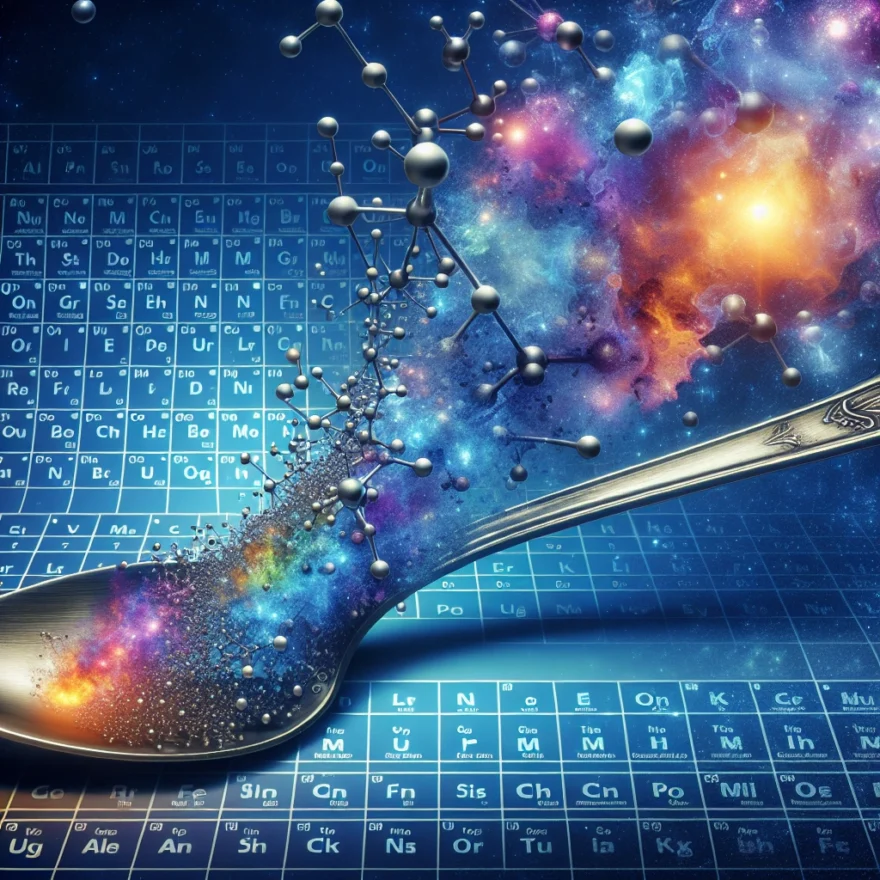
Introduction to The Disappearing Spoon
Delving into the world of elements, their intriguing stories, and their impact on human history, “The Disappearing Spoon: And Other True Tales of Madness, Love, and the History of the World from the Periodic Table of the Elements” is a captivating exploration penned by American science writer, Sam Kean. This book, published in 2010, offers a unique perspective on the periodic table, transforming it from a mundane chart in a science classroom to a vivid narrative filled with tales of passion, betrayal, discovery, and innovation.
Named after the infamous prank of crafting a spoon from gallium – a metal which melts at temperatures a little over 29.76°C, hence ‘disappearing’ when stirred into a hot beverage – the book is a testament to the quirky, often overlooked, aspects of science. The ‘madness’ referred to in the title is a nod to the various eccentric scientists and the bizarre occurrences connected to the elements.
Through “The Disappearing Spoon”, Kean takes readers on a journey through time and space, from the Big Bang to the present day, and from the farthest reaches of the universe to the inner workings of our own brains. He presents a fresh, engaging, and accessible approach to the world of chemistry, making it appealing even to those who might usually shy away from scientific subjects. The book is not just about the elements themselves, but also about the people who discovered them, the places they were found, and the profound impact they have had on history and culture.
Whether you’re a science enthusiast, a history buff, or simply a lover of good storytelling, “The Disappearing Spoon” promises a fascinating read, filled with tales that are as strange as they are true. In the following sections, we will delve deeper into the enigma of “The Disappearing Spoon”, exploring the madness and the periodic table, the role of elements in history and culture, the human side of the elements, and answering common questions readers might have about this extraordinary book.
Table of contents
- Introduction to The Disappearing Spoon
- The Enigma of The Disappearing Spoon
- Madness and the Periodic Table
- The Role of Elements in History and Culture
- The Human Side of the Elements
- Common Questions and Answers about The Disappearing Spoon
- Exploring the Elements
- The Impact of The Disappearing Spoon
- Conclusion: The Lasting Appeal of The Disappearing Spoon
The Enigma of The Disappearing Spoon
When we delve deeper into the heart of “The Disappearing Spoon,” we encounter a world of mystery and intrigue, where science and history intertwine in the most unexpected ways. The title itself is an allusion to one of the book’s most captivating tales, where gallium, a metal that melts at just above room temperature, is molded into the shape of a spoon. This spoon, when stirred into a hot cup of tea, vanishes without a trace, leaving the unsuspecting victim perplexed and astonished. This quirky anecdote is just one of many that author Sam Kean uses to illustrate the fascinating, and often overlooked, characteristics of the elements in the periodic table.
However, the enigma of the disappearing spoon extends far beyond this singular tale. It represents the larger theme of the book – the hidden and surprising nature of the elements that make up our world. Kean delves into the stories behind the discovery of these elements, often filled with obsession, betrayal, and intense rivalry. He explores the often-overlooked human drama that accompanied these scientific breakthroughs, bringing to life the scientists, inventors, and even charlatans who played a part in the creation of the periodic table.
Moreover, Kean uses the enigma of the disappearing spoon as a metaphor for the elusive nature of scientific knowledge. Just as the spoon disappears, leaving only a trace of its existence, so too does our understanding of the elements continue to evolve and change. New discoveries are constantly reshaping our view of the periodic table, and the stories Kean tells remind us that science is a dynamic and ever-changing field.
Ultimately, “The Disappearing Spoon” challenges us to look beyond the static image of the periodic table we all remember from our school days, and to see it instead as a vibrant and evolving tapestry of discovery, human drama, and mystery. It is this enigma, the book suggests, that makes the study of the elements so endlessly fascinating and rewarding.
Madness and the Periodic Table
The Disappearing Spoon: Tales of Madness and the Periodic Table delves into the fascinating world of chemistry, exploring the enigmatic nature of the elements and their impact on history and culture. One of the intriguing aspects of this book is the exploration of the relationship between madness and the periodic table.
Throughout history, there have been numerous cases of scientists and researchers who have become obsessed with the elements, often to the point of madness. The periodic table, with its complex arrangement of elements, has the power to captivate the human mind and drive individuals to extreme lengths in their pursuit of knowledge and understanding.
One example of this is the story of Dmitri Mendeleev, the Russian chemist who is credited with creating the first version of the periodic table. Mendeleev spent years organizing the elements based on their properties, and his obsession with this task consumed him. He would often work for days on end, neglecting his personal hygiene and even refusing to eat or sleep. His single-minded dedication to the periodic table bordered on madness, but it ultimately led to one of the most important scientific breakthroughs in history.
Another example is the case of Marie Curie, the renowned physicist and chemist who discovered the radioactive elements polonium and radium. Curie’s relentless pursuit of these elements, despite the dangerous health risks associated with radiation, can be seen as a form of madness. She worked tirelessly in her laboratory, exposing herself to high levels of radiation and ultimately sacrificing her health for the sake of scientific discovery.
The connection between madness and the periodic table is not limited to historical figures. Even today, scientists and researchers continue to be consumed by their fascination with the elements. The intense focus and dedication required to unravel the mysteries of the periodic table can sometimes push individuals to the brink of sanity.
However, it is important to note that not all cases of obsession with the periodic table result in madness. For many, the study of the elements is a source of inspiration and wonder. The periodic table provides a framework for understanding the building blocks of the universe and offers endless possibilities for scientific exploration.
In The Disappearing Spoon, author Sam Kean explores the fine line between genius and madness, highlighting the stories of those whose obsession with the periodic table pushed them to the edge. By delving into the human side of the elements, Kean offers a unique perspective on the intersection of science and the human experience.
Overall, the connection between madness and the periodic table is a captivating aspect of The Disappearing Spoon. It serves as a reminder of the immense power of knowledge and the lengths to which individuals will go in their quest for understanding. Whether it leads to madness or enlightenment, the periodic table continues to inspire and intrigue scientists and non-scientists alike.
The Role of Elements in History and Culture
Throughout history, elements have played a significant role in shaping human civilization and culture. The study of these fundamental building blocks of matter, as showcased in the book “The Disappearing Spoon: Tales of Madness and the Periodic Table,” reveals their fascinating impact on various aspects of our lives.
Elements have been integral to the development of civilizations, often serving as the catalysts for progress and innovation. For example, the discovery and mastery of fire, which is dependent on the element oxygen, revolutionized early human societies. Fire provided warmth, protection, and the ability to cook food, leading to improved health and survival rates.
Moreover, elements have influenced cultural practices and beliefs. In ancient times, certain elements were associated with gods and mythical beings, symbolizing their power and significance. Gold, for instance, was linked to the sun god Ra in Egyptian mythology, representing divinity and immortality. This association between elements and deities demonstrates the deep-rooted connection between elements and human culture.
Elements have also played a crucial role in the advancement of technology and industry. The Industrial Revolution, for instance, was made possible by harnessing the power of elements such as coal and iron. Coal provided the fuel necessary to power steam engines, while iron was used to construct machinery and infrastructure. These elements propelled the world into a new era of manufacturing and transportation, forever transforming society.
Furthermore, elements have influenced artistic expression and creativity. From the vibrant colors of pigments derived from elements like mercury and lead, to the use of metals like copper and bronze in sculpture, elements have been essential in the creation of visual arts. Additionally, elements such as carbon have been instrumental in the development of various mediums, including graphite for drawing and diamonds for jewelry.
Elements have also left their mark on language and literature. The periodic table, with its unique symbols and atomic numbers, has become a universal language for scientists and a source of inspiration for writers. Elements such as uranium, plutonium, and radium have found their way into countless works of fiction, often representing power, danger, or the unknown.
Overall, the role of elements in history and culture is undeniable. They have shaped our world, influenced our beliefs, and provided the foundation for scientific advancements. “The Disappearing Spoon” delves into these fascinating connections, unraveling the stories and mysteries behind each element and their impact on human civilization.
The Human Side of the Elements
Throughout history, the elements of the periodic table have played a vital role in shaping the human experience. From the ancient civilizations to modern times, these elements have been intertwined with our lives in ways that are both fascinating and profound.
One of the most intriguing aspects of the elements is their connection to human emotions and behaviors. For example, the element mercury has long been associated with madness and insanity. In the 18th and 19th centuries, hat makers who used mercury in the process of making felt hats often suffered from neurological symptoms, earning them the nickname “mad hatters.” This connection between mercury and madness is explored in “The Disappearing Spoon,” shedding light on the darker side of this element.
But it’s not just mercury that has a human side. The elements tell stories of triumph, tragedy, and everything in between. Take the case of radium, a highly radioactive element that was once hailed as a miracle cure. In the early 20th century, radium was used in a variety of products, including cosmetics and even food items. People were captivated by its glowing properties and believed it to have health benefits. However, the true dangers of radium were not fully understood at the time, leading to devastating consequences for those who were exposed to it.
On a more positive note, the element gold has always held a special place in human culture. Its rarity and beauty have made it a symbol of wealth and power throughout history. From ancient civilizations to modern societies, gold has been coveted and sought after, shaping economies and influencing human behavior. “The Disappearing Spoon” delves into the fascinating stories behind gold and its significance in human history.
Furthermore, the elements are not just abstract concepts confined to the laboratory. They have practical applications in our everyday lives. For instance, the element carbon is the building block of life, forming the basis of organic compounds and serving as the foundation for all living organisms. Carbon’s versatility and ability to form complex structures have allowed for the existence of life as we know it.
In “The Disappearing Spoon,” these human connections to the elements are explored in great detail. The book not only provides a scientific understanding of the periodic table but also delves into the stories and anecdotes that make the elements come alive. It offers a glimpse into the human side of science, reminding us that behind every element is a rich history and a profound impact on our lives.
Common Questions and Answers about The Disappearing Spoon
As a popular book that delves into the fascinating world of chemistry and the periodic table, The Disappearing Spoon: Tales of Madness and the Periodic Table often raises several common questions among readers. In this section, we aim to address some of these frequently asked questions:
1. What is The Disappearing Spoon about?
The Disappearing Spoon is a book written by Sam Kean, which explores the intriguing stories and history behind the elements of the periodic table. It takes readers on a journey through the periodic table, uncovering the peculiarities, discoveries, and significance of each element.
2. Why is it called The Disappearing Spoon?
The title of the book refers to a fascinating anecdote involving the element gallium. Gallium has a low melting point, and when placed in a cup of warm water, it can melt into a liquid. In the book, this property is used to create a disappearing spoon illusion, where a spoon made of gallium appears to vanish when placed in a hot beverage.
3. Is The Disappearing Spoon suitable for non-scientific readers?
Absolutely! The Disappearing Spoon is written in a captivating and accessible manner, making it enjoyable for both scientific and non-scientific readers alike. Sam Kean skillfully weaves together science, history, and storytelling to make complex concepts easy to understand and engaging for all audiences.
4. What can I expect to learn from The Disappearing Spoon?
The book covers a wide range of topics related to the periodic table and the elements. Readers can expect to learn about the origins of the periodic table, the discovery of various elements, their uses in everyday life, and the impact they have had on human history and culture. The book also explores the quirky and sometimes bizarre stories behind certain elements.
5. Is The Disappearing Spoon based on scientific facts?
Yes, The Disappearing Spoon is thoroughly researched and based on scientific facts. Sam Kean draws from a wealth of scientific literature, historical records, and interviews with experts to present accurate information about the elements and their significance.
6. Can The Disappearing Spoon be enjoyed by chemistry enthusiasts?
Absolutely! Chemistry enthusiasts will find The Disappearing Spoon particularly captivating as it delves deep into the world of elements, their properties, and their role in shaping our understanding of the natural world. The book provides a wealth of knowledge and fascinating anecdotes that will satisfy the curiosity of any chemistry lover.
7. Are there any follow-up books to The Disappearing Spoon?
Yes, Sam Kean has written other popular science books, including “The Violinist’s Thumb: And Other Lost Tales of Love, War, and Genius, as Written by Our Genetic Code” and “Caesar’s Last Breath: Decoding the Secrets of the Air Around Us.” These books explore different scientific topics with the same engaging storytelling approach.
By addressing these common questions, we hope to provide a clearer understanding of what The Disappearing Spoon is all about and why it has garnered such popularity among readers.
Exploring the Elements
One of the most fascinating aspects of “The Disappearing Spoon: Tales of Madness and the Periodic Table” is the exploration of the elements themselves. Sam Kean takes readers on a journey through the periodic table, uncovering the stories and quirks behind each element.
From hydrogen to uranium and everything in between, Kean delves into the properties, uses, and historical significance of the elements. He brings to life the world of chemistry, making it accessible and engaging for both science enthusiasts and those with little background in the subject.
Each chapter focuses on a specific element or group of elements, providing a deep dive into their unique characteristics. Kean masterfully weaves together scientific facts, historical anecdotes, and personal stories to create a rich tapestry of knowledge.
For example, in the chapter on mercury, Kean explores the element’s toxic properties and its historical use in medicine. He recounts the tragic story of the Mad Hatter, who suffered from mercury poisoning due to his occupation of hat-making. Through this captivating tale, Kean highlights the darker side of the periodic table.
Another intriguing chapter is dedicated to the noble gases. Kean explains their inert nature and their role in lighting up neon signs. He also introduces readers to the eccentric characters who discovered these elements and the challenges they faced in their scientific pursuits.
Kean’s writing style is both informative and entertaining, making even the most complex scientific concepts accessible. He uses vivid descriptions and analogies to help readers grasp the intricacies of atomic structure, chemical reactions, and the periodic trends of the elements.
By exploring the elements in “The Disappearing Spoon,” readers gain a deeper appreciation for the building blocks of the universe. They learn how these elements shape our world, from the elements that make up our bodies to the ones that fuel technological advancements.
Whether you’re a chemistry enthusiast or simply curious about the elements, “The Disappearing Spoon” offers a captivating journey through the periodic table. It reveals the hidden stories and mysteries behind each element, leaving readers with a newfound fascination for the world of chemistry.
The Impact of The Disappearing Spoon
The Impact of The Disappearing Spoon
The Disappearing Spoon: Tales of Madness and the Periodic Table has had a profound impact on both the scientific community and the general public. By presenting the periodic table in a captivating and accessible way, author Sam Kean has managed to ignite a renewed interest in the elements and their role in shaping our world.
One of the most significant impacts of The Disappearing Spoon is its ability to make complex scientific concepts relatable and engaging. Kean’s storytelling approach allows readers to connect with the elements on a personal level, bringing to life the stories behind their discovery, their uses, and their effects on human history and culture.
Through the book, readers are exposed to the fascinating and often bizarre tales of the elements, such as the rivalry between chemists in the race to discover new elements or the role of certain elements in historical events. This not only sparks curiosity but also encourages further exploration and understanding of the periodic table.
The Disappearing Spoon has also played a crucial role in inspiring a new generation of scientists. By presenting the periodic table as a narrative, rather than a dry list of elements and their properties, the book has made chemistry more accessible and appealing to young readers. It has the potential to ignite a passion for science and encourage future scientific discoveries.
Furthermore, The Disappearing Spoon has had a positive impact on science education. Teachers and educators have found the book to be a valuable resource in their classrooms, using it to supplement traditional textbooks and lectures. The engaging storytelling approach helps students grasp complex concepts more easily and fosters a deeper appreciation for the wonders of the periodic table.
Beyond its impact on the scientific community, The Disappearing Spoon has also captivated the general public. The book’s ability to blend science with history, culture, and even humor has made it a popular choice among readers of all backgrounds. It has brought the periodic table into the mainstream consciousness, making it a topic of conversation and intrigue outside of scientific circles.
In conclusion, The Disappearing Spoon: Tales of Madness and the Periodic Table has had a far-reaching impact on both the scientific community and the general public. Through its engaging storytelling and relatable approach, it has reignited interest in the elements and their significance in our lives. From inspiring future scientists to enhancing science education, this book has left a lasting impression and continues to shape our understanding of the periodic table.
Conclusion: The Lasting Appeal of The Disappearing Spoon
Throughout this article, we have delved into the fascinating world of “The Disappearing Spoon: Tales of Madness and the Periodic Table” and explored the various aspects that make it such a captivating read. From the enigmatic nature of the disappearing spoon itself to the madness that can be found within the periodic table, this book offers a unique perspective on the elements and their role in history and culture.
One of the reasons why “The Disappearing Spoon” has such lasting appeal is its ability to humanize the elements. By weaving together stories of scientists, inventors, and historical events, author Sam Kean brings the periodic table to life, making it more relatable and engaging for readers. This human element adds depth and emotion to what could otherwise be a dry and technical subject.
Another aspect that contributes to the lasting appeal of this book is its exploration of the elements themselves. Kean takes readers on a journey through the periodic table, uncovering the unique properties and quirks of each element. From the explosive reactivity of alkali metals to the mysterious allure of the noble gases, “The Disappearing Spoon” offers a comprehensive exploration of the elements that is both educational and entertaining.
Furthermore, “The Disappearing Spoon” highlights the impact of the periodic table on our everyday lives. By showcasing how elements have shaped history, technology, and even popular culture, Kean demonstrates the far-reaching influence of these fundamental building blocks of matter. This broader perspective allows readers to appreciate the significance of the periodic table beyond the confines of a chemistry textbook.
As we conclude our journey through “The Disappearing Spoon: Tales of Madness and the Periodic Table,” it is clear that this book has left a lasting impression on readers. Its unique blend of scientific knowledge, historical anecdotes, and storytelling prowess make it a must-read for anyone curious about the elements and their place in the world. Whether you are a science enthusiast or simply seeking a captivating non-fiction read, “The Disappearing Spoon” is sure to satisfy your curiosity and leave you with a newfound appreciation for the periodic table and its many tales of madness.