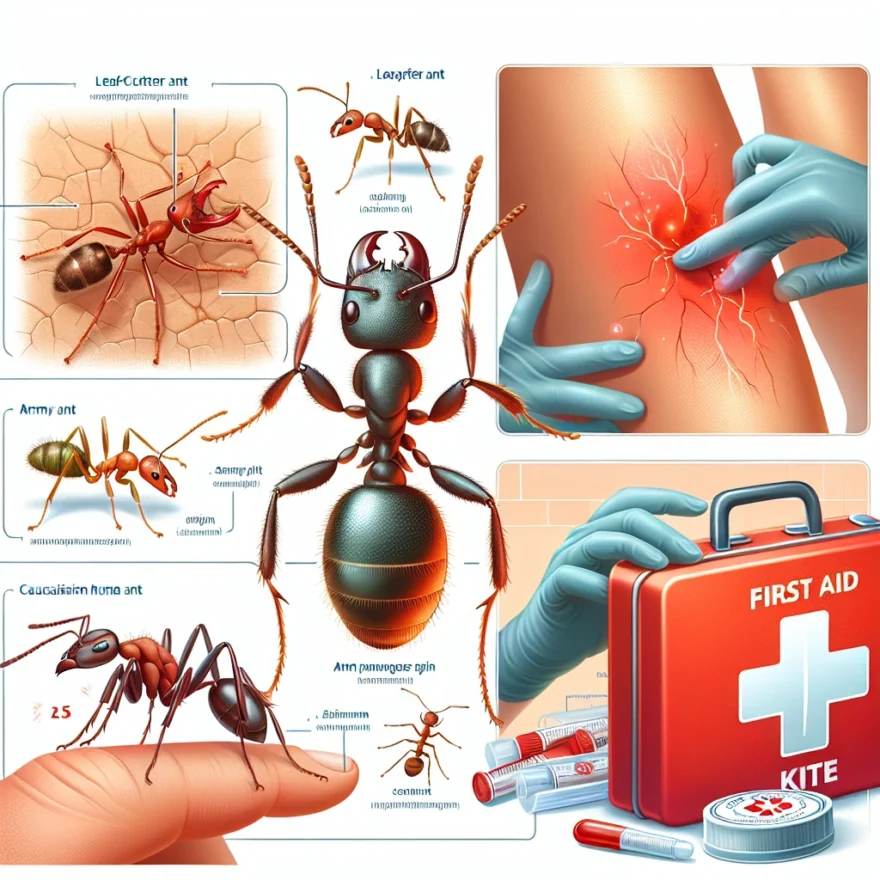
Introduction to Ants with Stingers
Ants are fascinating creatures that can be found all over the world. They are social insects, living in colonies that range from a few dozen to millions of individuals. While many ant species are harmless to humans, some possess a powerful weapon: a stinger. These ants use their stingers to defend their colonies, capture prey, and communicate with other ants. In this article, we will explore the various types of ants with stingers, their biology, and how they interact with humans. We will also discuss the symptoms and severity of stinging ant bites, how to identify different stinging ants, and their role in the ecosystem. Additionally, we will provide information on how to prevent stinging ant bites, first aid for stinging ant bites, and when to seek medical attention. Finally, we will explore home remedies and professional treatment options for ant bites, as well as how to control stinging ant infestations. Along the way, we will debunk some common myths about stinging ants and share interesting facts and resources for further learning about these intriguing insects.
Table of contents
- Introduction to Ants with Stingers
- Types of Ants with Stingers
- Biology of Stinging Ants
- Ant Stinger Anatomy and Function
- Stinging Ant Bites: Symptoms and Severity
- How to Identify Different Stinging Ants
- Stinging Ants’ Habitat and Distribution
- The Role of Stinging Ants in the Ecosystem
- Stinging Ants and Human Interactions
- How to Prevent Stinging Ant Bites
- First Aid for Stinging Ant Bites
- When to Seek Medical Attention for Ant Bites
- Home Remedies for Stinging Ant Bites
- Professional Treatment for Ant Bites
- How to Control Stinging Ant Infestations
- Common Myths about Stinging Ants
- Interesting Facts about Stinging Ants
- Stinging Ants in Popular Culture
- Resources for Further Learning about Stinging Ants
- Common Questions and Answers about Ants with Stingers
Types of Ants with Stingers
There is a vast diversity of ant species found across the globe, with over 12,000 known species. Among these, several species possess a stinger, which they use for defense, predation, and communication. Stinging ants can be found in various shapes, sizes, and colors, but they all share the common trait of a painful or irritating sting. Some of the most well-known stinging ants include:
- Bullet Ants (Paraponera clavata): Native to the rainforests of Central and South America, bullet ants are known for their extremely painful sting, which has been compared to the pain of being shot. These ants are relatively large, measuring up to 1.2 inches (30 mm) long and are characterized by their reddish-brown color and large mandibles.
- Fire Ants (Solenopsis spp.): Fire ants are a group of stinging ants that are native to South America but have since spread to other parts of the world, including the United States. They are known for their aggressive behavior, reddish-brown color, and painful stings, which can cause severe allergic reactions in some individuals. There are over 280 known species of fire ants, with the red imported fire ant (Solenopsis invicta) being the most notorious.
- Harvester Ants (Pogonomyrmex spp.): Harvester ants are a group of ants found in North and South America, particularly in arid and semi-arid regions. They are known for their large size, granivorous diet, and the presence of a stinger. The sting of some harvester ants, such as the red harvester ant (Pogonomyrmex barbatus), can be quite painful and cause localized swelling and redness.
- Jack Jumper Ants (Myrmecia spp.): Also known as the jumping jack or hopper ant, these ants are native to Australia and are known for their powerful sting, which can cause severe allergic reactions in some individuals. They are characterized by their large size, elongated mandibles, and distinctive jumping behavior.
- Army Ants (Eciton spp.): Army ants are a group of ants found in the tropics of Central and South America. They are known for their aggressive behavior, nomadic lifestyle, and powerful stings. While not all species of army ants possess a stinger, those that do can deliver a painful sting that can cause localized pain, swelling, and redness.
While these are some of the most well-known stinging ants, many other species possess a stinger and can deliver a painful or irritating sting. It is essential to be aware of the stinging ants native to your region and take precautions to avoid contact with these insects.
Biology of Stinging Ants
Stinging ants belong to the family Formicidae, which includes over 12,000 different species of ants. While not all ants have stingers, many of the most common species do. These stinging ants have evolved a unique defense mechanism to protect themselves and their colonies from predators.
The biology of stinging ants is fascinating. Most stinging ants are social insects that live in colonies consisting of one or more queens and a large number of workers. The queen is responsible for laying eggs, and the workers are responsible for caring for the young, foraging for food, and defending the colony.
Stinging ants are highly organized and have a complex social structure. Each ant has a specific role within the colony, and they communicate with each other using a variety of chemical signals.
The stingers of ants are modified ovipositors, which are used by female ants to lay eggs. In stinging ants, the ovipositor has evolved to become a defensive weapon. The stinger is connected to a venom gland, which produces and stores venom that can be injected into predators or prey.
The venom of stinging ants can cause a range of reactions in humans, from mild irritation to severe allergic reactions. The severity of the reaction depends on the species of ant, the amount of venom injected, and the individual’s sensitivity to the venom.
Stinging ants have a number of adaptations that allow them to survive and thrive in a wide range of environments. Some species of stinging ants, such as fire ants, are able to form large, aggressive colonies that can quickly take over an area. Other species, such as harvester ants, are able to survive in hot, dry environments by foraging for seeds and other food sources.
Overall, the biology of stinging ants is complex and fascinating. These insects have evolved a unique defense mechanism that allows them to protect themselves and their colonies from predators. Understanding the biology of stinging ants is important for anyone who lives in an area where these insects are common, as it can help to prevent stings and other negative interactions with these fascinating creatures.
Ant Stinger Anatomy and Function
Ant stingers are a fascinating part of their anatomy that serves a crucial function in their survival. Stingers are only present in certain species of ants, particularly in the Hymenoptera family, which includes bees and wasps as well.
The stinger of an ant is a modified ovipositor, which is an organ used for laying eggs. In the case of stinging ants, this organ has evolved to serve as a weapon for defense against predators and other threats.
The stinger is located at the end of the ant’s abdomen and is connected to a venom sac. When the ant feels threatened, it will use its stinger to inject venom into the attacker. The venom is a complex mixture of chemicals that can cause pain, swelling, and other symptoms in the victim.
Not all ants with stingers use them to defend themselves. Some species use their stingers to subdue prey, while others use them to establish dominance over other ants.
The anatomy of the stinger varies depending on the species of ant. In some ants, the stinger is barbed, which allows it to stick in the victim’s skin and continue to inject venom. Other ants have smooth stingers that can be withdrawn easily.
The function of the stinger is to protect the ant and its colony from threats. It is an important adaptation that has allowed ants to survive and thrive in a variety of environments.
Stinging Ant Bites: Symptoms and Severity
Ants with stingers are capable of inflicting painful bites that can cause a range of symptoms, depending on the type of ant and the individual’s reaction to the venom. In this section, we will explore the symptoms and severity of stinging ant bites.
Symptoms of Stinging Ant Bites
The symptoms of a stinging ant bite can vary depending on the species of ant and the individual’s sensitivity to the venom. In general, stinging ant bites can cause the following symptoms:
– Pain: Stinging ant bites are typically painful and may cause a burning or stinging sensation at the site of the bite.
– Swelling: The area around the bite may become swollen, red, and itchy.
– Itching: Stinging ant bites can be very itchy, and scratching the affected area can lead to further inflammation and infection.
– Nausea: Some people may experience nausea or vomiting after being bitten by a stinging ant.
– Headache: Headaches are a common symptom of stinging ant bites, especially in people who are allergic to the venom.
– Difficulty breathing: In severe cases, stinging ant bites can cause difficulty breathing, wheezing, and anaphylaxis.
Severity of Stinging Ant Bites
The severity of a stinging ant bite depends on several factors, including the species of ant, the amount of venom injected, and the individual’s sensitivity to the venom. In general, stinging ant bites can range from mild to severe. Mild reactions may include localized pain, swelling, and itching, while severe reactions can cause anaphylaxis, a life-threatening allergic reaction that requires immediate medical attention.
It’s important to note that some people may be more sensitive to stinging ant venom than others, and repeated exposure to the venom can increase the severity of the reaction over time. If you have a history of severe allergic reactions or have been bitten by a stinging ant before, it’s important to take extra precautions to avoid being bitten again.
In the next section, we will discuss how to identify different types of stinging ants and their habitats.
How to Identify Different Stinging Ants
Stinging ants come in different shapes, sizes, and colors. Identifying different stinging ants can be challenging, but it is essential to know which species you are dealing with to determine the severity of the bite and the appropriate treatment. Here are some tips on how to identify different stinging ants:
- Fire ants: Fire ants are reddish-brown to black in color and measure between 1/8 to 1/4 inch in length. They are known for their aggressive behavior and painful stings. Fire ants build large mounds in open areas such as lawns, parks, and fields.
- Bullet ants: Bullet ants are large, black ants that measure up to 1 inch in length. They are known for having the most painful sting of any insect, earning them the nickname “bullet ant.” Bullet ants are found in the rainforests of Central and South America.
- Harvester ants: Harvester ants are reddish-brown to black in color and measure between 1/4 to 3/8 inch in length. They are known for their large, conspicuous nests and aggressive behavior. Harvester ants are found in dry, open areas such as deserts and grasslands.
- Carpenter ants: Carpenter ants are large, black ants that measure between 1/4 to 1/2 inch in length. They are known for their ability to damage wood and other building materials. Carpenter ants build nests in moist or decaying wood.
- Velvet ants: Velvet ants are not actually ants but are a type of wingless wasp. They are known for their bright colors and fuzzy appearance. Velvet ants have a powerful sting and are found in dry, sandy areas.
- Acrobat ants: Acrobat ants are small, brown to black ants that measure between 1/16 to 1/8 inch in length. They are known for their ability to raise their abdomen over their head when disturbed, giving them the appearance of performing acrobatics. Acrobat ants build nests in moist or decaying wood.
- Thief ants: Thief ants are tiny, yellow to brown ants that measure between 1/32 to 1/16 inch in length. They are known for their ability to steal food and brood from other ant colonies. Thief ants build nests in small crevices and cracks.
Remember that identifying stinging ants can be challenging, and it is always best to seek professional help if you are unsure about the species you are dealing with.
Stinging Ants’ Habitat and Distribution
Stinging ants can be found in various habitats around the world. Some species prefer dry and arid environments, while others thrive in moist and humid conditions. The most common types of stinging ants are found in tropical and subtropical regions, where the climate is warm and humid.
Ants with stingers can be found in a variety of habitats, including forests, grasslands, deserts, and urban areas. Some species prefer to build their nests in the soil, while others make their homes in trees or other vegetation. The type of habitat that stinging ants prefer often depends on the species and their food sources.
One of the most common stinging ants in North America is the red imported fire ant, which is native to South America. This species has spread throughout the southern United States and can be found in a variety of habitats, including lawns, pastures, and agricultural fields. They prefer warm and sunny areas, and their nests can be found in soil mounds that can reach up to two feet in height.
Another common stinging ant in North America is the harvester ant, which is found in the western United States. These ants prefer dry and arid environments and can be found in grasslands, deserts, and other open habitats. They build their nests in the soil and are known for their aggressive behavior.
In tropical regions, the bullet ant is one of the most feared stinging ants. These ants are found in the rainforests of Central and South America and can grow up to one inch in length. They build their nests in trees and are known for their painful sting, which is described as feeling like being shot with a bullet.
Other stinging ants, such as the jack jumper ant in Australia and the Asian needle ant in Asia, have specific habitats and distributions. The jack jumper ant is found in the southeastern part of Australia and prefers dry and open habitats, while the Asian needle ant is found in forests and other wooded areas in Asia.
Overall, stinging ants can be found in a variety of habitats around the world. Understanding their habitat and distribution can help people identify and avoid them, as well as prevent infestations in homes and other buildings.
The Role of Stinging Ants in the Ecosystem
Stinging ants play a crucial role in the ecosystem as predators and prey. These ants are known for their aggressive behavior and powerful sting, which they use to defend their colony from predators and intruders. However, they also serve as a food source for other animals, including birds, reptiles, and mammals.
Stinging ants are also important for maintaining the balance of the ecosystem. They help control the population of other insects and pests, such as termites and cockroaches, which can cause damage to crops and buildings. In addition, stinging ants play a role in pollination by feeding on nectar and spreading pollen from flower to flower.
Stinging ants are also important for soil health. They help aerate the soil by digging tunnels and creating channels for air and water to flow through. This helps to improve soil structure and fertility, which is important for the growth of plants and other organisms.
However, stinging ants can also have negative impacts on the ecosystem. Some species of stinging ants are invasive and can displace native ant species, disrupting the balance of the ecosystem. In addition, some stinging ants can cause damage to crops and gardens, and their aggressive behavior can pose a threat to humans and pets.
Overall, stinging ants play a complex and important role in the ecosystem. While they can be a nuisance to humans, they are an essential part of the food web and contribute to the health and balance of the environment.
Stinging Ants and Human Interactions
Stinging ants can pose a threat to humans, especially those who are allergic to their venom. While most stinging ant species do not actively seek out human contact, they may sting if they feel threatened or their nest is disturbed.
Some stinging ants, such as fire ants, are more aggressive than others and will attack in large numbers, causing painful and potentially dangerous reactions. These ants are known to swarm and sting repeatedly, making them a serious threat to humans and animals alike.
It is important to take precautions when dealing with stinging ants, especially if you are allergic to their venom. Avoid wearing open-toed shoes or sandals when walking outside, as stinging ants may crawl onto your feet and legs. If you notice an ant nest on your property, avoid disturbing it and call a professional pest control service to safely remove it.
Stinging ants can also be a problem indoors, especially if they have established a nest inside your home. Keep your kitchen and other areas free of food debris and crumbs, as these can attract ants. Seal cracks and crevices around your home to prevent ants from entering, and consider using ant baits or other non-toxic methods to control ant infestations.
If you are stung by a stinging ant, it is important to remain calm and seek medical attention if you experience any severe symptoms, such as difficulty breathing or swelling of the throat. Most stinging ant bites can be treated at home with basic first aid, such as washing the affected area with soap and water and applying a cold compress to reduce swelling and pain.
Overall, stinging ants are an important part of the ecosystem and play a vital role in controlling other insect populations. However, it is important to take precautions when dealing with stinging ants and to seek professional help if you have an infestation on your property.
How to Prevent Stinging Ant Bites
Ants with stingers can be a nuisance, especially when they invade our homes or outdoor spaces. Fortunately, there are several steps you can take to prevent stinging ant bites and reduce the likelihood of an infestation.
1. Keep your home clean and tidy: Ants are attracted to food and water sources, so make sure to clean up spills and crumbs promptly. Store food in airtight containers and keep your kitchen and dining areas clean. Don’t leave pet food out for extended periods of time.
2. Seal entry points: Ants can enter your home through even the tiniest of cracks and crevices. Seal any gaps around doors, windows, and pipes. Use weather stripping on doors and windows to create a tight seal.
3. Trim vegetation: Ants often use trees and shrubs as a bridge to enter homes. Keep vegetation trimmed away from your home’s exterior to reduce the likelihood of an ant infestation.
4. Store firewood away from your home: Firewood is a popular nesting spot for ants. Store it away from your house and off the ground to reduce the likelihood of an infestation.
5. Keep outdoor spaces clean: Ants can be found in outdoor spaces such as patios, decks, and gardens. Keep these areas clean and free of debris to reduce the likelihood of an ant infestation.
6. Use ant baits and repellents: Ant baits and repellents can be effective in preventing ant infestations. Place ant baits near areas where ants are likely to enter your home. Repellents can be used to keep ants away from outdoor spaces.
By taking these steps, you can reduce the likelihood of a stinging ant infestation and prevent painful bites.
First Aid for Stinging Ant Bites
Stinging ant bites can cause pain, swelling, and itchiness. While most ant bites are not life-threatening, it is important to know how to provide first aid to reduce the symptoms of a sting and prevent infection. Here are some first aid tips for stinging ant bites:
- Remove the stinger: If the ant left its stinger in your skin, use a pair of tweezers or your fingernails to gently remove it. Do not use your fingers to pinch or squeeze the stinger as this can release more venom into your skin.
- Wash the affected area: Clean the area around the sting with soap and water to prevent infection. You can also use an antiseptic solution or a mixture of baking soda and water to clean the area.
- Apply a cold compress: Use a cold compress or an ice pack wrapped in a towel to reduce swelling and pain. Apply the compress to the affected area for 10-15 minutes at a time, several times a day.
- Take pain relievers: Over-the-counter pain relievers such as acetaminophen or ibuprofen can help reduce pain and inflammation caused by ant bites. Follow the instructions on the label and do not exceed the recommended dosage.
- Apply a topical cream: You can apply a topical cream or ointment containing hydrocortisone or calamine to reduce itching and inflammation. Do not apply the cream to open wounds or broken skin.
- Monitor for signs of infection: Watch for signs of infection such as redness, swelling, warmth, or drainage from the affected area. If you notice any of these symptoms, seek medical attention.
- Seek medical attention: If you experience severe symptoms such as difficulty breathing, swelling of the face or throat, or dizziness, seek immediate medical attention.
Remember, prevention is key when it comes to stinging ant bites. Avoid disturbing ant nests and wear protective clothing when working outdoors. If you encounter stinging ants, move away slowly and avoid swatting or crushing them. With proper first aid and prevention, you can reduce the symptoms of ant bites and enjoy the outdoors safely.
When to Seek Medical Attention for Ant Bites
If you have been bitten by an ant with a stinger, it is important to monitor the bite for any signs of an allergic reaction or infection. Most stinging ant bites will cause mild to moderate symptoms such as pain, swelling, and redness around the site of the bite. These symptoms can usually be treated at home with over-the-counter pain relievers and topical creams.
However, if you experience any of the following symptoms after being bitten by a stinging ant, seek medical attention immediately:
- Difficulty breathing or shortness of breath
- Tightness in the chest or throat
- Swelling of the lips, tongue, or face
- Dizziness or fainting
- Rapid or weak pulse
- Severe or persistent pain at the site of the bite
- Pus or discharge from the bite
- Fever or chills
- Red streaks or spreading redness around the bite
These symptoms may indicate an allergic reaction or infection, which can be life-threatening if left untreated. If you have a known allergy to insect stings, carry an epinephrine auto-injector with you at all times and use it immediately if you experience any symptoms of anaphylaxis.
It is also important to seek medical attention if you have been bitten by a venomous stinging ant such as a fire ant or bullet ant. These ants can cause severe pain, swelling, and other symptoms that may require medical treatment.
Remember, prevention is the best way to avoid stinging ant bites and the potential for serious complications. Take steps to avoid contact with stinging ants, such as wearing protective clothing and using insect repellent when spending time outdoors.
Home Remedies for Stinging Ant Bites
Ant bites can be painful and uncomfortable, but fortunately, there are several home remedies that can help alleviate the symptoms. Here are some of the most effective home remedies for stinging ant bites:
– Ice Pack: Applying an ice pack to the affected area can help reduce swelling and relieve pain. Wrap a few ice cubes in a towel and hold it against the bite for 10-15 minutes at a time.
– Baking Soda: Mix a small amount of baking soda with water to make a paste, and apply it to the bite. Baking soda can help neutralize the venom and reduce itching and swelling.
– Vinegar: Soak a cotton ball in vinegar and apply it to the bite. Vinegar can help neutralize the venom and reduce pain and swelling.
– Aloe Vera: Apply fresh aloe vera gel to the bite. Aloe vera has anti-inflammatory properties that can help reduce swelling and relieve pain.
– Tea Tree Oil: Apply a few drops of tea tree oil to the bite. Tea tree oil has antimicrobial and anti-inflammatory properties that can help reduce itching and swelling.
– Honey: Apply a small amount of honey to the bite. Honey has antibacterial and anti-inflammatory properties that can help reduce swelling and relieve pain.
It’s important to note that while these home remedies can be effective, they may not work for everyone. If you experience severe symptoms or an allergic reaction, seek medical attention immediately.
Professional Treatment for Ant Bites
While most ant bites are not dangerous and can be treated at home, some people may have severe allergic reactions to ant venom. In such cases, professional medical treatment is necessary. If you experience symptoms such as difficulty breathing, rapid swelling, or anaphylaxis, seek emergency medical attention immediately.
Healthcare providers may administer antihistamines or epinephrine to reduce swelling and alleviate symptoms. In some cases, corticosteroids may also be prescribed to reduce inflammation. If you have a severe allergic reaction to ant venom, your doctor may recommend immunotherapy, a treatment that involves gradually increasing exposure to venom to build up your immunity over time.
If you have been bitten by fire ants, which can cause severe pain and discomfort, your doctor may prescribe pain medication or topical creams to alleviate symptoms. In some cases, antibiotics may also be necessary to prevent infection.
It’s important to follow your doctor’s instructions and complete the full course of any prescribed medications. If you experience any adverse reactions or side effects, contact your healthcare provider immediately.
How to Control Stinging Ant Infestations
Ant infestations can be a nuisance, and stinging ants can pose a threat to humans and pets. If you have an ant infestation in your home or yard, it’s important to take steps to control it. Here are some tips on how to control stinging ant infestations:
- Identify the type of stinging ant you are dealing with. Different types of ants require different control methods.
- Remove food and water sources that may be attracting ants. This includes cleaning up spills and crumbs, storing food in airtight containers, and fixing leaky faucets.
- Seal off entry points that ants may be using to enter your home. This can include cracks in walls, gaps around windows and doors, and holes in screens.
- Use bait stations to attract and kill ants. Bait stations work by luring ants with a sweet or protein-based substance, which they then take back to the colony to share with other ants.
- Apply insecticide directly to ant nests or trails. This can be done using a spray or granular insecticide.
- Consider using natural methods to control ants. This can include using diatomaceous earth, which is a natural powder that damages the exoskeleton of ants, or using essential oils like peppermint or tea tree oil to repel ants.
- Keep your yard well-maintained. Trim back bushes and trees, remove debris and clutter, and keep your lawn mowed to reduce hiding places for ants.
- Consult a professional pest control company if your ant infestation is severe or if you are not comfortable handling the infestation on your own.
By following these tips, you can help control stinging ant infestations and keep your home and yard safe.
Common Myths about Stinging Ants
Ants with stingers are often misunderstood and surrounded by myths that can cause fear and misconceptions about these insects. Here are some common myths about stinging ants:
- Myth #1: All ants with stingers are aggressive and will attack humans without provocation.
- Fact: While some stinging ants can be aggressive, they usually only attack when they feel threatened or their nest is disturbed. Most stinging ants will not attack humans unless they are provoked.
- Myth #2: All stinging ants are the same and have the same type of venom.
- Fact: There are many different types of stinging ants, and each species has its own unique venom. Some stinging ants have venom that is more potent than others, and some can cause more severe reactions in humans.
- Myth #3: All stinging ants are pests and should be eliminated immediately.
- Fact: Stinging ants play an important role in the ecosystem, and they should only be eliminated if they pose a threat to humans or are causing damage to property.
- Myth #4: Home remedies are the best way to treat stinging ant bites.
- Fact: While home remedies can provide temporary relief for stinging ant bites, it is important to seek professional medical treatment if the symptoms are severe or if an allergic reaction occurs.
- Myth #5: Stinging ants are not beneficial to the environment.
- Fact: Stinging ants are important to the environment because they help control the population of other insects and pests. They also help to aerate the soil and distribute seeds.
Interesting Facts about Stinging Ants
Stinging ants are fascinating creatures that have many interesting facts. Here are some of the most notable:
- There are over 12,000 species of ants in the world, and only a small percentage of them have stingers.
- Ants with stingers are not always aggressive. Some species only use their stingers for defense.
- The bullet ant, found in Central and South America, has the most painful sting of any insect in the world.
- The harvester ant, found in North America, is known for its ability to harvest and store seeds for food.
- Stinging ants are social insects that live in colonies with a hierarchy of roles and responsibilities.
- Some species of stinging ants have the ability to spray formic acid from their stingers as a defense mechanism.
- Stinging ants are important predators in their ecosystems, helping to control populations of other insects.
- Ants with stingers are found on every continent except Antarctica.
- Some species of stinging ants are used in traditional medicine for their antimicrobial and anti-inflammatory properties.
- Ants with stingers have been used in various forms of art and culture, including jewelry, sculptures, and literature.
Stinging Ants in Popular Culture
Ants with stingers have been a part of popular culture for many years. They have been featured in movies, TV shows, and even in books. One of the most famous stinging ants is the bullet ant, which is known for having the most painful sting of any insect.
The bullet ant has been featured in several TV shows, including “Man vs. Wild” and “Breaking Trail.” In these shows, the hosts intentionally get stung by the bullet ant to show just how painful the sting can be. The bullet ant has also been featured in movies, such as the 2017 film “Jungle,” which is based on a true story about a man who gets lost in the Amazon rainforest.
Another famous stinging ant is the fire ant, which is known for its painful sting and aggressive behavior. Fire ants have been featured in several TV shows, including “Dirty Jobs” and “MythBusters.” In these shows, the hosts explore the behavior of fire ants and the best ways to deal with them.
Ants with stingers have also been featured in literature. In the children’s book “The Ant and the Grasshopper,” the ant is portrayed as a hardworking and diligent creature, while the grasshopper is portrayed as lazy and unprepared for the winter. In the book “The Once and Future King,” the character Merlyn turns the young King Arthur into an ant to teach him about the importance of hard work and diligence.
Ants with stingers have also been used as symbols in popular culture. The bullet ant has been used as a symbol of strength and resilience, while the fire ant has been used as a symbol of aggression and danger. In the movie “Antz,” the ants are portrayed as a highly organized and efficient society, while in the movie “A Bug’s Life,” the ants are portrayed as a community of hardworking individuals who must band together to overcome adversity.
Overall, ants with stingers have played a significant role in popular culture. They have been featured in movies, TV shows, and literature, and have been used as symbols of strength, resilience, aggression, and danger. While they can be a nuisance to humans, they are an important part of the ecosystem and should be treated with respect.
Resources for Further Learning about Stinging Ants
If you want to learn more about ants with stingers, there are many resources available online and offline. Here are some recommendations:
- AntWeb.org: This website provides a wealth of information about ants, including those with stingers. You can find detailed descriptions of different ant species, photos, and range maps. The site is maintained by the California Academy of Sciences.
- AntWiki.org: Another great resource for ant information, AntWiki.org is run by the same team as AntWeb.org. The site includes taxonomic information, distribution maps, and images of different ant species.
- Books: There are many books available on the topic of ants, including those with stingers. Some popular titles include “The Ants” by Bert Hölldobler and Edward O. Wilson, and “Ants of North America: A Guide to the Genera” by Brian L. Fisher and Stefan P. Cover.
- Online forums: There are many online forums and communities dedicated to ant keeping and entomology. These can be great places to ask questions and learn from other enthusiasts.
- Local universities and museums: Many universities and museums have entomology departments or collections that can be visited in person. These institutions often have experts on staff who can answer questions and provide information about ants and other insects.
- YouTube: There are many YouTube channels dedicated to ants and ant keeping. Some popular channels include AntsCanada, Ants Australia, and AntsCanada Ants. These channels often feature videos of ants in their natural habitats, as well as tips and tricks for keeping ants as pets.
Remember, when learning about ants with stingers, it’s important to rely on reputable sources and to take precautions when interacting with these insects in the wild.
Common Questions and Answers about Ants with Stingers
Q: What are ants with stingers?
A: Ants with stingers are a type of ant that has a stinger used for defense or hunting. The stinger is located at the end of the ant’s abdomen and is used to inject venom into prey or predators.
Q: What are the different types of ants with stingers?
A: There are many types of ants with stingers, including fire ants, bullet ants, harvester ants, and velvet ants. Each type of ant has its own unique characteristics and stinging behavior.
Q: What is the biology of stinging ants?
A: Stinging ants are social insects that live in colonies. They have a caste system, with different ants performing different roles within the colony. The queen ant is responsible for laying eggs, while worker ants gather food and defend the colony. Male ants are only produced for mating purposes.
Q: How do stinging ant stingers work?
A: Stinging ant stingers are hollow and are used to inject venom into prey or predators. The venom can cause pain, swelling, and other symptoms in humans and animals.
Q: What are the symptoms of a stinging ant bite?
A: Symptoms of a stinging ant bite can include pain, swelling, redness, itching, and in some cases, anaphylaxis. The severity of symptoms can vary depending on the type of ant and the individual’s sensitivity to the venom.
Q: How can I identify different types of stinging ants?
A: Different types of stinging ants can be identified by their size, color, and behavior. For example, fire ants are reddish-brown and aggressive, while velvet ants are fuzzy and brightly colored.
Q: Where do stinging ants live?
A: Stinging ants can be found in a variety of habitats, including forests, deserts, and grasslands. Some species of stinging ants are also found in urban areas.
Q: What is the role of stinging ants in the ecosystem?
A: Stinging ants play an important role in the ecosystem by controlling populations of other insects and contributing to soil health through their nest-building activities.
Q: How can I prevent stinging ant bites?
A: To prevent stinging ant bites, avoid disturbing ant nests and wear protective clothing when working outdoors. Keep food and garbage properly sealed to avoid attracting ants.
Q: What should I do if I am bitten by a stinging ant?
A: If you are bitten by a stinging ant, wash the affected area with soap and water and apply a cold compress to reduce swelling. Over-the-counter pain relievers and antihistamines can also help alleviate symptoms.
Q: When should I seek medical attention for a stinging ant bite?
A: Seek medical attention immediately if you experience symptoms such as difficulty breathing, swelling of the face or throat, or a severe allergic reaction. If you are unsure about the severity of your symptoms, it is always better to err on the side of caution and seek medical help.
Q: Are there any home remedies for stinging ant bites?
A: Home remedies for stinging ant bites include applying a paste made from baking soda and water, or using aloe vera gel or tea tree oil to soothe the affected area. However, these remedies may not be effective for everyone and it is always best to seek professional medical advice.
Q: How can I control stinging ant infestations?
A: To control stinging ant infestations, remove sources of food and water and seal entry points into your home. You may also need to use bait or insecticides to eliminate the colony.
Q: What are some common myths about stinging ants?
A: One common myth is that pouring gasoline on an ant nest will kill the colony. This is not only ineffective, but also dangerous and can cause a fire. Another myth is that all stinging ants are aggressive and will attack humans unprovoked, which is not true.
Q: What are some interesting facts about stinging ants?
A: Some species of stinging ants are capable of killing prey much larger than themselves, such as tarantulas. The sting of the bullet ant is considered one of the most painful in the world, and is even used as a rite of passage in some South American cultures.
Q: How are stinging ants portrayed in popular culture?
A: Stinging ants are often portrayed as aggressive and dangerous in movies and television shows. They are also sometimes used as a metaphor for hard work and diligence.
Q: Where can I learn more about stinging ants?
A: There are many resources available for learning more about stinging ants, including books, websites, and scientific journals. Some universities and research institutions also offer courses and workshops on entomology and insect behavior.