Introduction to Cabbage White Butterfly
The Cabbage White Butterfly, scientifically known as Pieris rapae, is a common garden pest that can wreak havoc on your carefully cultivated plants. These small, white butterflies are often seen flitting around vegetable gardens, laying their eggs on the leaves of brassicas, such as cabbage, kale, and broccoli. While they may appear harmless and even charming at first glance, the damage caused by their voracious caterpillars can lead to stunted growth, reduced yields, and unsightly holes in the leaves of your plants.
As a gardener, it’s essential to understand the lifecycle, habits, and preferences of the Cabbage White Butterfly in order to effectively manage and control their populations. This article will provide you with a comprehensive guide on how to identify, prevent, and manage Cabbage White Butterfly infestations in your garden. We will discuss various organic and chemical control methods, natural predators, companion planting strategies, and the importance of creating a healthy garden ecosystem to reduce the impact of these common pests. Additionally, we will explore the effects of climate change on Cabbage White Butterfly populations and answer some frequently asked questions about this widespread garden pest.
By the end of this article, you will have a thorough understanding of the Cabbage White Butterfly and the tools and techniques necessary to protect your garden from their destructive feeding habits. So, let’s dive in and learn how to manage this common garden pest effectively.
Table of contents
- Introduction to Cabbage White Butterfly
- Lifecycle and Identification of Cabbage White Butterfly
- Damage Caused by Cabbage White Butterfly
- Preventing Cabbage White Butterfly Infestations
- Natural Predators of Cabbage White Butterfly
- Organic Control Methods for Cabbage White Butterfly
- Chemical Control Options for Cabbage White Butterfly
- Monitoring and Early Detection of Cabbage White Butterfly
- Integrated Pest Management for Cabbage White Butterfly
- Companion Planting to Deter Cabbage White Butterfly
- Creating a Healthy Garden Ecosystem
- Commonly Affected Plants and Crops
- Cabbage White Butterfly and Climate Change
- Frequently Asked Questions About Cabbage White Butterfly
- Conclusion: Managing Cabbage White Butterfly in Your Garden
Lifecycle and Identification of Cabbage White Butterfly
Understanding the lifecycle and identification of the Cabbage White Butterfly is essential for effective garden pest management. The Cabbage White Butterfly (Pieris rapae) is a common pest in gardens and farms worldwide, particularly affecting plants in the Brassicaceae family, such as cabbage, broccoli, and kale. Native to Europe, Asia, and North Africa, this butterfly species has become invasive in many parts of the world, including North America and Australia.
The lifecycle of the Cabbage White Butterfly consists of four stages: egg, larva (caterpillar), pupa (chrysalis), and adult (butterfly). The entire lifecycle takes approximately 4-6 weeks, depending on environmental factors such as temperature and humidity.
Egg Stage: Female butterflies lay their eggs singly or in small clusters on the undersides of leaves, preferring those of brassica plants. The tiny, oval-shaped eggs are yellowish-white and can be difficult to spot without close inspection. They hatch within 4-10 days, depending on temperature and humidity.
Larval Stage: Upon hatching, the caterpillars begin feeding on the leaves of their host plants. The caterpillars are initially greenish-yellow with black markings, but as they grow and molt through several instars, they become green with a velvety texture and small yellow spots. The larval stage lasts for 2-3 weeks, during which the caterpillars can cause significant damage to their host plants by consuming large amounts of foliage.
Pupal Stage: After reaching full size, the caterpillars seek out a suitable location to form a chrysalis. They attach themselves to a leaf or stem, often on the same plant they fed on, and pupate. The chrysalis is green or brown, allowing it to blend in with its surroundings. This stage lasts for 1-2 weeks, depending on environmental conditions.
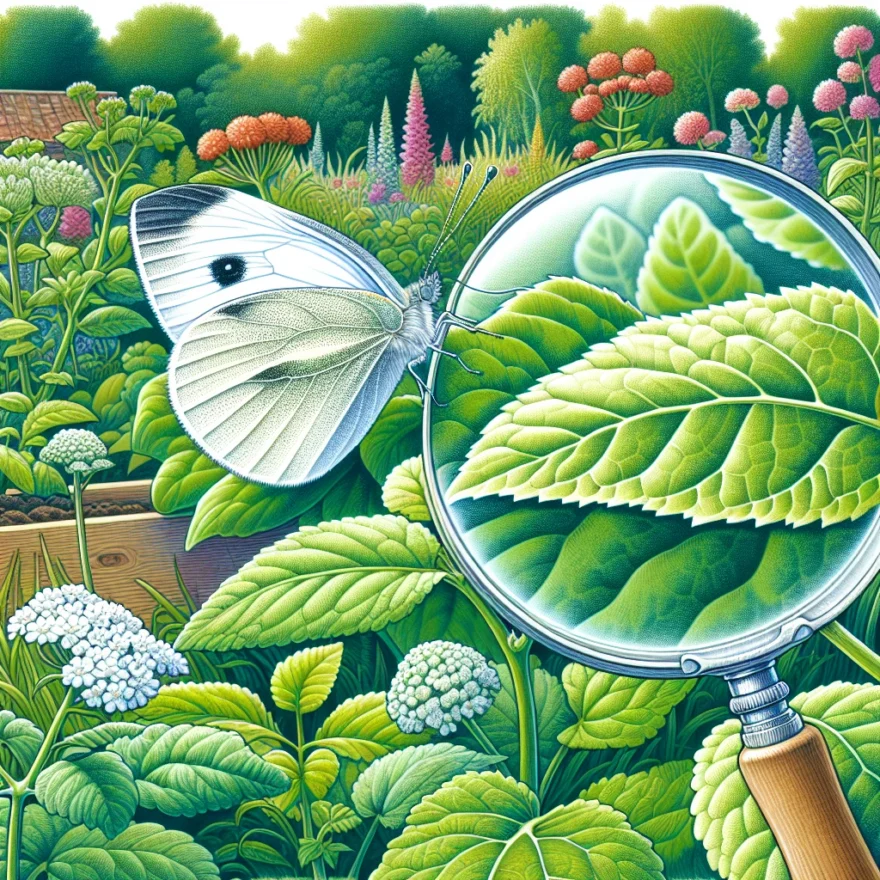
Adult Stage: The adult Cabbage White Butterfly emerges from the chrysalis, ready to mate and lay eggs. The adults have a wingspan of approximately 45-60 mm, with white wings featuring black spots on the forewings. The females have two black spots on each forewing, while the males have only one. The adults feed on nectar from various flowers and can be seen flying from plant to plant during warm, sunny days. The adult stage lasts for 2-3 weeks.
Proper identification of the Cabbage White Butterfly and its various life stages is crucial for implementing effective pest management strategies. Familiarizing yourself with the appearance and behaviors of this common garden pest will allow you to take action early, preventing extensive damage to your plants and crops.
Damage Caused by Cabbage White Butterfly
The Cabbage White Butterfly is a common garden pest that can cause significant damage to plants and crops. The adult butterfly lays its eggs on the undersides of leaves, and once the eggs hatch, the larvae begin to feed on the plants.
The larvae, also known as cabbage worms, are voracious eaters and can quickly strip a plant of its leaves. They prefer to feed on the leaves of brassicas, such as cabbage, broccoli, and cauliflower, but they will also feed on other plants in the garden.
The damage caused by cabbage white butterfly larvae can be severe, especially if left unchecked. The plants may become stunted, and the leaves may be riddled with holes. In severe cases, the entire plant may be destroyed.
In addition to the damage caused by the larvae, the adult butterflies can also be problematic. They feed on the nectar of flowers, which can reduce the amount of nectar available to pollinators such as bees and butterflies. This can have a negative impact on the overall health of the garden ecosystem.
It is important to take steps to manage cabbage white butterfly infestations to minimize the damage they can cause to your garden.
Preventing Cabbage White Butterfly Infestations
Preventing cabbage white butterfly infestations is an effective way to manage this common garden pest. Here are some tips to prevent infestations:
- Use row covers: Covering your plants with row covers can prevent adult cabbage white butterflies from laying eggs on your plants. Be sure to secure the edges of the cover to prevent butterflies from entering.
- Practice crop rotation: Cabbage white butterfly larvae feed on plants in the brassica family, so rotating your crops can help prevent infestations. Planting non-brassica crops in the same area where brassicas were grown can help break the life cycle of the pest.
- Remove plant debris: Cabbage white butterfly pupae can overwinter in plant debris, so removing debris from your garden can help prevent infestations in the spring.
- Plant trap crops: Planting trap crops, such as nasturtiums or mustard greens, can attract cabbage white butterflies away from your main crops. Once the trap crops are infested, you can remove them from your garden.
- Handpick eggs and larvae: Inspect your plants regularly for cabbage white butterfly eggs and larvae. Handpick and destroy any you find.
By taking these preventative measures, you can reduce the likelihood of cabbage white butterfly infestations in your garden.
Natural Predators of Cabbage White Butterfly
One of the most effective ways to control cabbage white butterfly populations is by encouraging natural predators to thrive in your garden. These predators can help keep the butterfly population in check, reducing the need for chemical or manual intervention.
Some of the most common natural predators of cabbage white butterfly include:
- Parasitic wasps: These tiny wasps lay their eggs on the cabbage white butterfly larvae. When the eggs hatch, the wasp larvae feed on the butterfly larvae, ultimately killing them.
- Ladybugs: Ladybugs are voracious predators of many garden pests, including cabbage white butterfly eggs and larvae.
- Robber flies: These predatory flies feed on a wide variety of insects, including cabbage white butterfly adults.
- Birds: Many bird species, such as sparrows and finches, feed on cabbage white butterfly adults and larvae.
Encouraging natural predators to thrive in your garden can be as simple as planting native flowers that provide nectar and pollen for adult insects, or leaving some areas of your garden un-mulched to provide habitat for ground-dwelling predators.
However, it’s important to note that indiscriminate use of insecticides can harm natural predator populations, so it’s best to avoid using these chemicals whenever possible.
By creating a healthy garden ecosystem that supports natural predator populations, you can help keep cabbage white butterfly populations in check and reduce the need for other pest control methods.
Organic Control Methods for Cabbage White Butterfly
The Cabbage White Butterfly is a common garden pest that can cause significant damage to your plants and crops. While chemical control methods may seem like a quick fix, they can harm beneficial insects and have negative effects on the environment. If you’re looking for a more natural approach to managing Cabbage White Butterfly, organic control methods are a great option.
Organic control methods for Cabbage White Butterfly focus on prevention and using natural predators and deterrents to keep populations under control. Here are some effective organic control methods:
- Row Covers: Covering your plants with a lightweight fabric, such as cheesecloth, can prevent adult butterflies from laying their eggs on your plants.
- Handpicking: Check your plants regularly for eggs, caterpillars, and butterflies and remove them by hand. This can be time-consuming, but it’s an effective method for small gardens.
- Natural Predators: Encourage natural predators, such as birds, lacewings, and parasitic wasps, to visit your garden. You can do this by planting nectar-rich flowers and providing nesting boxes for birds.
- Diatomaceous Earth: Sprinkling food-grade diatomaceous earth on your plants can help deter Cabbage White Butterfly. The sharp particles in the powder will scratch the butterfly’s soft body, causing it to dehydrate and die.
- Garlic Spray: Garlic contains sulfur compounds that can repel Cabbage White Butterfly. To make a garlic spray, blend a few cloves of garlic with water and strain the mixture. Spray the solution on your plants every few days.
- Neem Oil: Neem oil is a natural insecticide that can repel and kill Cabbage White Butterfly. Mix a few drops of neem oil with water and spray the solution on your plants.
Remember, organic control methods may take longer to see results, but they are safer for the environment and can help promote a healthy garden ecosystem. By using a combination of prevention, natural predators, and deterrents, you can effectively manage Cabbage White Butterfly in your garden.
Chemical Control Options for Cabbage White Butterfly
While organic control methods are preferable for managing cabbage white butterfly infestations, chemical control options are also available for gardeners who are dealing with severe infestations. Chemical control methods should only be used as a last resort, and gardeners should always follow the instructions on the label carefully to avoid harming beneficial insects and pollinators.
One chemical control option for cabbage white butterfly is Bacillus thuringiensis (Bt), a naturally occurring bacteria that is toxic to the larvae of many moth and butterfly species, including the cabbage white butterfly. Bt can be applied as a spray to affected plants, and it is generally considered safe for humans and other animals.
Another chemical control option is spinosad, a compound derived from soil bacteria that is toxic to many insect pests, including the cabbage white butterfly. Spinosad can be applied as a spray or dust to affected plants, and it is considered safe for humans and many beneficial insects.
It is important to note that chemical control methods can also harm beneficial insects, such as bees and butterflies, so it is important to use them sparingly and only when necessary. Gardeners should also be aware of the potential environmental impacts of using chemical pesticides, and should always dispose of them properly according to local regulations.
When using chemical control methods, it is important to follow the instructions on the label carefully, and to wear protective clothing and equipment to avoid exposure to the chemicals. It is also important to monitor the effectiveness of chemical control methods, and to switch to alternative methods if the infestation persists.
Monitoring and Early Detection of Cabbage White Butterfly
One of the most important aspects of managing cabbage white butterfly in your garden is monitoring and early detection. By keeping a close eye on your plants and checking for signs of infestation, you can take action before the problem becomes too severe.
One of the easiest ways to monitor for cabbage white butterfly is to simply observe your plants on a regular basis. Look for any signs of damage, such as holes in the leaves or chewed edges. You may also see the butterflies themselves flying around your garden.
Another effective method of monitoring is to use sticky traps. These traps are coated with a sticky substance that will catch any adult butterflies that fly into them. You can hang the traps near your plants and check them regularly to see if any butterflies have been caught.
Early detection is key when it comes to managing cabbage white butterfly. As soon as you notice any signs of infestation, it’s important to take action. The longer you wait, the more difficult it will be to control the problem.
Some signs that you may have a cabbage white butterfly infestation include:
- Holes in leaves
- Chewed edges on leaves
- Caterpillars on your plants
- Butterflies flying around your garden
If you notice any of these signs, it’s important to take action right away. The earlier you can catch the problem, the easier it will be to control.
Next, we’ll explore some methods for integrated pest management that can help you control cabbage white butterfly in your garden.
Integrated Pest Management for Cabbage White Butterfly
Integrated Pest Management (IPM) is an approach to pest control that utilizes a combination of techniques to manage pests in an environmentally responsible and effective way. When it comes to managing Cabbage White Butterfly in your garden, IPM can be a valuable tool.
The first step in IPM for Cabbage White Butterfly is to monitor your garden regularly for signs of infestation. Look for eggs, larvae, and adult butterflies on the undersides of leaves, as well as any damage to leaves and stems. Early detection is key to preventing a full-blown infestation.
Once you have detected Cabbage White Butterfly in your garden, it is important to identify the severity of the infestation. If the infestation is minor, you may be able to control it using natural predators or organic control methods. However, if the infestation is severe, you may need to consider chemical control options.
When using chemical control options, it is important to follow the instructions carefully and use the product only as directed. Be sure to wear protective clothing and take precautions to prevent exposure to the chemicals.
Companion planting can also be an effective tool in IPM for Cabbage White Butterfly. Planting herbs such as dill, thyme, and mint can help deter Cabbage White Butterfly from laying their eggs on your plants. Additionally, planting trap crops such as nasturtiums can help lure Cabbage White Butterfly away from your other plants.
Finally, creating a healthy garden ecosystem is key to preventing Cabbage White Butterfly infestations. By maintaining healthy soil, providing adequate water and nutrients, and promoting biodiversity in your garden, you can create an environment that is less hospitable to pests.
Companion Planting to Deter Cabbage White Butterfly
Companion planting is a natural and effective way to deter cabbage white butterflies from your garden. By planting certain herbs, flowers, and vegetables near your crops, you can create an environment that is less attractive to these pests.
One popular companion plant for deterring cabbage white butterflies is nasturtium. This flowering plant has a strong scent that repels many insects, including cabbage white butterflies. Plant nasturtiums near your cabbage, broccoli, and other brassicas to keep these pests at bay.
Another effective companion plant is thyme. This herb has a strong aroma that can deter cabbage white butterflies and other pests. Plant thyme near your brassicas, or use it as a border around your garden.
Marigolds are also a great companion plant for deterring cabbage white butterflies. These flowers have a strong scent that can repel many pests, including aphids and whiteflies. Plant marigolds near your brassicas, or use them as a border around your garden.
Other companion plants that can help deter cabbage white butterflies include:
- Garlic
- Onions
- Dill
- Sage
- Mint
- Lavender
By incorporating these companion plants into your garden, you can create a natural barrier against cabbage white butterflies and other pests. Plus, these plants can add beauty and diversity to your garden, making it a more enjoyable space for you and your family to spend time in.
Creating a Healthy Garden Ecosystem
Creating a healthy garden ecosystem is important for managing cabbage white butterfly and other garden pests. A healthy garden ecosystem includes a diverse range of plants, beneficial insects, and microorganisms that work together to support the growth and health of your garden.
One way to create a healthy garden ecosystem is to incorporate companion planting. Companion planting involves planting certain plants together that have a mutually beneficial relationship. For example, planting marigolds near your cabbage plants can deter cabbage white butterfly and other pests.
Another way to promote a healthy garden ecosystem is to avoid using pesticides and other chemicals that can harm beneficial insects and microorganisms. Instead, focus on organic control methods and integrated pest management strategies.
It’s also important to maintain healthy soil by adding compost and other organic matter. Healthy soil supports the growth of strong and healthy plants that are less susceptible to pests and diseases.
Finally, consider incorporating native plants into your garden. Native plants are adapted to your local climate and soil conditions, making them more resilient and less reliant on chemical inputs.
By creating a healthy garden ecosystem, you can reduce the impact of cabbage white butterfly and other pests on your garden while promoting the growth and health of your plants.
Commonly Affected Plants and Crops
Cabbage white butterflies are known to target a variety of plants and crops, particularly those in the brassica family. Some of the most commonly affected plants and crops include:
- Cabbage
- Kale
- Broccoli
- Cauliflower
- Brussels sprouts
- Collard greens
- Radishes
- Turnips
- Mustard greens
- Arugula
These plants are all highly nutritious and delicious, which is why they are often grown in home gardens and on small farms. Unfortunately, they are also highly attractive to cabbage white butterflies, which can quickly decimate a crop if left unchecked.
It’s important to note that cabbage white butterflies are not limited to the brassica family. They may also lay their eggs on other plants, such as nasturtiums, which can then serve as a host for their larvae.
To protect your plants and crops from cabbage white butterfly damage, it’s important to take proactive measures to prevent infestations and to monitor your garden regularly for signs of these pests.
Cabbage White Butterfly and Climate Change
Climate change is a significant factor affecting the behavior and distribution of many insect species, including the Cabbage White Butterfly. As temperatures rise and weather patterns change, the lifecycle and behavior of this common garden pest may be impacted.
One potential impact of climate change on the Cabbage White Butterfly is the lengthening of its breeding season. Warmer temperatures may allow the butterfly to breed earlier in the year, potentially leading to more generations and increased populations.
Additionally, changes in weather patterns may affect the migration patterns of the Cabbage White Butterfly. Warmer temperatures and altered precipitation levels could cause the butterfly to shift its range and move to new areas, potentially causing new infestations in previously unaffected regions.
Finally, climate change may also affect the natural predators of the Cabbage White Butterfly. As temperatures and weather patterns change, the populations of predators such as birds and parasitic wasps may also be impacted, potentially leading to changes in the balance of the ecosystem and the prevalence of the Cabbage White Butterfly.
Overall, while the exact impacts of climate change on the Cabbage White Butterfly are still being studied, it is clear that this common garden pest is not immune to the effects of our changing climate. As gardeners and farmers work to manage infestations of the Cabbage White Butterfly, it is important to keep in mind the potential impacts of climate change and to consider how we can work to mitigate these effects in the years to come.
Frequently Asked Questions About Cabbage White Butterfly
What plants are most commonly affected by Cabbage White Butterfly?
Cabbage White Butterfly is most commonly known to affect members of the Brassicaceae family, which includes cabbage, broccoli, kale, and cauliflower. However, they have also been known to feed on other plants such as nasturtiums, sweet alyssum, and mustard greens.
How can I tell if my garden has a Cabbage White Butterfly infestation?
If you notice small white or yellow eggs on the undersides of leaves, small green caterpillars with black heads, or large holes in leaves, it is likely that you have a Cabbage White Butterfly infestation in your garden.
Are there any natural predators of Cabbage White Butterfly?
Yes, there are several natural predators of Cabbage White Butterfly including parasitic wasps, tachinid flies, and birds such as sparrows and finches.
What are some organic control methods for Cabbage White Butterfly?
Some organic control methods for Cabbage White Butterfly include handpicking caterpillars off of plants, using row covers to prevent adult butterflies from laying eggs, and introducing natural predators such as parasitic wasps.
What are some chemical control options for Cabbage White Butterfly?
Chemical control options for Cabbage White Butterfly include using insecticidal soaps or pyrethrin-based sprays. However, it is important to use these methods sparingly and only as a last resort as they can harm beneficial insects and pollinators.
How can I create a healthy garden ecosystem to prevent Cabbage White Butterfly infestations?
Creating a healthy garden ecosystem involves planting a variety of plants to attract beneficial insects and pollinators, practicing crop rotation, and using organic fertilizers and pest control methods. This will help to create a balanced ecosystem that is less susceptible to infestations from pests such as Cabbage White Butterfly.
How does climate change affect Cabbage White Butterfly?
Climate change can affect the timing of Cabbage White Butterfly emergence and their reproductive cycles. Warmer temperatures can cause earlier emergence and extended breeding seasons, which can lead to increased populations and more damage to crops.
What is Integrated Pest Management (IPM) and how can it be used to manage Cabbage White Butterfly?
Integrated Pest Management is a holistic approach to pest control that involves using a combination of methods including cultural, biological, and chemical control methods. IPM can be used to manage Cabbage White Butterfly by incorporating practices such as crop rotation, introducing natural predators, and using pesticides only as a last resort.
What are some companion plants that can help to deter Cabbage White Butterfly?
Companion plants such as marigolds, nasturtiums, and mint can help to deter Cabbage White Butterfly by masking the scent of the host plants and attracting natural predators such as parasitic wasps.
How can I monitor and detect Cabbage White Butterfly early on?
Regularly inspecting plants for eggs, caterpillars, and damage can help to detect Cabbage White Butterfly early on. Using pheromone traps can also help to monitor adult butterfly populations.
What are some ways to prevent Cabbage White Butterfly infestations in my garden?
Preventing Cabbage White Butterfly infestations involves using a combination of methods such as planting resistant varieties of plants, practicing crop rotation, using row covers, introducing natural predators, and maintaining a healthy garden ecosystem.
Conclusion: Managing Cabbage White Butterfly in Your Garden
Managing Cabbage White Butterfly in Your Garden
After reading this article, you should have a good understanding of the Cabbage White Butterfly and how to manage them in your garden. Here are some key takeaways to help you prevent and control infestations:
– Start by identifying the butterfly in its different life stages. Knowing what to look for will help you detect and manage infestations early.
– Cabbage White Butterfly larvae feed on brassicas, so if you grow these plants, be vigilant in monitoring for signs of infestation. Covering your plants with a fine mesh or row cover can help prevent the butterflies from laying their eggs on your plants.
– Encourage natural predators like birds, wasps, and spiders to help control the Cabbage White Butterfly population. You can also introduce beneficial insects like ladybugs and lacewings to your garden.
– Organic control methods like handpicking, using insecticidal soap or neem oil, and applying Bacillus thuringiensis (BT) can help control infestations without harming beneficial insects.
– If infestations are severe, chemical control options like pyrethrin or spinosad can be used as a last resort. Always follow the label instructions and use caution when applying pesticides.
– Companion planting with plants like mint, thyme, and rosemary can help deter Cabbage White Butterflies from laying their eggs on your plants.
– Creating a healthy garden ecosystem with diverse plantings, proper soil management, and good cultural practices can help prevent infestations and promote the health of your plants.
By implementing these strategies, you can effectively manage Cabbage White Butterfly infestations in your garden while minimizing harm to beneficial insects and the environment. Remember to stay vigilant and monitor your plants regularly to catch infestations early and take action before they become severe.