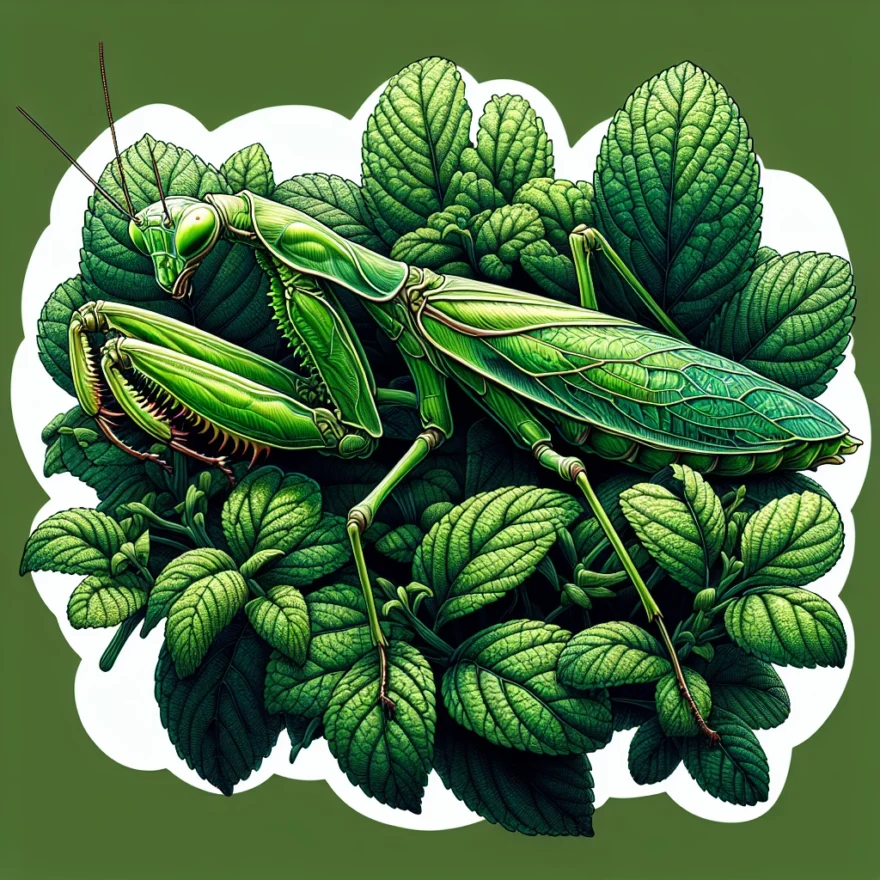
Introduction to the African Mantis
Stepping into the fascinating world of insects, one cannot help but be amazed by the diverse range of species and their unique abilities. Among them, the African Mantis, scientifically known as Sphodromantis viridis, stands out as a remarkable specimen. This insect, native to Africa, is renowned for its exceptional camouflage skills, earning it the title “Master of Camouflage”.
The African Mantis, also commonly referred to as the African Praying Mantis, is a species of mantis that belongs to the Mantidae family. This creature is not only intriguing due to its physical appearance but also its behavior and survival tactics. With their elongated bodies, triangular heads with large compound eyes, and raptorial forelegs, these mantises are well-adapted for a predatory lifestyle.
While their name suggests a religious connotation, the term ‘praying’ in their name actually refers to the stance that these insects adopt when they are waiting for prey. Their folded forelegs give the impression of prayer, but in reality, these legs are powerful weapons used to catch and hold onto their prey.
Despite their somewhat intimidating appearance, African Mantises are not harmful to humans. In fact, they are often kept as pets due to their docile nature and low maintenance requirements. However, their true prowess lies in their natural habitat, where their exceptional camouflage skills and predatory tactics come into play.
Join us as we delve deeper into the world of the African Mantis, exploring its habitat, diet, reproduction, and how it compares to other mantis species. We will also look at the threats facing this intriguing insect and its representation in popular culture. So, prepare to be amazed by the master of camouflage, the African Mantis.
Table of contents
Master of Camouflage
When it comes to the art of disguise, few creatures can match the skill and intricacy of the African Mantis. This insect is a true master of camouflage, using its unique physical attributes and behaviors to blend seamlessly into its surroundings. The African Mantis’ primary means of camouflage is its coloration, which can range from a vibrant green to a dull brown, depending on its specific habitat. This allows the mantis to hide among leaves, stems, and branches, effectively disappearing from the view of predators and prey alike.
But the African Mantis’ camouflage goes beyond mere coloration. Its slender, elongated body and leaf-like appendages mimic the shapes and textures of the plants among which it lives. When this mantis stays still, which it often does to avoid detection, it can be almost impossible to distinguish it from its surroundings. Even its movements are designed to maintain its disguise, as it sways gently back and forth to mimic the movement of leaves in the wind.
Furthermore, the African Mantis has a fascinating ability to adapt its coloration according to its environment. If it moves to a new location with different predominant colors, it can gradually change its own coloration to match. This process, known as physiological color change, can take a few days to a couple of weeks, but it ensures that the mantis remains hidden and protected.
Interestingly, the African Mantis also uses its camouflage for hunting. It lies in wait, perfectly camouflaged among the vegetation, and when an unsuspecting insect comes within reach, it strikes with lightning speed. Its camouflage not only protects it from predators but also makes it a formidable predator itself.
So, the next time you’re walking through the verdant landscapes of Africa, take a closer look at the leaves and branches around you. You might just be lucky enough to spot the master of camouflage, the African Mantis, hidden in plain sight.
Habitat and Distribution
The African Mantis, also known as the African praying mantis or Sphodromantis lineola, is a fascinating insect that is widely distributed across the African continent. Its unique characteristics and impressive camouflage abilities make it a true master of disguise in its natural habitat.
The African Mantis can be found in various habitats throughout Africa, including grasslands, forests, and even urban areas. They are commonly found in countries such as South Africa, Kenya, Tanzania, and Zimbabwe. This widespread distribution allows them to adapt to a range of environmental conditions and thrive in different ecosystems.
One of the key factors that contribute to the African Mantis’ success in different habitats is its ability to camouflage itself effectively. The mantis has a slender body with long legs, which helps it blend seamlessly with its surroundings. Its coloration can vary from shades of green to brown, depending on the specific environment it inhabits. This remarkable camouflage allows the mantis to remain hidden from predators and ambush its prey without being detected.
The African Mantis is a highly adaptable species and can be found in both rural and urban areas. In rural settings, they can be found in grassy fields, open woodlands, and gardens. In urban environments, they can be seen in parks, gardens, and even on the walls of buildings. Their ability to thrive in urban areas is due to their opportunistic feeding habits, as they can prey on a variety of insects commonly found in human-populated areas.
Despite their widespread distribution, African Mantises are not commonly seen by humans. This is mainly because of their excellent camouflage and their tendency to remain motionless for long periods, waiting for prey to come within striking distance. Their stealthy behavior and ability to blend in with their surroundings make them difficult to spot, even for keen observers.
It is important to note that while the African Mantis is native to Africa, it has also been introduced to other parts of the world, such as the United States and Europe. These introductions have been primarily accidental, occurring through the transport of plants or other materials. However, they have managed to establish populations in some regions outside of their native range.
In conclusion, the African Mantis is a fascinating insect that has mastered the art of camouflage. Its ability to blend in with its surroundings and adapt to different habitats has contributed to its widespread distribution across the African continent. Whether in rural or urban areas, the African Mantis remains a hidden gem of the insect world, silently observing its surroundings and striking with precision when the opportunity arises.
Diet and Hunting Techniques
The African Mantis is a fascinating creature known for its remarkable hunting techniques and ability to blend seamlessly into its surroundings. Its diet consists primarily of other insects, making it a formidable predator in the insect world.
Unlike some other mantis species that rely on ambush hunting, the African Mantis is an active hunter. It uses its excellent vision and lightning-fast reflexes to capture its prey. Its hunting techniques are highly specialized and adapted to its specific environment.
One of the most remarkable aspects of the African Mantis’s hunting strategy is its masterful camouflage. This insect has the incredible ability to mimic its surroundings, perfectly blending in with leaves, twigs, and other vegetation. Its body shape and coloration allow it to become virtually invisible to both its prey and potential predators.
When hunting, the African Mantis typically adopts a sit-and-wait approach. It remains motionless, patiently waiting for an unsuspecting insect to come within striking distance. Once a suitable prey item is within reach, the mantis strikes with lightning speed, using its sharp forelegs to grab and immobilize its victim.
The African Mantis is an opportunistic feeder, meaning it will eat a wide variety of insects. Its diet includes flies, moths, crickets, beetles, and even other mantises. Its strong forelegs are equipped with spines that help it to securely hold onto its prey while feeding.
Interestingly, the African Mantis is also known to exhibit cannibalistic behavior. In some cases, females will consume males after mating. This behavior is believed to provide the female with additional nutrients to support the development of her eggs.
After capturing its prey, the African Mantis will consume it by biting and chewing. It has powerful mandibles that allow it to tear apart its food into smaller, more manageable pieces. This feeding process ensures that the mantis can extract as much nutrition as possible from its prey.
Overall, the African Mantis is a highly skilled predator with a specialized diet and unique hunting techniques. Its ability to blend into its surroundings and its lightning-fast reflexes make it a true master of camouflage and a formidable force in the insect world.
Reproduction and Lifecycle
The African Mantis, also known as the African praying mantis, is a fascinating insect that exhibits a remarkable reproductive and lifecycle strategy. Let’s delve into the details of how these mantises reproduce and navigate through their lifecycle.
Reproduction in African Mantises typically occurs during the warmer months, when the conditions are favorable for mating. Male mantises are known for their elaborate courtship rituals, which are performed to attract females. These rituals often involve complex movements and displays of the male’s colorful wings and body patterns.
Once a male successfully attracts a female, they engage in a mating process that can be quite intense. The male carefully approaches the female, being cautious not to become a potential meal for her. In some cases, the female may even attempt to cannibalize the male during or after mating. This behavior, known as sexual cannibalism, may seem gruesome, but it serves an important purpose for the survival of the species.
After mating, the female African Mantis will lay her eggs. Unlike some other mantis species, the African Mantis does not create an elaborate egg case or ootheca. Instead, she deposits her eggs individually or in small clusters on suitable vegetation or other surfaces. This unique strategy allows for better camouflage and protection of the eggs.
Once the eggs are laid, the female mantis does not provide any further care or protection. The eggs are left to develop on their own, exposed to the elements. This may seem risky, but it is a survival strategy that has proven successful for the African Mantis species.
Within a few weeks, the eggs hatch, and tiny mantis nymphs emerge. These nymphs resemble miniature versions of the adults and undergo a series of molts as they grow. Molting is a process where the mantis sheds its exoskeleton to accommodate its increasing size. Each molt reveals a larger and more developed nymph.
As the nymphs grow, they go through several stages called instars. During each instar, the nymphs become more adept at hunting and capturing prey. They develop stronger grasping forelegs and become more skilled at camouflaging themselves within their surroundings.
Over the course of several months, the nymphs undergo multiple molts and instars until they reach adulthood. The exact number of molts and instars can vary depending on factors such as temperature and food availability.
Once the African Mantis reaches adulthood, it is fully equipped for reproduction. The cycle begins again as the adult mantises engage in courtship rituals and mate to produce the next generation.
The reproductive and lifecycle strategies of the African Mantis showcase the incredible adaptability and survival instincts of these remarkable insects. From their elaborate courtship rituals to their unique egg-laying behavior, the African Mantis has evolved to ensure the continuation of its species in the diverse habitats it inhabits.
African Mantis vs. Other Mantis Species
The African Mantis, also known as the Sphodromantis lineola, is a fascinating species that stands out among other mantis species due to its unique characteristics and behavior. While there are numerous mantis species found across the globe, the African Mantis possesses certain distinct features that set it apart.
One of the key differences between the African Mantis and other mantis species is its size. The African Mantis is relatively larger compared to many other mantis species, with adult females reaching lengths of up to 4 inches. This makes them one of the largest mantis species in Africa. In contrast, some other mantis species are smaller in size, with females measuring around 2-3 inches.
Another distinguishing feature of the African Mantis is its unique coloration. These mantises exhibit a range of colors, including shades of green, brown, and even pink. This versatile coloration allows them to blend seamlessly into their surroundings, making them highly effective at camouflage. In comparison, some other mantis species may have more limited color variations, which may not provide them with the same level of camouflage abilities.
The hunting techniques employed by the African Mantis also differ from those of other mantis species. These mantises are known for their aggressive and active hunting style. They are skilled ambush predators, relying on their exceptional camouflage to blend in with their environment and wait for unsuspecting prey to approach. Once within striking range, the African Mantis uses its sharp forelegs to snatch its prey with lightning speed. In contrast, some other mantis species may employ a more patient approach, remaining still and waiting for prey to come within reach.
Furthermore, the reproductive behavior of the African Mantis showcases distinct differences from other mantis species. After mating, the female African Mantis lays eggs in a protective case called an ootheca. Unlike some other mantis species, the African Mantis ootheca is relatively small and contains fewer eggs. This is in contrast to certain mantis species that produce larger oothecae with a higher number of eggs.
Overall, while all mantis species share certain common characteristics, the African Mantis stands out due to its larger size, versatile coloration, aggressive hunting techniques, and unique reproductive behavior. These distinct features contribute to the African Mantis earning its title as the “Master of Camouflage” in the insect world.
Threats and Conservation
The African Mantis, with its remarkable camouflage abilities, is truly a master of blending into its surroundings. However, despite its impressive survival skills, this fascinating insect faces a number of threats in its natural habitat. Understanding these threats and taking steps towards conservation are crucial for ensuring the continued existence of this species.
One of the primary threats to the African Mantis is habitat loss. As human populations expand and urban areas encroach upon natural habitats, the available space for mantises to thrive diminishes. Deforestation, agriculture, and urban development result in the destruction of the vegetation that these insects rely on for shelter and hunting.
Pesticide use is another significant threat to the African Mantis. As agricultural practices intensify, the widespread use of chemical pesticides has a detrimental impact on mantis populations. These insects are highly susceptible to the toxic effects of pesticides, which can lead to reduced numbers and even local extinctions.
Climate change also poses a threat to the African Mantis. As temperatures rise and weather patterns shift, the delicate balance of ecosystems is disrupted. This can affect the availability of food sources for the mantis, as well as its ability to regulate body temperature and survive in changing conditions.
In addition to these direct threats, the African Mantis also faces challenges from invasive species. Non-native predators and competitors can disrupt the natural balance of ecosystems, putting additional pressure on mantis populations.
Conservation efforts are vital for protecting the African Mantis and its unique role in the ecosystem. One approach is the preservation and restoration of natural habitats. By conserving areas with high mantis populations and creating protected reserves, we can provide a safe haven for these insects to thrive.
Education and awareness campaigns are also essential for promoting the conservation of the African Mantis. By educating communities about the importance of mantises in maintaining ecological balance and the threats they face, we can foster a sense of responsibility and encourage sustainable practices.
Furthermore, reducing the use of chemical pesticides and promoting organic farming practices can help mitigate the negative impacts on mantis populations. By adopting alternative pest control methods, we can create a healthier environment for mantises and other beneficial insects.
Collaborative research efforts are crucial for understanding the specific needs and vulnerabilities of the African Mantis. By studying their behavior, habitat requirements, and population dynamics, scientists can provide valuable insights for conservation strategies.
In conclusion, the African Mantis, despite its incredible camouflage abilities, is not immune to the threats posed by habitat loss, pesticide use, climate change, and invasive species. Conservation efforts, including habitat preservation, education, sustainable practices, and research, are essential for ensuring the continued survival of this remarkable insect.
African Mantis in Popular Culture
The African Mantis, with its unique appearance and fascinating behavior, has captured the imagination of people around the world. Its mastery of camouflage and predatory skills have made it a popular subject in various forms of popular culture. From movies and books to artwork and even video games, the African Mantis has left its mark on the creative world.
In literature, the African Mantis often serves as a symbol of stealth and cunning. Its ability to blend seamlessly into its surroundings has been used as a metaphor for hidden agendas and deceit. In some stories, the mantis is portrayed as a mysterious and enigmatic character, lurking in the shadows and manipulating events from behind the scenes.
Visual artists have also been inspired by the African Mantis. Its intricate body structure and vibrant colors make it a visually striking subject for paintings, sculptures, and illustrations. Artists often depict the mantis in its natural habitat, showcasing its camouflage abilities or capturing its intense gaze as it waits patiently for its prey.
The African Mantis has also made its way into the world of film and television. In nature documentaries, its unique hunting techniques and fascinating behavior are often showcased, highlighting its role as a top predator in its ecosystem. Additionally, the mantis has made appearances in fictional works, with characters inspired by its stealth and agility.
Video games have also embraced the African Mantis’s allure. In some games, players can take on the role of a mantis, navigating through a virtual world and utilizing its camouflage abilities to outsmart enemies. The mantis’s ability to blend into its surroundings and strike with precision has made it a popular choice for stealth-based gameplay.
Furthermore, the African Mantis has become a symbol of patience and adaptability in popular culture. Its ability to remain perfectly still for extended periods, waiting for the perfect moment to strike, has been used as a metaphor for perseverance and strategic thinking. It serves as a reminder that sometimes, the best course of action is to observe and wait for the right opportunity.
Overall, the African Mantis’s unique characteristics and captivating behavior have made it a beloved figure in popular culture. Its mastery of camouflage, predatory skills, and patient nature have inspired artists, writers, filmmakers, and game developers to incorporate its essence into their creations. Whether it’s through symbolism, visual representation, or gameplay mechanics, the African Mantis continues to leave a lasting impression on the creative world.
Common Questions about the African Mantis
As one of the most fascinating and elusive creatures in the insect world, the African Mantis often leaves people with many questions. In this section, we will address some of the common inquiries about this remarkable species.
1. How does the African Mantis camouflage itself?
The African Mantis is a true master of disguise. It has evolved to blend seamlessly with its surroundings, making it nearly invisible to both predators and prey. This species has a remarkable ability to change its color to match its environment, allowing it to blend in with leaves, branches, or flowers. Additionally, it can adopt various postures to mimic the appearance of a leaf or a twig, further enhancing its camouflage.
2. What is the average lifespan of an African Mantis?
The lifespan of an African Mantis can vary depending on factors such as habitat and availability of food. On average, these mantises live for about 6-12 months. However, in captivity, with proper care and nutrition, they can live up to 18 months.
3. Are African Mantises aggressive towards humans?
No, African Mantises are not aggressive towards humans. They are generally docile creatures and do not pose any threat to people. However, it’s important to handle them with care to avoid any unintentional harm to the mantis or yourself.
4. Can African Mantises fly?
Yes, African Mantises are capable of flight. They have two pairs of wings that enable them to move from one location to another. However, they primarily use their wings for short-distance flights, such as escaping from predators or reaching a new hunting ground.
5. Do African Mantises have any natural predators?
While African Mantises are skilled predators themselves, they do have natural enemies. Some of their predators include birds, reptiles, and larger insects. However, their exceptional camouflage and stealthy hunting techniques often make them difficult to detect and capture.
6. Are African Mantises beneficial to the ecosystem?
Yes, African Mantises play a vital role in maintaining the balance of the ecosystem. As voracious predators, they help control populations of other insects, including pests. By keeping these populations in check, mantises contribute to the overall health and stability of their habitats.
7. Can African Mantises be kept as pets?
Yes, African Mantises can be kept as pets. Many insect enthusiasts and hobbyists choose to keep them in captivity. However, it’s important to create a suitable environment that mimics their natural habitat and provide them with a proper diet. It’s also crucial to ensure that they are acquired from legal and ethical sources.
8. How do African Mantises reproduce?
African Mantises reproduce through a process called sexual reproduction. After mating, the female will lay eggs in a protective case called an ootheca. These eggs will hatch into tiny nymphs, which will undergo several molts before reaching adulthood.
9. Are African Mantises found only in Africa?
No, despite their name, African Mantises are not limited to Africa. They can also be found in other parts of the world, including Asia, Europe, and the Americas. However, they are most commonly associated with Africa due to their abundance and diversity in the continent.
10. How do African Mantises catch their prey?
African Mantises are ambush predators. They rely on their excellent camouflage and stealthy movements to capture their prey. Once an unsuspecting insect comes within striking range, the mantis will use its powerful forelegs to snatch and immobilize its victim. It then consumes the prey at its leisure.
These are just a few of the many questions that arise when exploring the world of the African Mantis. Their incredible camouflage abilities, unique behaviors, and important ecological role make them a truly fascinating insect to study and appreciate.