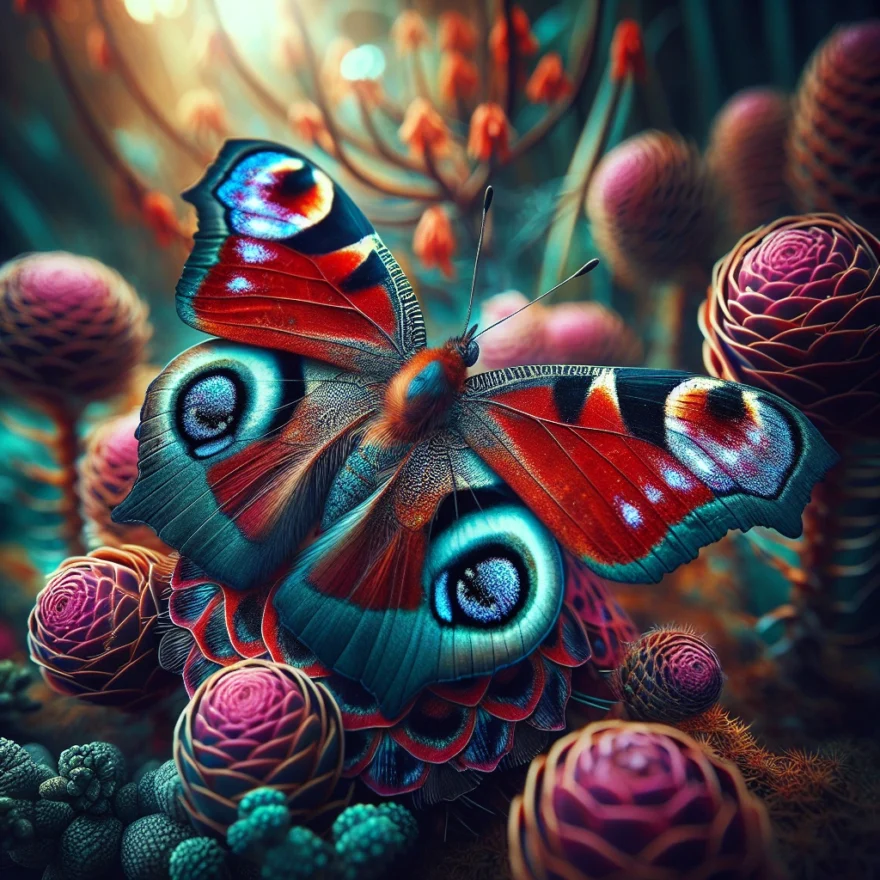
Introduction to the African Peacock Butterfly
Graceful, vibrant, and undeniably captivating, the African Peacock Butterfly, scientifically known as Papilio ophidicephalus, is a true spectacle of nature. This fascinating insect, named after the peacock for its strikingly beautiful and colorful wings, is a sight to behold in the wild. Its iridescent blue and green hues, punctuated with eye-catching patterns, make it one of the most visually stunning butterflies in the world.
The African Peacock Butterfly, belonging to the Papilionidae family, is not just a pretty face. It is a marvel of biological adaptation, showcasing unique behaviors and life cycle stages that make it a subject of great interest among entomologists and nature enthusiasts alike. This species, like a hidden gem in the entomological world, offers a perfect blend of beauty, uniqueness, and scientific intrigue.
Despite its stunning appearance, the African Peacock Butterfly remains relatively unknown to many people outside of its native range. This article aims to shed light on this extraordinary species, delving into its physical characteristics, life cycle, habitat, diet, interaction with humans, and conservation status. By exploring these aspects, we hope to provide a comprehensive understanding of the African Peacock Butterfly, allowing you to appreciate its beauty and significance in the grand tapestry of nature.
Table of contents
- Introduction to the African Peacock Butterfly
- Physical Characteristics of the African Peacock Butterfly
- Life Cycle of the African Peacock Butterfly
- Habitat and Distribution of the African Peacock Butterfly
- Diet and Predation
- The African Peacock Butterfly and Human Interaction
- Conservation Status of the African Peacock Butterfly
- Frequently Asked Questions about the African Peacock Butterfly
Physical Characteristics of the African Peacock Butterfly
The African Peacock Butterfly, scientifically known as Papilio constantinus, is a true marvel of nature, boasting a striking physical appearance that has captivated the hearts of entomologists and nature enthusiasts alike. This butterfly, native to the African continent, is renowned for its large size and vibrant coloration, making it one of the most visually stunning species in the Lepidoptera order.
One of the most distinctive features of the African Peacock Butterfly is its impressive wingspan, which can reach up to 10 cm (approximately 4 inches) in males and slightly less in females. This makes it one of the larger butterfly species found in Africa.
The upper side of the wings of the African Peacock Butterfly is a vibrant blue-green color, which is where it gets its common name. The lower side of the wings, on the other hand, is a more subdued brown color, providing an effective camouflage when the butterfly is at rest with its wings closed. This stark contrast between the upper and lower sides of the wings is a common feature in many butterfly species and serves as a form of protective coloration against predators.
The wings are adorned with a series of eye-catching, peacock-like eyespots. These eyespots, located on both the upper and lower sides of the wings, are a crucial part of the butterfly’s defense mechanism. When threatened, the African Peacock Butterfly will open its wings wide, revealing the large, intimidating eyespots in an attempt to scare off potential predators.
Another notable feature of the African Peacock Butterfly is its elongated body, which is covered in fine, hair-like scales. The body is typically a dark color, often black or dark brown, and is contrasted by bright red or orange spots along the sides. The butterfly also boasts a pair of long, slender antennae, which it uses for sensing its environment and locating food sources.
In terms of sexual dimorphism, there are slight differences between males and females. Males are generally larger and more brightly colored than females, a common trait in many butterfly species. Additionally, females have rounded wings, while males have more angular wings, giving them a slightly different shape when viewed from above.
The African Peacock Butterfly is indeed a sight to behold, with its striking physical characteristics making it a favorite among butterfly enthusiasts. Its vibrant coloration, large size, and distinctive eyespots all contribute to its status as one of Africa’s most beautiful and intriguing butterfly species.
Life Cycle of the African Peacock Butterfly
The life cycle of the African Peacock Butterfly is a fascinating journey that spans several stages, each marked by unique transformations. Understanding this life cycle provides valuable insights into the remarkable nature of these beautiful creatures.
The African Peacock Butterfly undergoes a complete metamorphosis, which consists of four distinct stages: egg, larva (caterpillar), pupa (chrysalis), and adult. Let’s explore each of these stages in detail:
Egg Stage:
The life cycle begins when the female African Peacock Butterfly lays her eggs on the underside of host plant leaves. The eggs are tiny, round, and pale yellow in color. They are carefully placed in clusters to ensure the survival of the species.
Larva Stage:
Once the eggs hatch, the larva emerges. The larva, commonly known as a caterpillar, is the feeding stage of the butterfly’s life cycle. The African Peacock Butterfly caterpillar has a vibrant appearance with a black body covered in spiky bristles and striking yellow and white markings.
During this stage, the caterpillar voraciously feeds on the leaves of its host plants, which include various species of milkweed and other flowering plants. It molts several times, shedding its old skin to accommodate its growing body.
Pupa Stage:
After the caterpillar has reached its full size, it enters the pupa stage. It attaches itself to a secure location, such as a leaf or a twig, and undergoes a remarkable transformation inside a protective case called a chrysalis.
Inside the chrysalis, the caterpillar’s body undergoes a complete reorganization. Tissues, organs, and appendages are broken down and reformed into the adult butterfly structure. This process, known as metamorphosis, takes place over a period of several days or weeks, depending on environmental conditions.
Adult Stage:
Finally, the fully developed butterfly emerges from the chrysalis. Its wings are initially soft and crumpled, but they quickly expand and harden. The African Peacock Butterfly displays stunning colors and patterns on its wings, with a combination of iridescent blues, greens, and browns.
As adults, African Peacock Butterflies engage in various behaviors, including feeding on nectar from flowers, mating, and laying eggs to continue the life cycle.
The life cycle of the African Peacock Butterfly is a remarkable example of nature’s ability to undergo incredible transformations. Each stage serves a specific purpose in the survival and reproduction of these striking insects.
Habitat and Distribution of the African Peacock Butterfly
The African Peacock Butterfly, scientifically known as Papilio dardanus, is a species of butterfly that is native to the African continent. This striking butterfly is widely distributed across various regions of Africa, inhabiting a diverse range of habitats.
The African Peacock Butterfly can be found in a variety of habitats including forests, woodlands, savannas, and even in urban areas such as gardens and parks. It is a highly adaptable species, capable of thriving in both natural and human-altered environments.
One of the reasons for the wide distribution of the African Peacock Butterfly is its ability to utilize different host plants for breeding and feeding. The caterpillars of this species feed on a variety of plants including members of the Citrus family, Rutaceae, and Fabaceae. This adaptability allows the butterfly to colonize different habitats and expand its range.
In terms of geographical distribution, the African Peacock Butterfly can be found in numerous countries across Africa, including but not limited to Nigeria, Cameroon, Uganda, Kenya, Tanzania, and South Africa. It is important to note that the exact distribution of this species can vary within these countries, as it is influenced by factors such as climate, vegetation, and availability of suitable host plants.
Within its range, the African Peacock Butterfly exhibits certain preferences for specific habitats. For example, in forested areas, it tends to inhabit the edges and clearings where sunlight is more abundant. In contrast, in arid savannas, it is commonly found near water sources such as rivers or ponds.
It is worth mentioning that the African Peacock Butterfly is a migratory species, capable of undertaking long-distance flights in search of suitable breeding and feeding grounds. This behavior further contributes to its wide distribution across the African continent.
Overall, the African Peacock Butterfly is a highly adaptable species that can be found in various habitats throughout Africa. Its ability to utilize different host plants and undertake long-distance migrations allows it to thrive in diverse environments, making it a fascinating and beautiful butterfly to observe in the wild.
Diet and Predation
The diet of the African Peacock Butterfly plays a vital role in its survival and overall health. As an adult butterfly, it primarily feeds on nectar from various flowers, using its long proboscis to extract the sweet liquid. This feeding behavior not only provides the butterfly with essential nutrients but also serves as a crucial pollination mechanism for the plants it visits.
However, the diet of the African Peacock Butterfly is not limited to nectar alone. It also exhibits a behavior known as mud-puddling, where it gathers on damp soil or mud to extract minerals and salts. This behavior is particularly common in male butterflies and is believed to supplement their nutrient intake.
While the adult butterfly focuses on obtaining nectar and minerals, the caterpillar stage of the African Peacock Butterfly has a different diet. The caterpillars primarily feed on the leaves of host plants, which vary depending on their geographical location. Some common host plants for the African Peacock Butterfly include members of the Acanthaceae, Urticaceae, and Euphorbiaceae families.
Despite the vibrant colors and striking patterns that adorn the wings of the African Peacock Butterfly, these features also serve as a form of protection against predation. The bright colors act as a warning to potential predators, indicating that the butterfly is toxic or distasteful. This defense mechanism, known as aposematism, helps deter predators from attacking the butterfly.
However, not all predators are deterred by the warning colors of the African Peacock Butterfly. Some birds, reptiles, and insects have developed strategies to prey upon these butterflies. Predators such as birds may pluck the butterflies out of the air, while reptiles like lizards and geckos may snatch them from vegetation.
In addition to aerial and terrestrial predators, the African Peacock Butterfly also faces threats from parasites and parasitoids. These include various species of wasps and flies that lay their eggs on or inside the caterpillars, eventually leading to their demise.
Overall, the diet and predation patterns of the African Peacock Butterfly are intricately linked to its survival and ecological role. By feeding on nectar and pollinating flowers, the butterfly contributes to the health and diversity of plant populations. While facing predation and parasitism, the butterfly has evolved defensive mechanisms to increase its chances of survival and reproduction.
The African Peacock Butterfly and Human Interaction
As with many butterfly species, the African Peacock Butterfly has a complex relationship with human interaction. While humans can greatly appreciate the beauty and elegance of these creatures, our activities can also have both positive and negative impacts on their populations.
One positive aspect of human interaction with the African Peacock Butterfly is through ecotourism. Many people are fascinated by butterflies and are willing to travel to areas where they can observe these magnificent creatures in their natural habitats. This can provide economic benefits to local communities, as well as raise awareness about the importance of conserving butterfly species.
However, human activities can also pose threats to the African Peacock Butterfly. Deforestation, for example, destroys the natural habitats of these butterflies, leading to a decline in their populations. The clearing of forests for agriculture, urbanization, and logging can fragment their habitats, making it difficult for them to find suitable breeding and feeding grounds.
Another negative impact of human interaction is the use of pesticides. In some agricultural areas, pesticides are used extensively to control pests that can damage crops. Unfortunately, these chemicals can also harm non-target organisms, including butterflies. The African Peacock Butterfly, like many other butterfly species, is vulnerable to the toxic effects of pesticides, which can lead to population declines.
Additionally, the illegal trade of butterflies for collectors and enthusiasts can also have detrimental effects on the African Peacock Butterfly populations. The capture and trade of these butterflies can disrupt their natural populations and reduce their numbers in the wild.
It is important for humans to be aware of the impact our actions can have on butterfly species like the African Peacock Butterfly. By promoting sustainable practices, such as responsible tourism, supporting conservation efforts, and reducing the use of harmful chemicals, we can help protect these beautiful creatures for future generations to enjoy.
Conservation Status of the African Peacock Butterfly
The conservation status of the African Peacock Butterfly is a topic of concern for scientists and conservationists alike. As with many butterfly species, the African Peacock Butterfly faces several threats that have led to a decline in their population numbers.
One of the primary threats to the African Peacock Butterfly is habitat loss. Due to human activities such as deforestation, urbanization, and agriculture, the natural habitats of these butterflies are being destroyed at an alarming rate. The loss of their preferred habitats, which include forests, woodlands, and savannahs, directly impacts the availability of food plants and suitable breeding grounds for the species.
Another significant factor contributing to the decline of the African Peacock Butterfly is climate change. As global temperatures rise, it alters the delicate balance of ecosystems and disrupts the life cycles of many insect species. Butterflies, including the African Peacock Butterfly, rely on specific temperature ranges for their survival and reproduction. Changes in temperature and weather patterns can lead to mismatches between the butterfly’s life cycle stages and the availability of food plants.
Furthermore, the use of pesticides and insecticides in agriculture poses a significant threat to the African Peacock Butterfly. These chemicals are designed to kill insects, including butterflies, and their widespread use can result in direct mortality or sublethal effects such as reduced reproductive success and weakened immune systems.
Efforts are being made to conserve the African Peacock Butterfly and protect its habitats. Conservation organizations are working to establish protected areas and promote sustainable land-use practices to minimize habitat loss. Additionally, raising awareness about the importance of butterflies and their role in ecosystems can help garner support for their conservation.
It is crucial for individuals to contribute to the conservation of the African Peacock Butterfly and other butterfly species. Simple actions such as planting native flowering plants in gardens, avoiding the use of pesticides, and participating in citizen science projects can make a significant difference in preserving butterfly populations.
By understanding the conservation status of the African Peacock Butterfly and taking proactive measures to protect them, we can ensure the long-term survival of this striking species and maintain the biodiversity of our ecosystems.
Frequently Asked Questions about the African Peacock Butterfly
FAQs about the African Peacock Butterfly
Here are some commonly asked questions about the African Peacock Butterfly:
1. What is the scientific name of the African Peacock Butterfly?
The scientific name of the African Peacock Butterfly is Papilio nireus.
2. How do you distinguish the African Peacock Butterfly from other butterfly species?
The African Peacock Butterfly can be distinguished by its vibrant blue coloration on the upper side of its wings, which is unique to this species. Additionally, it has distinctive black and white patterns on its wings, resembling the eyespots of a peacock’s tail feathers.
3. What is the average lifespan of the African Peacock Butterfly?
The average lifespan of the African Peacock Butterfly is approximately 2 to 4 weeks.
4. How does the African Peacock Butterfly defend itself against predators?
The African Peacock Butterfly uses a combination of camouflage and mimicry to defend itself against predators. When its wings are closed, the underside resembles a dead leaf, blending in with its surroundings. Additionally, the eyespots on its wings can startle or confuse potential predators, giving the butterfly a chance to escape.
5. What is the role of the African Peacock Butterfly in its ecosystem?
The African Peacock Butterfly plays a crucial role in pollination as it feeds on nectar from various flowers. During this process, it inadvertently transfers pollen from one flower to another, aiding in the reproduction of plants. This butterfly also serves as a food source for certain predators, contributing to the balance of the ecosystem.
6. Can the African Peacock Butterfly be kept as a pet?
While some people may be tempted to keep the African Peacock Butterfly as a pet due to its striking appearance, it is important to note that butterflies are delicate creatures that require specific environmental conditions and diets. It is best to appreciate these butterflies in their natural habitat and support conservation efforts to protect their populations.
7. Are there any conservation efforts in place to protect the African Peacock Butterfly?
Conservation efforts for the African Peacock Butterfly primarily focus on preserving its natural habitat, which includes protecting areas with diverse plant species and promoting sustainable land management practices. Additionally, raising awareness about the importance of butterflies in ecosystems helps garner support for their conservation.
8. Can the African Peacock Butterfly be found outside of Africa?
While the African Peacock Butterfly is primarily found in sub-Saharan Africa, it has been occasionally sighted in other regions, such as the Arabian Peninsula and parts of southern Europe. These sightings are believed to be the result of natural migration or accidental introductions.
9. Can the African Peacock Butterfly be harmful to humans?
No, the African Peacock Butterfly is not harmful to humans. It does not possess any venom or stingers, and it primarily feeds on nectar from flowers. However, it is important to respect their natural habitat and avoid capturing or handling them, as this can disrupt their delicate life cycle.
10. How can I attract the African Peacock Butterfly to my garden?
To attract the African Peacock Butterfly to your garden, you can plant a variety of nectar-rich flowers such as Lantana, Buddleja, and Zinnia. Providing a water source like a shallow dish with pebbles can also be beneficial. Avoid using pesticides in your garden, as they can be harmful to butterflies and other beneficial insects.