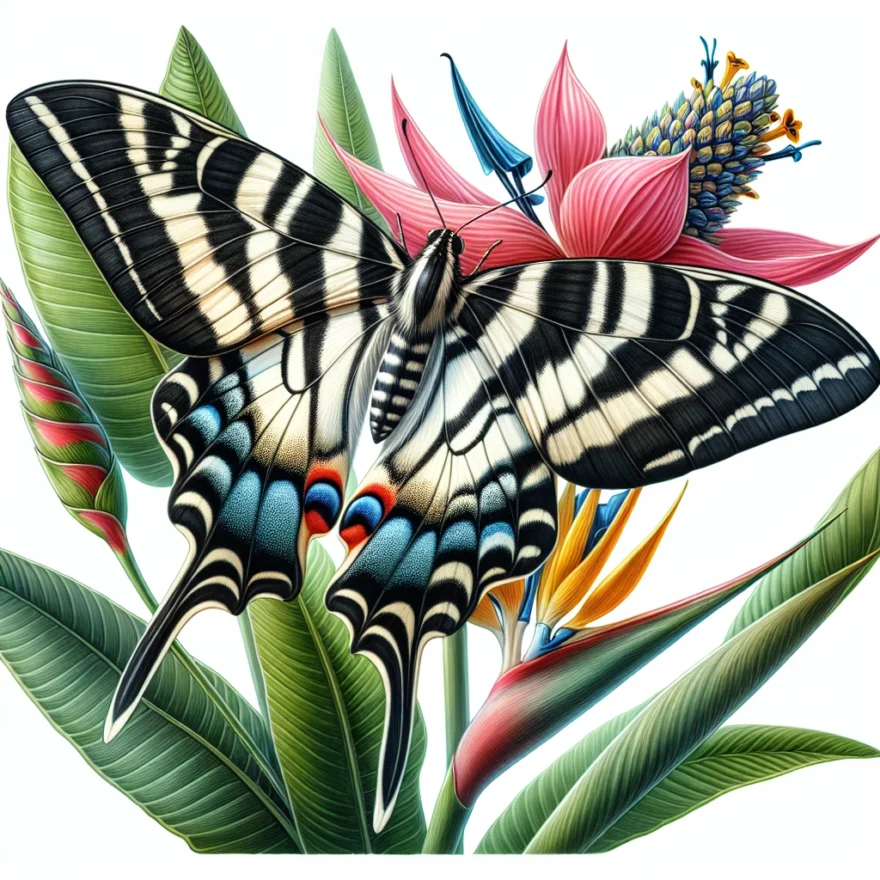
Introduction: The African Zebra Swallowtail Butterfly
The African Zebra Swallowtail Butterfly, scientifically known as Protographium marcellus, is an enigmatic and visually striking species that has captivated the interest of scientists, nature enthusiasts, and casual observers alike. Its name is derived from its distinctive black and white striped pattern, reminiscent of a zebra’s coat, and the swallow-like tails extending from its hind wings. This unique butterfly species, native to the diverse ecosystems of Africa, is a remarkable testament to the wonders of nature and evolution.
Not only does the African Zebra Swallowtail Butterfly boast an impressive aesthetic, but it also exhibits fascinating behaviors and life cycle processes that set it apart from many other butterfly species. It is a creature of contrast, known for its vibrant beauty and the resilience it displays in the face of the many challenges it encounters in its natural habitat.
This comprehensive guide will delve into the intriguing world of the African Zebra Swallowtail Butterfly, exploring its life cycle, habitat, diet, and unique characteristics. We will also discuss the conservation status of this species and the threats it faces in its natural environment. Whether you are a seasoned lepidopterist, a student of nature, or simply someone with a keen interest in the fascinating world of insects, this guide will provide a wealth of information about this remarkable butterfly species.
Table of contents
The Life Cycle of the African Zebra Swallowtail Butterfly
Delving into the fascinating life cycle of the African Zebra Swallowtail Butterfly, one can’t help but marvel at nature’s intricate design. This journey begins with the female butterfly laying her eggs on the underside of leaves, typically those of the Annonaceae family. These eggs, small, spherical, and of a pale yellow hue, are meticulously placed to ensure the safety and survival of the next generation.
Approximately after a week, these eggs hatch to reveal tiny caterpillars, which are predominantly black with white and yellow spots. The caterpillars, or larvae, are voracious eaters, feeding on the leaves of the host plant, growing rapidly, and shedding their skin multiple times in a process known as molting. This stage in their life cycle is a time of vulnerability, as they are at the mercy of predators and harsh weather conditions.
Following this period of rapid growth, the caterpillar enters the pupal stage, forming a chrysalis. This is a transformative period, where the caterpillar undergoes metamorphosis. The chrysalis, initially green, changes to a dark brown color, providing a natural camouflage against potential predators. This stage lasts for about two weeks, during which the caterpillar transforms into a butterfly in the safety of the chrysalis.
The emergence of the butterfly from the chrysalis is a slow and careful process. The newly formed butterfly needs time to allow its wings to dry and harden before it can take its first flight. This adult stage is where the African Zebra Swallowtail Butterfly truly shines, displaying its striking black and white striped pattern, long swallowtails, and red and blue markings. The adult butterflies feed on nectar from a variety of flowers, and the cycle begins anew when the females lay their eggs.
Each stage of the life cycle of the African Zebra Swallowtail Butterfly is a testament to the resilience and adaptability of this species. From a tiny egg to a stunning butterfly, the journey of the African Zebra Swallowtail Butterfly is a remarkable story of transformation and survival.
Habitat and Distribution
The African Zebra Swallowtail Butterfly, scientifically known as Graphium antheus, is a captivating species that can be found in various regions of Africa. This section will delve into the habitat and distribution of this enigmatic butterfly, shedding light on where it can be found and the unique environments it inhabits.
The African Zebra Swallowtail Butterfly is primarily found in the tropical rainforests and woodlands of sub-Saharan Africa. It thrives in areas with dense vegetation, as it provides the butterfly with ample food sources and suitable conditions for breeding.
One of the key factors that influence the distribution of the African Zebra Swallowtail Butterfly is its reliance on specific host plants. The larvae of this butterfly species feed exclusively on plants from the genus Capparis, which are commonly found in the African savannahs and woodlands. These plants serve as crucial breeding grounds and food sources for the caterpillars.
While the African Zebra Swallowtail Butterfly has a relatively wide distribution across Africa, it is important to note that its presence can vary within different regions. The butterfly is more abundant in countries such as Kenya, Tanzania, Uganda, and Ethiopia, where suitable habitats and host plants are plentiful.
Interestingly, the African Zebra Swallowtail Butterfly exhibits some degree of migratory behavior. During certain times of the year, when resources become scarce in its current location, the butterfly may embark on long-distance flights in search of more favorable conditions. This behavior allows for the expansion of their distribution and ensures their survival even in challenging environments.
In terms of altitude, the African Zebra Swallowtail Butterfly can be found at various elevations. It is commonly observed at altitudes ranging from sea level up to around 2,000 meters (6,500 feet). This adaptability to different altitudes further contributes to its wide distribution across Africa.
Overall, the African Zebra Swallowtail Butterfly is a versatile species that can thrive in a range of habitats, including tropical rainforests, woodlands, savannahs, and even mountainous regions. Its distribution is influenced by the availability of suitable host plants and resources, and it exhibits migratory behavior to ensure its survival in changing conditions.
Diet and Predators
The diet of the African Zebra Swallowtail Butterfly is primarily focused on the nectar of various flowering plants. These butterflies have a long proboscis, which is a straw-like structure that allows them to extract nectar from deep within the flowers. They are particularly attracted to brightly colored flowers with a strong fragrance.
In addition to nectar, the African Zebra Swallowtail Butterfly also feeds on rotting fruits and tree sap. They have been observed congregating around fallen fruits and tree wounds, where they can extract nutrients and minerals.
As for predators, the African Zebra Swallowtail Butterfly has a few natural enemies. One of the main predators is birds, which often prey on the adult butterflies. Birds are attracted to the bright colors and delicate wings of the butterflies, making them an easy target.
Another threat to the African Zebra Swallowtail Butterfly is spiders. These arachnids often spin intricate webs near flowers and wait for unsuspecting insects to get trapped. The butterflies can become entangled in these webs, making them an easy meal for the spiders.
Parasitic wasps are also known to target the African Zebra Swallowtail Butterfly. These wasps lay their eggs on the caterpillars of the butterfly. Once the eggs hatch, the wasp larvae feed on the caterpillar, eventually killing it.
Lastly, the larvae of the African Zebra Swallowtail Butterfly face predation from ants and other small insects. These predators are attracted to the caterpillars and will feed on them if given the opportunity.
Despite these predators, the African Zebra Swallowtail Butterfly has developed various defense mechanisms to increase its chances of survival. The butterfly’s bright colors and patterns serve as a warning to potential predators, signaling that they are toxic or unpalatable. This is known as aposematic coloration.
Furthermore, the caterpillars of the African Zebra Swallowtail Butterfly have spiky protrusions called osmeteria, which they can extend when threatened. These osmeteria release a foul-smelling odor that deters predators and gives the caterpillars a chance to escape.
Overall, the diet and predators of the African Zebra Swallowtail Butterfly play a significant role in its ecological interactions and survival strategies. Understanding these aspects helps us appreciate the intricate balance of nature and the fascinating adaptations of this enigmatic butterfly species.
Unique Behaviors and Characteristics
The African Zebra Swallowtail Butterfly is known for its unique behaviors and characteristics that set it apart from other butterfly species. Here are some fascinating facts about this enigmatic creature:
1. Striking Appearance: The African Zebra Swallowtail Butterfly is instantly recognizable by its striking black and white striped wings. The bold contrast of these patterns not only serves as a warning to potential predators but also aids in camouflage among the dappled sunlight of its forest habitat.
2. Mimicry: One of the most intriguing behaviors of the African Zebra Swallowtail Butterfly is its ability to mimic other butterfly species. This phenomenon, known as Batesian mimicry, allows the Zebra Swallowtail to imitate the appearance of toxic or unpalatable butterflies, deterring predators from attacking it.
3. Puddling: The Zebra Swallowtail is known to engage in a behavior called puddling, where groups of butterflies gather on damp soil or mud to extract minerals and salts. This behavior is particularly common among males, who require these nutrients for successful reproduction.
4. Courtship Rituals: Like many butterfly species, the African Zebra Swallowtail engages in elaborate courtship rituals. Males perform graceful flight displays to attract females, showcasing their vibrant wing patterns and engaging in aerial dances. These displays play a crucial role in mate selection.
5. Seasonal Migration: The African Zebra Swallowtail Butterfly is known to exhibit seasonal migration patterns. During certain times of the year, these butterflies undertake long-distance journeys in search of suitable breeding grounds and food sources. This behavior ensures the survival and genetic diversity of the species.
6. Unique Caterpillar Behavior: The caterpillars of the African Zebra Swallowtail are no less fascinating. They exhibit a behavior known as “tenting,” where they construct a shelter by folding and securing a leaf with silk. This shelter provides protection from predators and adverse weather conditions.
7. Symbiotic Relationships: The African Zebra Swallowtail has symbiotic relationships with certain plant species. The butterflies lay their eggs exclusively on specific host plants, and the caterpillars feed on these plants. In return, the plants benefit from the pollination services provided by the adult butterflies.
8. Ultraviolet Reflectance: The wings of the African Zebra Swallowtail Butterfly possess ultraviolet reflectance, which is invisible to humans but visible to other butterflies. This unique characteristic plays a crucial role in mate recognition and courtship behaviors.
These are just a few of the many unique behaviors and characteristics that make the African Zebra Swallowtail Butterfly a truly fascinating species. Understanding and appreciating these aspects not only deepens our knowledge of the natural world but also highlights the importance of conserving these beautiful creatures and their habitats.
Conservation Status and Threats
The African Zebra Swallowtail Butterfly, with its striking black and white striped wings, is a captivating species that has captured the attention of researchers and nature enthusiasts alike. While this butterfly is undoubtedly a fascinating creature, its conservation status and the threats it faces are of utmost concern.
Conservation Status:
The African Zebra Swallowtail Butterfly is currently listed as a species of least concern on the International Union for Conservation of Nature (IUCN) Red List. This means that, at present, the population of this butterfly is relatively stable and not at immediate risk of extinction.
However, it is important to note that this status can change over time due to various factors such as habitat loss, climate change, and human activities. Continuous monitoring and conservation efforts are necessary to ensure the long-term survival of this species.
Threats:
Despite its current conservation status, the African Zebra Swallowtail Butterfly faces several threats that could potentially impact its population in the future.
1. Habitat Loss: The destruction and fragmentation of natural habitats due to human activities, such as deforestation and urbanization, pose a significant threat to the African Zebra Swallowtail Butterfly. These butterflies rely on specific host plants for egg-laying and food sources for their larvae. Any disruption or loss of their habitat can lead to a decline in their population.
2. Climate Change: The changing climate patterns, including rising temperatures and altered rainfall patterns, can have adverse effects on the African Zebra Swallowtail Butterfly. These butterflies have specific temperature and moisture requirements for their survival and reproduction. Climate change can disrupt these conditions, affecting their ability to find suitable habitats and impacting their overall population.
3. Pesticide Use: The use of pesticides in agricultural practices can have unintended consequences for butterfly populations. Pesticides not only target pests but can also harm non-target organisms, including butterflies. Exposure to pesticides can lead to reduced reproductive success, developmental abnormalities, and even death in these delicate creatures.
4. Invasive Species: The introduction of non-native plant species can disrupt the natural balance of ecosystems and impact the African Zebra Swallowtail Butterfly. Invasive plants may outcompete or replace native host plants, reducing the availability of suitable habitats for the butterfly’s larvae.
5. Illegal Collection: Unfortunately, the African Zebra Swallowtail Butterfly is sometimes targeted by collectors for its unique and beautiful appearance. Illegal collection for the pet trade or personal collections can put additional pressure on the butterfly’s population, especially if not regulated properly.
Conclusion:
While the African Zebra Swallowtail Butterfly is currently listed as a species of least concern, it is crucial to recognize the potential threats it faces. Conservation efforts, such as protecting and restoring its natural habitats, promoting sustainable agricultural practices, and raising awareness about the importance of these butterflies, are essential for their long-term survival. By understanding and addressing these threats, we can ensure that future generations can continue to marvel at the beauty and enigma of the African Zebra Swallowtail Butterfly.
FAQs: Common Questions About the African Zebra Swallowtail Butterfly
FAQs: Common Questions About the African Zebra Swallowtail Butterfly
As one of the most fascinating butterflies in Africa, the African Zebra Swallowtail Butterfly often sparks curiosity and raises many questions. Here are some common queries about this enigmatic creature:
1. What is the significance of the African Zebra Swallowtail Butterfly’s unique markings?
The striking black and white striped pattern on the wings of the African Zebra Swallowtail Butterfly serves as a defense mechanism. The bold markings mimic the appearance of a poisonous butterfly species, deterring potential predators.
2. How long does the African Zebra Swallowtail Butterfly live?
On average, the African Zebra Swallowtail Butterfly has a relatively short lifespan of about two to three weeks. However, this can vary depending on environmental conditions and availability of food sources.
3. What is the role of the African Zebra Swallowtail Butterfly in its ecosystem?
The African Zebra Swallowtail Butterfly plays a crucial role in pollination. As it feeds on nectar from various flowers, it inadvertently transfers pollen from one flower to another, aiding in the reproduction of plants and ensuring biodiversity.
4. How does the African Zebra Swallowtail Butterfly protect itself from predators?
In addition to its deceptive markings, the African Zebra Swallowtail Butterfly has the ability to emit a strong odor when threatened. This odor acts as a deterrent to predators, making them think twice before attempting to prey on the butterfly.
5. Can the African Zebra Swallowtail Butterfly be found outside of Africa?
No, the African Zebra Swallowtail Butterfly is endemic to Africa and is primarily found in countries such as Kenya, Tanzania, Uganda, and Ethiopia. Its unique habitat requirements and specific host plants restrict its distribution to this region.
6. Are there any conservation efforts in place to protect the African Zebra Swallowtail Butterfly?
While the African Zebra Swallowtail Butterfly is not currently listed as a threatened species, habitat loss and climate change pose potential risks to its population. Conservation organizations and researchers are actively studying its behavior and working towards preserving its natural habitat.
7. Can the African Zebra Swallowtail Butterfly be kept as a pet?
It is generally not recommended to keep the African Zebra Swallowtail Butterfly as a pet. These butterflies have specific dietary and environmental needs that can be challenging to replicate in captivity. It is best to appreciate and observe them in their natural habitat.
8. How can I attract the African Zebra Swallowtail Butterfly to my garden?
To attract the African Zebra Swallowtail Butterfly to your garden, you can plant their preferred host plants, such as the wild custard apple or the African black plum. Providing a variety of nectar-rich flowers will also help attract adult butterflies seeking food sources.
9. Are there any similar butterfly species to the African Zebra Swallowtail?
Yes, there are several butterfly species that share similar characteristics with the African Zebra Swallowtail, such as the Eastern Tiger Swallowtail found in North America and the Scarlet Swallowtail found in Asia. However, each species has its own distinct features and adaptations.
10. Can the African Zebra Swallowtail Butterfly be harmful to humans?
No, the African Zebra Swallowtail Butterfly is not harmful to humans. It does not possess any toxic or venomous properties and is completely harmless if encountered.