Introduction to Apple Maggot
The apple maggot (Rhagoletis pomonella) is a notorious pest that poses a significant threat to apple orchards and other fruit-bearing plants. As its name suggests, the apple maggot primarily targets apple trees, but it can also infest other fruiting plants such as cherries, pears, and plums. This small, fly-like insect is native to North America and has become a major concern for both commercial and backyard fruit growers. The larvae of the apple maggot feed on the fruit, causing extensive damage that renders the fruit unmarketable and unsuitable for consumption. Understanding the lifecycle, damage, and control measures of apple maggots is essential for maintaining healthy and productive fruit trees.
Effective management of apple maggots requires a comprehensive understanding of their biology and behavior. This article will provide in-depth information on the lifecycle of apple maggots, the damage they cause, and the various control measures that can be implemented to prevent and manage infestations. Furthermore, we will explore the impact of apple maggots on fruit production, their identification, and integrated pest management strategies. You will also find answers to common questions about apple maggots, their relationship with human health, natural predators, and control options for organic growers. Finally, we will discuss apple maggot quarantine regulations to prevent the spread of this destructive pest.
Table of contents
- Introduction to Apple Maggot
- Lifecycle of Apple Maggot
- Damage Caused by Apple Maggot
- Control Measures for Apple Maggot
- Chemical Control Options
- Biological Control Methods
- Cultural Control Techniques
- Monitoring and Trapping Strategies
- Preventing Apple Maggot Infestations
- Signs of Apple Maggot Infestation
- Apple Maggot Host Plants
- Impact of Apple Maggot on Fruit Production
- Apple Maggot Identification
- Integrated Pest Management for Apple Maggot
- Common Questions and Answers about Apple Maggot
- Apple Maggot and Human Health
- Natural Predators of Apple Maggot
- Apple Maggot Control for Organic Growers
- Apple Maggot Quarantine Regulations
Lifecycle of Apple Maggot
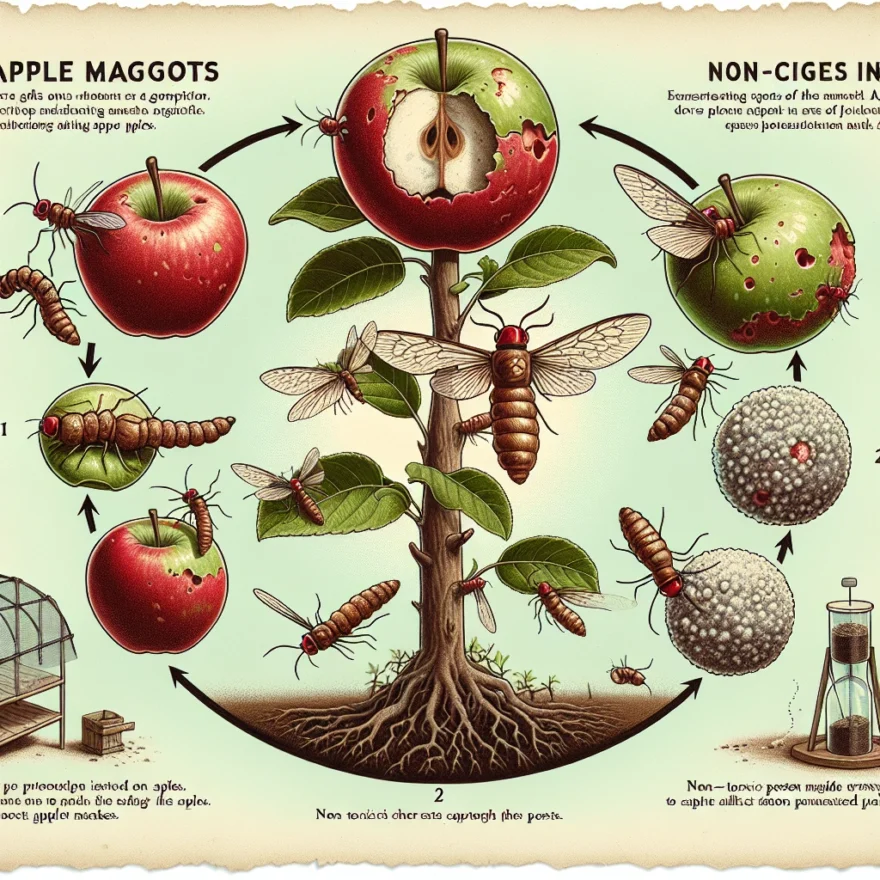
The apple maggot (Rhagoletis pomonella) is a small fly that lays its eggs in apples, causing significant damage to the fruit. Understanding the lifecycle of this pest is essential for effective control and prevention measures. The lifecycle of the apple maggot consists of four developmental stages: egg, larva, pupa, and adult.
The life cycle begins when adult female flies lay their eggs in the skin of apples, typically during the summer months. The female apple maggot can lay up to 400 eggs in her lifetime, and each egg is deposited just beneath the surface of the fruit. Within a few days, the eggs hatch into small white larvae, which are commonly known as maggots. The larvae begin feeding on the fruit, creating tunnels as they consume the flesh of the apple.
As the larvae continue to feed, they grow and molt through three different instars, or developmental stages, over the course of 3 to 4 weeks. Once the larvae have completed their growth, they exit the fruit and drop to the ground. Here, they burrow into the soil to pupate, or transform into the next stage of their lifecycle.
The pupal stage occurs in the soil and can last anywhere from a few weeks to several months, depending on the temperature and environmental conditions. During this time, the pupa undergoes a metamorphosis, transforming from a larva into an adult fly. In regions with cold winters, the pupa may remain in the soil throughout the winter months and emerge as an adult the following spring or early summer.
Upon emerging from the soil, adult apple maggots mate and begin the cycle anew. The adult flies have a relatively short lifespan of about 30 days, during which they feed on plant sap, honeydew, and other sugary substances. The adult flies are most active during warm, sunny days, and their activity decreases during cooler or overcast weather.
Overall, the lifecycle of the apple maggot is highly dependent on environmental factors such as temperature, humidity, and the availability of suitable host plants. By understanding the lifecycle of this pest, growers can implement effective control measures at the appropriate times, minimizing the damage caused by apple maggots and ensuring a healthy, productive apple crop.
Damage Caused by Apple Maggot
Apple maggot is a serious pest that can cause significant damage to apple and other fruit crops. The maggots tunnel into the fruit and feed on the flesh, leaving behind unsightly scars and rendering the fruit unmarketable. In addition to the direct damage caused by the maggots, apple maggot infestations can also lead to secondary infections by bacteria and fungi, which can further degrade the fruit.
The damage caused by apple maggot can vary depending on the severity of the infestation and the stage of fruit maturity. Early infestations may only result in small, superficial scars on the fruit, while more advanced infestations can cause extensive damage and rotting of the fruit. In severe cases, the entire crop can be lost.
Apple maggot damage can also impact the quality of the fruit. Infested fruit may be smaller and have a lower sugar content, which can affect the taste and texture of the fruit. In addition, fruit that has been infested with apple maggots may not store as well as uninfested fruit, which can result in significant financial losses for growers.
Controlling apple maggot infestations is essential for maintaining the health and productivity of fruit crops. Effective control measures can help prevent damage to fruit and reduce the risk of secondary infections. In the following sections, we will explore the various methods for controlling apple maggot, including chemical, biological, and cultural control techniques, as well as monitoring and trapping strategies and integrated pest management practices.
Control Measures for Apple Maggot
Apple maggots can cause significant damage to fruit crops, but fortunately, there are several control measures available to manage their populations. These control measures can be divided into three categories: chemical, biological, and cultural.
Chemical Control Options
Chemical control options involve the use of pesticides to kill apple maggots. These pesticides are typically applied to the trees during the growing season, either as a spray or a systemic treatment. It is important to follow the instructions on the pesticide label carefully to ensure effective control and to avoid harming beneficial insects and other wildlife.
Biological Control Methods
Biological control methods involve the use of natural predators and parasites to control apple maggot populations. One such predator is the tiny parasitic wasp, which lays its eggs inside the apple maggot larvae. When the eggs hatch, the wasp larvae feed on the apple maggot larvae, eventually killing them. Other natural predators of apple maggots include birds, spiders, and predatory insects.
Cultural Control Techniques
Cultural control techniques involve modifying the growing conditions of the fruit trees to make them less hospitable to apple maggots. These techniques include:
- Pruning the trees to improve air circulation and sunlight penetration, which can help to reduce the humidity that apple maggots thrive in.
- Removing fallen fruit from the ground, as this can provide a breeding ground for apple maggots.
- Harvesting fruit early, before apple maggots have a chance to infest them.
- Bagging individual fruit with a protective cover to prevent apple maggots from laying their eggs inside.
Monitoring and Trapping Strategies
Monitoring and trapping strategies involve using traps to capture and kill apple maggots. These traps can be either sticky traps or baited traps. Sticky traps use a sticky substance to trap the apple maggots, while baited traps use a lure to attract the apple maggots. The traps should be checked regularly and the captured apple maggots should be disposed of properly.
Preventing Apple Maggot Infestations
The best way to control apple maggots is to prevent infestations from occurring in the first place. This can be achieved by:
- Using certified disease-free nursery stock when planting new trees.
- Keeping the orchard clean and free of fallen fruit and other debris.
- Using row covers or netting to prevent apple maggots from accessing the fruit.
- Rotating crops and using cover crops to reduce the risk of apple maggots overwintering in the soil.
Integrated Pest Management for Apple Maggot
Integrated pest management (IPM) is a holistic approach to pest control that combines multiple control measures to manage pest populations. IPM involves monitoring pest populations, identifying the pest and its life cycle, and selecting the appropriate control measures. By using IPM, apple growers can effectively manage apple maggot populations while minimizing the use of pesticides and reducing the risk of harm to beneficial insects and other wildlife.
Chemical Control Options
Chemical control options can be an effective way to manage apple maggot infestations, but it is important to use them responsibly and in accordance with label instructions to avoid harm to people, pets, and non-target organisms.
The two main types of chemical control options for apple maggot are insecticides and pheromone disruptors.
Insecticides are chemicals that kill or repel insects. They can be applied to the foliage of apple trees or directly to the fruit. Insecticides are available in many different formulations, including sprays, dusts, and baits. Some common insecticides used to control apple maggot include carbaryl, malathion, and spinosad.
It is important to choose an insecticide that is labeled for use on apple trees and apple maggot, and to follow all label instructions carefully. Insecticides should be applied at the appropriate time and in the correct amount to ensure effectiveness and minimize harm to non-target organisms.
Pheromone disruptors are chemicals that interfere with the ability of male apple maggots to locate females for mating. By disrupting the mating process, pheromone disruptors can reduce the number of apple maggots that develop and cause damage to fruit.
Pheromone disruptors are available in the form of dispensers that are hung in apple trees. The dispensers release a synthetic version of the female apple maggot pheromone, which confuses male apple maggots and makes it difficult for them to find mates.
Pheromone disruptors are generally considered to be less harmful to non-target organisms than insecticides, but they may not be as effective in controlling apple maggot populations. They are also more expensive than insecticides and require more frequent applications.
When using chemical control options for apple maggot, it is important to consider the potential risks and benefits of each option and to choose the option that is most appropriate for your situation. It is also important to follow all label instructions carefully and to use the chemicals responsibly to minimize harm to people, pets, and non-target organisms.
Biological Control Methods
Biological control methods for apple maggot involve the use of natural predators and parasites to manage the pest population. These methods are considered environmentally friendly and safe for humans and other non-target organisms. Here are some of the most effective biological control methods for apple maggot:
- Parasitic wasps: Parasitic wasps are natural enemies of apple maggots. They lay their eggs inside the apple maggot larvae, which then hatch and feed on the host, killing it. There are several species of parasitic wasps that can be used for biological control of apple maggot, including Diachasmimorpha longicaudata and Bracon spp.
- Predatory insects: Predatory insects, such as ladybugs and lacewings, can also be effective in controlling apple maggot populations. These insects feed on the eggs and larvae of apple maggots, reducing their numbers. However, it is important to note that these insects may also feed on beneficial insects, so their use should be carefully monitored.
- Nematodes: Certain species of nematodes, such as Steinernema feltiae, can be used to control apple maggot populations. These microscopic worms infect the apple maggot larvae and release bacteria that kill the host. Nematodes are typically applied to the soil around the base of the apple tree.
- Fungi: Some species of fungi, such as Beauveria bassiana, can infect and kill apple maggots. These fungi are typically applied as a spray to the apple tree foliage and fruit.
- Birds: Some bird species, such as blue jays and robins, feed on apple maggots. Encouraging bird populations in and around apple orchards can help to reduce apple maggot numbers.
- Trichogramma wasps: Trichogramma wasps are tiny parasitic wasps that lay their eggs inside the eggs of apple maggots. The wasp larvae then feed on the apple maggot eggs, preventing them from hatching. Trichogramma wasps are typically released in large numbers to ensure effective biological control.
Biological control methods can be used alone or in combination with other control measures, such as cultural and chemical control methods, to effectively manage apple maggot populations. It is important to carefully consider the specific needs of your orchard and the potential impact on non-target organisms when selecting and applying biological control methods.
Cultural Control Techniques
Cultural control techniques are methods that involve changing the environment or cultural practices to prevent or reduce apple maggot infestations. These techniques are often used in combination with other control methods to create an integrated pest management plan.
One cultural control technique is to remove any fallen fruit from the ground and dispose of it properly. Apple maggots can emerge from fallen fruit, so by removing it, you can reduce the number of flies that will lay eggs in your orchard.
Another technique is to keep your orchard clean and free of debris. Apple maggots can hide in debris, so removing it can help reduce their numbers. This includes removing any pruned branches, leaves, and other debris from the orchard floor.
Planting trap crops is another cultural control technique. Trap crops are plants that are more attractive to apple maggots than your apple trees. By planting these crops around the perimeter of your orchard, you can lure the flies away from your apple trees. Some examples of trap crops include red currant, wild cherry, and hawthorn.
Pruning your apple trees can also help reduce apple maggot infestations. By opening up the canopy of the tree, you can increase air circulation and sunlight, which can make it more difficult for apple maggots to find suitable egg-laying sites.
Finally, timing your harvest can also be an effective cultural control technique. Apple maggots are most active in late summer and early fall, so harvesting your apples earlier in the season can help reduce the risk of infestation.
Monitoring and Trapping Strategies
One effective way to control apple maggot infestations is through monitoring and trapping strategies. These methods involve using traps to attract and capture adult apple maggots before they have a chance to lay eggs in the fruit.
There are several types of traps available for apple maggot control, including sticky traps, bait traps, and pheromone traps. Sticky traps are coated with a sticky substance that captures the adult flies when they land on the trap. Bait traps use a lure to attract the flies to the trap, where they are captured. Pheromone traps use synthetic sex pheromones to lure the male flies to the trap, where they are captured.
When using traps for apple maggot control, it is important to place them in the orchard at the right time. Traps should be set up early in the growing season, before the flies have a chance to lay their eggs in the fruit. They should also be placed in areas where apple maggot infestations are most likely to occur, such as near wild apple trees or other hosts.
Traps should be checked regularly to monitor the level of apple maggot activity in the orchard. This information can be used to determine when control measures need to be taken, such as applying insecticides or removing infested fruit. Traps should also be cleaned and maintained regularly to ensure they continue to function effectively.
While monitoring and trapping strategies can be effective for apple maggot control, they are best used in combination with other control measures, such as cultural and biological methods. Integrated pest management (IPM) programs that incorporate a variety of control measures are the most effective way to manage apple maggot infestations and protect fruit production.
Preventing Apple Maggot Infestations
Preventing Apple Maggot infestations is crucial for maintaining healthy fruit trees and a bountiful harvest. Here are some effective ways to prevent Apple Maggot infestations:
- Sanitation: Keep your orchard clean by removing any fallen fruit, as they can serve as breeding grounds for Apple Maggots. Dispose of the fruit by burying it or placing it in sealed plastic bags and throwing it away.
- Netting: Cover your trees with fine-mesh netting to prevent adult flies from laying their eggs on the fruit.
- Timely Harvesting: Harvest your fruit as soon as it ripens to prevent it from becoming overripe and attracting Apple Maggots.
- Trapping: Use yellow sticky traps or red ball traps to catch adult flies before they can lay their eggs on the fruit. Place the traps in the tree canopy before the fruit begins to ripen.
- Rotation: Rotate the location of your fruit trees each year to prevent the buildup of Apple Maggot populations in the soil.
- Use Resistant Varieties: Plant varieties of fruit trees that are resistant to Apple Maggot infestations.
- Apply Kaolin Clay: Apply a thin layer of kaolin clay to the fruit and leaves of your trees to deter adult flies from laying their eggs.
By following these preventative measures, you can reduce the risk of Apple Maggot infestations and ensure a healthy harvest of fruit.
Signs of Apple Maggot Infestation
Apple maggot infestation can be detected by observing the external signs on the fruit. The most obvious sign is the presence of small, white, thread-like tunnels or tracks on the surface of the apple. These tracks are made by the larvae as they feed and move through the fruit.
Another sign of apple maggot infestation is the appearance of brownish, sunken spots on the fruit’s skin. These spots are caused by the larvae feeding on the flesh of the apple, which can cause the fruit to rot and become unsuitable for consumption.
In addition to the physical signs of infestation, there may also be behavioral signs that indicate the presence of apple maggots. For example, if you notice a large number of flies hovering around your apple trees, this may be a sign that they are attracted to the scent of the fruit and are laying eggs on the surface.
It’s important to note that not all apples with external signs of damage are necessarily infested with apple maggots. Other insects or diseases can also cause similar damage to the fruit. To confirm the presence of apple maggots, you can cut open the fruit and check for the presence of larvae inside.
If you suspect that your apple trees are infested with apple maggots, it’s important to take action to control the infestation before it spreads and causes significant damage to your fruit crop.
Apple Maggot Host Plants
Apple maggot is a pest that primarily affects apple trees, but it can also infest other fruit trees. Some of the host plants of apple maggot include:
- Apple trees (Malus spp.)
- Pear trees (Pyrus spp.)
- Hawthorn trees (Crataegus spp.)
- Crabapple trees (Malus spp.)
- Quince trees (Cydonia oblonga)
Apple maggot larvae feed on the fruit of these trees, causing significant damage. The pest is most commonly found in regions with cool and humid climates, such as the Pacific Northwest and the Northeastern United States.
It is important for growers to identify the host plants of apple maggot in their region and take appropriate measures to prevent infestations. This can include implementing cultural control techniques, monitoring and trapping strategies, and using chemical or biological control methods.
Impact of Apple Maggot on Fruit Production
Apple maggot is a serious pest that affects fruit production, particularly apples. The damage caused by apple maggot can lead to significant economic losses for growers. When apple maggots infest an orchard, they can cause up to 80% damage to the fruit crop.
The maggots tunnel through the fruit, leaving unsightly brown trails and making the fruit unfit for sale. The damage caused by apple maggots can also lead to secondary infections by bacteria and fungi, which can further reduce the quality of the fruit.
Apple maggots can also impact the size and weight of the fruit. Infested fruit tends to be smaller and lighter than healthy fruit, which can affect the yield of the crop. Additionally, the presence of apple maggots can reduce the shelf life of the fruit, making it more difficult to transport and store.
Another impact of apple maggots on fruit production is the cost of control measures. Growers may need to invest in expensive pesticides and other control methods to manage apple maggot populations. These costs can add up quickly, especially for smaller growers who may not have the same resources as larger operations.
Overall, the impact of apple maggots on fruit production can be significant. It is important for growers to take proactive measures to prevent and manage apple maggot infestations to minimize the economic impact on their operations.
Apple Maggot Identification
Apple maggots are small flies that resemble common houseflies. They are about 1/5 inch long and have a black body with white stripes on their wings. These flies are difficult to spot because they are fast and agile. However, the larvae of apple maggots are easier to identify because they are white and have a pointed head. They are about 1/4 inch long and have a tapered body.
Apple maggots are often confused with other types of fruit flies, such as the cherry fruit fly and the blueberry maggot. However, apple maggots are specific to apples and related fruits, while other fruit flies attack different types of fruit.
If you suspect that you have an apple maggot infestation, it is important to properly identify the flies and larvae to ensure that you are using the correct control measures. You can take a sample of the flies or larvae to your local agricultural extension office or consult with a pest control professional for proper identification.
Integrated Pest Management for Apple Maggot
Integrated Pest Management (IPM) is a holistic approach to managing pests that aims to minimize the use of pesticides and reduce the impact of pest management practices on the environment. IPM for apple maggot involves a combination of cultural, biological, and chemical control methods to achieve effective pest management.
Cultural control techniques are an important part of IPM for apple maggot. These techniques include sanitation, pruning, and the use of resistant varieties. Sanitation involves removing fallen fruit from the ground and destroying infested fruit to reduce the number of overwintering sites for apple maggot larvae. Pruning can help to increase air circulation and sunlight penetration, which can reduce the risk of apple maggot infestations. Planting resistant varieties of apple trees can also help to reduce the risk of apple maggot infestations.
Biological control methods can also be used as part of IPM for apple maggot. These methods involve using natural enemies of apple maggot, such as parasitic wasps and predators like birds and spiders, to control pest populations. Parasitic wasps lay their eggs inside apple maggot larvae, which then hatch and kill the pest. Birds and spiders can also feed on apple maggot larvae, reducing pest populations.
Chemical control options are available for apple maggot, but should be used as a last resort and in combination with cultural and biological control methods. Insecticides should be applied only when necessary, and care should be taken to avoid harming beneficial insects and pollinators. Insecticides can also lead to the development of insecticide resistance in apple maggot populations, making them more difficult to control in the future.
Monitoring and trapping strategies are an important part of IPM for apple maggot. Traps can be used to monitor pest populations and to determine when control measures are necessary. Sticky traps can be used to capture adult apple maggot flies, while baited traps can be used to attract and kill adult flies.
Preventing apple maggot infestations is an important part of IPM. This can be achieved through a combination of cultural and biological control methods, as well as through the use of physical barriers such as netting or bags to prevent adult flies from laying eggs on fruit.
Integrated Pest Management for apple maggot is an effective approach to managing this pest. By combining cultural, biological, and chemical control methods, and by using monitoring and trapping strategies, growers can effectively manage apple maggot populations while minimizing the use of pesticides and reducing the impact of pest management practices on the environment.
Common Questions and Answers about Apple Maggot
Here are some common questions and answers about apple maggot:
Q: What is apple maggot?
A: Apple maggot is a type of fruit fly that is native to North America. It is a serious pest of apples and other fruits, and can cause significant damage to crops if left unchecked.
Q: What does the lifecycle of apple maggot look like?
A: The lifecycle of apple maggot begins when the adult female lays eggs on the surface of the fruit. The eggs hatch into larvae, which burrow into the fruit and feed on the flesh. After several weeks, the larvae emerge from the fruit and pupate in the soil. The adult flies then emerge from the pupae and begin the cycle again.
Q: How does apple maggot damage fruit?
A: Apple maggot larvae feed on the flesh of the fruit, causing it to rot and become discolored. This can make the fruit unmarketable and reduce the overall yield of the crop.
Q: What are some control measures for apple maggot?
A: There are several control measures for apple maggot, including chemical control options, biological control methods, and cultural control techniques. Monitoring and trapping strategies can also be effective in reducing infestations, and preventing infestations through quarantine regulations can help to limit the spread of the pest.
Q: What are some natural predators of apple maggot?
A: There are several natural predators of apple maggot, including birds, parasitic wasps, and predatory beetles. These predators can help to keep populations of apple maggot in check and reduce the need for chemical control options.
Q: Is apple maggot a threat to human health?
A: While apple maggot is not a direct threat to human health, the use of chemical pesticides to control infestations can pose risks to human health and the environment. Organic control methods and integrated pest management strategies can help to reduce the need for chemical pesticides and minimize these risks.
Q: How can organic growers control apple maggot?
A: Organic growers can control apple maggot through a combination of cultural control techniques, biological control methods, and monitoring and trapping strategies. These methods can be effective in reducing infestations and minimizing the need for chemical pesticides.
Q: What are the quarantine regulations for apple maggot?
A: Quarantine regulations for apple maggot vary by region, but typically involve restrictions on the movement of fruit and soil from infested areas. These regulations are designed to limit the spread of the pest and protect uninfested areas from infestation.
Apple Maggot and Human Health
While apple maggots may not directly harm human health, they can indirectly affect it by reducing the quality and quantity of the fruit produced. Apple maggots can cause significant damage to apple and pear crops, making them unsuitable for consumption. This can lead to economic losses for farmers and higher prices for consumers.
Additionally, some control measures for apple maggots involve the use of pesticides, which can have negative effects on human health. Pesticides can contaminate the soil and water, and exposure to them can cause skin irritation, respiratory problems, and other health issues. It is important to use pesticides responsibly and follow all safety guidelines when applying them.
Organic control methods, such as the use of natural predators and cultural techniques, can be effective in controlling apple maggots without the use of harmful chemicals. These methods are safer for both the environment and human health.
It is also important to properly wash and inspect apples and other fruits before consuming them to ensure that they are free of apple maggots and other pests. This can help prevent potential health risks and ensure that the fruit is safe to eat.
Natural Predators of Apple Maggot
Apple maggots are a major pest for apple growers, causing significant damage to fruit crops. However, there are several natural predators of apple maggots that can help control their populations. These predators include birds, parasitic wasps, and predatory insects.
Birds such as robins, blue jays, and starlings are known to feed on apple maggots. They are attracted to the smell of rotting fruit and will often pick off maggots from the surface of the fruit. Providing birdhouses and bird feeders can help attract these birds to your orchard, providing natural pest control.
Parasitic wasps are another natural predator of apple maggots. These tiny wasps lay their eggs inside the apple maggot larvae. As the wasp larvae develop, they feed on the apple maggot, eventually killing it. There are several species of parasitic wasps that target apple maggots, including the braconid wasp and the chalcid wasp.
Predatory insects such as ladybugs, lacewings, and ground beetles can also help control apple maggot populations. These insects feed on a variety of pests, including apple maggots, and can be attracted to your orchard by providing habitat and food sources such as flowering plants and cover crops.
While natural predators can help control apple maggot populations, it is important to use a combination of control methods for effective pest management. Integrated pest management techniques, which combine cultural, biological, and chemical control methods, can help reduce apple maggot populations while minimizing the use of harmful pesticides.
Apple Maggot Control for Organic Growers
Organic growers face unique challenges when it comes to controlling apple maggot infestations. Since they cannot use synthetic pesticides, they must rely on alternative methods to prevent and manage these pests.
One effective approach is to use physical barriers to prevent adult apple maggots from laying eggs on fruit. Organic growers can use sticky traps or bags to capture the flies before they can infest the crop. These traps should be placed in the orchard early in the season, before the flies emerge.
Another option is to use natural predators to control apple maggot populations. Parasitic wasps, for example, lay their eggs inside the larvae of apple maggots, killing them before they can mature. Organic growers can encourage these beneficial insects by planting flowering plants near the orchard or releasing them into the area.
Cultural practices can also help reduce apple maggot infestations. Organic growers should remove any fallen fruit from the ground, as this can attract adult flies. They should also prune trees to improve air circulation and reduce humidity, which can create a favorable environment for apple maggots.
Integrated pest management (IPM) is another effective approach for organic growers. This involves combining several control methods to manage apple maggot populations. For example, growers can use sticky traps to monitor fly populations, release natural predators to control larvae, and remove fallen fruit to reduce the number of breeding sites.
Finally, organic growers should be aware of quarantine regulations that may apply to their area. If apple maggots are a regulated pest in their region, they may need to take additional measures to prevent the spread of infestations.
Apple Maggot Quarantine Regulations
Apple Maggot Quarantine Regulations are in place to prevent the spread of this pest to other regions. The regulations vary depending on the state or country, but they generally require that all fruits and vegetables be inspected for signs of infestation before they can be transported across state or country lines.
These regulations are important because apple maggots can cause significant damage to fruit crops, and their spread can be difficult to control once they have established themselves in a new area. By preventing the spread of apple maggots, growers can protect their crops and ensure that consumers have access to high-quality, pest-free produce.
If you are a grower or producer of fruits and vegetables, it is important to be aware of the quarantine regulations in your area. This may involve obtaining special permits or certifications, and following specific procedures for transporting and handling your produce. Failure to comply with these regulations can result in fines or other penalties, and can also harm the reputation of your business.
Overall, the goal of apple maggot quarantine regulations is to protect the agricultural industry and ensure that consumers have access to safe and healthy food. By working together to prevent the spread of this pest, we can help to maintain the health and productivity of our agricultural systems for years to come.