Introduction to Cabbage Loopers
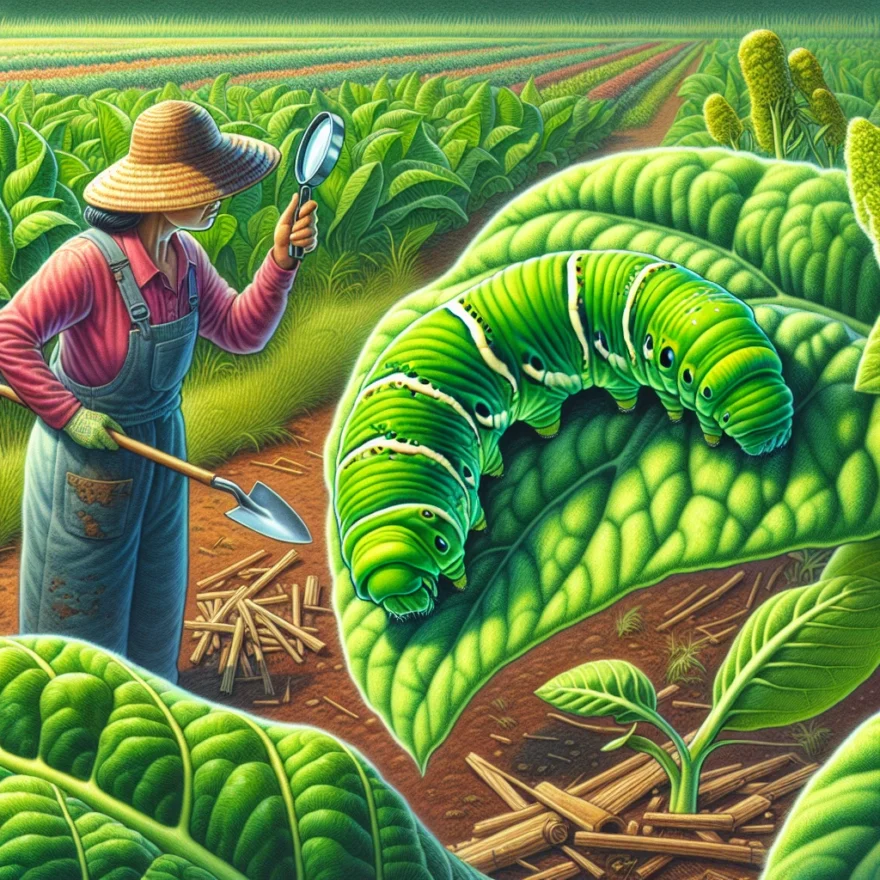
The cabbage looper (Trichoplusia ni) is a common and destructive pest that can wreak havoc on a variety of crops, including cabbage, broccoli, cauliflower, and other cruciferous vegetables. These small, green caterpillars are notorious for their voracious appetite, leaving behind large holes and chewed edges on leaves, ultimately causing significant damage to the plants they infest. Understanding the biology, behavior, and habits of cabbage loopers is crucial for effectively protecting your crops from this troublesome pest.
Native to North America, cabbage loopers are found throughout the United States, Canada, and Mexico. They are easily recognizable by their unique looping movement, in which they arch their body into a loop as they crawl. This distinctive motion has earned them the nickname “inchworms.” Adult cabbage loopers are brownish-gray moths with a wingspan of approximately 1.5 inches (3.8 cm) and a silvery, V-shaped mark on their wings.
While cabbage loopers can attack a wide range of plants, they are particularly fond of cruciferous vegetables, making them a significant concern for both home gardeners and commercial growers. In addition to direct damage to the plants, cabbage looper feeding can also lead to secondary infections, as the wounds they create provide entry points for various pathogens. Furthermore, their rapid reproduction and ability to develop resistance to certain pesticides make them a challenging pest to control.
Throughout this article, we will explore various methods for identifying, preventing, and controlling cabbage looper infestations, including organic and chemical approaches, cultural practices, and the use of natural enemies. By implementing a comprehensive and integrated pest management strategy, you can effectively protect your crops from cabbage loopers and ensure a healthy, bountiful harvest.
Table of contents
- Introduction to Cabbage Loopers
- Identifying Cabbage Looper Damage
- Cabbage Looper Life Cycle
- Natural Enemies of Cabbage Loopers
- Organic Methods for Cabbage Looper Control
- Chemical Control of Cabbage Loopers
- Cultural Practices to Prevent Cabbage Looper Infestations
- Monitoring and Scouting for Cabbage Loopers
- Physical Barriers for Cabbage Looper Protection
- Biological Control Agents for Cabbage Loopers
- Integrated Pest Management for Cabbage Loopers
- Common Questions and Answers about Cabbage Loopers
- Cabbage Looper Resistant Varieties
- Impact of Cabbage Loopers on Crop Yield
- Attracting Beneficial Insects to Combat Cabbage Loopers
- Cabbage Looper Pheromone Traps
- Post-Harvest Management of Cabbage Loopers
- Cabbage Looper Control in Greenhouses
- Preventing Cabbage Looper Infestations in Future Seasons
- Conclusion: Protecting Your Crops from Cabbage Loopers
Identifying Cabbage Looper Damage
One of the first steps in protecting your crops from cabbage looper damage is being able to identify the signs of their presence. Cabbage loopers are small, green caterpillars that are approximately 1 to 1.5 inches in length. They get their name from their unique looping movement, where they arch their bodies to bring their rear end close to their head before stretching out again.
The primary host plants for cabbage loopers are cruciferous vegetables, such as cabbage, broccoli, cauliflower, and kale. However, they can also be found on other plants, including lettuce, spinach, and tomato. Early detection of cabbage looper damage is crucial to prevent extensive damage to your crops.
Here are some common signs of cabbage looper damage:
- Holes in leaves: Cabbage loopers feed on the foliage of host plants, creating irregular-shaped holes in the leaves. These holes can vary in size and are often found on the outer edges of the leaves or near the center vein.
- Frass (insect feces): As they feed, cabbage loopers produce dark green to black droppings known as frass. You may find frass on the leaves or ground surrounding the affected plants.
- Leaf damage: In addition to holes, cabbage loopers can cause other types of leaf damage, such as skeletonizing the leaves by feeding on the soft tissue between the veins. This can give the leaves a lacy appearance.
- Stunted growth and reduced yield: Heavy infestations of cabbage loopers can lead to stunted plant growth and reduced crop yield, as the caterpillars consume a significant amount of foliage.
- Presence of caterpillars: If you see small, green caterpillars with a looping movement on your plants, it’s a clear sign of a cabbage looper infestation.
Regularly inspecting your plants for signs of cabbage looper damage can help you catch an infestation early and take appropriate action to protect your crops. Be sure to check both the upper and lower surfaces of the leaves, as cabbage loopers may hide on the underside of the foliage. By familiarizing yourself with the signs of cabbage looper damage, you can act quickly to minimize the impact of these pests on your crops.
Cabbage Looper Life Cycle
The cabbage looper, Trichoplusia ni, is a common pest of cabbage, broccoli, cauliflower, and other cruciferous vegetables. It is a small, light green caterpillar that can quickly cause damage to crops by feeding on leaves, buds, and developing heads.
The cabbage looper undergoes a complete metamorphosis, meaning it has four distinct life stages: egg, larva, pupa, and adult. Understanding the life cycle of the cabbage looper is important in developing effective management strategies.
Egg Stage
The cabbage looper female moth lays her eggs singly or in small clusters on the undersides of leaves. The eggs are tiny, white, and spherical, and hatch within 2-10 days depending on temperature and other environmental factors.
Larval Stage
After hatching from the egg, the cabbage looper enters the larval stage. The larva is the destructive stage of the insect’s life cycle, as it feeds voraciously on the foliage of host plants. The larva is pale green with a narrow white stripe running down its back and measures about 1 inch in length when fully grown. The larval stage lasts for 2-4 weeks, during which time the caterpillar molts several times.
Pupal Stage
When the larva is fully grown, it will spin a cocoon and enter the pupal stage. The pupa is brown and approximately 0.5 inch in length. It can be found attached to the underside of leaves or other plant material. The pupal stage lasts for 1-2 weeks.
Adult Stage
The adult cabbage looper is a moth with a wingspan of approximately 1.5 inches. The forewings are mottled brown and gray, while the hindwings are plain white. The adult moth emerges from the pupa and will mate and lay eggs, starting the life cycle over again.
It is important to note that the cabbage looper has multiple generations each year, with the number of generations depending on environmental conditions. In warmer climates, there may be up to six generations per year, while in cooler climates there may be only one or two.
Natural Enemies of Cabbage Loopers
One of the most effective ways to control cabbage loopers is by utilizing their natural enemies. These include a variety of insects and animals that prey on cabbage loopers throughout their life cycle.
One of the most common natural enemies of cabbage loopers is the parasitic wasp. These wasps lay their eggs inside the cabbage looper larvae. As the eggs hatch, the wasp larvae feed on the cabbage looper, ultimately killing it. Trichogramma wasps are one of the most effective parasitic wasps for controlling cabbage loopers. These tiny wasps are only about 1/50th of an inch long but can lay up to 100 eggs in a single cabbage looper egg.
Ladybugs are also effective predators of cabbage loopers. They feed on the eggs and larvae of the cabbage looper, helping to keep their populations in check. Lacewings are another insect predator that can be effective in controlling cabbage loopers.
Some birds, such as sparrows and chickadees, also feed on cabbage loopers. Providing birdhouses and bird feeders near your garden can help attract these birds and encourage them to feed on cabbage loopers and other garden pests.
It’s important to note that while natural enemies can be effective in controlling cabbage loopers, they may not completely eliminate the pest from your garden. Utilizing a combination of natural enemies, cultural practices, and other control methods can help ensure the health of your crops and minimize damage from cabbage loopers.
Organic Methods for Cabbage Looper Control
Organic methods for controlling cabbage loopers are becoming increasingly popular as more people strive to reduce their dependence on chemical pesticides. Here are some effective organic methods for cabbage looper control:
- Handpicking: If you have a small garden, or only a few plants, handpicking the loopers off the plants is an effective method of control. Inspect your plants regularly and remove any loopers you find by hand. Drop them into a bucket of soapy water to kill them.
- Bacillus thuringiensis (Bt): Bt is a naturally occurring bacteria that is toxic to cabbage loopers. It can be applied as a spray to the leaves of affected plants. When the cabbage looper larvae eat the sprayed leaves, they become infected with the bacteria and die. Bt is a safe and effective organic method of control, but it must be applied when the loopers are young and actively feeding.
- Neem oil: Neem oil is a natural insecticide that is effective against cabbage loopers. It works by disrupting the insect’s hormonal balance, making it difficult for them to feed and breed. Mix neem oil with water and spray it on the affected plants. Be sure to cover both the tops and bottoms of the leaves.
- Insecticidal soap: Insecticidal soap is a safe and effective organic method of control. It works by suffocating the insects. Mix the soap with water and spray it on the affected plants. Be sure to cover both the tops and bottoms of the leaves.
- Diatomaceous earth: Diatomaceous earth is a natural powder made from the fossilized remains of diatoms. It is abrasive to insects and causes them to dehydrate and die. Sprinkle diatomaceous earth around the base of affected plants to create a barrier that the loopers cannot cross.
- Companion planting involves planting certain plants together that benefit each other. Planting plants that attract beneficial insects, such as ladybugs and lacewings, can help control cabbage loopers. Plants such as dill, fennel, and parsley attract these beneficial insects.
Remember, organic methods of control may take longer to show results and may not be as effective as chemical pesticides. However, they are safer for the environment and for beneficial insects, such as bees and butterflies.
Chemical Control of Cabbage Loopers
Chemical control of cabbage loopers involves the use of insecticides to kill or repel the pests. However, it is essential to use chemicals judiciously, as overuse can lead to the development of resistance in cabbage loopers and other insects.
Before using any chemical control method, it is important to identify the specific insect causing damage to your crops. This will help you choose the appropriate insecticide and ensure that it is effective against the cabbage looper.
There are several types of insecticides that can be used to control cabbage loopers:
- Pyrethroids: These are synthetic insecticides that are derived from natural pyrethrins, which are found in chrysanthemum flowers. They are effective against cabbage loopers and other pests, but can also harm beneficial insects. Pyrethroids should be used sparingly and only when necessary.
- Spinosad: This is a naturally occurring insecticide that is derived from a soil bacterium. It is effective against cabbage loopers and other pests, but is less harmful to beneficial insects than many other insecticides.
- Bacillus thuringiensis (Bt): This is a naturally occurring soil bacterium that produces a protein that is toxic to cabbage loopers and other caterpillars. Bt is considered safe for humans and other animals, but can harm beneficial insects such as butterflies and moths.
- Neonicotinoids: These are a class of insecticides that are effective against cabbage loopers and many other pests. However, they have been linked to declines in bee populations and should be used with caution.
When using chemical control methods, it is important to follow the manufacturer’s instructions carefully. Wear protective clothing and avoid applying insecticides on windy days to prevent drift. Also, be aware of the potential risks to human health and the environment.
Chemical control should only be used as a last resort, after other methods such as cultural practices and biological control have been tried and found to be ineffective. When used properly, chemical control can be an effective way to manage cabbage loopers and protect your crops.
Cultural Practices to Prevent Cabbage Looper Infestations
One of the most effective ways to prevent cabbage looper infestations is through cultural practices. Here are some tips:
- Crop Rotation: Crop rotation is a simple but effective way to prevent cabbage looper infestations. By rotating crops, you can reduce the number of cabbage loopers that survive from one season to the next. It’s important to rotate crops that are not in the same family as brassicas, such as tomatoes or beans.
- Clean Field: Keeping the field clean is also important in preventing cabbage looper infestations. Remove all plant debris after harvest and plow under any remaining plants to destroy the overwintering pupae.
- Planting Dates: Planting early or late in the season can also help to prevent cabbage looper infestations. Cabbage loopers are most active during mid-summer, so planting before or after this time can reduce the risk of infestation.
- Companion Planting: Planting companion plants that repel cabbage loopers can also be effective. Some plants that repel cabbage loopers include onions, garlic, and chives.
- Trap Crops: Trap crops can be planted to attract cabbage loopers away from the main crop. Some good trap crops for cabbage loopers include radishes, turnips, and mustards.
By implementing these cultural practices, you can reduce the risk of cabbage looper infestations and protect your crops. However, it’s important to remember that cultural practices alone may not be enough to completely control cabbage loopers. You may need to use other methods, such as biological or chemical control, to fully protect your crops.
Monitoring and Scouting for Cabbage Loopers
One of the most effective ways to prevent cabbage looper infestations is to regularly monitor and scout your crops. By doing so, you can identify any signs of damage or the presence of cabbage loopers early on, before they have a chance to cause significant harm to your plants.
When monitoring for cabbage loopers, it’s important to inspect both the upper and lower surfaces of leaves, as well as the heads of cabbage and other cruciferous vegetables. Look for small, irregularly-shaped holes in the leaves, as well as ragged edges and chewed areas. You may also spot small green worms on the plants, which are the larvae of the cabbage looper.
Scouting for cabbage loopers can be done by physically inspecting your plants, or by using pheromone traps. Pheromone traps are designed to attract male cabbage loopers, which can help you determine the severity of the infestation and when to take action.
It’s recommended to monitor and scout your crops at least once a week, particularly during the growing season. This can help you stay on top of any potential infestations and take action before they become a major problem.
Regular monitoring and scouting can also help you determine the effectiveness of any control measures you may have implemented, whether they be organic or chemical in nature. By tracking the number of cabbage loopers present on your plants over time, you can determine if your control methods are working and make adjustments as needed.
Physical Barriers for Cabbage Looper Protection
Physical barriers can be an effective way to prevent cabbage loopers from damaging your crops. These barriers can be as simple as covering your plants with a lightweight row cover or as complex as constructing a physical barrier around your entire garden.
Row covers are made of a lightweight, spun-bonded fabric that allows air, light, and water to pass through, but keeps insects like cabbage loopers out. Row covers can be draped directly over your plants or supported by hoops or other structures. When using row covers, it is important to make sure that they are secured tightly to the ground to prevent cabbage loopers from crawling underneath.
Another physical barrier option is to construct a physical barrier around your entire garden. This can be done using materials like chicken wire or mesh netting. The barrier should be at least three feet tall and buried at least six inches into the ground to prevent cabbage loopers from crawling underneath. It is also important to make sure that the barrier is secured tightly to the ground to prevent cabbage loopers from crawling underneath.
Physical barriers can be an effective way to prevent cabbage loopers from damaging your crops, but they can also be expensive and time-consuming to install. If you choose to use physical barriers, make sure to weigh the costs and benefits and choose the option that is best for your specific situation.
Biological Control Agents for Cabbage Loopers
Biological control agents are natural enemies of cabbage loopers that can be used to reduce their population. These agents include parasitic wasps, predatory insects, and insect pathogens.
Parasitic wasps, such as Trichogramma spp. and Hyposoter exiguae, lay their eggs inside the eggs of cabbage loopers. When the wasp eggs hatch, the larvae feed on the looper eggs, killing them before they can hatch. These wasps are very small and do not harm plants or other insects.
Predatory insects, such as lacewings, lady beetles, and minute pirate bugs, feed on cabbage loopers and their eggs. These insects can be attracted to the garden by planting flowers that provide nectar and pollen, such as marigolds, zinnias, and alyssum.
Insect pathogens, such as Bacillus thuringiensis (Bt) and nucleopolyhedrovirus (NPV), are naturally occurring bacteria and viruses that infect and kill cabbage loopers. Bt is available in a spray form that can be applied to plants, while NPV is available as a bait that can be mixed with water and sprayed onto plants.
Using biological control agents can be an effective and environmentally friendly way to control cabbage loopers. However, it is important to note that these agents may not provide immediate control and may require several applications over time.
Integrated Pest Management for Cabbage Loopers
Integrated Pest Management (IPM) is a holistic approach to pest control that involves using a combination of strategies to manage pests while minimizing the negative impact on the environment and human health. IPM is particularly useful for managing Cabbage Loopers, as it allows growers to take a proactive approach to pest control while reducing the need for chemical pesticides.
The first step in implementing an IPM program for Cabbage Loopers is to monitor and scout for pests. This involves regularly inspecting crops for signs of damage and identifying any Cabbage Loopers that are present. Growers can use traps, visual inspections, and pheromone lures to monitor for Cabbage Loopers.
Once Cabbage Loopers have been identified, growers can use a combination of biological, cultural, and chemical control methods to manage the pest. Biological control involves introducing natural enemies of Cabbage Loopers, such as parasitic wasps and predatory insects, to the crop. Cultural control methods include practices such as crop rotation, sanitation, and planting Cabbage Looper-resistant varieties.
Chemical control methods, such as insecticides, should be used only when necessary and in combination with other control methods. When using insecticides, growers should follow label instructions carefully and avoid applying them during times when beneficial insects are active.
IPM programs for Cabbage Loopers should be tailored to the specific needs and conditions of the crop and the grower. By using a combination of control methods and regularly monitoring for pests, growers can effectively manage Cabbage Loopers while minimizing the negative impact on the environment and human health.
Common Questions and Answers about Cabbage Loopers
Q: What are Cabbage Loopers?
A: Cabbage Loopers are caterpillars that feed on plants in the cabbage family, including broccoli, cauliflower, and of course, cabbage. They are light green in color with a white stripe running down their backs and move in a characteristic “looping” motion, hence their name.
Q: How do I know if my plants have been damaged by Cabbage Loopers?
A: Cabbage Loopers leave behind distinctive damage on plants, including irregular holes in leaves and chewed edges. They may also leave behind dark green droppings on the leaves. If you suspect Cabbage Looper damage, inspect your plants closely for these signs.
Q: What is the life cycle of Cabbage Loopers?
A: Cabbage Loopers go through four stages of development: egg, larva (caterpillar), pupa, and adult. The entire life cycle takes around 30 days, and adults can lay up to 300 eggs during their lifetime.
Q: Are there any natural enemies of Cabbage Loopers?
A: Yes, there are several natural enemies of Cabbage Loopers, including parasitic wasps, tachinid flies, and birds. These predators can help to keep Cabbage Looper populations in check.
Q: What are some organic methods for controlling Cabbage Loopers?
A: Organic methods for controlling Cabbage Loopers include handpicking the caterpillars off of plants, using row covers to physically block them from accessing plants, and using organic insecticides such as neem oil or Bacillus thuringiensis (Bt).
Q: Are there any chemical insecticides that can be used to control Cabbage Loopers?
A: Yes, there are several chemical insecticides that can be used to control Cabbage Loopers, including spinosad and pyrethroids. However, it is important to use these chemicals sparingly and only as a last resort, as they can harm beneficial insects and have negative environmental impacts.
Q: What are some cultural practices that can help prevent Cabbage Looper infestations?
A: Cultural practices that can help prevent Cabbage Looper infestations include crop rotation, removing plant debris from the garden, and planting resistant varieties of cabbage family plants.
Q: How can I monitor and scout for Cabbage Loopers in my garden?
A: To monitor for Cabbage Loopers, inspect your plants regularly for signs of damage or caterpillars. You can also use pheromone traps to attract and catch adult moths, which can help give you an idea of when to expect Cabbage Looper infestations.
Q: What are some physical barriers I can use to protect my plants from Cabbage Loopers?
A: Physical barriers such as row covers or netting can be used to physically block Cabbage Loopers from accessing plants.
Q: Are there any biological control agents that can be used to control Cabbage Loopers?
A: Yes, there are several biological control agents that can be used to control Cabbage Loopers, including parasitic wasps and nematodes. These agents can be purchased and released in the garden to help control Cabbage Looper populations.
Q: What is integrated pest management (IPM), and how can it be used to control Cabbage Loopers?
A: Integrated pest management is an approach to pest control that involves using a combination of methods, including cultural, biological, and chemical controls, to manage pest populations. By using a variety of methods, IPM can be an effective way to control Cabbage Loopers while minimizing negative impacts on the environment.
Q: Are there any cabbage family plant varieties that are resistant to Cabbage Loopers?
A: Yes, there are several cabbage family plant varieties that are resistant to Cabbage Loopers, including ‘Early Jersey Wakefield’ cabbage and ‘Premium Crop’ broccoli.
Q: What kind of impact can Cabbage Loopers have on crop yield?
A: Cabbage Loopers can cause significant damage to crops, leading to reduced yields and lower quality produce.
Q: How can I attract beneficial insects to my garden to help combat Cabbage Loopers?
A: Planting a variety of flowers and herbs can help attract beneficial insects such as ladybugs and lacewings, which can help control Cabbage Looper populations.
Q: What are Cabbage Looper pheromone traps, and how do they work?
A: Cabbage Looper pheromone traps are traps that use a synthetic version of the female Cabbage Looper’s sex pheromone to attract and trap male moths. By trapping male moths, these traps can help reduce Cabbage Looper populations in the garden.
Q: How should I manage Cabbage Loopers after harvesting my crops?
A: After harvesting your crops, remove any plant debris from the garden and dispose of it properly to help prevent Cabbage Looper populations from building up in the soil.
Q: How can I control Cabbage Loopers in a greenhouse?
A: In a greenhouse, Cabbage Loopers can be controlled using a combination of cultural, biological, and chemical controls, including releasing beneficial insects, using row covers, and using organic insecticides.
Q: What can I do to prevent Cabbage Looper infestations in future seasons?
A: To prevent Cabbage Looper infestations in future seasons, practice good garden hygiene by removing plant debris and rotating crops, and consider using resistant plant varieties.
Cabbage Looper Resistant Varieties
One effective way to prevent Cabbage Loopers from damaging your crops is to plant Cabbage Looper resistant varieties. These varieties have been specifically bred to be less attractive to Cabbage Loopers or to have a natural resistance to the pest.
When choosing Cabbage Looper resistant varieties, look for those that have been labeled as such by seed companies or plant breeders. Some popular Cabbage Looper resistant varieties include:
- Green Magic
- Early Round Dutch
- Blue Vantage
- Super Red 80
- Golden Acre
Keep in mind that while Cabbage Looper resistant varieties can help reduce the likelihood of an infestation, they are not foolproof. It’s still important to practice good cultural and pest management practices to further protect your crops.
Impact of Cabbage Loopers on Crop Yield
Cabbage loopers can cause significant damage to crops, resulting in reduced yield and quality. These pests feed on the leaves of plants, creating large holes and causing the foliage to become ragged and tattered. The damage caused by cabbage loopers can also make plants more susceptible to other pests and diseases.
In addition to the physical damage caused by cabbage loopers, these pests can also have a negative impact on crop yield. When plants are heavily infested with cabbage loopers, they may not be able to photosynthesize effectively, which can lead to stunted growth and reduced yield.
The impact of cabbage loopers on crop yield can vary depending on a number of factors, including the severity of the infestation, the type of crop being grown, and the stage of development of the plants. For example, cabbage loopers can cause significant damage to young plants, which may not be able to recover from the feeding damage.
In addition to reducing crop yield, cabbage loopers can also impact the quality of the harvested produce. If cabbage loopers are present on the plants at the time of harvest, they may be inadvertently harvested along with the crop, which can lead to contamination and spoilage.
To minimize the impact of cabbage loopers on crop yield, it is important to implement effective control measures. This can include a combination of cultural practices, such as crop rotation and sanitation, as well as biological and chemical control methods. By taking a proactive approach to cabbage looper control, growers can help to protect their crops and ensure a successful harvest.
Attracting Beneficial Insects to Combat Cabbage Loopers
One effective way to control Cabbage Loopers in your garden is to attract beneficial insects that prey on them. These insects are natural predators that can help keep Cabbage Looper populations in check, reducing the need for chemical pesticides. Here are some beneficial insects that can help control Cabbage Loopers:
- Parasitic Wasps: These tiny wasps lay their eggs inside Cabbage Looper caterpillars, which eventually kills them. You can attract parasitic wasps to your garden by planting flowers such as yarrow, dill, and fennel.
- Ladybugs: Ladybugs are voracious predators of Cabbage Loopers and other garden pests. You can attract ladybugs to your garden by planting flowers such as marigolds, cosmos, and sunflowers.
- Lacewings: Lacewings are another predator of Cabbage Loopers. They can be attracted to your garden by planting flowers such as dill, yarrow, and cosmos.
- Hoverflies: Hoverflies are beneficial insects that feed on nectar and pollen, but their larvae also feed on Cabbage Loopers. You can attract hoverflies to your garden by planting flowers such as alyssum, dill, and fennel.
By attracting these beneficial insects to your garden, you can create a natural balance that helps control Cabbage Looper populations. It’s important to provide a variety of flowers that bloom throughout the growing season to ensure a steady supply of nectar and pollen for these insects.
It’s also important to avoid using broad-spectrum pesticides that can harm beneficial insects along with Cabbage Loopers. Instead, use targeted pesticides that only affect the pest you’re trying to control.
By attracting beneficial insects and using targeted pesticides, you can effectively control Cabbage Loopers in your garden while also promoting a healthy ecosystem.
Cabbage Looper Pheromone Traps
One effective method for controlling cabbage loopers is the use of pheromone traps. These traps work by attracting male cabbage loopers with a synthetic version of the female cabbage looper scent, which is released into the air. Once the male cabbage loopers are lured in, they become trapped in the sticky surface of the trap and are unable to mate with the females, thus reducing the population of cabbage loopers in the area.
Pheromone traps are easy to use and can be placed in the garden or greenhouse. It is important to follow the instructions carefully and place the traps at the appropriate time, usually when the first signs of cabbage looper activity are observed. The traps should be placed at a height of 3-4 feet above the ground and spaced 25-50 feet apart.
It is important to note that pheromone traps are not a complete solution for cabbage looper control. They are most effective when used in combination with other control methods such as cultural practices, biological control agents, and physical barriers.
When using pheromone traps, it is important to monitor them regularly and replace them when they become full or after the recommended time period has passed. It is also important to properly dispose of the traps to prevent accidental exposure to beneficial insects or other wildlife.
Overall, pheromone traps can be a useful tool in the integrated pest management of cabbage loopers. When used in combination with other control methods, they can help reduce cabbage looper populations and protect your crops from damage.
Post-Harvest Management of Cabbage Loopers
After harvesting your crops, it is important to properly manage any remaining cabbage loopers to prevent future infestations. One method of post-harvest management is to remove any remaining plant debris from the field or greenhouse. This debris can serve as a breeding ground for cabbage loopers and other pests.
Another method is to inspect harvested crops for any signs of cabbage looper damage. If any cabbage loopers are found, they should be removed and destroyed. This can be done by hand, or by using a vacuum or other mechanical device to remove the pests.
It is also important to properly dispose of any harvested crops that have been damaged by cabbage loopers. These crops can still contain cabbage looper eggs or larvae, which can lead to future infestations if not properly disposed of.
One method of disposal is to bury the damaged crops at least 12 inches deep in the soil. Another method is to place the damaged crops in a sealed plastic bag and dispose of them in the trash.
Proper post-harvest management of cabbage loopers can help prevent future infestations and protect your crops for future seasons.
Cabbage Looper Control in Greenhouses
Greenhouses offer a controlled environment for growing crops, but they can also provide a suitable habitat for cabbage loopers. These pests can quickly multiply in a greenhouse, causing significant damage to your crops. Here are some ways to control cabbage loopers in greenhouses:
- Remove infested plants: If you notice any plants with cabbage looper damage, remove them immediately to prevent the spread of the pests.
- Use sticky traps: Hang yellow sticky traps around the greenhouse to catch adult cabbage loopers. This can help reduce their population.
- Introduce beneficial insects: Release natural predators such as lacewings, ladybugs, and parasitic wasps into the greenhouse to control cabbage looper populations.
- Apply organic insecticides: Use organic insecticides such as neem oil, spinosad, or Bacillus thuringiensis (Bt) to control cabbage loopers. These products are safe for humans and other animals.
- Practice good sanitation: Keep the greenhouse clean and free of debris to reduce hiding places for cabbage loopers and other pests.
- Monitor and scout: Regularly inspect your plants for signs of cabbage looper damage and take action as soon as you notice any infestations.
- Implement physical barriers: Cover your plants with row covers or netting to prevent cabbage loopers from laying their eggs on the leaves.
By following these methods, you can control cabbage loopers in your greenhouse and protect your crops from damage.
Preventing Cabbage Looper Infestations in Future Seasons
Preventing Cabbage Looper infestations in future seasons requires a combination of proactive measures and ongoing monitoring. Here are some tips to help you keep your crops protected:
- Rotate your crops: Cabbage Loopers can overwinter in the soil, so it’s important to rotate your crops to prevent them from building up in the same area year after year. Consider planting crops that are not hosts for Cabbage Loopers in between your brassica crops.
- Remove crop debris: After harvest, be sure to remove all plant debris from your fields. Cabbage Loopers can overwinter in plant debris, so removing it can help reduce their numbers in the following season.
- Use row covers: Row covers can be an effective physical barrier to keep Cabbage Loopers from laying their eggs on your crops. Be sure to secure the edges of the row cover to prevent adult moths from getting inside.
- Introduce beneficial insects: Beneficial insects like lacewings and parasitic wasps can help control Cabbage Looper populations. Consider introducing them to your fields early in the season to help keep Cabbage Loopers in check.
- Practice good sanitation: Keep your fields clean and free of weeds, as these can harbor Cabbage Loopers and other pests. Also, be sure to clean your tools and equipment between uses to prevent the spread of pests and diseases.
- Monitor regularly: Regular monitoring is key to catching Cabbage Looper infestations early. Use pheromone traps to monitor adult moth activity, and scout your fields regularly for signs of damage or larvae.
- Consider using resistant varieties: Some varieties of cabbage and other brassicas are more resistant to Cabbage Loopers than others. Consider using these varieties in your fields to reduce the risk of infestation.
By taking these proactive measures, you can help prevent Cabbage Looper infestations in future seasons and keep your crops healthy and productive.
Conclusion: Protecting Your Crops from Cabbage Loopers
Protecting Your Crops from Cabbage Loopers
In conclusion, cabbage loopers can cause significant damage to your crops if left unchecked. However, there are many methods available to control and prevent infestations.
By identifying cabbage looper damage and understanding their life cycle, you can take appropriate action to protect your crops. Natural enemies, such as parasitic wasps and predatory insects, can be encouraged to help control cabbage loopers.
Organic methods, such as using Bacillus thuringiensis (Bt) or neem oil, can be effective in controlling cabbage loopers without the use of harmful chemicals. However, if chemical control is necessary, be sure to follow all instructions and safety precautions.
Cultural practices, such as crop rotation and proper sanitation, can also help prevent cabbage looper infestations. Monitoring and scouting for cabbage loopers is important to catch infestations early and prevent further damage.
Physical barriers, such as row covers or netting, can be used to protect crops from cabbage loopers. Biological control agents, such as nematodes or entomopathogenic fungi, can also be used to control infestations.
Integrated pest management, which combines multiple methods of control, can be an effective way to manage cabbage loopers. Resistant varieties of crops can also be planted to reduce the impact of cabbage loopers.
Attracting beneficial insects, such as ladybugs or lacewings, can help combat cabbage loopers and other pests. Pheromone traps can also be used to monitor and control cabbage looper populations.
Post-harvest management, such as proper storage and disposal of plant debris, can help prevent cabbage looper infestations in future seasons. In greenhouses, proper ventilation and sanitation can help control cabbage looper populations.
Overall, protecting your crops from cabbage loopers requires a combination of prevention, monitoring, and control methods. By taking proactive measures, you can reduce the impact of cabbage loopers on your crops and ensure a successful harvest.