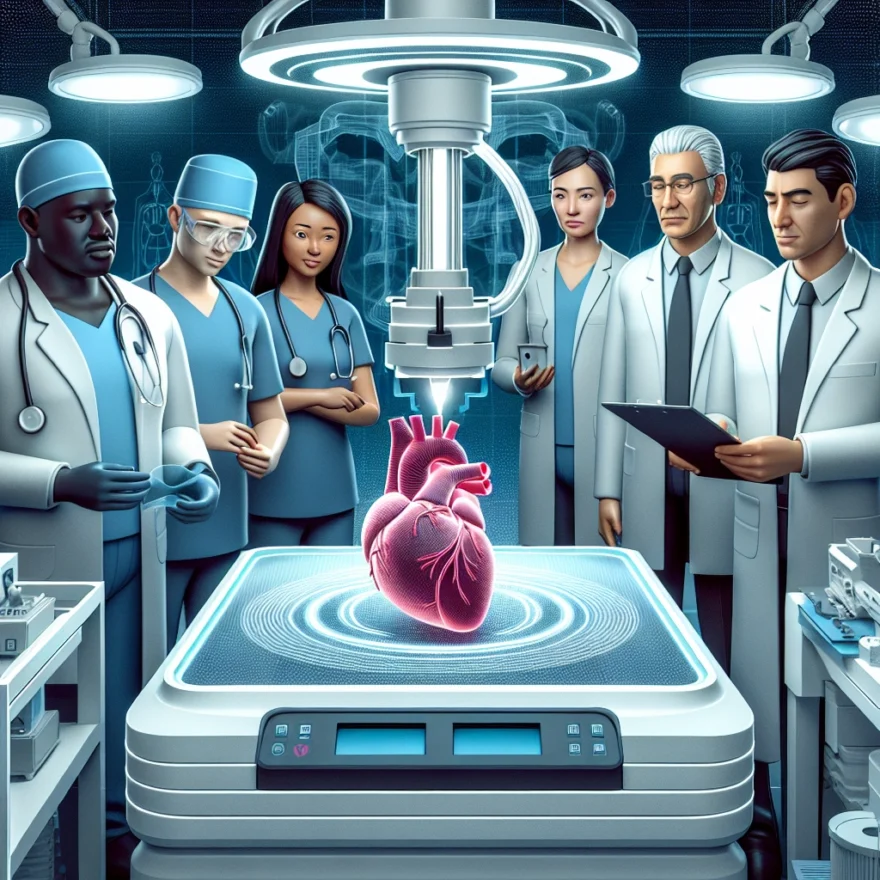
Introduction to 3D Printing in Healthcare
The advent of 3D printing technology has revolutionized various industries, and healthcare is no exception. 3D printing, also known as additive manufacturing, is a process that creates a three-dimensional object from a digital model. This is achieved by adding material layer by layer, hence the term ‘additive’. This innovative technology has been around since the 1980s, but its application in the healthcare sector has gained significant momentum in the last decade.
In the realm of healthcare, 3D printing has the potential to transform the way medical professionals deliver patient care. It can be used to create patient-specific models for surgical planning, personalized prosthetics and implants, and even bio-printed tissues and organs. Furthermore, it can aid in medical research and education, providing tangible models for study and training.
The integration of 3D printing into healthcare is still in its early stages. However, the advancements made so far have been promising, demonstrating the immense potential of this technology in improving patient outcomes, reducing healthcare costs, and advancing medical science. This article delves into the numerous applications, benefits, and challenges of 3D printing in healthcare, providing insights into its current use and future possibilities.
Table of contents
- Introduction to 3D Printing in Healthcare
- Applications of 3D Printing in Medicine
- Benefits of 3D Printing in Healthcare
- Challenges and Limitations of 3D Printing in Healthcare
- Case Studies: Success Stories of 3D Printing in Healthcare
- The Future of 3D Printing in Healthcare
- Common Questions About 3D Printing in Healthcare
- Conclusion: The Transformative Potential of 3D Printing in Healthcare
Applications of 3D Printing in Medicine
3D printing, also known as additive manufacturing, is revolutionizing the field of medicine by offering innovative solutions to a myriad of health-related issues. This technology has been used in various medical applications, demonstrating its vast potential and versatility.
One of the most prominent uses of 3D printing in medicine is in the realm of medical devices and equipment. Custom-made orthotics and prosthetics are now being 3D printed to perfectly fit the patient’s body, enhancing comfort and functionality. Similarly, dental implants and hearing aids are being personalized using this technology, offering improved quality and fit. Moreover, surgical tools such as forceps, scalpel handles, and clamps can be 3D printed on-demand, reducing costs and increasing accessibility.
Another significant application of 3D printing is in the area of surgical planning. Surgeons can now use 3D printed models of a patient’s anatomy to plan and practice complex procedures, thus reducing risks and improving surgical outcomes. This is particularly useful in areas such as neurosurgery, orthopedic surgery, and reconstructive surgery.
3D printing is also making waves in the field of tissue engineering and regenerative medicine. Scientists are exploring the potential of 3D bioprinting, a process where biological materials, cells, and supporting components are combined to print tissue-like structures that imitate natural tissues. This could potentially lead to the creation of organs for transplantation, addressing the critical shortage of donor organs worldwide.
Pharmaceuticals are another area where 3D printing shows promise. The technology can be used to produce personalized medications, tailoring the dosage, size, shape, and even release characteristics of the drug to the individual patient’s needs. This could significantly improve treatment efficacy and patient compliance.
Lastly, 3D printing is being used in medical research and education. Accurate 3D models of body parts and organs can be printed for educational purposes, offering students a hands-on approach to learning. In research, these models can be used for testing and development of new medical devices and treatments.
These are just a few examples of how 3D printing is being applied in medicine, and the possibilities continue to expand as the technology advances. It’s clear that 3D printing has the potential to significantly impact healthcare, offering innovative solutions to some of the most pressing challenges in the field.
Benefits of 3D Printing in Healthcare
As the field of healthcare continues to advance, 3D printing has emerged as a revolutionary technology with numerous benefits. This innovative technique allows for the creation of three-dimensional objects by layering materials based on a digital model. In the realm of healthcare, 3D printing has the potential to transform the way medical devices, prosthetics, and even organs are manufactured and utilized.
One of the primary benefits of 3D printing in healthcare is customization. Traditional manufacturing methods often rely on mass production, resulting in standardized products that may not perfectly fit individual patients’ needs. However, with 3D printing, medical devices and prosthetics can be tailored to each patient’s unique anatomy. This level of customization not only improves the comfort and functionality of the devices but also enhances patient outcomes.
Another significant advantage of 3D printing in healthcare is its ability to reduce costs. Traditional manufacturing processes can be time-consuming and expensive, especially for complex medical devices. However, 3D printing allows for more efficient production, eliminating the need for expensive molds or tooling. Additionally, the ability to create medical devices on-site, such as in hospitals or clinics, can further reduce costs by minimizing transportation and inventory expenses.
Furthermore, 3D printing enables rapid prototyping and iterative design. In the past, developing new medical devices or prosthetics required multiple iterations and extensive time. With 3D printing, healthcare professionals can quickly create prototypes, test them, and make necessary adjustments in a much shorter timeframe. This accelerated design process not only saves time but also allows for faster innovation and the development of more advanced medical solutions.
Additionally, 3D printing has the potential to improve patient care in remote or underserved areas. Access to medical devices and prosthetics can be limited in certain regions, making it challenging for patients to receive the care they need. However, with 3D printing, healthcare providers can produce these devices locally, reducing the reliance on external suppliers and improving accessibility for patients in remote areas.
Moreover, 3D printing has shown promise in the field of regenerative medicine. Scientists are exploring the use of 3D printing to create artificial organs, tissues, and scaffolds that can support tissue regeneration. This groundbreaking approach has the potential to revolutionize organ transplantation, as it could eliminate the need for donor organs and reduce the risk of rejection.
In conclusion, the benefits of 3D printing in healthcare are vast and transformative. From customization and cost reduction to rapid prototyping and improved accessibility, this technology has the potential to revolutionize the field of medicine. As researchers and healthcare professionals continue to explore its capabilities, 3D printing holds the promise of enhancing patient care, advancing medical innovation, and ultimately improving the overall quality of healthcare.
Challenges and Limitations of 3D Printing in Healthcare
While 3D printing has shown immense promise in revolutionizing healthcare, it is not without its challenges and limitations. Understanding these hurdles is crucial for further development and implementation of this technology in the medical field.
One of the primary challenges of 3D printing in healthcare is the high cost associated with the technology. The initial investment required for purchasing and maintaining 3D printers, as well as the cost of materials, can be prohibitive for many healthcare facilities. Additionally, the complexity of the printing process and the need for skilled personnel to operate the printers further adds to the overall expense.
Another limitation is the time-consuming nature of 3D printing. Depending on the complexity and size of the object being printed, the process can take several hours or even days. This can be a significant drawback in emergency situations where immediate medical intervention is required. However, advancements in technology are continuously being made to improve the speed of 3D printing, which may help overcome this limitation in the future.
Quality control is also a challenge in 3D printing. Ensuring that the printed objects meet the necessary standards of accuracy and precision is essential, particularly in medical applications where even minor errors can have serious consequences. Regular calibration and maintenance of the printers, as well as rigorous testing of the printed objects, are necessary to address this issue.
Another limitation of 3D printing in healthcare is the limited range of materials that can be used. While there are various materials available for printing, including plastics, metals, and even biological materials, the selection is still relatively limited compared to traditional manufacturing methods. This can restrict the types of medical devices, implants, and anatomical models that can be produced using 3D printing.
Regulatory challenges also pose a significant hurdle to the widespread adoption of 3D printing in healthcare. The regulatory frameworks governing the use of 3D-printed medical devices and implants are still evolving, and there is a need for clear guidelines and standards to ensure patient safety and efficacy. Additionally, intellectual property rights and liability issues surrounding 3D printing further complicate the regulatory landscape.
Despite these challenges and limitations, the potential of 3D printing in healthcare cannot be understated. With continued research, development, and collaboration between the medical and engineering fields, many of these hurdles can be overcome. The transformative impact of 3D printing on personalized medicine, surgical planning, prosthetics, and drug delivery makes it a technology worth exploring and investing in for the future of healthcare.
Case Studies: Success Stories of 3D Printing in Healthcare
Throughout the years, 3D printing has revolutionized the healthcare industry, enabling medical professionals to create customized solutions for patients. Let’s explore some success stories that highlight the incredible potential of 3D printing in healthcare:
1. Patient-Specific Implants
In 2014, a 3D printed titanium sternum and rib cage made headlines when it saved the life of a Spanish cancer patient. The patient had a malignant tumor in his chest, which required the removal of a portion of his sternum and several ribs. Using a 3D printed implant, surgeons were able to reconstruct the patient’s chest, providing a perfect fit and significantly reducing the risk of complications. This groundbreaking procedure showcased the ability of 3D printing to create patient-specific implants with incredible precision.
2. Surgical Guides
3D printing has also been instrumental in improving surgical outcomes by providing surgeons with customized guides. In 2015, a team of doctors successfully separated conjoined twins in China with the help of 3D printed surgical models. By creating accurate replicas of the twins’ organs, the medical team was able to carefully plan and practice the complex procedure, leading to a successful separation. This case demonstrated how 3D printing can enhance surgical precision and reduce the risks associated with complex surgeries.
3. Prosthetics
3D printing has transformed the field of prosthetics, making it more accessible and affordable for patients in need. In 2016, a young girl named Isabella received a 3D printed prosthetic arm, allowing her to perform everyday tasks that were once challenging. Unlike traditional prosthetics, which can be expensive and require frequent adjustments, 3D printed prosthetics can be easily customized and produced at a fraction of the cost. Isabella’s story is just one example of how 3D printing is improving the lives of individuals with limb differences.
4. Organ Transplants
While still in the early stages of development, 3D printing holds immense potential for organ transplantation. Researchers have successfully 3D printed functional human kidneys, livers, and hearts using bioinks and patient-derived cells. These bioengineered organs have the potential to revolutionize the transplant industry, as they can be created on-demand, reducing the organ shortage and eliminating the need for immunosuppressive drugs. Although further research is needed, these advancements in 3D printing offer hope for patients awaiting life-saving organ transplants.
5. Dental Applications
3D printing has found widespread use in dentistry, allowing for the creation of accurate and customized dental implants, crowns, and orthodontic models. In 2019, a team of researchers successfully 3D printed a set of dentures using a biocompatible resin. This breakthrough not only improved the efficiency of the denture fabrication process but also provided patients with dentures that fit better and were more comfortable to wear. The dental industry continues to explore the potential of 3D printing in improving oral healthcare.
These case studies highlight just a few of the many success stories in which 3D printing has made a significant impact on healthcare. As technology continues to advance, we can expect even more innovative applications of 3D printing in the medical field, ultimately improving patient outcomes and transforming the way healthcare is delivered.
The Future of 3D Printing in Healthcare
As 3D printing continues to advance and evolve, its potential in healthcare is becoming even more promising. The future of 3D printing in healthcare holds numerous possibilities that can revolutionize the way medical professionals approach patient care, treatment, and research.
One of the key areas where 3D printing is expected to make significant strides is in personalized medicine. With the ability to create patient-specific models, implants, and prosthetics, 3D printing can greatly enhance the effectiveness of treatments and improve patient outcomes. For example, surgeons can use 3D-printed models to practice complex procedures before performing them on actual patients, reducing the risk of errors and complications.
Another exciting prospect is the development of 3D-printed organs and tissues. While this technology is still in its early stages, researchers have already made significant progress in creating functional organs such as hearts, kidneys, and livers using 3D printing techniques. This breakthrough has the potential to address the organ shortage crisis and eliminate the need for organ transplantation waiting lists.
Additionally, 3D printing has the potential to revolutionize the field of pharmaceuticals. The ability to create personalized medications with precise dosages tailored to individual patients can greatly improve treatment efficacy and reduce the risk of adverse reactions. This approach, known as 3D-printed drug delivery systems, could lead to more targeted and efficient drug therapies.
Furthermore, the future of 3D printing in healthcare extends beyond patient care. It has the potential to transform medical education and training. Medical students can benefit from hands-on learning experiences with 3D-printed anatomical models, allowing them to gain a deeper understanding of complex structures and procedures. This technology can also facilitate collaboration between healthcare professionals, enabling them to share and exchange ideas more effectively.
Despite the immense potential, there are still challenges that need to be addressed for the future of 3D printing in healthcare to fully unfold. One of the primary challenges is the need for regulatory frameworks to ensure the safety and efficacy of 3D-printed medical devices and medications. Standardization and quality control measures will be essential to guarantee the reliability of 3D-printed products in healthcare settings.
Additionally, the cost of 3D printing technology and materials remains a barrier to widespread adoption. As the technology advances and becomes more accessible, the costs are expected to decrease, making it more feasible for healthcare institutions to integrate 3D printing into their practices.
In conclusion, the future of 3D printing in healthcare is incredibly promising. From personalized medicine to the creation of functional organs, this technology has the potential to revolutionize patient care, medical education, and pharmaceuticals. While there are challenges to overcome, continued advancements in 3D printing technology and regulatory frameworks will pave the way for a future where 3D printing plays a central role in improving healthcare outcomes.
Common Questions About 3D Printing in Healthcare
As 3D printing technology continues to advance, it is natural for people to have questions about its potential in healthcare. Here, we will address some common questions regarding 3D printing in healthcare:
-
How does 3D printing work in healthcare?
3D printing, also known as additive manufacturing, involves the creation of three-dimensional objects by layering materials based on a digital model. In healthcare, 3D printing allows for the production of patient-specific medical devices, prosthetics, anatomical models, and even tissues and organs.
-
What are the main applications of 3D printing in medicine?
There are numerous applications of 3D printing in healthcare. Some of the main ones include:
- Creating customized prosthetics and implants
- Producing anatomical models for surgical planning and education
- Fabricating personalized drug delivery systems
- Printing tissues and organs for transplantation
-
What are the benefits of 3D printing in healthcare?
3D printing offers several benefits in healthcare, such as:
- Improved patient care through personalized medical devices and treatments
- Enhanced surgical planning and training with realistic anatomical models
- Reduced costs and lead times for producing medical devices
- Increased accessibility to medical devices in remote or underserved areas
-
What are the challenges and limitations of 3D printing in healthcare?
While 3D printing holds immense potential, there are still some challenges to overcome:
- Regulatory hurdles and standards for ensuring safety and effectiveness
- Material limitations for printing functional tissues and organs
- High costs associated with 3D printing equipment and materials
- Integration of 3D printing into existing healthcare workflows
-
Can you provide some examples of successful 3D printing in healthcare?
Certainly! There have been several successful applications of 3D printing in healthcare:
- A patient with a severe cranial defect received a 3D-printed titanium implant to restore the shape of their skull.
- Surgeons used 3D-printed models of a patient’s heart to plan and practice a complex cardiac surgery, resulting in a successful outcome.
- Researchers have successfully printed functional human tissues, such as skin and cartilage, which could potentially revolutionize regenerative medicine.
-
What does the future hold for 3D printing in healthcare?
The future of 3D printing in healthcare is promising. As technology advances, we can expect to see further advancements in printing functional organs, development of new materials, and increased integration of 3D printing into routine medical practice.
Conclusion: The Transformative Potential of 3D Printing in Healthcare
Throughout this article, we have explored the incredible potential of 3D printing in healthcare. The advancements in this technology have opened up a world of possibilities, revolutionizing the way we approach medical treatments and patient care.
By harnessing the power of 3D printing, healthcare professionals are able to create customized medical devices, prosthetics, and even organs, tailored specifically to each patient’s unique needs. This level of personalization not only improves the effectiveness of treatments but also enhances patient comfort and quality of life.
The applications of 3D printing in medicine are vast and diverse. From surgical planning and training to drug delivery systems and tissue engineering, this technology is reshaping the healthcare landscape. It allows for faster and more efficient production of medical equipment, reducing costs and improving accessibility.
One of the key benefits of 3D printing in healthcare is its ability to accelerate innovation. Researchers and scientists can rapidly prototype and test new ideas, leading to faster development of breakthrough treatments and therapies. This technology also enables collaboration between different disciplines, fostering a multidisciplinary approach to healthcare.
However, it is important to acknowledge the challenges and limitations of 3D printing in healthcare. Regulatory and ethical considerations need to be addressed to ensure patient safety and the ethical use of this technology. The high costs of 3D printers and materials, as well as the need for skilled professionals, can also hinder widespread adoption.
Despite these challenges, there have been numerous success stories showcasing the transformative potential of 3D printing in healthcare. From the creation of patient-specific implants to the production of functional prosthetics, this technology has already made a significant impact on patient outcomes and quality of life.
The future of 3D printing in healthcare is promising. As technology continues to advance, we can expect even greater precision, speed, and affordability in the production of medical devices and implants. The integration of 3D printing with other emerging technologies, such as artificial intelligence and robotics, holds immense potential for further advancements.
In conclusion, 3D printing has the power to revolutionize healthcare. Its ability to customize medical solutions, accelerate innovation, and improve patient outcomes makes it a game-changer in the field of medicine. While there are challenges to overcome, the transformative potential of 3D printing in healthcare is undeniable. As this technology continues to evolve, we can look forward to a future where personalized and efficient healthcare solutions are the norm.