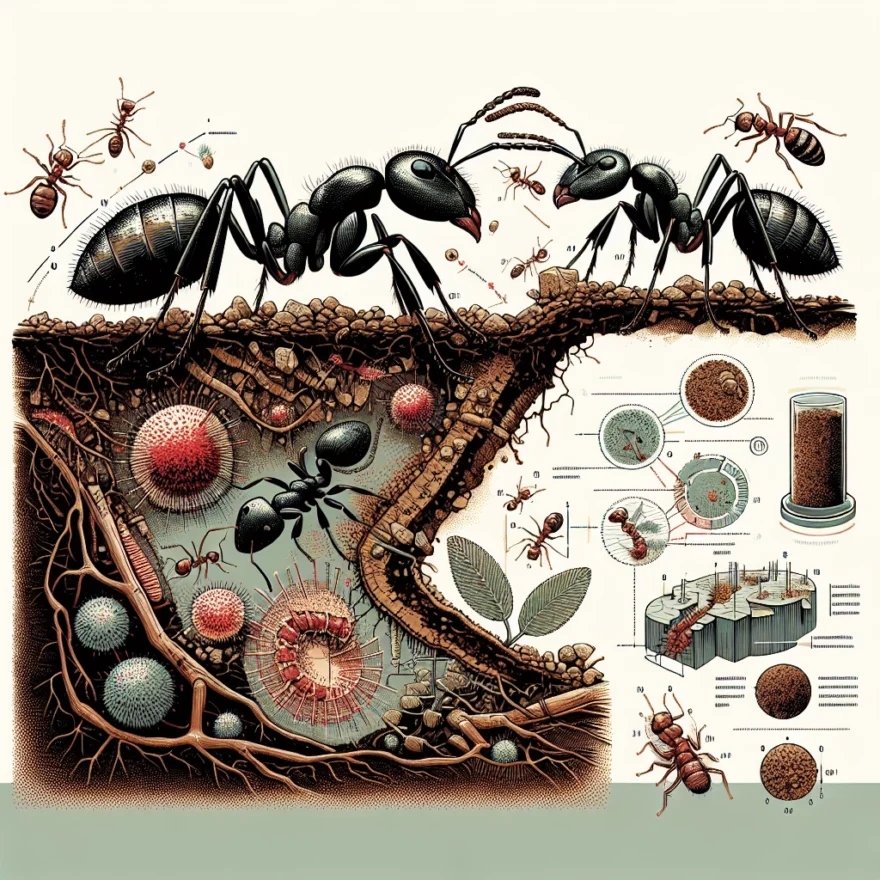
Introduction to Pavement Ants
Pavement ants, scientifically known as Tetramorium caespitum, are a common sight in urban and suburban areas across North America and Europe. These tiny insects often go unnoticed as they forage for food and build their nests in the cracks and crevices of sidewalks, driveways, and other paved surfaces. Although they may seem harmless, pavement ants can become a nuisance when they invade homes and gardens in search of food and shelter. In this comprehensive guide, we’ll explore the fascinating world of pavement ants, delving into their physical characteristics, habitat preferences, diet, behavior, and social structure. We’ll also discuss how to identify signs of infestation, compare pavement ants to other common ant species, and examine their natural predators and impact on the environment. Finally, we’ll provide practical advice on preventing and controlling pavement ant infestations, including non-chemical and chemical methods, safety precautions, and when to call a professional exterminator. By understanding these fascinating insects and implementing effective control measures, you can keep your home and garden free of pavement ants and maintain a healthy, balanced ecosystem.
Table of contents
- Introduction to Pavement Ants
- Physical Characteristics of Pavement Ants
- Habitat and Nesting Preferences
- Pavement Ant Diet and Feeding Habits
- Pavement Ant Reproduction and Life Cycle
- Pavement Ant Behavior and Social Structure
- Signs of Pavement Ant Infestation
- Pavement Ants vs. Other Common Ant Species
- Natural Predators of Pavement Ants
- Preventing Pavement Ant Infestations
- Non-Chemical Pavement Ant Control Methods
- Chemical Pavement Ant Control Methods
- Safety Precautions for Ant Control
- When to Call a Professional Exterminator
- Pavement Ants and Their Impact on the Environment
- Frequently Asked Questions About Pavement Ants
Physical Characteristics of Pavement Ants
Pavement ants, scientifically known as Tetramorium caespitum, are small insects that can be easily identified by their distinctive physical features. These ants are typically dark brown to black in color, with a shiny, smooth exoskeleton. The workers, which make up the majority of the colony, measure between 2.5 to 3 millimeters in length, while the queens are larger, reaching up to 8 millimeters.
One of the most notable characteristics of pavement ants is their 12-segmented antennae, which end in a three-segmented club. This feature helps them navigate and communicate with other ants in their colony. Additionally, pavement ants have two spines on their thorax, which are easily visible when viewed from the side. These spines are a key identifying feature that sets them apart from other ant species.
Another distinguishing feature of pavement ants is their unevenly rounded thorax, which gives them a somewhat humped appearance. Their legs and antennae are lighter in color compared to their bodies, often appearing pale or yellowish. Pavement ants also possess a pair of stingers at the end of their gaster (the bulbous, posterior part of the abdomen), which they use for defense and subduing prey. However, their sting is relatively mild and usually causes little more than a slight irritation in humans.
It is important to note that pavement ants can sometimes be mistaken for other ant species due to their small size and dark coloration. However, their unique physical features, such as the spines on their thorax, the three-segmented club on their antennae, and their unevenly rounded thorax, make them easily distinguishable from other common ants when observed closely.
Habitat and Nesting Preferences
Pavement ants are a common species found in urban and suburban areas across North America. They are named for their tendency to build nests under pavement, sidewalks, and driveways. However, they can also be found nesting under rocks, in soil, and in other small spaces.
Pavement ants prefer to nest in areas that are close to food sources, such as kitchens, pantries, and garbage cans. They will also nest near water sources, such as sinks and leaky pipes. If you see pavement ants in your home, it is likely that they have built a nest somewhere nearby.
Pavement ants are able to adapt to a variety of environments, which is why they are so common in urban areas. They can be found in parks, playgrounds, and other outdoor areas as well as in homes and buildings. They are also able to survive in a range of temperatures, from hot summers to cold winters.
Pavement ant nests are typically small and can be difficult to locate. They are often located in cracks and crevices in pavement, or in soil near the foundation of a building. The nests are made up of small chambers and tunnels, which are used for storing food and caring for the young. Pavement ants will often create multiple entrances to their nests, making it difficult to completely eliminate them.
Pavement Ant Diet and Feeding Habits
Pavement ants are omnivorous, which means they eat both plant and animal matter. Their diet consists of a variety of food sources, including insects, honeydew from aphids, nectar from flowers, seeds, and grease or sweet-based foods.
These ants are known to scavenge for food and can often be found around garbage cans, picnic areas, and outdoor eating areas. They are attracted to sweet substances, such as sugar, syrup, and honey, as well as greasy foods, like meats and cheese.
Pavement ants are also known to farm aphids for their honeydew, a sweet substance produced by the aphids. The ants will protect the aphids from predators and move them from plant to plant to ensure a steady supply of honeydew.
During the winter months, pavement ants will go into a state of hibernation and will not eat. They will store food during the warmer months to sustain themselves during this time.
It is important to keep food sources, such as crumbs and spills, cleaned up to prevent pavement ants from being attracted to your home. Store food in airtight containers and keep garbage cans tightly sealed to prevent access.
If you have an infestation of pavement ants, it is important to properly identify the food source they are attracted to and eliminate it. This will help to reduce the number of ants in your home and prevent future infestations.
Pavement Ant Reproduction and Life Cycle
Pavement ants have a unique and fascinating life cycle. The colony is started by a single queen ant who lays eggs. The queen ant is responsible for the reproduction of the entire colony. The eggs hatch into larvae, which are fed by the worker ants. The larvae then spin cocoons around themselves and pupate. After a few weeks, adult ants emerge from the pupae.
Pavement ants have a relatively short life cycle, with workers living for about 3-6 months and queens living for up to several years. The queen ant can lay up to 10-12 eggs per day, and the colony can grow to several thousand ants.
Pavement ants reproduce through mating flights, which occur in the late spring or early summer. During these flights, winged male and female ants mate in the air. The males die shortly after mating, while the females shed their wings and search for a suitable nesting site to start a new colony.
The reproductive success of pavement ants is largely dependent on environmental conditions. The temperature, humidity, and availability of food and shelter can all impact the growth and survival of the colony. Pavement ants are also susceptible to predators such as birds, spiders, and other insects.
Pavement Ant Behavior and Social Structure
Pavement ants are social insects that live in large colonies. Their social structure is hierarchical, with a queen ant at the top of the hierarchy. The queen is responsible for laying eggs, which hatch into worker ants. These workers are responsible for all the tasks necessary to maintain the colony, such as foraging for food, caring for the young, and defending the colony from predators.
Pavement ants communicate with each other using chemical signals called pheromones. These pheromones are used to mark trails to food sources and to communicate with other members of the colony. When a worker ant finds a food source, it will leave a trail of pheromones for other ants to follow.
Pavement ants are known for their aggressive behavior towards other ant species. They will often engage in territorial disputes with other ant colonies, and will even attack and kill members of other ant species. However, within their own colony, pavement ants are relatively peaceful and cooperative.
Pavement ants are also known for their ability to adapt to changing environments. They can quickly adjust their foraging patterns and nesting locations in response to changes in their environment, such as changes in temperature or food availability.
Overall, the behavior and social structure of pavement ants is complex and fascinating. Understanding these aspects of pavement ant biology is essential for effective pest control and management.
Signs of Pavement Ant Infestation
Pavement ants can be a nuisance when they invade homes, gardens, and other outdoor spaces. Here are some signs that you may have a pavement ant infestation:
- Presence of ants: The most obvious sign of a pavement ant infestation is the presence of ants. You may see them crawling along sidewalks, driveways, or other paved areas. They may also be found inside your home, particularly in kitchens or near sources of food.
- Ant trails: Pavement ants often travel in trails, so you may see a line of ants moving back and forth between their nest and a food source. These trails may be visible on sidewalks or other outdoor surfaces.
- Piles of soil: Pavement ants create small mounds of soil around the entrance to their nest. These piles may be found along the edge of a sidewalk or driveway.
- Wings: During the breeding season, pavement ants may swarm and shed their wings. If you see discarded wings on the ground, it may be a sign that there is a nearby nest.
- Strange odors: Pavement ants release a pheromone when they are threatened or killed, which can create a strong odor. If you notice a strange smell in your home or yard, it may be a sign of an ant infestation.
If you notice any of these signs, it is important to take action to control the infestation. Pavement ants can quickly multiply and become a major problem if left untreated.
Pavement Ants vs. Other Common Ant Species
Ants are one of the most common household pests, and there are many different species that can invade your home. Pavement ants are just one of the many species that you may encounter, and it’s important to know how they differ from other common ant species.
One of the most common ant species that you may encounter is the carpenter ant. Unlike pavement ants, carpenter ants are known for their destructive behavior. They like to burrow into wood, which can cause significant damage to your home if left unchecked. If you notice large ants in your home that seem to be tunneling through wood, you may have a carpenter ant infestation.
Another common ant species is the pharaoh ant. These ants are known for their small size and light yellow color. They are often found in kitchens and bathrooms, where they are attracted to food and moisture. Unlike pavement ants, pharaoh ants can be difficult to control because they have multiple queens and can quickly establish new colonies if one is destroyed.
Odorous house ants are another common species that you may encounter. These ants are known for the foul odor that they emit when they are crushed. They are attracted to sweet and greasy foods, and can quickly become a nuisance in your home. Unlike pavement ants, odorous house ants are not known for causing structural damage to homes.
Finally, fire ants are a species that you should be aware of if you live in certain parts of the country. These ants are known for their painful stings, and can be dangerous to people and pets. They are typically found in warm, dry climates, and are known for building large mounds in open areas. Unlike pavement ants, fire ants are not typically found inside homes.
Overall, it’s important to be able to identify different ant species so that you can take the appropriate steps to control them. While pavement ants are not typically dangerous or destructive, they can still be a nuisance if they invade your home. By understanding how they differ from other common ant species, you can take the necessary steps to keep your home pest-free.
Natural Predators of Pavement Ants
Pavement ants have a number of natural predators that help to keep their populations in check. These predators include other insects, birds, and mammals.
One of the most common predators of pavement ants is the antlion. Antlions are insects that are known for digging pits in the ground and then waiting for ants to fall in. Once an ant falls into the pit, the antlion uses its mandibles to grab the ant and pull it under the sand to eat it.
Other insects that prey on pavement ants include spiders, beetles, and other ant species. Spiders are particularly effective at catching ants, as they can spin webs in areas where ants are known to travel and then wait for them to get caught in the web.
Birds are also known to prey on pavement ants. Species such as the American robin and the northern flicker are known to eat ants, including pavement ants. These birds will often forage for ants in lawns and gardens, using their sharp beaks to pick the ants off the ground.
Mammals such as skunks, raccoons, and opossums are also known to eat pavement ants. These animals will often dig up ant nests in order to get to the ants inside. They may also eat ants that are wandering around on the ground.
While natural predators can help to control pavement ant populations, they are not always effective at eliminating infestations. In some cases, it may be necessary to use chemical or non-chemical methods to control ant populations.
Preventing Pavement Ant Infestations
Pavement ants are a common household pest, and once they have established a colony, they can be difficult to get rid of. However, there are several steps you can take to prevent pavement ant infestations from occurring in the first place. Here are some tips:
- Keep your home clean: Pavement ants are attracted to food sources, so it’s essential to keep your home clean and free of crumbs and spills. Be sure to wipe down counters and sweep floors regularly.
- Store food properly: Pavement ants can easily get into unsealed food containers, so it’s important to store food in airtight containers or in the refrigerator. This includes pet food as well.
- Seal entry points: Pavement ants can enter your home through even the smallest cracks and crevices. Seal any entry points, such as gaps around windows and doors, with caulk or weather stripping.
- Keep your yard tidy: Pavement ants often nest outside, so it’s important to keep your yard tidy. Remove any piles of debris or wood, and keep your lawn trimmed.
- Eliminate standing water: Pavement ants need water to survive, so it’s important to eliminate any standing water sources around your home. Fix leaky faucets and pipes, and ensure that your gutters are clear of debris.
- Use natural ant repellents: There are several natural ant repellents that you can use to deter pavement ants from entering your home. These include cinnamon, cloves, and peppermint oil. Simply sprinkle these substances around entry points and areas where you have seen ants.
By taking these preventative measures, you can significantly reduce the likelihood of a pavement ant infestation in your home. However, if you do notice signs of an infestation, it’s important to take action quickly to prevent the problem from getting worse.
Non-Chemical Pavement Ant Control Methods
Controlling pavement ants without the use of chemicals is not only safer for the environment but also for humans and pets. Here are some non-chemical methods that you can use to control pavement ants:
- Sanitation: Keeping your home and surrounding area clean is one of the best ways to prevent pavement ant infestations. Make sure to clean up any spills, crumbs, and food debris. Keep your trash cans tightly sealed and dispose of garbage regularly.
- Sealing Entry Points: Pavement ants can enter your home through small cracks and gaps in windows, doors, and foundations. Seal these entry points with caulk or weather stripping to prevent ants from entering.
- Vinegar: Vinegar is a natural ant repellent. Mix equal parts of vinegar and water and spray the solution around areas where ants are present. Vinegar also helps to remove the ant trail, making it difficult for ants to find their way back.
- Boric Acid: Boric acid is a natural insecticide that is toxic to ants. Mix boric acid with sugar or honey and place it in areas where ants are present. The ants will be attracted to the sugar or honey and will carry the boric acid back to their nest, killing the colony.
- Diatomaceous Earth: Diatomaceous earth is a natural powder that is made from the fossilized remains of diatoms. It is abrasive to insects and causes them to dehydrate and die. Sprinkle diatomaceous earth around areas where ants are present.
- Mint: Mint is a natural ant repellent. Plant mint around the perimeter of your home or place mint leaves in areas where ants are present. You can also make a mint spray by boiling mint leaves in water and spraying the solution around your home.
It is important to note that while non-chemical methods can be effective in controlling pavement ants, they may not completely eliminate the problem. If you have a severe infestation or if non-chemical methods do not work, it may be necessary to use chemical methods or to call a professional exterminator.
Chemical Pavement Ant Control Methods
While non-chemical methods can be effective in controlling pavement ants, sometimes chemical methods are necessary to eliminate an infestation. It’s important to note that chemical control methods should always be used with caution and according to the instructions on the label.
There are a few different types of chemical control methods that can be used to eliminate pavement ants:
- Baits: Ant baits are a popular and effective way to control pavement ants. Baits work by attracting ants with a food source that has been treated with a slow-acting poison. The ants then bring the poisoned food back to the colony, where it is shared with other ants and eventually kills off the entire colony. It’s important to use ant baits that are specifically formulated for pavement ants, as other types of ant baits may not be effective.
- Sprays: Ant sprays can be used to kill pavement ants on contact. However, they are not as effective as baits because they do not target the entire colony. When using ant sprays, it’s important to spray directly on the ants and their trails, as well as any cracks or crevices where ants may be entering the home.
- Dusts: Ant dusts can be used to treat cracks and crevices where pavement ants may be entering the home. The dust is applied to these areas and acts as a barrier, killing any ants that come into contact with it. It’s important to use ant dusts that are specifically formulated for pavement ants, as other types of ant dusts may not be effective.
- Granules: Ant granules can be spread around the perimeter of the home to create a barrier that prevents ants from entering. The granules are treated with a slow-acting poison that is carried back to the colony by foraging ants, eventually killing off the entire colony. It’s important to use ant granules that are specifically formulated for pavement ants, as other types of ant granules may not be effective.
When using chemical control methods, it’s important to follow all safety precautions on the label. This may include wearing gloves and a mask, keeping children and pets away from treated areas, and avoiding contact with the product.
If you are unsure about how to use chemical control methods or are uncomfortable doing so, it’s best to contact a professional exterminator who can safely and effectively eliminate the pavement ant infestation.
Safety Precautions for Ant Control
When it comes to controlling pavement ant infestations, safety should always be a top priority. Here are some safety precautions to keep in mind:
- Read and follow all instructions on ant control product labels carefully.
- Wear protective clothing, including gloves and a mask, when handling ant control products.
- Keep ant control products out of reach of children and pets.
- Store ant control products in a cool, dry place away from food and water sources.
- Dispose of ant control product containers properly, according to local regulations.
- Do not use outdoor ant control products indoors.
- Do not use ant control products near water sources or in areas where they may contaminate water.
- If using bait stations, place them in areas where children and pets cannot access them.
- If hiring a professional exterminator, make sure they are licensed and follow all safety protocols.
By following these safety precautions, you can effectively control pavement ant infestations without putting yourself, your family, or the environment at risk.
When to Call a Professional Exterminator
If you have tried the non-chemical methods and chemical treatments for pavement ant control but still see a significant number of ants in your home or business, it may be time to call a professional exterminator. Professional pest control companies have access to stronger pesticides and equipment that are not available to the general public. They also have the knowledge and expertise to identify the root cause of the pavement ant infestation and develop a customized treatment plan to eliminate them.
Professional exterminators will typically conduct a thorough inspection of your property to identify the extent of the infestation and locate the pavement ant nests. They will then use targeted treatments to eliminate the ants and prevent them from returning. This may include applying liquid or granular baits, dusts, or sprays directly to the nests and surrounding areas.
It is important to choose a reputable pest control company that uses safe and effective methods for pavement ant control. Look for a company that is licensed and insured, and has experience dealing with ant infestations. Ask for references and read online reviews to ensure that the company has a good reputation.
While professional extermination services may be more expensive than DIY methods, they can save you time and money in the long run by effectively eliminating the pavement ant infestation and preventing future problems. Additionally, professional exterminators can provide ongoing maintenance and monitoring to ensure that your property remains ant-free.
Pavement Ants and Their Impact on the Environment
Pavement ants, like all living creatures, have an impact on the environment in which they live. While they may seem like a nuisance to humans, they play an important role in the ecosystem.
Pavement ants are omnivores and feed on a variety of foods, including plant material, insects, and other arthropods. They are also known to scavenge for food, which can help to clean up the environment by removing dead organisms and other waste.
Pavement ants are also an important food source for many other animals, including birds, reptiles, and mammals. Without pavement ants, these animals would have to find alternative sources of food, which could have a ripple effect throughout the ecosystem.
However, pavement ants can also have negative impacts on the environment. They are known to disrupt the natural balance of ecosystems by outcompeting native ant species for resources. This can lead to a decrease in biodiversity and can have negative effects on the ecosystem as a whole.
Additionally, pavement ants can cause damage to infrastructure, such as sidewalks and buildings, by excavating soil and creating tunnels. This can lead to costly repairs and can be a safety hazard for pedestrians.
It is important to find a balance between controlling pavement ant populations and preserving their role in the ecosystem. By using non-chemical control methods and taking steps to prevent infestations, we can minimize the negative impacts of pavement ants while still allowing them to play their important role in the environment.
Frequently Asked Questions About Pavement Ants
Q: How do I identify pavement ants?
A: Pavement ants are small, usually measuring around 1/8 inch long. They are dark brown or black in color and have parallel lines running down their bodies. They also have two spines on their back ends.
Q: Where do pavement ants build their nests?
A: Pavement ants build their nests in cracks in pavement, under rocks, and in soil. They can also build nests inside buildings, particularly in walls and insulation.
Q: What do pavement ants eat?
A: Pavement ants eat a variety of foods, including sweets, meats, and greasy foods. They are also known to eat other insects.
Q: How do pavement ants reproduce?
A: Pavement ants reproduce through a process called swarming. During swarming, winged males and females leave the nest to mate. The females then establish new colonies.
Q: What is the social structure of pavement ants?
A: Pavement ants live in colonies with a hierarchical social structure. The queen ant is responsible for laying eggs, while worker ants gather food and care for the young. Male ants are produced only for mating purposes.
Q: How can I tell if I have a pavement ant infestation?
A: Signs of a pavement ant infestation include the presence of large numbers of ants, particularly near food sources or in areas with cracks in pavement or soil. You may also notice small piles of dirt near pavement cracks, which indicate the location of a nest.
Q: How can I prevent pavement ant infestations?
A: To prevent pavement ant infestations, keep your home and yard clean and free of food debris. Seal cracks in pavement and walls, and keep vegetation trimmed away from your home.
Q: What are some non-chemical methods for controlling pavement ants?
A: Non-chemical methods for controlling pavement ants include using bait traps, vacuuming up ants, and pouring boiling water into ant nests.
Q: What are some chemical methods for controlling pavement ants?
A: Chemical methods for controlling pavement ants include using insecticides and ant baits. It is important to follow all safety precautions when using these products.
Q: When should I call a professional exterminator?
A: You should call a professional exterminator if you have a large or persistent pavement ant infestation, or if you are uncomfortable using chemical methods to control ants.
Q: What is the impact of pavement ants on the environment?
A: Pavement ants can have a negative impact on the environment by disrupting soil ecosystems and preying on other insects. However, they also serve as a food source for many animals.
Q: Are pavement ants dangerous?
A: Pavement ants are not generally considered to be dangerous to humans. However, they can contaminate food and cause damage to structures.