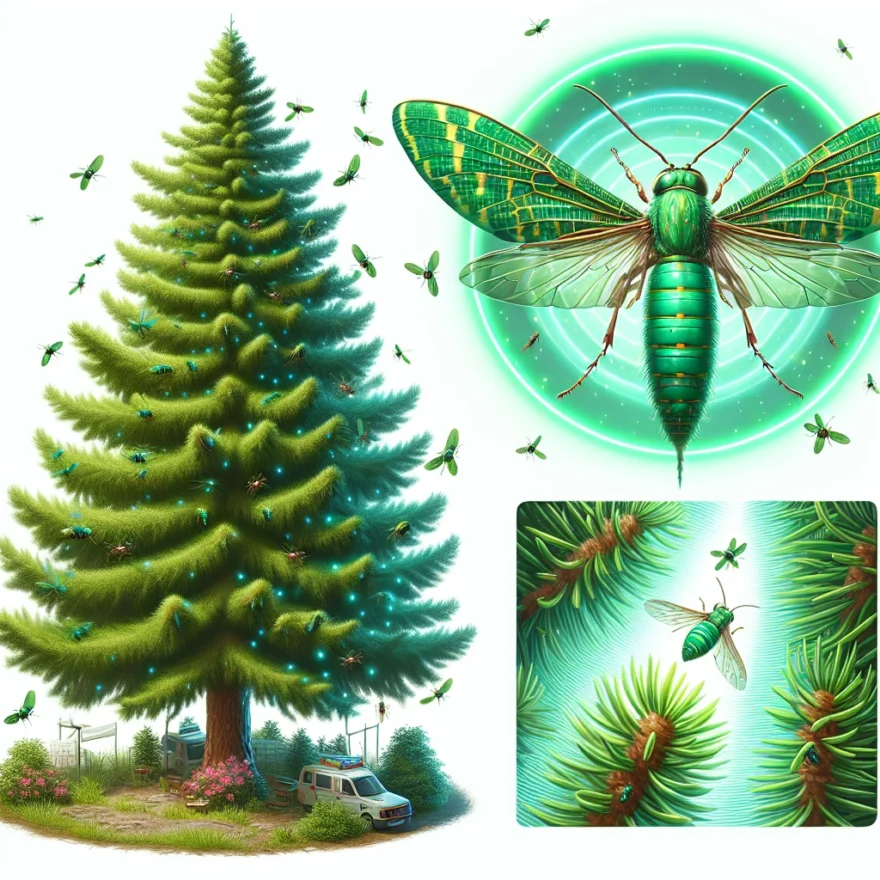
Introduction to Pine Sawfly
Pine sawflies are a group of insects that can cause significant damage to pine trees, affecting their growth and overall health. These pests belong to the family Diprionidae and are commonly found throughout North America, Europe, and Asia. Pine sawflies are known to feed on various species of pine trees, including Scots pine, red pine, and white pine, among others. While they may seem like a minor nuisance at first, a severe infestation can lead to defoliation and even tree death.
Protecting your pine trees from pine sawfly infestations involves understanding the biology and behavior of these insects, as well as the signs of their presence. By learning how to identify pine sawfly infestations, you can take the necessary steps to prevent them from causing extensive damage to your trees. Implementing preventive measures, monitoring for early detection, and using appropriate control methods are all crucial components of an effective pine sawfly management strategy.
In this article, we will discuss various aspects of pine sawfly infestations, including their life cycle, the damage they cause, and the different control methods available for managing these pests. We will also explore the role of natural predators, the impact of climate change on pine sawfly populations, and the importance of integrated pest management in protecting your pine trees from these destructive insects. By gaining a comprehensive understanding of pine sawfly biology and behavior, you can ensure the health and longevity of your pine trees for years to come.
Table of contents
- Introduction to Pine Sawfly
- Identifying Pine Sawfly Infestations
- Pine Sawfly Life Cycle
- Damage Caused by Pine Sawfly
- Preventive Measures for Pine Sawfly Infestations
- Natural Predators of Pine Sawfly
- Chemical Control Options for Pine Sawfly
- Biological Control Methods for Pine Sawfly
- Monitoring and Early Detection of Pine Sawfly
- Pruning and Tree Care for Pine Sawfly Prevention
- Using Insecticides for Pine Sawfly Control
- Pine Sawfly Control in Commercial Forestry
- Integrated Pest Management for Pine Sawfly
- Common Questions and Answers about Pine Sawfly
- Pine Sawfly and Climate Change
- The Impact of Pine Sawfly on Ecosystems
- Pine Sawfly Infestations in Urban Landscapes
- Pine Sawfly Species and Their Host Trees
- Case Studies: Successful Pine Sawfly Control
- Conclusion: Protecting Your Pine Trees from Pine Sawfly
Identifying Pine Sawfly Infestations
One of the first steps in protecting your pine trees from the pine sawfly is learning how to identify the signs of an infestation. Early detection is crucial for effective management and control of these pests. In this section, we will discuss the various indicators of pine sawfly infestations and how to recognize them in your trees.
Pine sawflies are small, wasp-like insects that belong to the family Diprionidae. The adult sawflies are typically inconspicuous and not commonly seen. However, it is their larvae that cause the most damage to pine trees. Pine sawfly larvae resemble caterpillars and are often mistaken for them. They have a distinct appearance, with a cylindrical body, a well-developed head, and multiple pairs of fleshy, stubby legs called prolegs. The color of the larvae can vary depending on the species, but they are often green or gray with darker stripes or spots.
Here are some common signs of a pine sawfly infestation:
- Defoliation: Pine sawfly larvae feed on the needles of pine trees, causing defoliation. If you notice patches of missing needles or an overall thinning of the tree’s foliage, this could be a sign of a pine sawfly infestation. Severe defoliation can lead to reduced growth, tree stress, and even death in some cases.
- Skeletonized needles: As the larvae feed on the needles, they often leave behind the central vein, creating a skeletonized appearance. This is a clear indication of pine sawfly feeding activity.
- Larvae presence: Inspect the branches and foliage of your pine trees for the presence of pine sawfly larvae. They can often be found in groups, feeding on the needles together. If you spot any larvae, take a closer look to determine if they are indeed pine sawfly larvae based on their appearance.
- Silken webs: Some species of pine sawflies, such as the European pine sawfly, create silken webs on the branches and needles of the tree. If you notice these webs, it could be a sign of an infestation.
- Adult sawflies: Although adult pine sawflies are not as easily spotted as their larvae, you may still notice them flying around your pine trees during their mating season, which typically occurs in the spring or early summer. Keep an eye out for small, wasp-like insects near your trees.
By familiarizing yourself with the signs of a pine sawfly infestation, you can take action quickly to protect your pine trees from these destructive pests. In the following sections, we will discuss various control methods and strategies for managing pine sawfly infestations, as well as preventive measures to keep your trees healthy and free from these pests.
Pine Sawfly Life Cycle
The pine sawfly, also known as Diprion pini, is a common pest that affects pine trees. Understanding the life cycle of the pine sawfly is crucial in developing effective control measures. The pine sawfly has four life stages: egg, larva, pupa, and adult.
The adult pine sawfly is a small, non-stinging wasp that lays eggs in the needles of pine trees. The eggs are laid in groups of 30 to 100 and are typically found on the underside of needles in the lower crown of the tree. The eggs are oval-shaped and are about 1 mm in length.
After the eggs hatch, the larvae emerge and begin feeding on the needles of the pine tree. The larvae are small, green or yellow caterpillars with black heads and can grow up to 25 mm in length. The larvae feed on the needles for several weeks, causing damage to the tree.
Once the larvae have reached maturity, they spin cocoons and enter the pupal stage. The pupal stage lasts for several weeks before the adult sawfly emerges. The adult sawfly is a small, non-stinging wasp that is about 6 mm in length. The adult sawfly does not feed on the tree and only lives for a few days.
The entire life cycle of the pine sawfly takes about one year to complete. The eggs are laid in the fall and overwinter on the tree. The larvae emerge in the spring and feed on the tree until they pupate in the summer. The adult sawfly emerges in the late summer or early fall and lays eggs on the tree to start the cycle over again.
Damage Caused by Pine Sawfly
The Pine Sawfly is a pest that can cause significant damage to pine trees. The larvae of the Pine Sawfly feed on the needles of the tree, which can lead to defoliation and stunted growth. The damage caused by Pine Sawfly infestations can be severe, especially in young trees or trees that are already stressed due to environmental factors.
One of the most noticeable signs of Pine Sawfly damage is the presence of chewed and skeletonized needles. The larvae of the Pine Sawfly feed on the needles, leaving behind only the veins and the base of the needle. This can give the tree a patchy appearance, with some areas of the tree having no needles at all.
Pine Sawfly infestations can also cause the tree to produce less new growth. This can lead to stunted growth and a weakened tree. In severe cases, Pine Sawfly infestations can even kill the tree.
The damage caused by Pine Sawfly infestations can also have a ripple effect on the ecosystem. For example, defoliation can reduce the amount of food available to other insects and animals that rely on pine trees for survival. Additionally, the weakened state of the tree can make it more susceptible to other pests and diseases.
It’s important to take Pine Sawfly infestations seriously and take steps to prevent and control them to protect the health of your pine trees and the surrounding ecosystem.
Preventive Measures for Pine Sawfly Infestations
Preventing a pine sawfly infestation is the best way to protect your pine trees from this pest. Here are some preventive measures you can take:
- Plant resistant trees: Choose pine tree species that are less susceptible to pine sawfly infestations. Some species that are less attractive to pine sawflies include Austrian pine, red pine, and Scotch pine.
- Maintain tree health: Keep your pine trees healthy and vigorous by providing them with proper nutrients, water, and sunlight. Healthy trees are less susceptible to pine sawfly infestations.
- Prune trees: Prune your pine trees regularly to remove dead or damaged branches. This will help prevent pine sawflies from laying their eggs on the tree.
- Remove infested trees: If you notice a pine sawfly infestation in one of your trees, remove the tree immediately to prevent the infestation from spreading to other trees.
- Clean up debris: Keep the area around your pine trees clean by removing fallen needles, cones, and other debris. This will help prevent pine sawflies from laying their eggs in the area.
- Use sticky bands: Wrap sticky bands around the trunk of your pine trees to prevent adult pine sawflies from climbing up the tree to lay their eggs.
- Use pheromone traps: Place pheromone traps around your pine trees to attract and trap adult male pine sawflies. This will help reduce the number of pine sawflies in the area.
- Use insecticidal soap: Spray your pine trees with insecticidal soap to kill pine sawflies and their eggs. This is a natural and safe way to control pine sawflies.
- Use neem oil: Neem oil is another natural and safe way to control pine sawflies. Spray your pine trees with neem oil to kill pine sawflies and their eggs.
By taking these preventive measures, you can help protect your pine trees from pine sawfly infestations. However, if you do notice an infestation, it is important to take action immediately to prevent the infestation from spreading.
Natural Predators of Pine Sawfly
One of the most effective ways to control pine sawfly infestations is through natural predators. These predators are insects, birds, and other animals that feed on pine sawflies and their eggs, larvae, and pupae. By introducing these natural predators into the ecosystem, you can help keep pine sawfly populations under control without the use of chemicals.
One of the most common natural predators of pine sawflies is the parasitic wasp. These wasps lay their eggs inside the pine sawfly larvae, and the larvae are eventually killed by the wasp larvae. Other natural predators of pine sawflies include ladybugs, lacewings, and spiders.
Birds are also effective predators of pine sawflies. Chickadees, nuthatches, and woodpeckers are known to feed on pine sawfly larvae, while blue jays and crows will eat the adult sawflies.
In addition to introducing natural predators, you can also encourage their presence by planting native plants and trees that provide habitat and food sources for these animals. Avoid using pesticides and other chemicals that can harm these natural predators and disrupt the ecosystem.
While natural predators can be effective in controlling pine sawfly infestations, it is important to note that they may not be enough on their own. It is important to also implement other preventive measures and control methods, such as pruning and tree care, monitoring and early detection, and chemical control options if necessary.
Chemical Control Options for Pine Sawfly
Chemical control options for pine sawfly are available, but they should be used as a last resort. The use of insecticides can harm beneficial insects and pollinators, as well as contaminate soil and water sources. However, in severe infestations, chemical control may be necessary to protect the health of the pine trees.
Before using any insecticide, it is important to identify the specific species of pine sawfly and determine the appropriate treatment. Some insecticides may be more effective on certain species or life stages of the sawfly.
The timing of insecticide application is also crucial. Insecticides should be applied when the sawfly larvae are actively feeding, usually in the spring or early summer. It is important to follow the instructions on the insecticide label and wear protective clothing and equipment when applying the product.
There are several types of insecticides that can be used to control pine sawfly, including:
- Contact insecticides: These insecticides kill the sawfly on contact. They are usually sprayed directly on the larvae and have a short residual effect.
- Systemic insecticides: These insecticides are absorbed by the tree and kill the sawfly when it feeds on the foliage. They have a longer residual effect than contact insecticides.
- Insecticidal soaps and oils: These products suffocate the sawfly larvae by coating their bodies and blocking their breathing pores. They are less toxic than other insecticides and may be a good option for organic gardening.
It is important to note that not all insecticides are safe for all pine tree species. Some species may be more sensitive to certain chemicals, and the use of the wrong insecticide can cause damage to the tree. It is important to consult with a professional arborist or extension agent before using any insecticide.
When using insecticides, it is important to minimize their impact on the environment. This can be done by carefully following the instructions on the product label, avoiding spraying during windy conditions, and using the minimum effective dose.
Chemical control should be used as part of an integrated pest management approach that includes monitoring, early detection, and preventive measures. By using a combination of methods, it may be possible to control pine sawfly without the use of insecticides.
Biological Control Methods for Pine Sawfly
Biological control methods for pine sawfly involve the use of natural enemies to control the pest population. This method is considered to be environmentally friendly and sustainable. Biological control agents include predators, parasites, and pathogens that attack pine sawflies at different stages of their life cycle.
Predators such as birds, ants, and ground beetles feed on pine sawfly eggs and larvae. These natural enemies help to reduce the number of pine sawflies in the environment. Parasites such as wasps and flies lay their eggs inside pine sawfly larvae, which eventually kills the host. This method is effective in reducing pine sawfly populations.
Pathogens such as bacteria, viruses, and fungi can also be used to control pine sawfly populations. These pathogens infect and kill pine sawflies, reducing their numbers in the environment. However, the use of pathogens requires careful monitoring to ensure that they do not harm other beneficial insects in the environment.
Biological control methods can be used in combination with other methods such as pruning and tree care to effectively control pine sawfly populations. The use of biological control methods is also cost-effective in the long run as it reduces the need for chemical pesticides.
One example of a successful biological control program for pine sawflies is the use of parasitic wasps in the Pacific Northwest. The parasitic wasp, Diprion similis, was introduced to the region in the 1920s and has since become established in the area. The wasp lays its eggs inside pine sawfly larvae, which eventually kills the host. The use of parasitic wasps has helped to reduce pine sawfly populations in the region.
Monitoring and Early Detection of Pine Sawfly
Monitoring and early detection of pine sawfly is crucial for effective control measures. The earlier an infestation is detected, the easier it is to control and prevent further damage to the pine trees. Here are some tips for monitoring and early detection:
- Regularly inspect your pine trees for signs of sawfly infestation, such as defoliation and sawfly larvae on the needles.
- Use sticky traps to capture adult sawflies and monitor their population levels.
- Monitor the weather conditions, as sawfly populations tend to increase during warm and dry weather.
- Collaborate with local forestry or agricultural agencies for information on sawfly outbreaks in your area.
- Encourage community members to report any signs of sawfly infestation in their trees.
Early detection can also help determine the best course of action for control measures. For instance, if sawfly larvae are detected early in their life cycle, natural predators or biological control methods may be effective in controlling the infestation. However, if the infestation is severe, chemical control options may be necessary.
It is important to note that monitoring and early detection should be an ongoing process, as pine sawflies can quickly reproduce and cause significant damage to pine trees. Regular inspections and collaboration with local experts can help prevent and control sawfly infestations.
Pruning and Tree Care for Pine Sawfly Prevention
Pruning and tree care are important components of preventing pine sawfly infestations. Proper pruning techniques can help keep pine trees healthy and less susceptible to pests.
When pruning pine trees, it is important to remove any dead or diseased branches as soon as possible. These branches can attract pests and weaken the overall health of the tree. It is also important to remove any branches that are rubbing against each other, as this can create wounds in the bark that can attract pests.
Pruning should also be done to improve the overall structure of the tree. This can help prevent branches from breaking and falling, which can create wounds in the bark that can attract pests. Pruning should be done in the late fall or winter, when the tree is dormant.
In addition to pruning, proper tree care can also help prevent pine sawfly infestations. Trees should be watered regularly, especially during dry periods, to keep them healthy and less susceptible to pests. Mulching around the base of the tree can also help retain moisture and improve soil health.
Fertilizing can also help keep trees healthy, but it is important to use the right type and amount of fertilizer. Too much fertilizer can actually attract pests and weaken the tree’s overall health.
Overall, proper pruning and tree care can go a long way in preventing pine sawfly infestations. By keeping trees healthy and strong, they are less likely to attract pests and more likely to withstand any damage caused by infestations.
Using Insecticides for Pine Sawfly Control
Insecticides are a common method of controlling pine sawfly infestations. They are effective in killing the larvae and preventing further damage to the trees. However, it is important to use insecticides carefully and responsibly to avoid harming beneficial insects and other wildlife in the ecosystem.
Before using insecticides, it is important to identify the type of pine sawfly infestation and the appropriate insecticide to use. Some insecticides are only effective against certain types of sawflies, so it is important to read the label carefully and follow the instructions.
There are two main types of insecticides used for pine sawfly control: contact insecticides and systemic insecticides. Contact insecticides are sprayed directly onto the sawflies and kill them on contact. Systemic insecticides are absorbed by the tree and kill the sawflies when they feed on the tree.
It is important to choose the right insecticide for the job and to apply it at the right time. Insecticides should be applied when the sawfly larvae are actively feeding, usually in the early summer. It is important to follow the label instructions carefully and to wear protective clothing and equipment when applying insecticides.
While insecticides can be effective in controlling pine sawfly infestations, they should be used as a last resort. Integrated pest management techniques, such as natural predators and biological control methods, should be used first to minimize the use of insecticides and to protect the ecosystem.
Pine Sawfly Control in Commercial Forestry
Commercial forestry is an important industry that relies heavily on the health and productivity of pine trees. Pine sawfly infestations can have a significant impact on the growth and quality of pine trees, which can ultimately affect the profitability of commercial forestry operations. Fortunately, there are several effective methods for controlling pine sawfly infestations in commercial forestry settings.
One of the most important steps in pine sawfly control in commercial forestry is monitoring and early detection. Regular inspections should be conducted to identify any signs of pine sawfly infestations, such as defoliation or sawfly larvae on the needles. Early detection can help prevent the spread of infestations and minimize the damage to pine trees.
In addition to monitoring, pruning and tree care can also help prevent pine sawfly infestations. Removing dead or damaged branches can reduce the number of sites where sawflies can lay their eggs, and improving tree health can make them less susceptible to infestations.
Chemical control options are also available for pine sawfly control in commercial forestry. Insecticides can be applied to the foliage of pine trees to kill sawfly larvae and prevent further damage. However, it is important to carefully consider the potential environmental impact of using insecticides and to follow all safety guidelines and regulations.
Biological control methods can also be effective in commercial forestry settings. Natural predators of pine sawflies, such as parasitic wasps and birds, can be introduced to help control infestations. Additionally, pheromone traps can be used to attract and trap adult sawflies before they can lay their eggs on pine trees.
Integrated pest management (IPM) is a holistic approach to pest control that combines several different methods to effectively manage infestations while minimizing environmental impact. In commercial forestry, IPM strategies can include monitoring, pruning, biological control, and targeted use of insecticides when necessary.
Overall, pine sawfly control in commercial forestry requires a combination of monitoring, prevention, and intervention strategies. By taking a proactive approach to pest control, commercial forestry operations can protect their pine trees and maintain their productivity and profitability.
Integrated Pest Management for Pine Sawfly
Integrated Pest Management (IPM) is a holistic approach to pest management that involves a combination of different strategies to control pests like Pine Sawfly. The goal of IPM is to minimize the use of pesticides while still effectively managing pest populations. IPM strategies for Pine Sawfly control include:
- Monitoring: Regular monitoring of pine trees for Pine Sawfly larvae can help detect infestations early on. This can be done by inspecting the needles and branches of trees for signs of damage or by using pheromone traps to attract adult Pine Sawflies.
- Cultural Control: Cultural control measures can help prevent Pine Sawfly infestations. This includes maintaining healthy trees through proper watering, fertilization, and pruning. Removing and destroying infested branches can also help prevent the spread of Pine Sawfly larvae.
- Biological Control: Natural enemies of Pine Sawfly, such as parasitic wasps and predators like birds and spiders, can be used to control Pine Sawfly populations. These natural enemies can be encouraged by planting flowering plants and providing nesting sites for birds.
- Chemical Control: Pesticides can be used as a last resort for Pine Sawfly control. However, it is important to choose the right pesticide and apply it correctly to minimize harm to non-target organisms and the environment.
- Integrated Control: A combination of different control strategies can be used to manage Pine Sawfly populations. This approach is more effective than relying on a single control method and can reduce the need for pesticides.
IPM for Pine Sawfly can be an effective way to manage this pest without causing harm to the environment or other non-target organisms. By combining different strategies and monitoring regularly, it is possible to protect your pine trees from Pine Sawfly infestations.
Common Questions and Answers about Pine Sawfly
Q: What is a Pine Sawfly?
A: Pine Sawfly is an insect that belongs to the family of sawflies. They are not actually flies, but are related to wasps and bees. Pine Sawflies are common pests of pine trees and can cause significant damage if not controlled.
Q: How can I identify a Pine Sawfly infestation?
A: Pine Sawfly larvae can be identified by their green or yellowish-green color and black spots on their body. They have a distinctive head and are about 1 inch long. Adult Pine Sawflies are black and yellow and look like small wasps. They lay their eggs in rows on the needles of pine trees.
Q: What is the life cycle of Pine Sawfly?
A: Pine Sawflies have a one-year life cycle. Adults emerge in the spring and lay their eggs on the needles of pine trees. The eggs hatch into larvae, which feed on the needles and grow to about 1 inch long. The larvae then pupate in the soil and emerge as adults the following spring.
Q: What kind of damage can Pine Sawfly cause?
A: Pine Sawfly larvae can defoliate entire branches of pine trees, which can weaken the tree and make it more susceptible to other pests and diseases. Severe infestations can kill the tree.
Q: How can I prevent Pine Sawfly infestations?
A: To prevent Pine Sawfly infestations, keep your pine trees healthy by watering and fertilizing them regularly. Remove dead or diseased branches and prune your trees to improve air circulation. You can also use physical barriers, such as sticky bands or insect netting, to prevent adult Pine Sawflies from laying their eggs on your trees.
Q: Are there any natural predators of Pine Sawfly?
A: Yes, there are several natural predators of Pine Sawfly, including birds, parasitic wasps, and predatory insects such as ladybugs and lacewings. Encouraging these predators in your garden can help control Pine Sawfly populations.
Q: What are the chemical control options for Pine Sawfly?
A: Chemical control options for Pine Sawfly include insecticides such as carbaryl, malathion, and permethrin. These insecticides can be applied as sprays or soil drenches. However, they can harm beneficial insects and should be used as a last resort.
Q: Are there any biological control methods for Pine Sawfly?
A: Yes, there are several biological control methods for Pine Sawfly, including the use of parasitic wasps and predatory insects such as ladybugs and lacewings. These natural enemies can be released into your garden to help control Pine Sawfly populations.
Q: How can I monitor and detect Pine Sawfly infestations early?
A: You can monitor your pine trees for Pine Sawfly larvae by inspecting the needles for feeding damage and looking for the larvae themselves. Early detection is important for effective control.
Q: Can pruning and tree care help prevent Pine Sawfly infestations?
A: Yes, pruning and tree care can help prevent Pine Sawfly infestations by improving the health of your trees and making them less attractive to pests. Removing dead or diseased branches and improving air circulation can also help prevent infestations.
Q: When should I use insecticides for Pine Sawfly control?
A: Insecticides should be used for Pine Sawfly control only as a last resort, when other control methods have failed. They should be applied when the larvae are actively feeding on the needles, usually in late spring or early summer.
Q: How can Pine Sawfly be controlled in commercial forestry?
A: Pine Sawfly can be controlled in commercial forestry by using a combination of cultural, biological, and chemical control methods. These methods include pruning and thinning trees to improve air circulation, releasing natural enemies such as parasitic wasps and predatory insects, and using insecticides as a last resort.
Q: What is Integrated Pest Management for Pine Sawfly?
A: Integrated Pest Management (IPM) for Pine Sawfly is a holistic approach to pest control that combines cultural, biological, and chemical control methods. IPM emphasizes the use of non-chemical control methods first, and the use of chemical control methods only as a last resort.
Q: How does climate change affect Pine Sawfly?
A: Climate change can affect Pine Sawfly populations by altering the timing of their life cycle and changing their distribution. Warmer temperatures can cause Pine Sawflies to emerge earlier in the spring, which can lead to more generations per year and increased damage to pine trees.
Q: What is the impact of Pine Sawfly on ecosystems?
A: Pine Sawfly can have a significant impact on ecosystems by defoliating entire stands of pine trees. This can affect the habitat of other species that depend on the pines, such as birds and insects. Severe infestations can also lead to soil erosion and other ecological problems.
Q: Can Pine Sawfly infestations occur in urban landscapes?
A: Yes, Pine Sawfly infestations can occur in urban landscapes, especially if there are pine trees nearby. Homeowners can take steps to prevent infestations by keeping their trees healthy and monitoring them for signs of damage.
Q: What are some common Pine Sawfly species and their host trees?
A: Some common Pine Sawfly species include the European Pine Sawfly, the Redheaded Pine Sawfly, and the Blackheaded Pine Sawfly. These species feed on different species of pine trees, including Scotch pine, white pine, and red pine.
Q: Can you provide some case studies of successful Pine Sawfly control?
A: One successful case study of Pine Sawfly control involved the release of a parasitic wasp, Diprion similis, in a pine forest in Sweden. The wasps reduced the Pine Sawfly population by 80% and prevented further damage to the trees. Another case study involved the use of a biological control agent, Bacillus thuringiensis, to control Pine Sawfly in a forest in British Columbia.
Conclusion: Protecting Your Pine Trees from Pine Sawfly
In conclusion, Pine Sawfly is a common pest of pine trees that can cause significant damage if not controlled. By using a combination of cultural, biological, and chemical control methods, you can protect your pine trees from Pine Sawfly infestations and keep them healthy for years to come.
Pine Sawfly and Climate Change
Climate change is having a significant impact on the behavior and distribution of many insect species, including the pine sawfly. As temperatures rise and weather patterns change, the pine sawfly is able to expand its range and become more destructive in areas where it was previously not a problem.
Research has shown that warmer temperatures and increased carbon dioxide levels can lead to increased pine sawfly populations. Warmer temperatures can speed up the pine sawfly life cycle, allowing them to reproduce more quickly and produce more generations in a single year. Increased carbon dioxide levels can also lead to larger and more robust pine trees, creating ideal conditions for pine sawfly populations to thrive.
Additionally, climate change can also impact the natural predators of the pine sawfly. Changes in weather patterns can lead to the decline of certain predator populations, allowing the pine sawfly to go unchecked and cause more damage to pine trees.
As climate change continues to impact our planet, it is important for homeowners, landscapers, and forestry professionals to be aware of the potential impact on pine sawfly populations and take steps to protect their trees.
The Impact of Pine Sawfly on Ecosystems
Pine sawflies can have a significant impact on ecosystems, particularly in areas where pine trees are a dominant species. These pests can cause defoliation, which can lead to reduced growth and productivity of pine trees. In turn, this can have a cascading effect on other species that rely on pine trees for food and habitat.
Insect outbreaks can also alter nutrient cycling and carbon storage in ecosystems. For example, when pine sawflies defoliate trees, the trees may take up less carbon dioxide from the atmosphere, which can contribute to increased levels of greenhouse gases. Additionally, the loss of leaves can reduce the amount of litter on the forest floor, which can impact soil nutrient cycling and the diversity of soil microorganisms.
Pine sawfly outbreaks can also impact wildlife populations. For example, birds that rely on pine trees for nesting or foraging may experience reduced food availability or habitat quality during an infestation. Similarly, small mammals that rely on pine trees for cover or food may be impacted by defoliation.
It is important to consider the potential impacts of pine sawflies on ecosystems when developing management strategies. While it may be tempting to use chemical controls to quickly address an infestation, these methods can have unintended consequences for non-target species and the broader ecosystem. Integrated pest management approaches that prioritize prevention, monitoring, and natural control methods may be more effective and sustainable in the long-term.
Pine Sawfly Infestations in Urban Landscapes
Urban landscapes are often home to a variety of trees, including pine trees. Unfortunately, these trees can become infested with pine sawflies, causing damage and potentially killing the tree if left untreated.
Pine sawfly infestations in urban landscapes can be particularly problematic because these areas often have a high concentration of trees, making it easier for the sawflies to spread from tree to tree. Additionally, urban areas may have limited natural predators of the pine sawfly, which can allow the infestation to grow unchecked.
If you suspect that your pine trees have a sawfly infestation, it is important to take action quickly. The first step is to properly identify the pest and the extent of the infestation. This can be done by inspecting the tree for sawfly larvae and the telltale signs of damage, such as defoliation and webbing.
Once the infestation has been identified, there are several steps that can be taken to control and prevent further damage. One option is to prune the affected branches, removing any sawfly larvae and their webs. This can help to prevent the infestation from spreading to other parts of the tree.
Another option is to use insecticides to control the sawfly population. However, it is important to use these chemicals carefully and according to the manufacturer’s instructions, as they can be harmful to other insects, animals, and humans if not used properly.
Biological control methods can also be effective in controlling pine sawfly infestations. For example, introducing natural predators of the sawfly, such as parasitic wasps, can help to reduce the population and prevent further damage.
Finally, it is important to practice good tree care to prevent future infestations. This includes regular pruning and maintenance, as well as monitoring the tree for signs of damage or infestation.
Overall, pine sawfly infestations in urban landscapes can be a serious problem, but with proper identification and control measures, it is possible to protect your pine trees and prevent further damage.
Pine Sawfly Species and Their Host Trees
Pine sawflies are a group of insects that belong to the family Diprionidae. There are several species of pine sawflies, and each species has a preferred host tree. Pine sawflies are most commonly found on pine trees, but some species can also infest spruce and fir trees.
The European pine sawfly (Neodiprion sertifer) is a common species found in Europe and North America. This sawfly species feeds on the needles of various pine species, including Scots pine, red pine, and jack pine. The redheaded pine sawfly (Neodiprion lecontei) is another common species found in North America. This sawfly species feeds on the needles of various pine species, including eastern white pine, red pine, and Scots pine.
The introduced pine sawfly (Diprion similis) is a species that was accidentally introduced to North America from Europe. This sawfly species feeds on the needles of various pine species, including Scots pine, red pine, and jack pine. The red pine sawfly (Diprion similis) is another species that is found in North America. This sawfly species feeds on the needles of red pine trees.
The mountain pine sawfly (Neodiprion lecontei) is a species that is found in western North America. This sawfly species feeds on the needles of various pine species, including lodgepole pine, ponderosa pine, and western white pine. The blackheaded pine sawfly (Neodiprion excitans) is another species that is found in western North America. This sawfly species feeds on the needles of various pine species, including lodgepole pine, ponderosa pine, and western white pine.
Case Studies: Successful Pine Sawfly Control
One successful method of controlling pine sawfly infestations is the use of biological control. In a study conducted in a pine forest in Canada, researchers introduced a parasitic wasp, Diprion similis, which preys on pine sawfly larvae. The wasps were able to establish a population in the forest and significantly reduce the pine sawfly population.
Another successful case of pine sawfly control was achieved through the use of insecticides. In a commercial forestry operation in the United States, a spray program was implemented using the insecticide Bacillus thuringiensis. The program was able to effectively control the pine sawfly population and protect the pine trees.
Pruning and tree care can also be effective methods of preventing pine sawfly infestations. In a study conducted in a pine forest in Sweden, researchers found that pruning the lower branches of pine trees reduced the incidence of pine sawfly infestations. The removal of lower branches reduces the amount of foliage available for the pine sawfly larvae to feed on.
Integrated pest management (IPM) has also been successful in controlling pine sawfly infestations. IPM involves the use of multiple control methods, including monitoring, cultural controls, biological controls, and chemical controls. In a study conducted in a pine forest in Germany, researchers implemented an IPM program that included the use of pheromone traps to monitor the pine sawfly population, the release of parasitic wasps to control the larvae, and the use of insecticides when necessary. The program was able to effectively control the pine sawfly population and protect the pine trees.
Conclusion: Protecting Your Pine Trees from Pine Sawfly
Protecting your Pine Trees from Pine Sawfly
After reading this article, you should have a good understanding of the Pine Sawfly and how to protect your pine trees from this pest. It is important to identify Pine Sawfly infestations early on and take preventive measures to avoid significant damage to your trees.
Regular monitoring and early detection of Pine Sawfly infestations is crucial. You can use sticky traps or visual inspections to check for signs of infestation. If you notice any signs of Pine Sawfly, such as needle damage or larvae, take action immediately.
There are several preventive measures you can take to protect your pine trees from Pine Sawfly infestations. These include maintaining tree health through proper pruning and fertilization, removing and destroying any infested branches, and using natural predators such as birds and wasps.
If preventive measures are not enough, there are several chemical and biological control options available. Chemical control options include insecticides such as pyrethroids, while biological control options include the use of nematodes or microbial pesticides.
For commercial forestry, it is important to implement an integrated pest management plan that includes regular monitoring, preventive measures, and the use of chemical or biological control options if necessary.
It is also important to consider the impact of climate change on Pine Sawfly populations and adjust management strategies accordingly.
In urban landscapes, Pine Sawfly infestations can be particularly problematic. It is important to work with a professional arborist or pest management specialist to develop an effective management plan.
By implementing these strategies, you can protect your pine trees from Pine Sawfly and ensure their health and longevity.