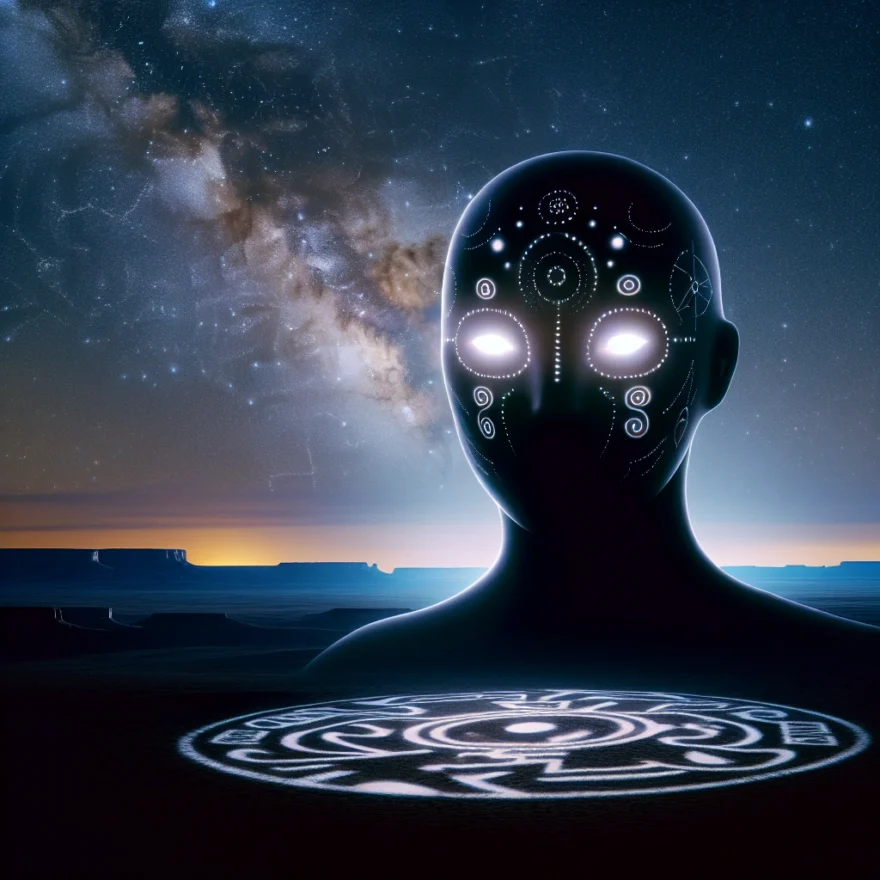
Introduction to Skinwalkers
Steeped in the rich tapestry of Native American folklore, the legend of the Skinwalker has both fascinated and terrified for centuries. This spectral entity, deeply rooted in the culture and beliefs of the Navajo people, is more than just a simple ghost story. The Skinwalker, or “yee naaldlooshii”, as it’s known in the Navajo language, is a malevolent shapeshifter, capable of transforming into, mimicking, and possessing animals and humans alike.
The term ‘Skinwalker’ is derived from the Navajo word ‘yee naaldlooshii’, which directly translates to ‘with it, he goes on all fours’. This is a reference to the Skinwalker’s alleged ability to transform into any animal they desire. However, the Skinwalker isn’t just a creature of transformation, but also of manipulation and deception. It’s said that they can mimic human voices, lure people to their doom, and even take control of their victims’ bodies.
While the Skinwalker is a common figure in several Native American cultures, it holds a special place in Navajo folklore. Here, it is not just a mythical creature, but a symbol of the ultimate taboo. Becoming a Skinwalker requires the most egregious of acts, including the killing of a close family member. As such, the Skinwalker is seen as a symbol of perversion, a violation of the most sacred trusts.
Despite the fear and taboo surrounding Skinwalkers, there is a certain fascination that accompanies these tales. Sightings are reported even today, with people claiming to have encountered these eerie beings on lonely roads or in the deep wilderness. These reports only serve to fuel the curiosity and fear surrounding this enigmatic figure, making the Skinwalker a captivating subject of study.
Table of contents
- Introduction to Skinwalkers
- Skinwalkers in Navajo Folklore
- The Anatomy of a Skinwalker Sighting
- Famous Skinwalker Sightings
- The Science Behind Skinwalker Sightings
- Skinwalkers and Other Cultures
- The Skinwalker Phenomenon in Popular Culture
- The Navajo Perspective on Skinwalkers
- Common Questions About Skinwalker Sightings
- The Impact of Skinwalker Sightings
- Conclusion: The Unresolved Mystery of Skinwalkers
Skinwalkers in Navajo Folklore
Immersed in the rich tapestry of Navajo folklore, the legend of the Skinwalkers is both fascinating and terrifying. Skinwalkers, or ‘yee naaldlooshii’, which translates to ‘he who walks on all fours’, are believed to be witches or medicine men who have succumbed to dark magic. They are said to have the ability to shape-shift into any animal they desire, most commonly wolves, coyotes, owls, foxes, or crows – creatures that are often associated with death or misfortune.
The Navajo people regard the Skinwalker with a mix of fear and respect. These creatures are not mere figments of folkloric imagination, but rather, they are deeply ingrained in the Navajo cultural psyche. The Skinwalker is seen as a symbol of the perversion of sacred practices and the ultimate embodiment of evil.
According to Navajo belief, a Skinwalker is created when a medicine man uses his powers for evil, often involving the act of killing a close relative. This act is said to imbue them with supernatural abilities, including shape-shifting, mind control, and even the power to bring death. The Skinwalker is also believed to have the ability to steal the face of different people, and it is said that if you lock eyes with a Skinwalker, they can absorb themselves into your body.
Despite the fear they instill, Skinwalkers are rarely spoken about openly among the Navajo people. The topic is typically avoided, and direct encounters are rarely discussed for fear of attracting their attention. The Skinwalker is seen as a very real and potent threat, and even the mere mention of the creature is enough to instill fear.
The Navajo people’s belief in Skinwalkers is not merely a superstition or a relic from the past. It continues to be a part of their culture and belief system, affecting their behavior and their interactions with the world around them. The legend of the Skinwalker serves as a reminder of the potential for evil that exists when individuals stray from the path of harmony and balance, key tenets of the Navajo worldview.
The Anatomy of a Skinwalker Sighting
The Anatomy of a Skinwalker Sighting
When it comes to understanding skinwalker sightings, it is essential to delve into the details of these mysterious encounters. While each sighting may vary in terms of specific details, there are common elements that tend to recur in many eyewitness accounts.
Firstly, skinwalker sightings often occur in remote areas, such as desolate stretches of desert or dense forests. These locations are believed to be significant due to their association with the supernatural and the spiritual beliefs of the Navajo people.
Secondly, witnesses often describe a feeling of unease or a sense of being watched before a skinwalker sighting takes place. This eerie sensation can be attributed to the deep-rooted fear and respect that the Navajo community holds for these malevolent entities.
Thirdly, the appearance of a skinwalker is said to be both terrifying and uncanny. Witnesses commonly describe seeing a humanoid figure with glowing, animal-like eyes. The skinwalker is believed to have the ability to shape-shift into various animal forms, making it difficult to identify them solely by their physical appearance.
Furthermore, during a skinwalker sighting, witnesses often report hearing strange noises, such as animalistic growls or cries, which add to the overall sense of dread and fear. These sounds are believed to be a manifestation of the dark powers possessed by these supernatural beings.
In some cases, witnesses claim to have experienced physical manifestations of a skinwalker’s presence, such as sudden drops in temperature, unexplained odors, or even the feeling of being touched or scratched by an unseen entity. These physical sensations further contribute to the chilling nature of a skinwalker encounter.
Lastly, it is not uncommon for skinwalker sightings to be accompanied by unexplained phenomena, such as flickering lights, electrical disturbances, or the malfunctioning of electronic devices. These anomalous occurrences add a layer of mystery and intrigue to the already perplexing nature of skinwalker sightings.
Overall, the anatomy of a skinwalker sighting involves a combination of eerie sensations, terrifying appearances, strange sounds, physical manifestations, and unexplained phenomena. The cumulative effect of these elements creates an experience that is deeply unsettling and leaves witnesses with a lasting impression of fear and awe.
Famous Skinwalker Sightings
Throughout history, there have been numerous reported sightings of skinwalkers, adding to the mystique and fear surrounding these elusive creatures. Here are some of the most famous skinwalker sightings:
The Sherman Ranch Incident
One of the most well-known skinwalker sightings occurred at the Sherman Ranch in Utah, also known as the Skinwalker Ranch. In the 1990s, the ranch gained notoriety due to a series of bizarre and unexplained events. Witnesses reported seeing strange creatures resembling skinwalkers lurking around the property. These sightings were often accompanied by poltergeist activity, UFO sightings, and other paranormal phenomena. The events at the Sherman Ranch continue to fascinate and puzzle researchers to this day.
The Navajo Reservation Encounters
Within the Navajo Reservation, there have been numerous reports of skinwalker encounters. Locals have shared chilling stories of seeing shadowy figures with glowing eyes, who possess the ability to shape-shift into animals. These encounters often leave witnesses feeling a sense of dread and unease. While many of these sightings remain unexplained, they have become an integral part of Navajo folklore and continue to be passed down through generations.
The Skinwalker Canyon Incident
In the desolate canyons of Arizona, there have been multiple accounts of skinwalker sightings. One particular incident involved a group of hikers who claimed to have encountered a creature resembling a skinwalker. They described it as a tall, shadowy figure with glowing eyes and an unnerving presence. The hikers reported feeling intense fear and an overwhelming sense of malevolence during the encounter. This incident, like many others, adds to the growing body of evidence surrounding the existence of skinwalkers.
The New Mexico Ranch Sightings
In the vast deserts of New Mexico, there have been several reported sightings of skinwalkers. One notable case involved a ranch where the owners reported frequent encounters with these mysterious beings. They described seeing humanoid figures lurking around their property, exhibiting supernatural abilities and causing disturbances. These sightings led to extensive investigations, but the true nature of these encounters remains a mystery.
The Utah Reservation Encounters
Similar to the Navajo Reservation, the Utah Reservation has also been a hotbed for skinwalker sightings. Numerous individuals have reported seeing creatures that match the descriptions of skinwalkers, often in close proximity to Native American communities. These encounters have fueled fear and speculation among the locals, further perpetuating the legend of the skinwalker.
These are just a few examples of the famous skinwalker sightings that have captivated the public’s imagination. While skeptics may dismiss these accounts as mere folklore or misidentifications, the sheer number of sightings and the consistency in their descriptions cannot be easily ignored. The mystery surrounding skinwalkers continues to intrigue researchers, paranormal enthusiasts, and those curious about the unexplained.
The Science Behind Skinwalker Sightings
Skinwalkers have long been a subject of fascination and fear in Navajo folklore. These mysterious beings are said to have the ability to transform into animals and possess supernatural powers. While the existence of skinwalkers is primarily rooted in Native American legends and beliefs, some have sought to explain these sightings through a scientific lens. In this section, we will explore the possible scientific explanations behind skinwalker sightings.
One theory that has been put forth to explain skinwalker sightings is the psychological phenomenon known as pareidolia. Pareidolia is the tendency of the human brain to perceive meaningful patterns or shapes in random or ambiguous stimuli. In the case of skinwalkers, it is possible that people may misinterpret ordinary sights and sounds as evidence of these supernatural beings. For example, a rustling in the bushes or the shadowy figure of an animal in the distance may be attributed to a skinwalker, when in reality, it could be a natural occurrence or a regular animal.
Another scientific explanation for skinwalker sightings is the power of suggestion and collective belief. When a community strongly believes in the existence of skinwalkers, it can create a shared narrative that influences individual perceptions. This can lead to a heightened state of fear and hyper-awareness, causing people to interpret ordinary events as encounters with skinwalkers. In such cases, the power of suggestion and the collective belief in skinwalkers can shape people’s experiences and reinforce the belief in their existence.
Furthermore, some researchers have suggested that certain mental health conditions, such as sleep paralysis or hallucinations, could contribute to the perception of skinwalker sightings. Sleep paralysis is a phenomenon in which a person is temporarily unable to move or speak while falling asleep or waking up. During these episodes, individuals may experience vivid and often terrifying hallucinations, which could potentially be interpreted as encounters with skinwalkers. Additionally, hallucinations caused by conditions like schizophrenia or substance abuse could also contribute to the belief in skinwalkers.
While these scientific explanations offer potential insights into the phenomenon of skinwalker sightings, it is important to note that they do not definitively prove or disprove the existence of these beings. The nature of skinwalker sightings is deeply rooted in cultural beliefs and personal experiences, making it difficult to fully understand or explain through scientific means alone.
In conclusion, the scientific explanations behind skinwalker sightings often revolve around psychological phenomena such as pareidolia, the power of suggestion, and certain mental health conditions. These explanations provide a rational lens through which to analyze and interpret these sightings, but they do not invalidate the cultural significance and belief in skinwalkers within the Navajo tradition. The mystery of skinwalkers remains unresolved, leaving room for both scientific exploration and the preservation of ancient legends and folklore.
Skinwalkers and Other Cultures
In addition to the Navajo culture, stories and legends of shape-shifting beings can be found in various other cultures around the world. While these entities may not be called “skinwalkers” specifically, there are similarities in their abilities and characteristics.
One such example is the werewolf in European folklore. Similar to the skinwalker, the werewolf is believed to have the ability to transform from human to wolf form. These creatures are often associated with the full moon and are said to possess superhuman strength and heightened senses. However, unlike skinwalkers, werewolves are not typically associated with witchcraft or dark magic.
In Native American cultures outside of the Navajo, similar legends of shape-shifters exist. For instance, the Ojibwe people speak of the Wendigo, a malevolent spirit that possesses humans and turns them into cannibalistic monsters. The Wendigo is said to have a insatiable hunger for human flesh and is often associated with winter and starvation.
Another example is the Kitsune in Japanese folklore. Kitsune are fox-like creatures with the ability to shape-shift into human form. They are often depicted as mischievous tricksters or as wise and powerful beings. Like skinwalkers, Kitsune are believed to have the ability to possess humans and manipulate their actions.
It is important to note that while these legends may share similarities with the concept of skinwalkers, each culture has its own unique beliefs and interpretations of shape-shifting beings. The specific abilities, motivations, and cultural significance of these entities may vary greatly from one culture to another.
The Skinwalker Phenomenon in Popular Culture
Throughout the years, the mysterious and eerie phenomenon of skinwalkers has captivated the imaginations of people around the world. It comes as no surprise, then, that the skinwalker legend has made its way into popular culture, leaving its mark on various forms of media.
One of the most notable appearances of skinwalkers in popular culture is in literature. Many authors have drawn inspiration from the Navajo legend and incorporated skinwalkers into their stories. These tales often portray skinwalkers as malevolent and powerful beings, capable of wreaking havoc on unsuspecting victims. Some popular books featuring skinwalkers include Tony Hillerman’s “Skinwalkers” and Graham Masterton’s “The Manitou.”
In addition to literature, skinwalkers have also made appearances in movies and television shows. These visual mediums allow for a more immersive experience, bringing the terrifying legend to life. Films like “Skinwalkers” (2006) and episodes of popular TV series such as “Supernatural” and “The X-Files” have featured skinwalker storylines, further cementing their place in popular culture.
The influence of skinwalkers can also be seen in the world of gaming. Several video games have incorporated skinwalkers as formidable adversaries, adding an extra layer of mystery and danger to the gameplay. These games often explore the dark and supernatural aspects of the skinwalker legend, providing players with thrilling and spine-chilling experiences.
Furthermore, skinwalkers have become a popular topic in online communities and forums dedicated to the paranormal. People from all walks of life share their stories, theories, and encounters, contributing to the ongoing fascination and intrigue surrounding skinwalkers. This online presence has allowed for the spread of information and discussion about the phenomenon, reaching even wider audiences.
It is important to note that while skinwalkers have gained popularity in popular culture, their portrayal may not always accurately reflect the Navajo legend. The true nature of skinwalkers, as understood by the Navajo people, is deeply rooted in their cultural beliefs and traditions.
Despite the various interpretations and adaptations of skinwalkers in popular culture, the underlying sense of fear and mystery remains. The skinwalker phenomenon continues to captivate audiences, leaving them both intrigued and unsettled by the unexplained.
The Navajo Perspective on Skinwalkers
The Navajo people have a deeply rooted belief in the existence of skinwalkers, and their perspective on these creatures is shaped by their rich cultural heritage and spiritual beliefs. In Navajo folklore, skinwalkers are considered to be witches or sorcerers who have gained the ability to transform into animals.
According to Navajo tradition, skinwalkers are individuals who have chosen to embrace the dark side of their powers and engage in malevolent activities. They are believed to have acquired their shape-shifting abilities through dark rituals and the use of supernatural powers.
The Navajo people view encounters with skinwalkers as extremely dangerous and taboo. They believe that even speaking about these creatures can attract their attention and invite their malevolent presence. As a result, there is a general reluctance among the Navajo community to discuss skinwalkers openly.
Navajo elders often caution against seeking out or engaging with skinwalkers, as they are believed to possess powerful and malicious intentions. The Navajo people believe that skinwalkers have the ability to inflict harm, sickness, and even death upon their victims through the use of witchcraft and dark magic.
Traditional Navajo ceremonies and practices are often employed as protective measures against skinwalkers. These rituals aim to cleanse individuals and their surroundings from negative energies and provide spiritual protection. The use of ceremonial herbs, such as sage and cedar, is also common in warding off the influence of skinwalkers.
It is important to note that the Navajo perspective on skinwalkers is deeply rooted in their cultural beliefs and should be approached with respect and sensitivity. For the Navajo people, skinwalkers are not simply a legend or a myth, but a very real and potent force that should be treated with caution.
Common Questions About Skinwalker Sightings
As the topic of Skinwalker Sightings continues to captivate the curiosity of many, a number of common questions arise. In this section, we will address some of these frequently asked questions and provide insights into this intriguing phenomenon.
1. Are Skinwalkers real?
The existence of Skinwalkers is deeply rooted in Navajo folklore and beliefs. While skeptics may dismiss them as mere legends, there have been numerous reported sightings and encounters that cannot be easily explained. The Navajo people firmly believe in the reality of Skinwalkers and their malevolent abilities.
2. What do Skinwalkers look like?
Descriptions of Skinwalkers vary, but they are often described as witches or shamans who have the ability to shape-shift into animals. Some accounts suggest that they appear as dark figures with glowing eyes, while others claim they take on the form of specific animals such as coyotes, wolves, or owls.
3. How do Skinwalkers acquire their powers?
According to Navajo beliefs, individuals become Skinwalkers by performing a dark and forbidden ceremony. This ceremony involves the killing of a close family member, usually a sibling. The Skinwalker then gains the ability to transform into various animals and use their powers for malevolent purposes.
4. Can Skinwalkers harm or kill people?
Yes, Skinwalkers are believed to possess harmful intentions towards humans. They are said to have the power to inflict illness, misfortune, and even death upon their victims. Encounters with Skinwalkers often leave individuals feeling a sense of dread and fear.
5. How can one protect themselves from Skinwalkers?
Navajo tradition suggests several protective measures against Skinwalkers. These include avoiding eye contact, refraining from speaking their name, and placing a line of cornmeal outside the entrance of one’s home, as it is believed that Skinwalkers cannot cross this barrier. Additionally, the Navajo perform various ceremonies and rituals to ward off these malevolent entities.
6. Are Skinwalker sightings exclusive to the Navajo people?
While the legend of Skinwalkers originates from Navajo folklore, similar entities and phenomena exist in other cultures around the world. For example, in European folklore, there are tales of witches who can transform into animals. However, the specific characteristics and practices associated with Skinwalkers are unique to Navajo culture.
7. Can Skinwalkers be captured or killed?
According to Navajo beliefs, capturing or killing a Skinwalker is extremely difficult. They are said to possess supernatural powers that make them elusive and resistant to harm. Navajo tradition advises against attempting to confront or engage with Skinwalkers directly, as it may provoke their wrath.
8. Are there any scientific explanations for Skinwalker sightings?
While scientific explanations for Skinwalkers remain elusive, some theories suggest that these sightings could be attributed to misidentifications, hallucinations, or psychological phenomena. However, these explanations fail to account for the deeply ingrained cultural beliefs and the consistency of reported encounters.
9. Can Skinwalkers be photographed or captured on video?
There are very few, if any, documented photographs or videos of Skinwalkers. This further adds to the mystery surrounding their existence. Some believe that Skinwalkers possess supernatural abilities that allow them to avoid detection by modern technology.
10. How do Skinwalker sightings impact the Navajo community?
Skinwalker sightings can instill fear and anxiety within the Navajo community. These encounters are taken seriously, and the Navajo people often rely on their cultural practices and traditions to protect themselves from harm. The belief in Skinwalkers is deeply ingrained in their culture, and the phenomenon continues to be a source of intrigue and caution.
The Impact of Skinwalker Sightings
One cannot underestimate the impact that skinwalker sightings have had on various communities, particularly those with a strong connection to Navajo culture. These encounters with the supernatural have left a lasting impression on both individuals and the collective consciousness, shaping beliefs, behaviors, and even the way people interact with the natural world.
First and foremost, the impact of skinwalker sightings is deeply rooted in fear. The Navajo legend surrounding these malevolent beings instills a sense of terror and unease in those who are familiar with the stories. The idea that a person can transform into a creature with dark powers is enough to send shivers down anyone’s spine. This fear has led to a heightened sense of caution and vigilance among the Navajo people, particularly in remote areas where encounters are said to be more prevalent.
Furthermore, the impact of skinwalker sightings extends beyond the realm of folklore and superstition. These encounters often leave witnesses traumatized and psychologically scarred. The sheer intensity of seeing a creature that defies explanation and possesses supernatural abilities can have a profound effect on an individual’s mental well-being. Many people who claim to have encountered skinwalkers report experiencing nightmares, anxiety, and a persistent sense of dread long after the sighting.
In some cases, the impact of skinwalker sightings has also had tangible effects on the physical environment. There have been reports of livestock mysteriously dying or falling ill after a supposed encounter with a skinwalker. These incidents not only result in financial losses for ranchers and farmers but also contribute to a general sense of unease and vulnerability within the community.
Another significant impact of skinwalker sightings is the effect on tourism and local economies. As the legend of the skinwalker gains popularity and reaches a wider audience, there has been an increase in interest from paranormal enthusiasts and thrill-seekers. This has led to a rise in tourism in areas associated with skinwalker sightings, with visitors hoping to catch a glimpse of these elusive creatures. While this may bring economic benefits to some communities, it also raises ethical concerns about the exploitation of Navajo culture and the potential for misrepresentation.
Lastly, the impact of skinwalker sightings can be seen in the ongoing efforts to understand and explain these phenomena. Scientists, researchers, and paranormal investigators have dedicated time and resources to studying skinwalkers and documenting eyewitness accounts. These efforts not only contribute to the body of knowledge surrounding unexplained mysteries but also provide a sense of validation for those who have had firsthand experiences with skinwalkers. However, the lack of concrete evidence and the elusive nature of these creatures continue to fuel speculation and debate.
In conclusion, the impact of skinwalker sightings is far-reaching and multifaceted. It encompasses fear, trauma, environmental effects, economic implications, and the pursuit of knowledge. Whether one believes in the existence of skinwalkers or dismisses them as mere legend, there is no denying the profound influence they have had on the communities and individuals who have encountered them.
Conclusion: The Unresolved Mystery of Skinwalkers
Throughout history, the phenomenon of Skinwalker sightings has remained an enigma, leaving many unanswered questions and fueling the curiosity and fear of those who have encountered them. Despite the numerous accounts and legends surrounding these mysterious beings, the truth behind Skinwalkers continues to elude us.
While Navajo folklore provides a rich tapestry of stories and beliefs about Skinwalkers, their existence remains firmly rooted in the realm of legend and myth. The accounts of those who claim to have witnessed these creatures are often dismissed as mere superstition or attributed to natural phenomena.
However, the sheer number of reported sightings and the consistency of the descriptions cannot be easily dismissed. Many witnesses describe encounters with beings that possess supernatural abilities, such as shape-shifting and mind control. These encounters often leave a lasting impact on those who experience them, instilling a deep sense of fear and unease.
Scientific explanations for Skinwalker sightings are scarce and often speculative. Some theories suggest that these sightings could be attributed to hallucinations, sleep paralysis, or misidentifications of known animals. However, these explanations fail to account for the cultural significance and historical context of Skinwalker legends.
Interestingly, similar legends of shape-shifting creatures exist in other cultures around the world. From the werewolves of European folklore to the skinwalkers of Native American tribes, these stories share common themes of transformation and malevolence. This suggests that the phenomenon of shape-shifting beings is not unique to the Navajo culture.
The Skinwalker phenomenon has also found its way into popular culture, with numerous books, movies, and television shows featuring these mysterious beings. While these portrayals often take creative liberties, they serve to perpetuate the fascination and intrigue surrounding Skinwalkers.
From a Navajo perspective, discussing Skinwalkers openly is often met with caution and reluctance. The belief in these entities is deeply ingrained in Navajo culture, and many fear that speaking about them may invite their presence or bring about negative consequences. This cultural sensitivity adds another layer of complexity to the understanding of Skinwalker sightings.
Despite the wealth of information available on Skinwalkers, many questions remain unanswered. Are these sightings the result of elaborate hoaxes, shared delusions, or something far more mysterious? Without concrete evidence or scientific consensus, the true nature of Skinwalkers may forever remain a mystery.
What is certain, however, is the profound impact that Skinwalker sightings have on those who experience them. Whether these encounters are real or imagined, they leave a lasting impression on the witnesses, shaping their beliefs and perceptions of the world around them.
In conclusion, the phenomenon of Skinwalker sightings continues to captivate our imaginations and challenge our understanding of the unknown. As we delve deeper into the legends, stories, and accounts surrounding these mysterious beings, we are reminded of the vastness of human belief and the enduring power of the unexplained.