Introduction to Spectral Hounds
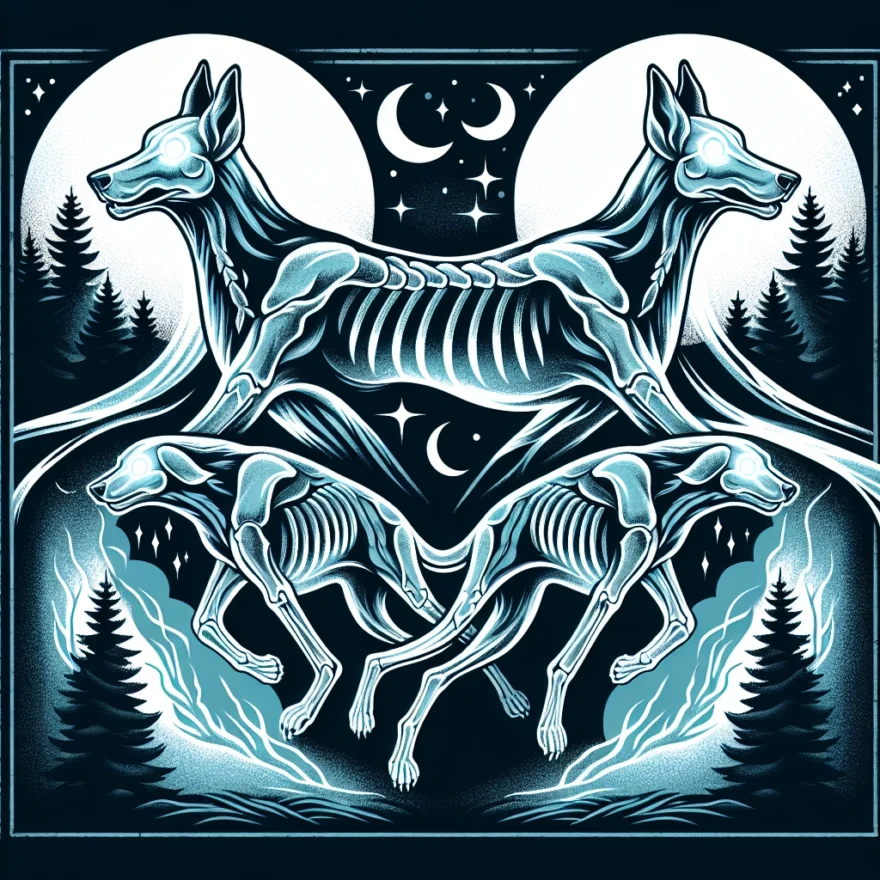
Imagine a dark, foggy night in the heart of an ancient forest. The moon is but a sliver, barely illuminating the twisted path ahead. Suddenly, you hear a distant howl, echoing through the trees, sending a chill down your spine. The sound grows closer, the earth beneath your feet seems to tremble with each beat. You see a pack of hounds, their eyes glowing with an eerie light, their bodies semi-transparent, and their presence otherworldly. This, dear reader, is your first encounter with spectral hounds.
Spectral hounds, also known as ghostly hounds, phantom hounds, or hellhounds, are a common feature in the folklore and mythology of various cultures across the world. These supernatural canines are often depicted as harbingers of death, omens of disaster, or as guardians of the supernatural. Their appearances are usually associated with specific locations, such as crossroads, ancient pathways, or burial sites, and their presence is often accompanied by the sound of howling winds, thunder, or the tolling of a distant bell.
Despite their often terrifying depiction, spectral hounds are not always malevolent spirits. In some tales, they act as guides for lost souls, helping them find their way to the afterlife. In others, they serve as protectors, warding off evil spirits or warning of impending danger. Regardless of their role, spectral hounds are always associated with the supernatural, the unknown, and the boundary between life and death.
The tales of spectral hounds have been passed down through generations, their stories evolving and adapting to fit the cultural context of each era. They have inspired countless works of literature, art, and even modern media, from the ghostly hounds in Arthur Conan Doyle’s “The Hound of the Baskervilles” to the terrifying hellhounds of the “Supernatural” TV series.
Join us as we delve into the mysterious world of spectral hounds, exploring their origins and symbolism, their role in various mythologies, and their enduring presence in modern culture. Whether you’re a folklore enthusiast, a horror fan, or simply curious about the unknown, we invite you to uncover the secrets of these ghostly canines.
Table of contents
- Introduction to Spectral Hounds
- Origins of Spectral Hound Folklore
- Spectral Hounds in Celtic Mythology
- Spectral Hounds in Nordic Folklore
- Spectral Hounds in British Folklore
- Symbolism of Spectral Hounds
- Spectral Hounds in Modern Culture
- Common Questions about Spectral Hounds
- Conclusion: The Enduring Allure of Spectral Hounds
Origins of Spectral Hound Folklore
The spectral hound, also known as the ghostly canine, is a recurring figure in folklore across many cultures and epochs. Its origins are as varied as the tales themselves, with roots in Celtic, Nordic, and British mythology. These spectral creatures are often associated with death, the underworld, and the supernatural, serving as omens or harbingers of doom.
One of the earliest references to spectral hounds can be traced back to the ancient Celtic folklore. Here, they were known as ‘Cŵn Annwn’, hounds of the otherworld, led by the god Arawn or sometimes by Gwyn ap Nudd, king of the fairies and the underworld. These hounds were said to hunt the souls of the dead, their ghostly baying echoing across the night sky. They were often depicted as white with red ears, a common motif for magical or otherworldly animals in Celtic mythology.
Nordic folklore also has its share of spectral hounds. The most famous of these is perhaps the hellhound Garmr, who guards the gates of Hel, the Norse realm of the dead. In the epic poem Beowulf, a spectral hound known as the ‘Black Shuck’ is said to roam the coastline of East Anglia, its menacing presence foretelling disaster.
In British folklore, spectral hounds are a common theme. They are often associated with places of ancient significance, such as old roads, burial mounds, and stone circles. These hounds, known as ‘Black Dogs’, ‘Barghests’, or ‘Shucks’, are often seen as omens of death. Their appearance is said to herald a death in the family or a major disaster in the community.
Despite their ominous reputation, spectral hounds are not always seen as malevolent spirits. In some tales, they are portrayed as protective spirits or guides for lost souls. Regardless of their role, these ghostly canines have left an indelible mark on folklore, their haunting tales echoing through the ages.
Spectral Hounds in Celtic Mythology
In Celtic mythology, spectral hounds hold a significant place in folklore and legends. These ghostly canines, often known as “Cù Sìth” in Scottish Gaelic or “Cwn Annwn” in Welsh, are believed to be otherworldly creatures that inhabit the spirit realm. They are often depicted as large, black dogs with glowing red eyes and shaggy fur, instilling both fear and fascination in those who encounter them.
According to Celtic lore, these spectral hounds are often associated with the realm of the dead. They are said to be guardians of the underworld, tasked with guiding the souls of the deceased to the afterlife. It is believed that when these hounds are seen, it is an omen of impending death or a warning of some sort.
One well-known tale featuring spectral hounds in Celtic mythology is that of the Wild Hunt. The Wild Hunt is a supernatural phenomenon where a group of spectral hounds, led by a powerful figure such as the Celtic god Cernunnos or the Welsh god Gwyn ap Nudd, would traverse the night sky in pursuit of lost souls. It was believed that those who witnessed the Wild Hunt would either be taken away by the hounds or suffer a tragic fate.
In Scottish folklore, the Cù Sìth was feared by many. It was believed that these spectral hounds would roam the countryside, especially during the festival of Samhain, the Celtic precursor to Halloween. During this time, it was customary to leave offerings of food and drink outside one’s home to appease the Cù Sìth and prevent them from entering and causing harm.
The Cwn Annwn, on the other hand, were associated with the Welsh underworld and were said to be the hunting dogs of Arawn, the ruler of Annwn. They were often depicted as white with red ears and were believed to roam the night in search of souls. It was considered a bad omen to hear their howling, as it meant that death was near.
The spectral hounds in Celtic mythology are not only associated with death and the afterlife but also with the supernatural and the mystical. They are believed to possess otherworldly powers and are often seen as protectors or omens. The appearance of these ghostly canines in Celtic folklore serves as a reminder of the ancient beliefs and the rich tapestry of mythology that has shaped the culture of the Celtic people.
Spectral Hounds in Nordic Folklore
In Nordic folklore, spectral hounds hold a prominent place in the rich tapestry of mythical creatures. These ghostly canines, known as “Draugr” or “Draugarhund,” are believed to be the spirits of deceased warriors or guardians of the underworld. They are often described as large, black dogs with glowing red eyes and a menacing presence.
The legends of spectral hounds in Nordic folklore are deeply rooted in the region’s ancient mythology. These supernatural creatures are said to roam the night, searching for lost souls or guiding the dead to the afterlife. They are often associated with burial mounds, where they guard the treasures and secrets of the underworld.
One famous spectral hound from Nordic folklore is the “Garmr,” a monstrous dog that guards the gates of Hel, the realm of the dead. According to legend, Garmr will break free from his chains during Ragnarok, the apocalyptic battle that signals the end of the world.
Another notable spectral hound is the “Black Shuck,” which is found in both Nordic and British folklore. This large, black dog is said to be an omen of death and is often associated with storms and shipwrecks. It is believed that encountering the Black Shuck is a sign that one’s life is about to be cut short.
In Nordic folklore, spectral hounds are not always seen as malevolent beings. Some tales depict them as loyal companions and protectors, offering guidance and assistance to those in need. They are believed to possess supernatural powers, such as the ability to see into the future or sense danger.
The symbolism of spectral hounds in Nordic folklore is multifaceted. They represent the thin veil between the living and the dead, serving as a reminder of mortality and the transient nature of life. They also embody the primal instincts and untamed forces of nature, reflecting the wild and unpredictable aspects of the Nordic landscape.
Today, spectral hounds continue to capture the imagination of people around the world. They have made appearances in various forms of media, including literature, film, and video games. Their enduring presence in popular culture is a testament to the timeless allure of these ghostly canines.
Spectral Hounds in British Folklore
British folklore is rich with tales of spectral hounds, adding to the mystique and fascination surrounding these ghostly canines. These spectral hounds, also known as “hellhounds” or “black dogs,” have long been a part of British folklore and have been the subject of numerous stories and legends throughout the centuries.
One of the most well-known spectral hounds in British folklore is the Black Shuck. This ghostly black dog is said to roam the countryside, particularly in the counties of Norfolk, Suffolk, and Essex. Descriptions of the Black Shuck vary, but it is often depicted as a large, shaggy black dog with fiery eyes and sometimes even multiple heads.
The Black Shuck is often associated with doom and misfortune, and encountering it is believed to be a bad omen. According to legend, those who see the Black Shuck are destined to die or experience some form of tragedy. The origins of the Black Shuck legend are unclear, but it has been passed down through generations, captivating the imaginations of locals and inspiring countless stories.
Another spectral hound of British folklore is the Barghest. Originating from northern England, particularly Yorkshire, the Barghest is often described as a large, black dog with glowing red eyes. It is believed to be a harbinger of death, lurking in the shadows and appearing to those who are about to die.
Similar to the Black Shuck, encountering the Barghest is considered a grim omen. It is said that the sound of its howl can be heard at night, sending chills down the spines of those who are unfortunate enough to hear it. The Barghest is deeply rooted in the folklore of Yorkshire and has become an iconic figure in the region’s supernatural tales.
Aside from these specific spectral hounds, various other ghostly canines are found in British folklore. These tales often involve encounters with mysterious black dogs that appear out of nowhere, haunting lonely roads, crossroads, or graveyards. These spectral hounds are believed to be guardians of the supernatural realm, serving as protectors or guides for lost souls.
The stories surrounding spectral hounds in British folklore have captivated the imaginations of people for centuries. They have been passed down through generations, with each retelling adding its own unique twists and interpretations. These tales serve as a reminder of the enduring power of folklore and the fascination humans have with the supernatural.
Today, spectral hounds continue to be a source of inspiration in modern culture. They have made appearances in literature, music, and even in movies and television shows. The allure of these ghostly canines persists, as they represent the mysterious and otherworldly aspects of our collective imagination.
While the origins and true nature of spectral hounds may remain shrouded in mystery, their presence in British folklore continues to capture the hearts and minds of those who are drawn to the supernatural. Whether they are seen as omens of doom or guardians of the spirit world, spectral hounds remain an integral part of the rich tapestry of British folklore.
Symbolism of Spectral Hounds
In folklore and mythology, spectral hounds have long been associated with various symbolic meanings. These ghostly canines have captured the imagination of people across different cultures and have come to represent a range of concepts and ideas. Let’s explore some of the common symbolic interpretations of spectral hounds.
1. Guardians of the Underworld: In many mythologies, spectral hounds are believed to guard the realms of the dead. They are often depicted as fierce and formidable creatures that protect the boundaries between the living and the afterlife. Their presence serves as a warning to those who dare to trespass into the realm of the deceased.
2. Omens of Death: Spectral hounds are often associated with death and the supernatural. Their appearance is believed to foretell impending doom or the imminent passing of a loved one. In folklore, the howling of these ghostly canines is considered a chilling omen, signaling the approach of death or tragedy.
3. Guides and Protectors: Despite their ominous reputation, spectral hounds are also seen as guides and protectors in some folklore. They are believed to lead lost souls or weary travelers safely through treacherous terrains or dark and dangerous paths. These ghostly companions offer guidance and protection to those in need.
4. Symbol of Loyalty: Spectral hounds are often associated with loyalty and faithfulness. In stories and legends, they are depicted as steadfast companions who remain devoted to their masters even in the afterlife. Their unwavering loyalty serves as a reminder of the importance of loyalty and fidelity in human relationships.
5. Harbingers of Otherworldly Beings: In certain folklore, spectral hounds are believed to be harbingers of other supernatural beings or entities. Their appearance is seen as a sign that other mythical creatures or spirits are nearby. They are often associated with the presence of fairies, witches, or other mystical beings.
6. Symbol of Transformation: Spectral hounds are sometimes seen as symbols of transformation and change. Their ghostly nature and ability to traverse between realms represent the fluidity of existence and the possibility of transcending boundaries. They remind us that life is a continuous journey of transformation.
7. Representation of Unresolved Guilt or Grief: In certain folklore, spectral hounds are believed to be manifestations of unresolved guilt or grief. They may appear as a result of a person’s deep remorse or intense sorrow, haunting them until they find resolution or closure. These ghostly canines serve as a reminder of the weight of unresolved emotions.
8. Symbol of the Wild and Untamed: Spectral hounds are often associated with the untamed wilderness and the primal forces of nature. They embody the raw power and unpredictability of the natural world, reminding us of the untamed aspects of our own selves and the importance of respecting and honoring nature.
These are just a few of the symbolic interpretations of spectral hounds found in folklore and mythology. The rich and varied symbolism associated with these ghostly canines reflects the enduring fascination and intrigue they hold in our collective imagination.
Spectral Hounds in Modern Culture
Throughout history, spectral hounds have captivated the human imagination, and their presence can still be felt in modern culture. These ghostly canines continue to inspire various forms of artistic expression, literature, and even make appearances in popular media.
One prominent example of spectral hounds in modern culture is found in the world of literature. Many authors have drawn inspiration from the folklore surrounding spectral hounds, incorporating them into their stories to add an element of mystery and the supernatural. These spectral hounds often serve as harbingers of doom or symbols of impending danger. Their eerie presence and otherworldly nature make for compelling storytelling.
One of the most well-known literary works featuring spectral hounds is Sir Arthur Conan Doyle’s “The Hound of the Baskervilles.” In this iconic Sherlock Holmes novel, a terrifying spectral hound haunts the Baskerville family, adding an element of suspense and horror to the story. The image of the ghostly hound has become deeply ingrained in popular culture, with numerous adaptations in film, television, and theater.
Aside from literature, spectral hounds also make appearances in various forms of visual art, such as paintings and illustrations. Artists often depict these ghostly canines with glowing eyes, floating above the ground, and surrounded by an aura of otherworldliness. These artistic representations help to keep the myth and mystery of spectral hounds alive in the modern world.
Moreover, spectral hounds have also found a place in popular media, particularly in the realm of video games and role-playing games. These games often draw inspiration from folklore and mythology, and spectral hounds make for intriguing and formidable adversaries or companions. Players can encounter these ghostly canines in haunting landscapes, adding an extra layer of excitement and mystery to their gaming experience.
Additionally, spectral hounds have become popular symbols in various subcultures and communities. They are often associated with concepts such as protection, loyalty, and the supernatural. Some people even incorporate images of spectral hounds into their tattoos or use them as symbols in their personal branding.
Overall, the enduring allure of spectral hounds in modern culture can be attributed to their fascinating folklore and the sense of mystery and danger they evoke. Whether in literature, visual art, or popular media, these ghostly canines continue to captivate our imagination and remind us of the rich tapestry of folklore that has shaped our collective consciousness.
Common Questions about Spectral Hounds
Common Questions about Spectral Hounds
As spectral hounds are a fascinating and eerie part of folklore, it’s natural for readers to have some questions about them. Here are some common questions and their answers:
1. Are spectral hounds real?
Spectral hounds are not real in the physical sense. They exist purely in folklore and mythology. However, the stories and legends surrounding spectral hounds have persisted for centuries, captivating the imaginations of many.
2. What do spectral hounds look like?
The appearance of spectral hounds can vary depending on the specific folklore or mythology they are associated with. In general, they are described as large, black dogs with glowing red eyes. Some accounts also mention them having shaggy fur and bared teeth.
3. What is the purpose of spectral hounds?
The purpose of spectral hounds varies across different cultures and stories. In some cases, they are believed to be omens of death or harbingers of misfortune. In other tales, they are guardians of the supernatural realm or companions of deities. Their role often reflects the beliefs and values of the culture they originate from.
4. Can spectral hounds cause harm to humans?
While spectral hounds are often associated with darkness and death, there is no concrete evidence to suggest that they can physically harm humans. However, encountering a spectral hound in folklore is often seen as a foreboding sign or a warning of impending danger.
5. Are spectral hounds only found in specific regions?
Spectral hounds appear in various forms across different regions and cultures. They are prominently featured in Celtic, Nordic, and British folklore, but similar legends of ghostly canines can also be found in other parts of the world. The specific characteristics and names attributed to these spectral hounds may vary, but the underlying concept remains consistent.
6. Do spectral hounds have any symbolic meaning?
Yes, spectral hounds often carry symbolic meanings. They are often associated with death, the afterlife, and the supernatural. They can represent the boundary between the mortal world and the spiritual realm. Additionally, spectral hounds can symbolize loyalty, protection, and the wild forces of nature.
7. Are there any modern references to spectral hounds?
Yes, spectral hounds continue to capture the imagination of modern culture. They appear in various forms of media, including literature, movies, and video games. These contemporary references often draw inspiration from the rich folklore surrounding spectral hounds, adding new layers of interpretation and storytelling.
By exploring these common questions, we can gain a deeper understanding of the enduring allure and fascination surrounding spectral hounds in folklore.
Conclusion: The Enduring Allure of Spectral Hounds
Throughout history, the legends and folklore surrounding spectral hounds have captivated the imaginations of people across different cultures. These ghostly canines have left an indelible mark on our collective consciousness, inspiring countless tales of mystery and intrigue. As we delve into the world of spectral hounds and explore their origins, symbolism, and cultural significance, it becomes clear why these enigmatic creatures continue to hold such allure.
One of the enduring aspects of spectral hound folklore is its ability to transcend time and geographical boundaries. From the ancient Celtic myths to the rich tapestry of Nordic folklore, spectral hounds have made their presence known in various cultural narratives. Each culture has its own unique interpretation of these otherworldly creatures, adding to their mystique and fascination.
In Celtic mythology, the spectral hounds are often associated with the Otherworld, a realm that exists parallel to our own. These hounds, known as the Cù Sìth in Scottish folklore and the Cwn Annwn in Welsh mythology, are believed to be guardians of the supernatural realm. Their appearance is often seen as a harbinger of death or an omen of impending doom.
In Nordic folklore, spectral hounds are often depicted as companions of the gods, such as Odin’s faithful hounds, Geri and Freki. These hounds are said to accompany the gods during their hunts, embodying both loyalty and ferocity. In some tales, they are seen as protectors, while in others, they are seen as omens of tragedy.
British folklore also has its own share of spectral hound legends, with perhaps the most famous being the Black Shuck. This monstrous black dog is said to roam the English countryside, appearing as a foreboding figure with glowing red eyes. Encounters with the Black Shuck are often associated with misfortune or death, leaving a lasting impression on those who cross its path.
Symbolically, spectral hounds represent a variety of themes and emotions. They are often associated with the supernatural, the unknown, and the liminal spaces between life and death. Their appearance is often linked to the concept of fate and the inevitability of one’s destiny. In some cases, they are seen as guides, leading lost souls to the afterlife.
Despite their ancient origins, spectral hounds continue to capture our imagination in modern culture. They have become a staple in literature, appearing in numerous novels and short stories that explore themes of mystery and the supernatural. Additionally, spectral hounds have made their way into movies, television shows, and even video games, ensuring their continued presence in popular culture.
As we conclude our exploration of spectral hounds, it is clear that their enduring allure lies in their ability to evoke a sense of wonder, fear, and fascination. These ghostly canines embody the mysterious and the unknown, tapping into our primal fears and curiosity about the supernatural. Whether they are viewed as omens of death or as guardians of the Otherworld, spectral hounds will continue to haunt our imaginations and leave an indelible mark on our folklore for generations to come.