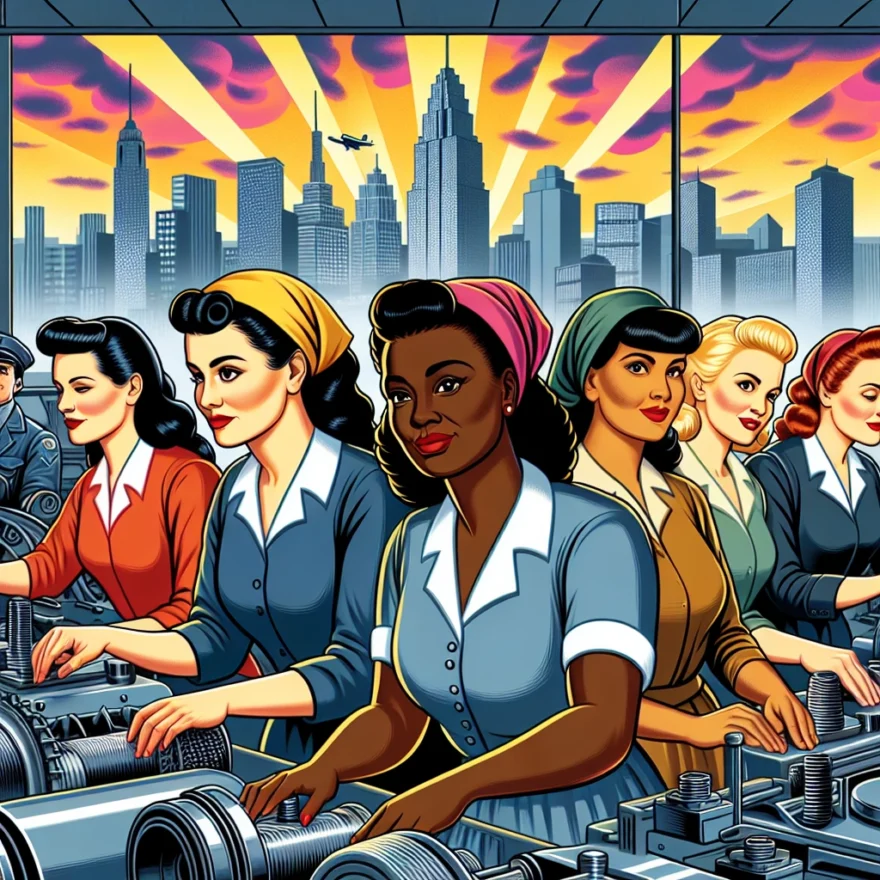
Introduction: The Unsung Heroes
World War II is often remembered for the tales of valor, courage, and strategic brilliance demonstrated by the soldiers on the front lines. However, there is another side to the war that remains relatively unexplored, a side that played a crucial role in shaping the outcome of the conflict. This is the story of the unsung heroes – the women who worked tirelessly behind the scenes in the top-secret city of Oak Ridge, Tennessee, also known as the Atomic City.
These women, often referred to as ‘The Girls of Atomic City,’ were instrumental in the success of the Manhattan Project, the U.S. research and development project that produced the world’s first nuclear weapons during World War II. They were young, they were brave, and they were kept in the dark about the true nature of their work. Yet, their contributions were pivotal in ending the war and reshaping the world order.
Their story is one of determination, resilience, and patriotism. It’s a story that challenges the traditional narratives of war, highlighting the often overlooked role of women in historical events. But most importantly, it’s a story that deserves to be told and remembered.
So, let’s delve into the mysterious world of the Atomic City, explore the lives of the women who lived and worked there, and uncover the secrets of the Manhattan Project. Along the way, we’ll also address some common questions readers may have about ‘The Girls of Atomic City.’
Table of contents
The Secret City: Oak Ridge, Tennessee
Hidden in the verdant hills of East Tennessee, the town of Oak Ridge was one of the most secretive places during World War II. The town was not marked on any map and was heavily guarded by armed forces. It was a city built from scratch, constructed under a cloak of extreme secrecy, and was not even officially acknowledged until after the war.
The U.S. government chose the location due to its remote location, low population, and access to ample water and electricity. The town was built almost overnight, with prefabricated homes, grocery stores, schools, and theaters popping up to accommodate the influx of workers. At its peak, Oak Ridge was home to over 75,000 individuals, making it the fifth largest city in Tennessee at the time.
Despite its size, the purpose of Oak Ridge was unknown to the vast majority of its residents. The city was a critical part of the Manhattan Project, the U.S. government’s top-secret initiative to develop the atomic bomb. The facilities in Oak Ridge were responsible for the production of enriched uranium, a key component in the creation of the atomic bomb. The residents, many of them young women, were recruited from all over the country with the promise of good wages and the opportunity to contribute to the war effort. However, they were not told what they would be doing or where they would be going.
Life in Oak Ridge was a study in contrasts. On one hand, it was a typical American town with schools, churches, and recreational facilities. On the other hand, it was a place of stringent security measures, with guards at the gates, ID checks, and a ban on cameras and outside visitors. The residents lived with the constant presence of secrecy, knowing that they were part of something important, but not knowing exactly what.
The secrecy surrounding Oak Ridge was so intense that even the U.S. Vice President, Harry S. Truman, was unaware of its existence until he became President. It was only after the bombing of Hiroshima and Nagasaki that the true purpose of Oak Ridge was revealed to the world, and the residents finally understood the magnitude of the work they had been doing.
Today, Oak Ridge stands as a testament to the extraordinary efforts of the thousands of ordinary men and women who lived and worked there during one of the most pivotal times in world history. The town’s unique history is preserved in the American Museum of Science and Energy, where visitors can learn about the Manhattan Project and the significant role that Oak Ridge played in it.
The Women behind the Project
The Girls of Atomic City: Unsung Heroes of World War II tells the remarkable story of the women who played a crucial role in the development of the atomic bomb during World War II. These women, often referred to as “the women behind the project,” worked tirelessly in Oak Ridge, Tennessee, a secret city dedicated to the Manhattan Project.
At the time, Oak Ridge was a small, rural town that was transformed into a bustling hub of scientific research and production. Thousands of workers, including scientists, engineers, and support staff, were recruited from all over the country to work on the top-secret project. Among them were a significant number of women who would become instrumental in the success of the endeavor.
These women came from diverse backgrounds and were recruited for various roles within the project. They worked as secretaries, chemists, technicians, and even janitors. Many of them were recent high school graduates or young college students who were eager to contribute to the war effort.
One of the remarkable aspects of the women’s involvement in the project was the level of responsibility they were given. Despite the prevailing gender norms of the time, these women were entrusted with highly classified information and were essential in carrying out critical tasks. They operated complex machinery, conducted experiments, and performed calculations vital to the development of the atomic bomb.
However, the women behind the project faced numerous challenges. They had to adapt to the strict security measures in place, which included living in a highly controlled environment. They were subjected to background checks, required to wear badges at all times, and were prohibited from discussing their work with anyone outside of the project.
Living in secrecy also meant that the women had to make sacrifices. They were separated from their families and friends, and many had to leave behind their previous lives without knowing the true nature of the project they were joining. The isolation and secrecy created a unique bond among the women, as they relied on each other for support and camaraderie.
Despite the challenges, the women behind the project demonstrated incredible resilience and determination. Their contributions to the Manhattan Project were invaluable, and their efforts played a significant role in bringing an end to World War II.
The Girls of Atomic City sheds light on the often overlooked stories of these remarkable women. It honors their bravery, intelligence, and dedication, and serves as a reminder of the countless unsung heroes who played a vital role in shaping history.
Living in Secrecy: Life in Atomic City
During World War II, a secret city known as Oak Ridge, Tennessee played a crucial role in the development of the atomic bomb. This city, referred to as “Atomic City,” was home to thousands of workers who were sworn to secrecy about their work and the purpose of the city itself. Living in secrecy became a way of life for the residents of Atomic City, and it had a profound impact on their daily lives.
One of the most significant aspects of living in Atomic City was the strict security measures that were enforced. The entire city was surrounded by a fence, and entry was restricted to authorized personnel only. Guards were stationed at the gates, and identification badges were required for anyone entering or leaving the city. This level of security created a sense of isolation and confinement for the residents.
Another challenge of living in secrecy was the lack of information and communication with the outside world. The residents of Atomic City were not allowed to discuss their work or the purpose of the city with anyone outside of its boundaries. This meant that they were cut off from their families and friends, unable to share the details of their daily lives or the important work they were doing.
Furthermore, the residents of Atomic City had to adapt to a highly regulated lifestyle. Every aspect of their lives was monitored and controlled. Housing assignments were determined by job positions, and families were often separated, with husbands and wives living in different areas of the city. Curfews were strictly enforced, and residents had to adhere to a set of rules and regulations that governed their behavior.
Despite the challenges and restrictions, the residents of Atomic City found ways to create a sense of community and support. They formed social clubs, organized recreational activities, and built friendships with their fellow workers. These connections provided a support system and a sense of normalcy in an otherwise secretive and controlled environment.
Living in secrecy also meant that the residents of Atomic City had to deal with the constant fear of accidental exposure to radiation. Although they were aware that they were working on something important, the full extent of the dangers associated with atomic energy was not fully understood at the time. Many workers later suffered from health issues related to radiation exposure, highlighting the sacrifices they made in the name of national security.
Overall, living in secrecy in Atomic City was a unique and challenging experience for the residents. They were unsung heroes who played a crucial role in the development of the atomic bomb, yet their contributions went unrecognized for many years. It is important to remember and honor the sacrifices they made during World War II, as their efforts helped shape the course of history.
The Manhattan Project: A Game Changer
The Manhattan Project: A Game Changer
During World War II, the United States embarked on a top-secret mission to develop an atomic bomb. This mission, known as the Manhattan Project, would forever change the course of history. At the heart of this groundbreaking project were the brilliant minds and dedicated efforts of scientists, engineers, and technicians. However, one group of individuals played a crucial role in the success of the Manhattan Project – the women of Atomic City.
While the project was primarily led by men, women made up a significant portion of the workforce in Oak Ridge, Tennessee, where the secret city of Atomic City was established. These women were recruited from all walks of life, ranging from recent high school graduates to college-educated professionals. They were brought in to work on various tasks, including operating machines, conducting experiments, and analyzing data.
The women of Atomic City worked tirelessly, often without fully understanding the nature of their work. They were given specific tasks and were expected to carry them out with utmost precision and secrecy. Many of them worked long hours, sometimes even overnight, to meet deadlines and ensure the project’s success.
One of the most remarkable aspects of the Manhattan Project was the level of secrecy surrounding it. The women of Atomic City were not aware of the true nature of their work until the bombings of Hiroshima and Nagasaki in August 1945. It was only then that they realized the magnitude of their contributions and the devastating power of the atomic bomb.
The success of the Manhattan Project marked a turning point in human history. The development of the atomic bomb not only brought an end to World War II but also ushered in a new era of warfare and global politics. It forever changed the way nations approached military strategy and raised profound ethical and moral questions.
Despite the immense significance of their contributions, the women of Atomic City remained largely unrecognized for their efforts. Their stories were overshadowed by the secrecy surrounding the project and the focus on the scientific and military achievements. It is only in recent years that their stories have come to light, thanks to books like “The Girls of Atomic City” by Denise Kiernan.
Through “The Girls of Atomic City,” readers gain a deeper understanding of the experiences and sacrifices of these unsung heroes. The book sheds light on the challenges faced by the women of Atomic City, including the discrimination they faced based on their gender and the difficulties of living in a highly secretive environment.
Furthermore, “The Girls of Atomic City” highlights the resilience and determination of these women. Despite the hardships they endured, they played an integral role in the development of the atomic bomb and the subsequent end of the war. Their contributions should not be forgotten, and their stories serve as a testament to the strength and courage of women during wartime.
Overall, the Manhattan Project was a game changer in every sense of the word. It not only revolutionized warfare but also had far-reaching implications for science, politics, and society as a whole. The women of Atomic City played a vital role in this historic endeavor, and their stories deserve to be told and celebrated.
After the War: The Legacy of Atomic City
After the end of World War II, the legacy of Atomic City and the contributions of the women who worked there continued to have a profound impact on history. The work done in Oak Ridge, Tennessee, during the war laid the foundation for future advancements in science, technology, and nuclear energy.
One of the most significant legacies of Atomic City was the role it played in the development of nuclear power. The knowledge and expertise gained by the women who worked on the Manhattan Project paved the way for the construction of nuclear power plants around the world. The advancements made in nuclear energy have since provided a significant source of electricity and have played a vital role in meeting the growing energy demands of modern society.
Additionally, the women who worked in Atomic City played a crucial role in breaking down gender barriers in the workforce. During the war, women were given opportunities to work in roles traditionally held by men, proving their capabilities and challenging societal norms. Their contributions helped pave the way for greater gender equality in the workplace and opened doors for future generations of women in science, technology, and engineering.
The legacy of Atomic City also serves as a reminder of the sacrifices made by those involved in the Manhattan Project. The women who worked in Oak Ridge lived in secrecy, often isolated from their families and friends. They dedicated their time and efforts to a cause they believed in, despite the personal sacrifices it required. Their unwavering commitment and resilience in the face of adversity are a testament to the human spirit and the lengths people are willing to go to protect their country.
Today, Atomic City stands as a symbol of the remarkable achievements and contributions made by the women who worked there. Their stories have been immortalized in books like “The Girls of Atomic City,” ensuring that their bravery and dedication will never be forgotten. The legacy of Atomic City serves as a reminder of the unsung heroes of World War II and the tremendous impact they had on shaping the course of history.
Common Questions about The Girls of Atomic City
As the story of The Girls of Atomic City: Unsung Heroes of World War II unfolds, readers may have some common questions about the book and the events it portrays. Here, we aim to answer those questions and provide a deeper understanding of this remarkable piece of history.
1. What is The Girls of Atomic City: Unsung Heroes of World War II about?
The Girls of Atomic City is a book written by Denise Kiernan that sheds light on the untold story of the women who worked in Oak Ridge, Tennessee, during World War II. These women played a crucial role in the development of the atomic bomb as part of the top-secret Manhattan Project.
2. Who were the women behind the project?
The women who worked in Oak Ridge came from various backgrounds and walks of life. They were recruited from all over the country and were often unaware of the nature of the work they would be doing. Many of them were young and eager to contribute to the war effort.
3. What was life like in Atomic City?
Life in Oak Ridge, also known as Atomic City, was shrouded in secrecy. The residents lived in a highly controlled environment, with limited access to the outside world. They were not allowed to discuss their work or even their location with family and friends. Despite the restrictions, the community thrived and developed its own unique culture.
4. What was the Manhattan Project?
The Manhattan Project was a top-secret research and development project during World War II that aimed to create the first atomic bomb. Oak Ridge played a significant role in this project by enriching uranium for the bomb. The project was a game changer, leading to the creation of the devastating weapons that ended the war.
5. What is the legacy of Atomic City?
The legacy of Atomic City is a complex one. While the work done in Oak Ridge contributed to the end of World War II, it also raised ethical questions about the use of atomic weapons. The town itself transformed from a secretive wartime community to a center for nuclear research and technology.
6. How did the women of Atomic City contribute to the war effort?
The women of Atomic City played a vital role in the war effort by working in various capacities within the Manhattan Project. They operated massive machines, conducted scientific experiments, and performed clerical duties. Their contributions were essential to the success of the project.
7. What makes The Girls of Atomic City an important book?
The Girls of Atomic City brings to light the often overlooked stories of the women who worked in Oak Ridge. It highlights their resilience, dedication, and the sacrifices they made for their country. The book also raises important questions about the ethics of war and the impact of scientific advancements.
Conclusion
The Girls of Atomic City: Unsung Heroes of World War II offers a compelling narrative that honors the women who played a crucial role in the development of the atomic bomb. By answering these common questions, we hope to provide a deeper understanding of the book and the historical events it portrays.