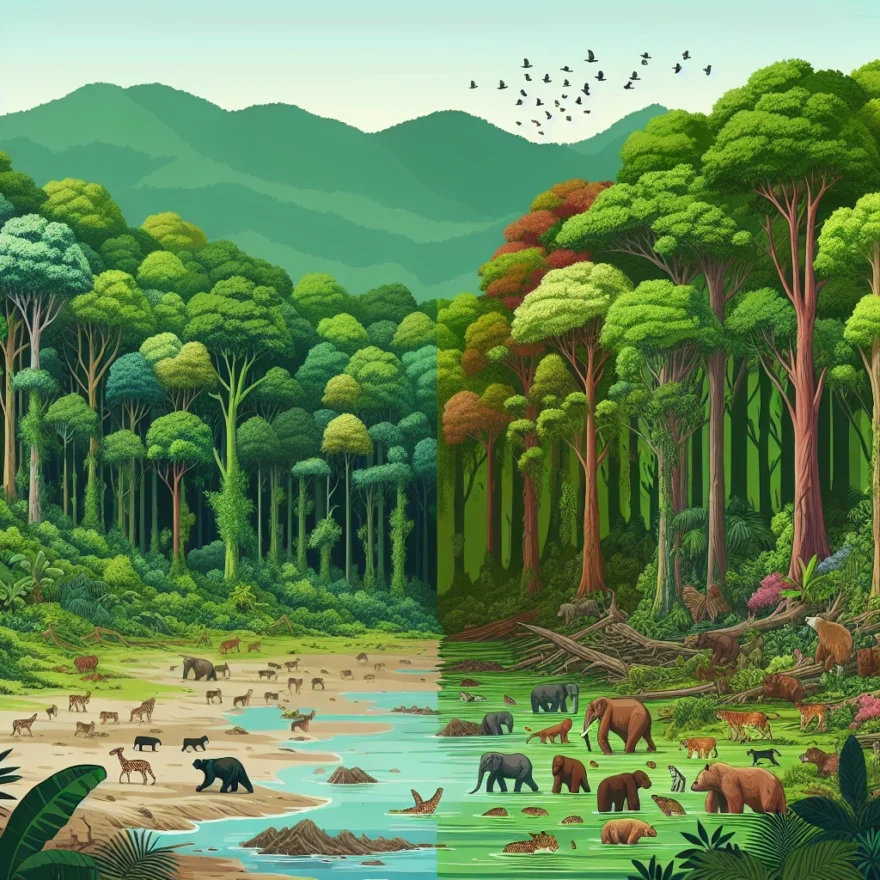
Introduction to Deforestation and Animal Mortality
Deforestation, the large-scale removal of forests for various human activities such as agriculture, logging, and urbanization, has been a growing concern in recent decades. Forests are home to a vast array of plant and animal species, many of which are found nowhere else in the world. As these natural habitats are destroyed, the consequences for wildlife can be severe, often leading to increased mortality rates among animal populations.
When forests are cleared, the complex ecosystems that have evolved over millions of years are disrupted, leaving countless species vulnerable to extinction. The loss of habitat due to deforestation is one of the leading causes of species decline worldwide. As a result, understanding the relationship between deforestation and animal mortality is crucial for the development of effective conservation strategies.
This article will explore the various ways in which deforestation contributes to increased animal mortality rates. By examining the consequences of habitat loss, fragmentation of ecosystems, loss of biodiversity, and the role of climate change, we will gain a deeper understanding of the challenges faced by wildlife in the face of deforestation. Additionally, we will discuss the impacts on endangered and endemic species, the connection between deforestation and zoonotic diseases, and the effects on food chains and trophic cascades.
Furthermore, we will delve into the role of invasive species in animal mortality and the importance of conservation efforts to combat deforestation. By exploring reforestation and its benefits, sustainable land management, community involvement in forest conservation, and global initiatives to protect forests and wildlife, we can begin to understand the steps necessary to mitigate the impacts of deforestation on animal mortality rates. Finally, we will discuss the economic impact of deforestation on animal mortality and the future of forests and wildlife populations, as well as address common questions and answers about deforestation and animal mortality.
Through a comprehensive exploration of these topics, this article aims to provide readers with a thorough understanding of the impact of deforestation on animal mortality rates, as well as the importance of preserving our planet’s forests for the sake of countless species that call them home.
Table of contents
- Introduction to Deforestation and Animal Mortality
- Habitat Loss and Its Consequences
- Fragmentation of Ecosystems
- Loss of Biodiversity and Keystone Species
- Climate Change and Its Role in Deforestation
- Impacts on Endangered and Endemic Species
- Deforestation and Zoonotic Diseases
- Effects on Food Chains and Trophic Cascades
- The Role of Invasive Species in Animal Mortality
- Conservation Efforts to Combat Deforestation
- Reforestation and Its Benefits
- The Importance of Sustainable Land Management
- Community Involvement in Forest Conservation
- Global Initiatives to Protect Forests and Wildlife
- The Economic Impact of Deforestation on Animal Mortality
- The Future of Forests and Wildlife Populations
- Common Questions and Answers about Deforestation and Animal Mortality
Habitat Loss and Its Consequences
Deforestation, the process of clearing large areas of forest for various human activities, has become a major environmental concern worldwide. As forests disappear, the countless species that call these ecosystems home face an increasingly uncertain future. One of the most significant consequences of deforestation is habitat loss, which has a direct impact on animal mortality rates.
Forests are teeming with life, providing essential resources such as food, water, shelter, and breeding grounds for a wide range of species. When these habitats are destroyed, animals are forced to adapt to new environments, compete with other species for limited resources, or face the possibility of extinction. This can lead to a decline in population numbers and, in some cases, the complete disappearance of a species from an area.
As more and more land is cleared for agriculture, logging, and urban development, the remaining forest fragments become increasingly isolated. This isolation can limit the movement of animals, reducing their ability to find suitable habitats, mates, and food sources. Smaller, isolated populations are also more vulnerable to genetic problems, inbreeding, and local extinctions, further exacerbating the impact of habitat loss on animal mortality rates.
Moreover, deforestation can lead to the degradation of the remaining forest habitat. For instance, when large trees are removed, the forest canopy is opened up, allowing more sunlight to penetrate the forest floor. This can result in a shift in plant species composition and the loss of certain microhabitats, which in turn affects the availability of food and shelter for various animal species.
It is important to note that not all species are affected equally by habitat loss. Some animals, known as habitat specialists, are particularly vulnerable because they rely on specific forest conditions or resources to survive. For example, certain bird species may depend on particular tree species for nesting, while others require specific types of fruit for their diet. When these resources are lost due to deforestation, these specialist species may struggle to adapt and face a higher risk of mortality.
In contrast, habitat generalists, which can thrive in a variety of environments, may be more resilient to the effects of deforestation. However, this resilience can come at a cost, as generalist species may outcompete specialist species for resources, further contributing to declines in biodiversity and animal mortality rates.
In conclusion, habitat loss caused by deforestation has far-reaching consequences for animal populations. The destruction of forest ecosystems not only leads to the direct loss of habitats but also contributes to the fragmentation and degradation of remaining forest areas. As a result, many species face increased competition for resources, reduced genetic diversity, and the loss of crucial microhabitats. Understanding the link between deforestation and animal mortality rates is crucial for the development of effective conservation strategies to protect the world’s forests and their rich biodiversity.
Fragmentation of Ecosystems
Deforestation not only causes habitat loss but also leads to fragmentation of ecosystems. Fragmentation occurs when large, contiguous forest areas are broken up into smaller, isolated patches due to human activities such as logging, mining, and agriculture. This process has severe consequences for wildlife populations, as it creates barriers to movement and gene flow.
Fragmentation of ecosystems can lead to a reduction in biodiversity, as species that rely on large, contiguous forest areas for survival may struggle to adapt to the new, fragmented landscape. Keystone species, which play a critical role in maintaining the balance of an ecosystem, may also be lost due to fragmentation. For example, large predators such as tigers and jaguars require large areas of forest to hunt and roam, and their absence can have cascading effects on the entire ecosystem.
Fragmentation can also lead to an increase in edge effects, where the boundary between two different habitats creates a unique microclimate that can favor certain species over others. This can lead to an imbalance in the ecosystem, as some species become dominant while others are excluded. In addition, fragmentation can increase the risk of invasive species colonizing the area, as they are often better adapted to disturbed habitats and can outcompete native species.
Overall, fragmentation of ecosystems is a major threat to wildlife populations and can have far-reaching consequences for the entire ecosystem. It is important to consider the impacts of human activities on the landscape and to implement conservation measures that aim to maintain large, contiguous forest areas and promote connectivity between fragmented patches.
Loss of Biodiversity and Keystone Species
Deforestation has a significant impact on the loss of biodiversity and the disappearance of keystone species. Biodiversity refers to the variety of life on Earth, including the diversity of species, genes, and ecosystems. When forests are cleared, the habitat of many species is destroyed, and they are forced to move or die. This results in a decline in biodiversity, which can have far-reaching consequences for the health of ecosystems and the services they provide.
Keystone species are those that play a critical role in maintaining the balance of an ecosystem. They have a disproportionate impact on the ecosystem relative to their abundance. When keystone species are lost, the entire ecosystem can be disrupted, with cascading effects throughout the food web.
Deforestation can lead to the loss of keystone species, such as large predators, which can have a significant impact on the ecosystem. For example, the removal of wolves from Yellowstone National Park led to an increase in the population of deer, which in turn led to overgrazing and a decline in the health of the park’s vegetation. The reintroduction of wolves helped to restore balance to the ecosystem.
Loss of biodiversity and keystone species can also have economic consequences. For example, the loss of pollinators such as bees can have a significant impact on the production of crops and the food industry. The loss of biodiversity can also lead to the loss of potential sources of new medicines and other products.
Conservation efforts, such as the protection of forests and the restoration of degraded ecosystems, can help to mitigate the loss of biodiversity and keystone species. In addition, sustainable land management practices can help to maintain the health of ecosystems and the services they provide.
Climate Change and Its Role in Deforestation
Deforestation is a major contributor to climate change, but climate change also plays a role in deforestation. The two are intricately linked and create a vicious cycle that exacerbates the negative impacts on animal mortality rates.
Climate change is caused by the increase in greenhouse gases in the atmosphere, primarily carbon dioxide. Deforestation is a significant source of carbon dioxide emissions, as trees absorb carbon dioxide as part of the process of photosynthesis. When trees are cut down or burned, the stored carbon is released back into the atmosphere, contributing to climate change.
Climate change also affects forests and their ability to regenerate. Rising temperatures and changing precipitation patterns can make it difficult for trees to grow and thrive. This can lead to a decrease in forest cover and an increase in deforestation.
Deforestation and climate change also have a significant impact on the water cycle. Trees play a crucial role in regulating the water cycle, as they absorb water through their roots and release it into the atmosphere through a process called transpiration. When trees are removed, the water cycle is disrupted, leading to changes in precipitation patterns and increased risk of droughts and floods.
The impacts of climate change on forests and wildlife are already being felt around the world. Rising temperatures and changing precipitation patterns are causing shifts in the distribution and abundance of species, as well as changes in the timing of seasonal events such as migration and breeding.
As climate change continues to worsen, the negative impacts on forests and wildlife are likely to become even more severe. This, in turn, will further exacerbate the negative impacts of deforestation on animal mortality rates.
Impacts on Endangered and Endemic Species
Deforestation has a significant impact on the survival of endangered and endemic species. Endangered species are those that are at risk of extinction, while endemic species are those that are found only in a specific geographic region.
Deforestation removes the habitat of these animals, leaving them with no place to live and breed. As a result, their populations decline, making them more vulnerable to extinction. According to the World Wildlife Fund, deforestation is the leading cause of species extinction.
Endangered species that are particularly affected by deforestation include orangutans, tigers, and elephants. These animals require large areas of forest to survive, and their populations have declined rapidly due to habitat loss. Endemic species, such as the lemurs of Madagascar, are also at risk due to deforestation.
In addition to habitat loss, deforestation can also lead to the fragmentation of ecosystems. This means that large areas of forest are divided into smaller, isolated patches. This can be particularly harmful to species that require large areas of habitat to survive, as they may not be able to move between patches of forest to find food and mates.
Loss of biodiversity is another consequence of deforestation. Biodiversity refers to the variety of life on Earth, including the number of species, their genetic diversity, and the ecosystems they inhabit. Deforestation reduces biodiversity by removing habitats and disrupting ecosystems.
Keystone species, which are species that have a disproportionately large impact on the ecosystem, are particularly important for maintaining biodiversity. For example, the jaguar is a keystone species in the Amazon rainforest, as it helps to regulate the populations of its prey. If the jaguar were to become extinct due to habitat loss, the populations of its prey would increase, leading to imbalances in the ecosystem.
Deforestation also has an impact on the genetic diversity of species. When populations become isolated due to habitat fragmentation, they may become genetically distinct from other populations of the same species. This can lead to reduced genetic diversity, which can make the species more vulnerable to disease and environmental changes.
Overall, deforestation has a significant impact on endangered and endemic species. To protect these species, it is important to preserve their habitats and maintain the biodiversity of ecosystems.
Deforestation and Zoonotic Diseases
Deforestation not only affects animal populations, but it can also have serious consequences for human health. One of the ways deforestation impacts human health is through the increase in zoonotic diseases. Zoonotic diseases are those that are transmitted from animals to humans, and they can range from mild illnesses to deadly pandemics.
Deforestation can lead to the emergence and spread of zoonotic diseases in several ways. First, when forests are cleared for agriculture or urban development, wildlife that once lived in these areas are forced to move to new locations. This can bring animals into closer contact with humans, increasing the risk of disease transmission. Additionally, deforestation can disrupt the natural balance of ecosystems, leading to an increase in the populations of certain animal species that are known to carry diseases.
One example of a zoonotic disease that has been linked to deforestation is Ebola. The Ebola virus is believed to have originated in fruit bats, which are known to live in tropical forests. When forests are cleared for agriculture or logging, these bats may be forced to move to new areas, bringing the virus with them. Once the virus is introduced to human populations, it can spread rapidly and cause a deadly outbreak.
Another example is Lyme disease, which is transmitted to humans through tick bites. Deforestation can lead to an increase in the populations of white-footed mice, which are known to carry the bacteria that causes Lyme disease. When these mice come into contact with ticks, the ticks can become infected and transmit the disease to humans.
Preventing deforestation is one way to reduce the risk of zoonotic diseases. By preserving natural habitats, we can help to maintain the natural balance of ecosystems and reduce the likelihood of animals carrying diseases. Additionally, measures can be taken to reduce the risk of disease transmission when humans come into contact with wildlife, such as through the use of protective clothing and vaccines.
Overall, the impact of deforestation on zoonotic diseases is a complex issue that requires a multifaceted approach. By addressing the root causes of deforestation and taking steps to reduce the risk of disease transmission, we can help to protect both animal and human populations from the devastating effects of zoonotic diseases.
Effects on Food Chains and Trophic Cascades
Deforestation can have a significant impact on food chains and trophic cascades. As habitats are destroyed, the animals that rely on those habitats for food and shelter are forced to either adapt or die. This can lead to a disruption in the food chain, as certain species may become more abundant or disappear entirely.
For example, when large areas of forest are cleared, the predators that rely on those forests for prey may struggle to find food. This can lead to a decrease in predator populations, which in turn can lead to an increase in the populations of their prey. This can have a ripple effect throughout the ecosystem, as the prey species may then consume more of their own food sources, leading to a decrease in those populations as well.
Trophic cascades can also occur when a keystone species is lost due to deforestation. Keystone species are those that have a disproportionate impact on the ecosystem relative to their abundance. For example, a predator that preys on a particular herbivore may prevent that herbivore from overgrazing on certain plants, allowing other species to thrive. If that predator is lost due to deforestation, the herbivore may become more abundant and overgraze, leading to a decrease in the populations of those other species.
Deforestation can also lead to changes in the types of species that are present in an ecosystem. As certain species become more or less abundant, the types of interactions that occur between species can change. This can have a cascading effect on the entire ecosystem, as the loss of one species can lead to the loss of others.
In order to mitigate the effects of deforestation on food chains and trophic cascades, it is important to take a holistic approach to forest conservation. This means not only protecting individual species, but also protecting their habitats and the relationships they have with other species in the ecosystem. Reforestation efforts can also help to restore damaged ecosystems and promote the recovery of species that have been lost due to deforestation.
The Role of Invasive Species in Animal Mortality
Deforestation not only destroys habitats, but it also creates opportunities for invasive species to thrive. Invasive species are non-native species that are introduced to an ecosystem and can cause harm to the native species. They can outcompete native species for resources, prey on them, or introduce diseases. Invasive species can have a significant impact on animal mortality rates.
When forests are cleared, invasive species can easily enter the newly created habitats. They can rapidly reproduce and spread, taking over the ecosystem and causing harm to native species. For example, in Australia, the introduction of the cane toad has had devastating effects on native species. The cane toad was introduced to control pests in sugarcane fields, but it quickly spread to other habitats and began preying on native species, such as snakes and lizards, which had no natural defense against it.
Invasive species can also disrupt food chains and trophic cascades. For example, when an invasive species preys on a native species, it can cause a decline in the population of the native species, which can then have a ripple effect on the rest of the ecosystem. This can lead to a decrease in biodiversity and even the extinction of some species.
Furthermore, invasive species can introduce diseases to native species. For example, the chytrid fungus, which is an invasive species, has caused the decline and extinction of many amphibian species around the world.
It is important to prevent the introduction of invasive species to ecosystems. This can be done by implementing strict regulations on the importation of non-native species and by monitoring ecosystems for signs of invasive species. If invasive species are detected, steps can be taken to control or eradicate them.
Overall, invasive species are a significant threat to animal mortality rates in deforested areas. It is crucial to address the issue of invasive species in order to protect native species and maintain a healthy ecosystem.
Conservation Efforts to Combat Deforestation
Deforestation is a global issue that affects not only animal mortality rates, but also the environment as a whole. Fortunately, there are conservation efforts being made to combat deforestation and protect wildlife populations.
One of the most effective ways to combat deforestation is through reforestation. Reforestation involves planting trees in areas that have been cleared of forests. This helps to restore the natural habitat of wildlife and prevent further habitat loss. Reforestation also helps to mitigate the effects of climate change by reducing the amount of carbon dioxide in the atmosphere.
In addition to reforestation, sustainable land management practices can also help to combat deforestation. This involves using land in a way that is environmentally sustainable and does not contribute to habitat loss. For example, farmers can use agroforestry techniques to grow crops and trees together, which helps to maintain soil health and prevent erosion.
Community involvement is also crucial in forest conservation efforts. By educating and involving local communities in conservation efforts, it is possible to create a sense of ownership and responsibility for protecting forests and wildlife. This can include initiatives such as community-based forest management and ecotourism programs.
Global initiatives are also being taken to protect forests and wildlife. The United Nations has established the REDD+ program, which aims to reduce emissions from deforestation and forest degradation in developing countries. The program provides financial incentives for developing countries to reduce their greenhouse gas emissions by protecting their forests.
It is important to note that conservation efforts must be tailored to specific regions and ecosystems. What works in one area may not work in another. Therefore, it is crucial to take a holistic approach to conservation efforts and involve local communities and experts in the process.
Overall, while deforestation continues to be a major threat to animal mortality rates, there are conservation efforts being made to combat this issue. By implementing sustainable land management practices, reforestation, and involving local communities and global initiatives, it is possible to protect forests and wildlife populations for future generations.
Reforestation and Its Benefits
Deforestation has been a major threat to wildlife populations and their habitats. However, reforestation is an effective way to combat the negative impacts of deforestation. Reforestation involves planting trees in areas that have been cleared of forests.
Reforestation has numerous benefits, including:
- Restoration of habitats: Reforestation helps to restore habitats that have been destroyed due to deforestation. This is essential for the survival of many species that depend on forests for their survival.
- Carbon sequestration: Trees absorb carbon dioxide from the atmosphere and store it in their biomass. Reforestation can help to mitigate the effects of climate change by reducing the amount of carbon dioxide in the atmosphere.
- Soil conservation: Trees help to prevent soil erosion by holding the soil in place with their roots. This is especially important in areas that are prone to heavy rainfall or flooding.
- Water conservation: Trees help to regulate the water cycle by absorbing water from the soil and releasing it into the atmosphere through transpiration. This helps to maintain the water balance in ecosystems.
- Biodiversity conservation: Reforestation helps to restore the biodiversity of ecosystems by providing habitats for a variety of plant and animal species.
- Economic benefits: Reforestation can provide economic benefits to local communities through the production of timber, non-timber forest products, and ecotourism.
However, it is important to note that reforestation alone cannot fully address the negative impacts of deforestation. Sustainable land management practices, community involvement, and global initiatives are also necessary to protect forests and wildlife populations.
The Importance of Sustainable Land Management
Deforestation is a major problem that has far-reaching impacts on the environment and wildlife. To address this issue, sustainable land management is crucial. Sustainable land management involves the use of land resources in a way that meets the needs of the present without compromising the ability of future generations to meet their own needs.
One of the key components of sustainable land management is the use of agroforestry systems. Agroforestry involves the integration of trees with crops and/or livestock. This approach can help to reduce deforestation by providing an alternative source of income for farmers and reducing the need to clear forests for agriculture. In addition, agroforestry systems can help to restore degraded land, increase soil fertility, and improve water quality.
Another important aspect of sustainable land management is the use of conservation agriculture practices. Conservation agriculture involves the use of minimum tillage, crop rotation, and cover crops to reduce soil erosion and improve soil health. This approach can help to reduce the need for clearing forests for agriculture and can also improve the resilience of crops to climate change.
Community involvement is also essential for sustainable land management. Local communities must be involved in decision-making processes and must be given the tools and resources they need to manage their land sustainably. This can include providing education and training on sustainable land management practices, as well as supporting community-led conservation efforts.
Finally, it is important to recognize the economic benefits of sustainable land management. Sustainable land management practices can lead to increased productivity, improved soil health, and reduced costs for farmers. In addition, sustainable land management can help to create new job opportunities in areas such as agroforestry, ecotourism, and sustainable forestry.
Overall, sustainable land management is essential for addressing the problem of deforestation and protecting wildlife populations. By using agroforestry systems, conservation agriculture practices, and involving local communities in decision-making processes, we can ensure that our land resources are used in a way that is sustainable for future generations.
Community Involvement in Forest Conservation
Deforestation is a global issue that affects not only wildlife but also human communities. Forests are essential for the survival of many indigenous and local communities, providing them with food, shelter, and medicine. Therefore, community involvement in forest conservation is crucial for the preservation of both wildlife and human livelihoods.
Communities can contribute to forest conservation in various ways. One way is through sustainable land management practices. By adopting sustainable practices such as agroforestry and rotational grazing, communities can reduce their impact on forests and prevent further deforestation. These practices also help to restore degraded lands and improve soil fertility, which benefits both wildlife and human agriculture.
Another way communities can contribute to forest conservation is by participating in reforestation efforts. Reforestation involves planting trees in areas that have been deforested or degraded. Communities can participate in reforestation by planting trees on their land or participating in community-led reforestation projects. Reforestation not only helps to restore forests but also provides benefits such as carbon sequestration, soil conservation, and improved water quality.
Community involvement in forest conservation also includes the monitoring and reporting of illegal activities such as logging and poaching. Communities can act as watchdogs, reporting illegal activities to authorities and raising awareness about the impacts of deforestation on wildlife and human communities.
Finally, community-based ecotourism can also contribute to forest conservation. Ecotourism involves visiting natural areas while minimizing the impact on the environment and supporting local communities. By participating in ecotourism, communities can generate income from their natural resources and promote the conservation of forests and wildlife.
Overall, community involvement in forest conservation is essential for the preservation of both wildlife and human livelihoods. By adopting sustainable land management practices, participating in reforestation efforts, monitoring and reporting illegal activities, and promoting community-based ecotourism, communities can contribute to the preservation of forests and wildlife populations.
Global Initiatives to Protect Forests and Wildlife
As deforestation continues to be a pressing issue, various global initiatives have been established to protect forests and wildlife. These initiatives aim to conserve and restore forests, promote sustainable land use, and protect the biodiversity of ecosystems.
The United Nations has set up the REDD+ program, which stands for Reducing Emissions from Deforestation and Forest Degradation. This program provides financial incentives for developing countries to reduce their greenhouse gas emissions by protecting and restoring forests. The program also supports sustainable land use practices and encourages the participation of local communities in forest conservation efforts.
The Convention on Biological Diversity (CBD) is another global initiative that aims to protect biodiversity and promote sustainable development. The CBD has set targets for the conservation and restoration of ecosystems, and for the sustainable use of natural resources. The CBD also promotes the participation of indigenous and local communities in conservation efforts.
The Forest Stewardship Council (FSC) is a certification program that promotes responsible forest management. The FSC provides a system for certifying forests that meet certain environmental and social standards, and for tracking the flow of certified wood and paper products from the forest to the consumer. The FSC also promotes the conservation of biodiversity and the protection of endangered species.
The World Wildlife Fund (WWF) is an international organization that works to protect endangered species and their habitats. The WWF supports conservation efforts through research, advocacy, and community engagement. The organization also works with businesses and governments to promote sustainable land use practices and reduce the impact of human activities on wildlife.
Other global initiatives include the Global Environment Facility (GEF), which provides funding for environmental projects in developing countries, and the Intergovernmental Panel on Climate Change (IPCC), which assesses the science of climate change and its impacts on ecosystems and human societies.
These global initiatives play a crucial role in protecting forests and wildlife, but it is also important for individuals to take action. By supporting sustainable land use practices, reducing our consumption of paper and wood products, and advocating for conservation efforts, we can all contribute to the protection of our planet’s natural resources.
The Economic Impact of Deforestation on Animal Mortality
Deforestation has significant economic impacts on both local and global scales. In addition to the loss of biodiversity and damage to ecosystems, deforestation can also lead to economic losses in various industries and communities.
One of the most significant economic impacts of deforestation is the loss of revenue from ecotourism. Many forests are popular tourist destinations, attracting visitors from all over the world. However, deforestation destroys the natural beauty and biodiversity of these areas, making them less attractive to tourists. This, in turn, can lead to a decline in revenue for local communities that rely on tourism as a source of income.
Deforestation can also impact industries that rely on forests for resources. For example, the timber industry is a significant contributor to many local and national economies. However, deforestation can lead to the depletion of timber resources, making it more difficult and expensive for companies to source the materials they need. This can lead to a decline in profits and job losses in the industry.
The loss of biodiversity and ecosystems can also have economic impacts on agriculture and food production. Many crops rely on the natural processes that occur in forests, such as pollination and nutrient cycling. Deforestation can disrupt these processes, leading to a decline in crop yields and quality. This can, in turn, lead to higher food prices and a decline in the agricultural industry.
On a global scale, deforestation can also impact the economy through climate change. Forests play a crucial role in regulating the Earth’s climate by absorbing carbon dioxide from the atmosphere. When forests are destroyed, this carbon is released back into the atmosphere, contributing to global warming. This can lead to a range of economic impacts, such as increased costs associated with natural disasters and changes in weather patterns.
Overall, the economic impacts of deforestation on animal mortality rates are significant and far-reaching. It is important for policymakers, industry leaders, and communities to work together to develop sustainable land management practices that protect both the environment and the economy.
The Future of Forests and Wildlife Populations
As deforestation continues to threaten the habitats of countless animal species, the future of forests and wildlife populations remains uncertain. Without immediate action to address the root causes of deforestation, we may see irreversible damage to ecosystems and the extinction of many species.
The loss of forests and the fragmentation of ecosystems can lead to a decrease in biodiversity and the loss of keystone species. This can have cascading effects on food chains and other ecological processes, ultimately leading to a decline in the health and resilience of entire ecosystems.
Climate change is also exacerbating the effects of deforestation, further threatening the survival of wildlife populations. As temperatures rise and weather patterns become more extreme, many species are struggling to adapt to changing conditions.
However, there is hope for the future of forests and wildlife populations. Conservation efforts, such as reforestation and sustainable land management, can help to restore and protect critical habitats. In addition, initiatives to combat climate change can help to mitigate the impacts of deforestation and protect vulnerable species.
Community involvement is also essential for the success of conservation efforts. By working with local communities to promote sustainable land use practices and protect natural resources, we can create a more sustainable future for both people and wildlife.
Ultimately, the future of forests and wildlife populations depends on our collective actions. By taking steps to address the root causes of deforestation and promote conservation efforts, we can help to ensure a brighter future for all species.
Common Questions and Answers about Deforestation and Animal Mortality
Q: How does deforestation affect animal mortality rates?
A: Deforestation has a significant impact on animal mortality rates. When forests are cleared for human activities such as agriculture, logging, and urbanization, animals lose their natural habitats. This results in habitat loss, fragmentation of ecosystems, and loss of biodiversity. Animals are forced to migrate to new areas where they may not be able to find the resources they need to survive. This can lead to starvation, dehydration, and disease. Additionally, deforestation can lead to climate change, which can further exacerbate the negative impacts on animal populations.
Q: How does habitat loss affect animals?
A: Habitat loss is one of the primary consequences of deforestation. When animals lose their natural habitats, they are forced to adapt to new environments or migrate to new areas. This can be challenging and often leads to increased mortality rates. Animals may not be able to find food, water, or shelter in their new environments, leading to starvation, dehydration, and disease. Additionally, habitat loss can lead to increased competition for resources, which can further impact animal populations.
Q: What is fragmentation of ecosystems and how does it impact animals?
A: Fragmentation of ecosystems is the process by which large, contiguous habitats are broken up into smaller, isolated patches. This can occur as a result of deforestation or other human activities. Fragmentation can have a significant impact on animals by reducing the size of their habitats and limiting their ability to move freely between areas. This can lead to increased mortality rates as animals are unable to find resources or mates, and are more vulnerable to predators and disease.
Q: What is loss of biodiversity and how does it impact animals?
A: Loss of biodiversity refers to the decline in the number and variety of species in an ecosystem. Deforestation is a major contributor to loss of biodiversity, as it destroys the habitats of many species and can lead to their extinction. Loss of biodiversity can have a significant impact on animals by reducing the availability of food sources and disrupting the delicate balance of ecosystems. This can lead to increased mortality rates as animals struggle to adapt to changing environments.
Q: How does climate change impact animal mortality rates?
A: Climate change is a major consequence of deforestation, as it can lead to increased temperatures, changes in precipitation patterns, and other environmental changes. These changes can have a significant impact on animal populations by altering their habitats, food sources, and migration patterns. This can lead to increased mortality rates as animals struggle to adapt to the changing climate.
Q: How do zoonotic diseases relate to deforestation?
A: Zoonotic diseases are diseases that can be transmitted from animals to humans. Deforestation can increase the risk of zoonotic diseases by bringing humans into closer contact with wild animals. When humans encroach on animal habitats, they can come into contact with animals that carry diseases. Additionally, deforestation can lead to changes in the behavior of animals, which can increase the risk of disease transmission. For example, when fruit bats lose their natural habitats, they may start to roost in urban areas, increasing the risk of transmission of diseases such as Ebola.
Q: How does deforestation impact food chains and trophic cascades?
A: Deforestation can have a significant impact on food chains and trophic cascades. When animals lose their natural habitats, they may not be able to find the food sources they need to survive. This can disrupt the delicate balance of ecosystems and lead to changes in the populations of other species. For example, if a predator species loses its prey due to deforestation, it may turn to other prey species, leading to increased competition and potential declines in those populations.
Q: What is the role of invasive species in animal mortality?
A: Invasive species are species that are not native to an ecosystem and can have negative impacts on the populations of native species. Deforestation can create opportunities for invasive species to colonize new areas and outcompete native species for resources. This can lead to declines in native species populations and increased mortality rates.
Q: What are some conservation efforts to combat deforestation?
A: There are several conservation efforts underway to combat deforestation and its impacts on animal mortality rates. These include reforestation and forest restoration programs, sustainable land management practices, community involvement in forest conservation, and global initiatives to protect forests and wildlife. Additionally, conservation organizations work to raise awareness about the impacts of deforestation and advocate for policies that promote sustainable land use.
Q: How does reforestation benefit animal populations?
A: Reforestation can benefit animal populations by restoring their natural habitats and providing them with the resources they need to survive. When forests are restored, animals can move back into their natural habitats and find the food, water, and shelter they need. Additionally, reforestation can help to mitigate the negative impacts of climate change and support the recovery of endangered and endemic species.
Q: Why is sustainable land management important for animal populations?
A: Sustainable land management is important for animal populations because it promotes the responsible use of natural resources and helps to protect their habitats. Sustainable land management practices can help to prevent deforestation, reduce the impact of human activities on animal populations, and support the recovery of endangered and endemic species. Additionally, sustainable land management can help to mitigate the negative impacts of climate change and promote the long-term health of ecosystems.
Q: How can community involvement help to protect forests and wildlife?
A: Community involvement is an important component of forest conservation efforts. When local communities are involved in conservation efforts, they can help to protect the forests and wildlife in their areas. This can include activities such as monitoring wildlife populations, promoting sustainable land use practices, and advocating for policies that support forest conservation. Additionally, community involvement can help to raise awareness about the importance of forests and wildlife and promote a culture of conservation.
Q: What are some global initiatives to protect forests and wildlife?
A: There are several global initiatives underway to protect forests and wildlife, including the United Nations Framework Convention on Climate Change, the Convention on Biological Diversity, and the Global Forest Watch program. These initiatives aim to promote sustainable land use practices, protect endangered and endemic species, and mitigate the negative impacts of climate change on ecosystems.
Q: How does deforestation impact the economy?
A: Deforestation can have significant impacts on the economy, particularly in developing countries where forests are often cleared for agriculture and logging. While deforestation can provide short-term economic benefits, such as increased agricultural production and timber exports, it can also have long-term costs, such as decreased biodiversity, increased soil erosion, and decreased water quality. Additionally, deforestation can lead to the loss of ecosystem services, such as carbon sequestration and water regulation, which can have negative impacts on human well-being.
Q: What does the future hold for forests and wildlife populations?
A: The future of forests and wildlife populations is uncertain, but there are several factors that will play a role in their survival. These include the adoption of sustainable land use practices, the implementation of conservation efforts, and the mitigation of the negative impacts of climate change. Additionally, the involvement of local communities and the support of global initiatives will be critical in protecting forests and wildlife for future generations.