Introduction: The Enigma of the Patomskiy Crater
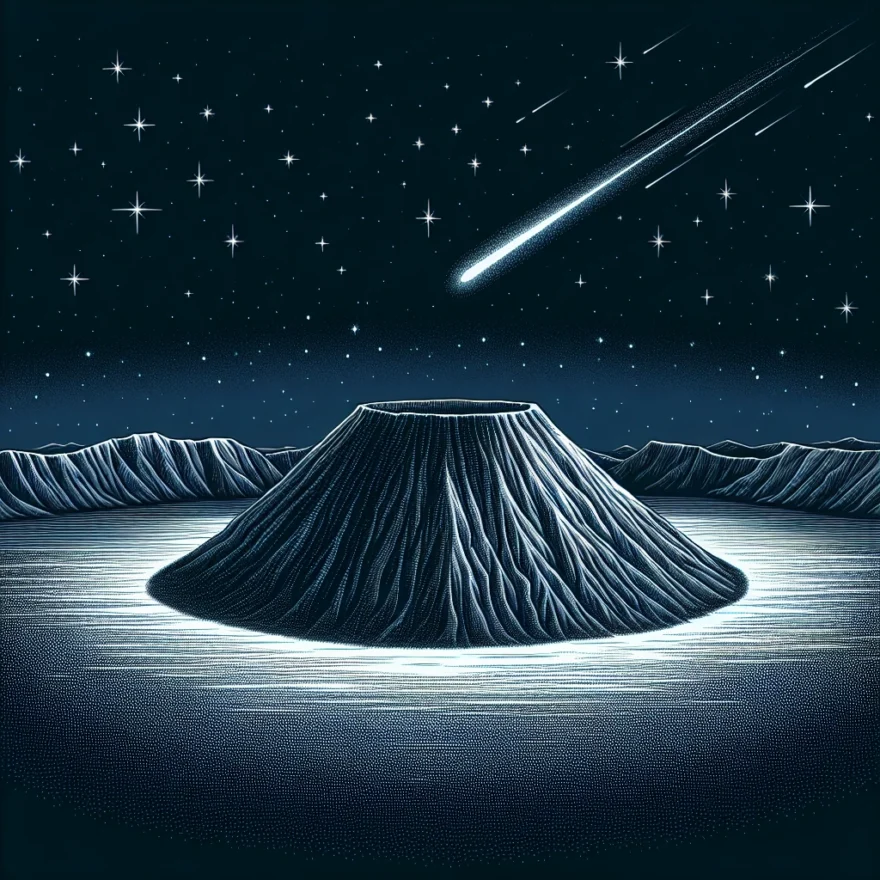
Deep in the heart of the Siberian wilderness, shrouded in mystery and local folklore, lies the enigmatic Patomskiy Crater. This peculiar, cone-shaped formation, also known as Patomskiy’s dome or the Eagle’s Nest, has puzzled scientists and geologists since its discovery in the mid-twentieth century. Its origin remains one of the most contentious debates in the field of geology and extraterrestrial studies, making it a fascinating subject for those intrigued by the unexplained.
The Patomskiy Crater, standing around 40 meters high and 100 meters wide, is an anomaly that defies conventional geological understanding. Its unique shape, reminiscent of a bird’s nest or an open volcanic crater, is unlike any other known natural formation. The crater’s composition, primarily limestone and shale with traces of other minerals, adds to the mystery, as these materials are not typically associated with impact craters.
Moreover, the crater’s location in one of the most remote areas of Russia, far from any known volcanic activity, makes the volcanic theory less plausible. The absence of any impact residue or meteor fragments in the vicinity further complicates the mystery, leading to numerous theories and speculations about its origin.
From geological anomalies to extraterrestrial impacts, the Patomskiy Crater has been the subject of numerous studies and investigations, each attempting to unravel the mystery behind this enigmatic formation. Yet, despite these efforts, the crater remains an enigma, its origin story still untold.
The mystery of the Patomskiy Crater is not just a scientific puzzle; it’s also a rich source of local folklore and mythology. The local indigenous people have their own interpretations and stories about the crater, adding another layer to its mystique. As we delve deeper into the mystery of the Patomskiy Crater, we will explore the various theories, investigations, and stories surrounding this fascinating geological anomaly.
Table of contents
- Introduction: The Enigma of the Patomskiy Crater
- The Discovery of the Patomskiy Crater
- Geological Theories: An Earthly Explanation
- Extraterrestrial Theories: A Cosmic Connection
- The Impact on Local Flora and Fauna
- Scientific Investigations and Findings
- Myths and Legends: The Crater in Folklore
- The Patomskiy Crater Today
- Common Questions About the Patomskiy Crater
The Discovery of the Patomskiy Crater
Located in the remote wilderness of Siberia, the Patomskiy Crater remained unknown to the wider world until 1949. It was in this year that geologist Vadim Kolpakov stumbled across the enigmatic formation during a geological expedition. Nestled in the Irkutsk region, the crater was an unexpected find in the dense Siberian forest, instantly captivating Kolpakov with its unusual structure and size.
The crater, which was later named after the nearby Patom River, measures approximately 520 feet wide and 130 feet high. Its shape, resembling a giant bird’s nest or an open mouth, has led to it being colloquially referred to as “Kolpakov’s Cone” or “The Eagle’s Nest”. The central mound, or “beak”, rises roughly 40 feet above the surrounding terrain, adding to the mystery of its formation.
Kolpakov’s discovery sparked a wave of intrigue among the scientific community. The remote location and the sheer size of the crater posed many questions. How could such a large and distinct formation have remained hidden for so long? What could have caused such a unique structure to form? The answers to these questions were not immediately apparent, and the Patomskiy Crater became an enigma that would tantalize researchers for decades to come.
Despite the challenges posed by the crater’s remote location and harsh weather conditions, Kolpakov was determined to learn more about this geological oddity. He conducted initial surveys, documenting the crater’s dimensions and taking samples for further analysis. However, the isolation of the site and the limited resources available at the time meant that a comprehensive study of the crater would have to wait.
Over the years, the Patomskiy Crater has continued to attract interest from geologists, astronomers, and conspiracy theorists alike. Its discovery marked the beginning of a quest for knowledge that continues to this day, with each new finding adding another piece to the puzzle of the Patomskiy Crater’s origins.
Geological Theories: An Earthly Explanation
The Patomskiy Crater, located in the Irkutsk region of Siberia, has long been a subject of fascination and speculation. While some believe it to be the result of extraterrestrial impact, there are several geological theories that offer a more earthly explanation for its formation.
One of the prominent geological theories suggests that the Patomskiy Crater is a volcanic formation. It is believed that a volcanic eruption occurred millions of years ago, causing the earth to collapse and form the crater. This theory is supported by the presence of volcanic rocks and minerals found in the area surrounding the crater. Additionally, the circular shape of the crater is consistent with other volcanic craters found around the world.
Another geological explanation proposes that the Patomskiy Crater is a result of a natural geological process known as a mud volcano. Mud volcanoes are formed when pressurized mud and gases are forced to the surface, creating a cone-shaped structure. This theory suggests that the Patomskiy Crater was formed by the eruption of mud and gases from deep within the earth. The presence of mud and clay deposits in the area supports this theory.
Furthermore, some geologists argue that the Patomskiy Crater could be a result of a karst collapse. Karst collapses occur when underground caves and tunnels collapse due to the dissolution of soluble rocks such as limestone. This theory suggests that the crater was formed when a large underground cavity collapsed, leaving behind the distinctive circular depression. The presence of limestone in the region lends credibility to this explanation.
While these geological theories provide plausible explanations for the formation of the Patomskiy Crater, they are not without their limitations. The exact age of the crater is still uncertain, and further geological investigations are required to determine the precise processes that led to its creation.
Extraterrestrial Theories: A Cosmic Connection
The Patomskiy Crater has long been a subject of fascination and speculation, with various theories attempting to explain its origin and formation. While geological theories provide a plausible explanation for the crater’s existence, there are those who believe that there may be a cosmic connection, suggesting that the Patomskiy Crater was the result of an extraterrestrial impact.
Extraterrestrial theories propose that the crater was formed by the impact of a meteorite or some other celestial object. Proponents of this theory point to the unique characteristics of the Patomskiy Crater, such as its unusual shape and the absence of a central peak, which they argue are consistent with impact craters found on other celestial bodies.
One of the key arguments put forth by those who support the extraterrestrial theory is the presence of shatter cones in the surrounding rocks. Shatter cones are distinctive geological features that are typically associated with meteorite impacts. These cone-shaped fractures in the rock are believed to form as a result of the intense pressure generated by the impact.
Additionally, proponents of the cosmic connection theory highlight the high concentration of iron and other trace elements found in the rocks near the Patomskiy Crater. They argue that these elements could have been deposited by a meteorite, providing further evidence of an extraterrestrial origin.
Another intriguing aspect of the extraterrestrial theory is the possibility that the Patomskiy Crater was not formed by a meteorite impact, but rather by the crash landing of an alien spacecraft. This idea is fueled by reports of alleged UFO sightings in the area surrounding the crater. While these accounts are largely anecdotal and lack concrete evidence, they have contributed to the speculation surrounding the cosmic connection theory.
It is important to note, however, that the extraterrestrial theory is highly controversial and has been met with skepticism by the scientific community. Critics argue that the geological features and mineral composition of the Patomskiy Crater can be adequately explained by natural processes, without invoking extraterrestrial involvement.
Despite the lack of consensus among scientists, the extraterrestrial theory continues to captivate the imagination of those intrigued by the mysteries of the universe. Whether the Patomskiy Crater was indeed formed by an extraterrestrial impact or is simply a geological anomaly, its enigmatic nature adds to the allure of this fascinating natural phenomenon.
The Impact on Local Flora and Fauna
The Patomskiy Crater, with its mysterious origins, has not only captivated the attention of scientists and researchers but has also left a lasting impact on the local flora and fauna. The unique geological features of the crater have created a distinct environment that has influenced the surrounding ecosystem.
One noticeable effect of the crater on the local flora is the presence of unusual plant species. Scientists have discovered that certain plants have adapted to the specific conditions within the crater, such as the extreme temperatures and the high mineral content of the soil. These plants have developed unique characteristics that allow them to thrive in this otherwise inhospitable environment. The study of these plant species has provided valuable insights into the adaptability and resilience of life forms in extreme conditions.
Similarly, the Patomskiy Crater has had a significant impact on the local fauna. The diverse range of animal species found in the vicinity of the crater has fascinated researchers. Some scientists believe that the crater acts as a natural habitat for certain animals, offering protection and resources that are not available in the surrounding areas. This has led to the discovery of rare and endangered species, making the crater an important site for conservation efforts.
However, the impact of the Patomskiy Crater on the local flora and fauna is not limited to positive effects. The sudden formation of the crater and the subsequent disturbances in the surrounding environment have also caused disruptions in the ecosystem. The displacement of soil, changes in water flow, and alterations in the availability of resources have affected the balance of the ecosystem, leading to the decline or disappearance of certain species.
Scientists continue to study the long-term effects of the Patomskiy Crater on the local flora and fauna. By understanding the intricate relationships between the geological features of the crater and the surrounding ecosystem, researchers hope to gain insights into the broader impacts of geological anomalies on biodiversity and ecological stability.
Scientific Investigations and Findings
The Patomskiy Crater has been the subject of numerous scientific investigations in an attempt to unravel its mysterious origins. Researchers from various disciplines have conducted studies and gathered evidence to shed light on this enigmatic geological formation.
One of the key scientific investigations focused on determining the age of the crater. Through the use of radiocarbon dating and analysis of surrounding geological layers, scientists have estimated that the Patomskiy Crater is approximately 250 years old. This finding contradicts the popular belief that the crater is of ancient origin.
Geologists have also examined the rocks and minerals found within the crater to understand its composition. The analysis revealed a high concentration of quartz, feldspar, and other common minerals, suggesting that the formation is likely of terrestrial origin. Additionally, the absence of any extraterrestrial materials such as meteorite fragments further supports the geological explanation.
Furthermore, researchers have conducted geophysical surveys to study the structure of the crater. Ground-penetrating radar and magnetometer measurements have provided valuable insights into the subsurface features of the area. These investigations have revealed that the Patomskiy Crater is not a result of a meteorite impact but rather a collapse caused by natural processes such as erosion and underground water flow.
In addition to the geological investigations, scientists have also studied the effects of the crater on the surrounding environment. Ecological surveys have been conducted to assess the impact on local flora and fauna. Surprisingly, researchers have found that the crater has become a unique ecosystem, hosting a variety of plant and animal species that are not typically found in the region. This suggests that the crater has created a microhabitat with its own distinct ecological dynamics.
While the scientific investigations have provided compelling evidence for a geological explanation of the Patomskiy Crater, there are still unanswered questions and lingering mysteries. The exact mechanism of its formation and the reason for its peculiar shape continue to puzzle scientists. Some researchers argue that there may be undiscovered geological processes at play, while others propose that the crater could be a result of a rare combination of natural factors.
Despite the ongoing scientific investigations, the Patomskiy Crater remains a captivating enigma that has also inspired a rich tapestry of myths and legends. These cultural narratives, passed down through generations, add to the allure and fascination surrounding this geological anomaly.
Myths and Legends: The Crater in Folklore
Throughout history, the Patomskiy Crater has captured the imagination of people, giving rise to numerous myths and legends. These tales have been passed down through generations, each adding their own unique twist to the mystery surrounding the crater. Let’s explore some of the most fascinating folklore associated with the Patomskiy Crater.
One popular legend suggests that the Patomskiy Crater is the result of a meteorite impact caused by a celestial being. According to this belief, a powerful god descended from the heavens and struck the Earth with a fiery object, creating the crater as a testament to his divine power. Locals often refer to the crater as the “Handprint of God,” symbolizing the impact of this otherworldly force.
Another intriguing myth suggests that the Patomskiy Crater is actually a gateway to another dimension. It is believed that ancient civilizations used the crater as a portal to communicate with supernatural beings and access hidden realms. Some even claim to have witnessed strange lights and heard ethereal voices emanating from the depths of the crater, further fueling the belief in its mystical properties.
Legends surrounding the Patomskiy Crater also speak of supernatural creatures inhabiting its surroundings. One such creature is the “Guardian of the Crater,” a mythical beast said to possess immense strength and protect the secrets hidden within the crater. According to local folklore, anyone who dares to disturb the tranquility of the crater will face the wrath of this formidable guardian.
Interestingly, some legends attribute the formation of the Patomskiy Crater to the actions of ancient extraterrestrial beings. These tales suggest that the crater was created by a spacecraft landing or a powerful energy beam emitted by alien visitors. Believers in this theory speculate that the crater may hold clues to advanced technology or even extraterrestrial artifacts buried deep within its core.
While these myths and legends may seem far-fetched, they play a significant role in shaping the cultural significance of the Patomskiy Crater. They add an air of mystery and intrigue to the already enigmatic geological anomaly, captivating the minds of locals and visitors alike.
The Patomskiy Crater Today
The Patomskiy Crater, located in the Irkutsk region of Siberia, continues to captivate scientists, researchers, and curious visitors alike. Today, it stands as a mysterious geological formation that has yet to be fully explained. Despite numerous scientific investigations and theories, the true origin of the crater remains elusive.
Over the years, the Patomskiy Crater has become a popular tourist attraction, drawing in visitors from all over the world. Its unique shape, measuring approximately 170 meters in diameter and 40 meters in depth, is a sight to behold. The surrounding landscape, with its dense forests and picturesque scenery, adds to the allure of this enigmatic site.
Scientists and geologists continue to study the Patomskiy Crater in an effort to unravel its secrets. Various research expeditions have been conducted, employing advanced technologies and methodologies to gather data and analyze the geological features of the crater. However, despite these efforts, a definitive explanation for its formation remains elusive.
One prevailing theory suggests that the Patomskiy Crater is a result of a geological anomaly, possibly caused by a combination of factors such as underground gas explosions, volcanic activity, or the collapse of a natural cavity. This theory is supported by the presence of fractured rocks and the absence of evidence pointing towards an extraterrestrial impact.
On the other hand, proponents of the extraterrestrial theory argue that the unique shape and characteristics of the Patomskiy Crater indicate a possible meteorite or asteroid impact. They point to the presence of shocked quartz and the lack of volcanic activity as evidence supporting their claims. However, no conclusive evidence has been found to definitively prove this theory.
Despite the ongoing debate and lack of concrete answers, the Patomskiy Crater continues to be a subject of fascination and intrigue. It has inspired numerous myths and legends, with locals attributing its formation to supernatural forces and cosmic events. These stories have been passed down through generations, adding to the mystique surrounding the crater.
Today, visitors to the Patomskiy Crater can explore the area and witness the captivating beauty of this geological wonder. Guided tours are available, providing insights into the various scientific theories and investigations conducted over the years. The site also offers a visitor center, where visitors can learn more about the history, geology, and folklore associated with the crater.
While the true nature of the Patomskiy Crater remains a mystery, its significance as a geological anomaly or potential extraterrestrial impact site cannot be denied. It serves as a reminder of the vastness and complexity of our planet, and the mysteries that still lie waiting to be unraveled.
Common Questions About the Patomskiy Crater
Throughout the years, the Patomskiy Crater has captivated the imagination of both scientists and enthusiasts alike. As a result, numerous questions have arisen regarding this mysterious geological formation. In this section, we will address some of the most common questions about the Patomskiy Crater.
1. How was the Patomskiy Crater formed?
The exact formation process of the Patomskiy Crater remains a subject of debate. While some believe it to be a result of a meteorite impact, others argue that it is a geological anomaly caused by natural processes. The lack of conclusive evidence makes it difficult to determine the exact mechanism behind its formation.
2. Is there any scientific evidence supporting an extraterrestrial impact?
Although some researchers have proposed the theory of an extraterrestrial impact, there is currently no concrete scientific evidence to support this claim. The lack of impact-related minerals and the presence of geological features consistent with terrestrial origins have led many scientists to favor the geological anomaly explanation.
3. What are the most plausible geological explanations?
Several geological theories have been put forward to explain the Patomskiy Crater. One possibility is that it was formed by a volcanic explosion, leaving behind a collapsed caldera. Another theory suggests that it could be a result of a gas explosion within the Earth’s crust. However, more research is needed to validate these hypotheses.
4. How has the Patomskiy Crater affected the local flora and fauna?
The Patomskiy Crater has had a noticeable impact on the surrounding ecosystem. The unique geological conditions within the crater have created a distinct microclimate, influencing the vegetation and wildlife in the area. Some plant species have adapted to the harsh environment, while certain animal species have made the crater their habitat.
5. Have there been any scientific investigations conducted at the Patomskiy Crater?
Over the years, several scientific expeditions have been organized to study the Patomskiy Crater. These investigations have involved geological surveys, analysis of soil and rock samples, and even remote sensing techniques. While these studies have provided valuable insights, they have not yet yielded definitive answers regarding the crater’s origins.
6. What role does folklore play in the understanding of the Patomskiy Crater?
Folklore and local legends have played a significant role in shaping the perception of the Patomskiy Crater. Many tales and myths have emerged, attributing supernatural and mystical properties to the crater. While these stories may not provide scientific explanations, they offer valuable cultural insights into the significance of the crater within the local community.
7. What is the current state of the Patomskiy Crater?
Today, the Patomskiy Crater remains an enigma. It continues to intrigue researchers and attract visitors from around the world. Efforts are ongoing to further investigate the crater and uncover its mysteries. The site is also a popular tourist destination, allowing visitors to witness the unique geological formation firsthand.
In conclusion, the Patomskiy Crater is a captivating geological anomaly that has sparked numerous questions and theories. While the exact cause of its formation remains uncertain, ongoing scientific research and exploration will hopefully shed more light on this intriguing mystery in the future.