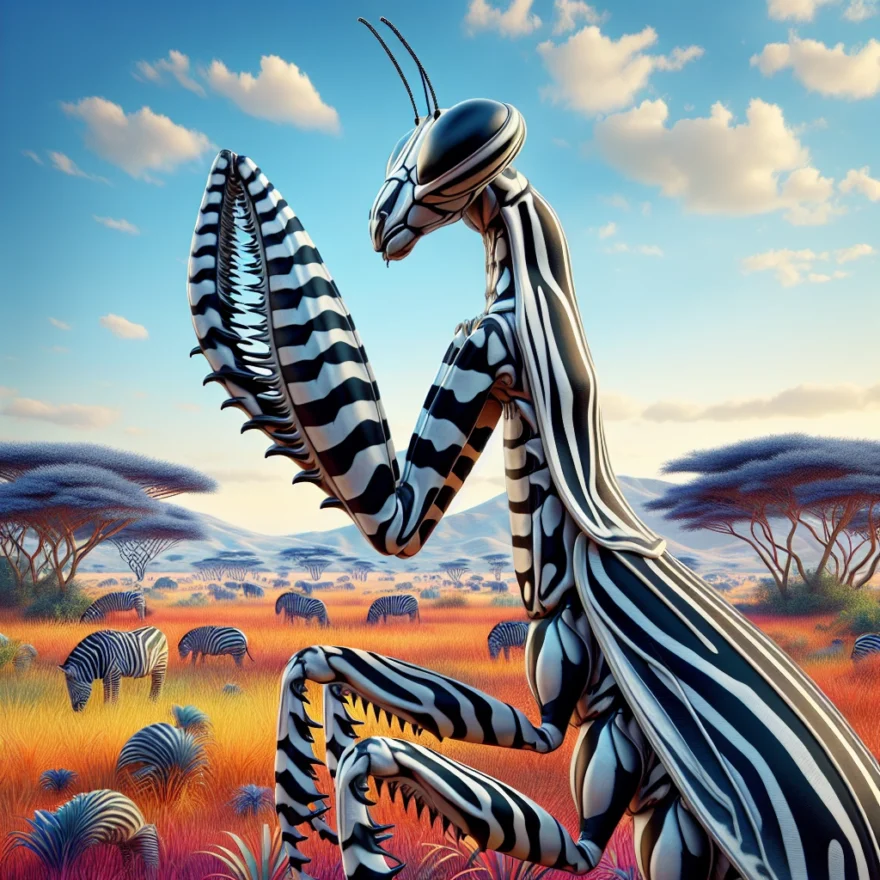
Introduction to African Zebra Praying Mantises
Dancing gracefully in the wilds of Africa, the Zebra Praying Mantis is an intriguing sight to behold. This fascinating insect, scientifically known as Pseudocreobotra wahlbergii, is a marvel of nature. With its striking zebra-like stripes and formidable predatory skills, it has earned a reputation as one of the most captivating species of mantises in the world.
Native to the African continent, these mantises are predominantly found in the subtropical and tropical regions of South Africa. They are known for their distinctive black and white stripes, which serve as an effective camouflage in the wild, helping them blend into the foliage and ambush their prey with surprising efficiency.
The African Zebra Praying Mantis is a part of the Mantidae family, a group of insects renowned for their unique hunting style. They have a peculiar stance, with their forelegs folded as if in prayer, which is where their common name ‘Praying Mantis’ originates from.
The name ‘Zebra’ in their moniker is derived from their zebra-like stripes, which not only provide an effective disguise but also add to their aesthetic appeal. This distinctive appearance has made them a popular choice among insect enthusiasts and hobbyists worldwide.
While they may appear delicate and harmless, these insects are formidable predators. They have a unique hunting style that sets them apart from other insects. But there is much more to these intriguing creatures than meets the eye. In the following sections, we will delve deeper into the world of African Zebra Praying Mantises, exploring their physical characteristics, behavioral traits, life cycle, role in the ecosystem, and much more.
Table of contents
- Introduction to African Zebra Praying Mantises
- Physical Characteristics of African Zebra Praying Mantises
- Behavioral Traits of African Zebra Praying Mantises
- The Life Cycle of African Zebra Praying Mantises
- African Zebra Praying Mantises and Their Ecosystem
- Conservation Status of African Zebra Praying Mantises
- African Zebra Praying Mantises in Popular Culture
- Fascinating Facts about African Zebra Praying Mantises
- Common Misconceptions about African Zebra Praying Mantises
- Common Questions about African Zebra Praying Mantises
Physical Characteristics of African Zebra Praying Mantises
With their distinctive zebra-like stripes, African Zebra Praying Mantises are a sight to behold. These fascinating creatures are a species of mantis native to Africa, known scientifically as Pseudocreobotra wahlbergii. Their name is derived from their unique physical characteristics, which mimic the black and white patterning of a zebra.
Their bodies are primarily green, but they are most recognized for their striking forewings, which display a pattern of black and white stripes. These wings extend down the length of their bodies, and when fully grown, the mantises can reach a length of approximately 4 to 5 cm for females, and slightly smaller for males.
Like all mantises, they have triangular heads with large compound eyes that provide them with a wide field of vision. Their flexible neck allows them to turn their heads 180 degrees, a feature that is quite unique among insects. This, combined with their excellent eyesight, makes them formidable predators.
The most iconic feature of the African Zebra Praying Mantis, and indeed all mantises, are their raptorial forelegs. These are folded in a way that resembles a praying stance, hence their common name. But make no mistake, these are not for prayer, but for predation. The legs are lined with sharp spines that they use to snare their prey, and once caught, there is little hope of escape.
Sexual dimorphism is also evident in this species. Females are generally larger and more robust than males. They also have wider abdomens, which are necessary for egg production. Males, on the other hand, are more slender and have longer antennae and larger eyes, traits that are beneficial for locating potential mates.
In conclusion, the African Zebra Praying Mantis is a unique insect with striking physical characteristics that set it apart from other mantis species. From their zebra-striped wings to their raptorial forelegs, these creatures are a testament to the diverse and fascinating world of insects.
Behavioral Traits of African Zebra Praying Mantises
African Zebra Praying Mantises, also known as African Zebra Mantis or Gongylus gongylodes, are fascinating creatures with unique behavioral traits that set them apart from other mantis species. These predatory insects are known for their distinctive appearance, which resembles the black and white stripes of a zebra. Let’s delve into the intriguing behavioral traits of these remarkable creatures.
1. Camouflage: One of the most remarkable behavioral traits of African Zebra Praying Mantises is their ability to blend seamlessly into their surroundings. Their black and white striped exoskeleton allows them to mimic the patterns of zebra bark or foliage, providing effective camouflage from potential predators and prey.
2. Ambush Predators: African Zebra Praying Mantises are ambush predators, patiently waiting for their prey to come within striking distance. They remain motionless, relying on their excellent camouflage to remain undetected. When an unsuspecting insect comes near, the mantis strikes with lightning speed, using its raptorial forelegs to capture and immobilize its prey.
3. Aggressive Mimicry: These mantises are not only masters of camouflage but also skilled at aggressive mimicry. They have been observed imitating the movements of harmless prey, such as butterflies or moths, to attract their unsuspecting victims. Once the prey comes close, the mantis seizes the opportunity to launch its attack.
4. Cannibalistic Behavior: African Zebra Praying Mantises are known for their cannibalistic tendencies, especially during mating. The female mantis may sometimes devour the male after or even during copulation. This behavior is believed to provide the female with additional nutrients to support the development of her eggs.
5. Visual Communication: These mantises communicate using visual cues. Males often use their wings to display vibrant colors and patterns to attract females during courtship. They may also engage in ritualized movements to signal their intentions and establish dominance.
6. Defensive Behaviors: When threatened, African Zebra Praying Mantises display various defensive behaviors. They may raise their forelegs and spread their wings to appear larger and more intimidating. Additionally, they can release a foul-smelling defensive secretion from glands located on their thorax, deterring potential predators.
7. Paternal Care: Unlike many other insect species, male African Zebra Praying Mantises exhibit a unique form of paternal care. After mating, the male may remain with the female to protect the eggs from predators and environmental hazards until they hatch.
These behavioral traits make African Zebra Praying Mantises intriguing and captivating creatures to study. Their camouflage, ambush hunting techniques, aggressive mimicry, cannibalistic tendencies, visual communication, defensive behaviors, and paternal care all contribute to their survival and success in their natural habitats.
The Life Cycle of African Zebra Praying Mantises
As fascinating as African Zebra Praying Mantises are, their life cycle is equally intriguing. These unique insects go through a series of stages, each marked by distinct physical changes and behaviors. Let’s take a closer look at the life cycle of African Zebra Praying Mantises:
Egg Stage
The life cycle begins with the female mantis laying a cluster of eggs, known as an ootheca, on a suitable surface. The ootheca is a foam-like structure that hardens to protect the developing eggs. The female carefully attaches the ootheca to a plant or other secure location, ensuring the eggs are safe from predators.
Nymph Stage
After a few weeks, the eggs hatch, and tiny nymphs emerge. The nymphs resemble miniature versions of adult mantises but lack wings and are not yet sexually mature. They go through a series of molts, shedding their exoskeletons as they grow. Each molt reveals a larger and more developed nymph.
Adult Stage
Once the nymphs have completed their final molt, they reach adulthood. At this stage, the African Zebra Praying Mantises have fully developed wings and can fly. The adults are highly skilled hunters, using their specialized front legs to catch and capture prey. They are also capable of reproducing and continuing the life cycle.
Mating and Reproduction
During the adult stage, the male mantises actively search for females to mate with. They use their keen sense of smell to locate potential mates. Once a male finds a receptive female, he approaches her cautiously, as female mantises are known for their aggressive behavior. If the female accepts the male, mating occurs, and the female stores the sperm for later use.
Egg Laying
After mating, the female African Zebra Praying Mantis will search for a suitable location to lay her eggs. As mentioned earlier, she will produce an ootheca and carefully attach it to a secure surface. The female mantis can lay multiple oothecae during her lifetime, ensuring the continuation of the species.
Life Cycle Continuation
The eggs within the ootheca will undergo a period of dormancy, often lasting through the winter months. This dormant stage allows the embryos to develop slowly, ensuring that the nymphs hatch at an optimal time when food and environmental conditions are favorable. Once the nymphs emerge, the life cycle begins anew.
The life cycle of African Zebra Praying Mantises is a testament to their adaptability and survival strategies. Each stage of their development serves a purpose, allowing them to flourish in their natural habitat. Understanding their life cycle helps us appreciate the complexity and beauty of these remarkable insects.
African Zebra Praying Mantises and Their Ecosystem
The African Zebra Praying Mantises are fascinating creatures that play an important role in their ecosystem. Found primarily in the grasslands and savannas of Africa, these mantises are well-adapted to their surroundings and have unique interactions with other organisms in their habitat.
One of the key aspects of the African Zebra Praying Mantises’ ecosystem is their diet. These predatory insects feed on a variety of small insects and arthropods, including grasshoppers, flies, and beetles. By preying on these pests, the mantises help to control their populations and maintain a balance in the ecosystem.
Interestingly, African Zebra Praying Mantises have developed remarkable camouflage that allows them to blend seamlessly into their surroundings. Their black and white striped bodies resemble the patterns found on zebras, giving them their name. This camouflage helps them to hide from both predators and prey, making them highly effective hunters.
In addition to their hunting prowess, African Zebra Praying Mantises also have important relationships with other organisms in their ecosystem. For example, they are often hosts to various species of parasitic wasps. These wasps lay their eggs on the mantises’ bodies, and when the eggs hatch, the larvae feed on the mantises. While this may seem detrimental to the mantises, it actually benefits the ecosystem by controlling the mantis population and providing a food source for the wasps.
Furthermore, African Zebra Praying Mantises have a role in pollination. As they move from plant to plant in search of prey, they inadvertently transfer pollen, aiding in the reproduction of various plant species. This mutualistic relationship between the mantises and plants is crucial for the overall health and diversity of the ecosystem.
It is important to note that human activities, such as habitat destruction and pesticide use, can have a negative impact on the African Zebra Praying Mantises and their ecosystem. Loss of habitat reduces their available hunting grounds and disrupts their interactions with other organisms. Pesticides can also harm the mantises directly or indirectly by reducing their prey populations.
In conclusion, the African Zebra Praying Mantises play a vital role in their ecosystem. Through their hunting abilities, camouflage, and interactions with other organisms, they contribute to the balance and diversity of the grasslands and savannas of Africa. It is crucial that we take steps to protect their habitat and ensure their survival for the benefit of the entire ecosystem.
Conservation Status of African Zebra Praying Mantises
African Zebra Praying Mantises, like many other insect species, face various threats to their survival. Understanding the conservation status of these fascinating creatures is crucial in order to protect and preserve their populations for future generations.
Due to their specific habitat requirements and limited distribution, African Zebra Praying Mantises are considered to have a vulnerable conservation status. Here are some of the key factors contributing to their conservation concerns:
Habitat Loss: The destruction and fragmentation of their natural habitats pose a significant threat to African Zebra Praying Mantises. Deforestation, urbanization, and agricultural expansion result in the loss of suitable vegetation and disrupt the delicate balance of their ecosystems.
Climate Change: The effects of climate change, such as rising temperatures and altered precipitation patterns, can have detrimental impacts on the survival and reproduction of African Zebra Praying Mantises. These changes can disrupt their life cycles, affect their prey availability, and lead to habitat degradation.
Pesticide Use: The widespread use of pesticides in agricultural practices can have unintended consequences for African Zebra Praying Mantises. These mantises rely on insects as their primary food source, and the use of pesticides can reduce their prey populations and even directly harm the mantises themselves.
Illegal Collection: African Zebra Praying Mantises are highly sought after by collectors due to their unique and striking appearance. Illegal collection for the pet trade or for scientific purposes can put additional pressure on their already vulnerable populations.
In order to conserve African Zebra Praying Mantises, several measures can be taken:
Habitat Protection: Preserving their natural habitats through the establishment of protected areas and the implementation of sustainable land-use practices is crucial for the long-term survival of these mantises.
Education and Awareness: Raising awareness about the importance of African Zebra Praying Mantises and their role in ecosystems can help garner support for their conservation. Educating local communities, policymakers, and the general public about the threats they face can lead to increased efforts to protect them.
Research and Monitoring: Conducting scientific research to better understand the ecology and behavior of African Zebra Praying Mantises is essential for their conservation. Monitoring their populations and studying their response to environmental changes can provide valuable insights for conservation strategies.
Regulation of Trade: Implementing and enforcing regulations to control the illegal collection and trade of African Zebra Praying Mantises can help reduce the pressure on their populations.
By addressing these conservation challenges and taking proactive measures, we can ensure the long-term survival of African Zebra Praying Mantises and protect the invaluable biodiversity they contribute to our planet.
African Zebra Praying Mantises in Popular Culture
Throughout history, insects have captivated human imagination and have often found their way into popular culture. African Zebra Praying Mantises, with their unique appearance and fascinating behavior, have also made their mark in various forms of media and entertainment. Let’s explore some of the ways these remarkable insects have been portrayed in popular culture:
1. Movies and TV Shows:
African Zebra Praying Mantises have been featured in several nature documentaries, showcasing their hunting prowess and survival skills. These documentaries provide valuable insights into the lives of these intriguing insects and help raise awareness about their importance in the ecosystem.
In addition, African Zebra Praying Mantises have made appearances in fictional movies and TV shows. They are often depicted as fierce and formidable predators, adding an element of excitement and danger to the storyline.
2. Art and Literature:
The striking appearance of African Zebra Praying Mantises has inspired many artists and writers. They have been depicted in paintings, sculptures, and illustrations, showcasing their vibrant colors and elegant postures. In literature, they have been used as symbols of patience, strength, and adaptability.
3. Symbolism and Superstitions:
In some cultures, African Zebra Praying Mantises are considered symbols of good luck and fortune. They are believed to bring blessings and protection to those who encounter them. On the other hand, in certain superstitions, they are seen as omens of impending danger or misfortune.
4. Fashion and Design:
The distinct black and white stripes of African Zebra Praying Mantises have caught the attention of fashion designers and interior decorators. Their unique pattern has been incorporated into clothing, accessories, and home decor items, adding a touch of exoticism and intrigue.
5. Video Games and Toys:
African Zebra Praying Mantises have become popular characters in video games, both as protagonists and antagonists. Their agile movements and predatory nature make them exciting additions to virtual worlds. They have also been recreated as toys and collectibles, allowing enthusiasts to have a tangible representation of these fascinating insects.
Overall, African Zebra Praying Mantises have left a significant impact on popular culture, showcasing their beauty, strength, and mysterious allure. Their presence in various forms of media serves as a reminder of the diversity and wonder of the natural world.
Fascinating Facts about African Zebra Praying Mantises
African Zebra Praying Mantises are truly fascinating creatures with a plethora of unique characteristics and behaviors. Here are some intriguing facts about these incredible insects:
1. Striking Appearance: African Zebra Praying Mantises, as their name suggests, have a distinct zebra-like pattern on their bodies. This black and white coloration helps them blend into their surroundings and provides excellent camouflage while they patiently wait for their prey.
2. Impressive Size: These mantises are relatively large compared to other species, with adult females reaching up to 3 inches in length. Their size contributes to their effectiveness as predators, allowing them to capture a wide range of prey.
3. Voracious Predators: African Zebra Praying Mantises are skilled hunters and primarily feed on other insects. They have sharp forelegs with spiky structures that they use to grasp and immobilize their prey. Once captured, they quickly consume their victims, often starting with the head.
4. Agile Hunters: These mantises are incredibly agile and can move swiftly to catch their prey. They possess excellent vision, allowing them to accurately judge distances and strike with precision. Their ability to rotate their heads up to 180 degrees further enhances their hunting prowess.
5. Sexual Dimorphism: Male and female African Zebra Praying Mantises display notable differences in size and appearance. While females have a robust body and the distinctive zebra pattern, males are smaller and have a more slender physique. This sexual dimorphism is a common characteristic among many mantis species.
6. Complex Mating Rituals: Like other mantises, African Zebra Praying Mantises engage in intricate mating rituals. The male cautiously approaches the female, often displaying vibrant colors and performing elaborate courtship dances to gain her acceptance. However, mating can be a risky affair for the males, as they may sometimes become the female’s next meal if they fail to impress her.
7. Exceptional Camouflage: These mantises have evolved remarkable camouflage abilities to blend in with their environment. Their zebra-like pattern helps them mimic the dappled sunlight filtering through the foliage, making them nearly invisible to both predators and prey.
8. Cannibalistic Behavior: While cannibalism is not uncommon among mantises, it is particularly prevalent in African Zebra Praying Mantises. After mating, the female may consume the male, providing her with valuable nutrients to support the development of her eggs.
9. Habitat Range: African Zebra Praying Mantises are native to the tropical regions of Africa, including countries such as Kenya, Tanzania, and Uganda. They can be found in various habitats, including forests, grasslands, and gardens, where they thrive amidst abundant vegetation.
10. Contribution to Pest Control: These mantises play a vital role in natural pest control by preying on a wide range of insects, including harmful agricultural pests. Their presence helps maintain the balance of ecosystems and reduce the need for chemical pesticides.
These fascinating facts shed light on the intriguing world of African Zebra Praying Mantises. From their unique appearance and hunting strategies to their complex mating rituals and ecological significance, these remarkable insects continue to captivate researchers and nature enthusiasts alike.
Common Misconceptions about African Zebra Praying Mantises
When it comes to African Zebra Praying Mantises, there are several common misconceptions that often arise. Let’s take a closer look at these misconceptions and debunk them:
Misconception 1: African Zebra Praying Mantises are dangerous to humans
Contrary to popular belief, African Zebra Praying Mantises are not a threat to humans. While they may have sharp forelimbs used for capturing prey, they are not designed to harm humans. These mantises are generally docile and prefer to avoid human contact. So, there’s no need to fear them.
Misconception 2: African Zebra Praying Mantises are harmful to crops and gardens
Another misconception is that African Zebra Praying Mantises are harmful to crops and gardens. However, these mantises are actually beneficial to the ecosystem. They primarily feed on insects such as flies, mosquitoes, and aphids, which are considered pests for crops. By preying on these pests, African Zebra Praying Mantises help maintain a natural balance in the ecosystem.
Misconception 3: African Zebra Praying Mantises are aggressive towards each other
While African Zebra Praying Mantises may engage in territorial disputes, they are not inherently aggressive towards each other. These mantises typically exhibit aggressive behavior only when competing for resources or during mating rituals. Otherwise, they are solitary creatures and prefer to avoid confrontation.
Misconception 4: African Zebra Praying Mantises can change their colors
Contrary to popular belief, African Zebra Praying Mantises cannot change their colors like some other mantis species. The vibrant black and white stripes on their bodies are a permanent feature and serve as a form of camouflage in their natural habitat.
Misconception 5: African Zebra Praying Mantises are only found in Africa
Despite their name, African Zebra Praying Mantises are not exclusively found in Africa. While they are native to Africa, they have also been introduced to other parts of the world, including North America and Europe. This species has adapted well to different climates and can thrive in various regions.
By debunking these common misconceptions, we can gain a better understanding of the true nature and characteristics of African Zebra Praying Mantises. These fascinating creatures play an important role in the ecosystem and deserve our admiration and protection.
Common Questions about African Zebra Praying Mantises
As fascinating creatures, African Zebra Praying Mantises often raise a lot of questions. Let’s explore some of the common questions people have about these unique insects:
1. What is the scientific name of the African Zebra Praying Mantis?
The scientific name of the African Zebra Praying Mantis is Miomantis caffra. It belongs to the family Mantidae, which includes various species of praying mantises.
2. Where are African Zebra Praying Mantises found?
African Zebra Praying Mantises are primarily found in southern and eastern parts of Africa, including countries such as South Africa, Zimbabwe, Mozambique, and Tanzania. They inhabit grasslands, savannas, and open woodlands.
3. How big do African Zebra Praying Mantises grow?
Adult African Zebra Praying Mantises can grow up to 2.5 to 3 inches (6 to 7.5 centimeters) in length. However, the size may vary slightly depending on the specific subspecies and individual mantises.
4. What do African Zebra Praying Mantises eat?
African Zebra Praying Mantises are carnivorous predators. They primarily feed on a variety of insects, including flies, crickets, moths, and even other smaller mantises. They are known for their exceptional hunting skills.
5. Do African Zebra Praying Mantises bite humans?
While African Zebra Praying Mantises are capable of biting, they rarely bite humans unless they feel threatened or provoked. Their bite is not venomous and is generally harmless to humans.
6. How long do African Zebra Praying Mantises live?
The lifespan of African Zebra Praying Mantises can vary depending on various factors such as environmental conditions and availability of food. On average, they live for about 6 to 12 months.
7. Can African Zebra Praying Mantises fly?
Yes, African Zebra Praying Mantises have wings as adults and are capable of flying. However, they are not strong flyers and usually rely on their excellent camouflage and ambush hunting techniques to catch prey.
8. Are African Zebra Praying Mantises endangered?
Currently, African Zebra Praying Mantises are not considered endangered. However, due to habitat loss and environmental changes, their populations may be at risk in certain areas. Further research is needed to determine their conservation status accurately.
9. Can African Zebra Praying Mantises be kept as pets?
Yes, African Zebra Praying Mantises can be kept as pets in captivity. However, it is important to provide them with a suitable enclosure, proper care, and a diet consisting of live insects. It is always recommended to research and understand their specific needs before keeping them as pets.
10. Do African Zebra Praying Mantises have any predators?
African Zebra Praying Mantises have a few natural predators, including birds, spiders, and certain reptiles. Their excellent camouflage and ability to remain motionless help them avoid being detected by potential predators.
These are just a few of the common questions people have about African Zebra Praying Mantises. These fascinating insects continue to captivate researchers and nature enthusiasts with their unique characteristics and behavior.