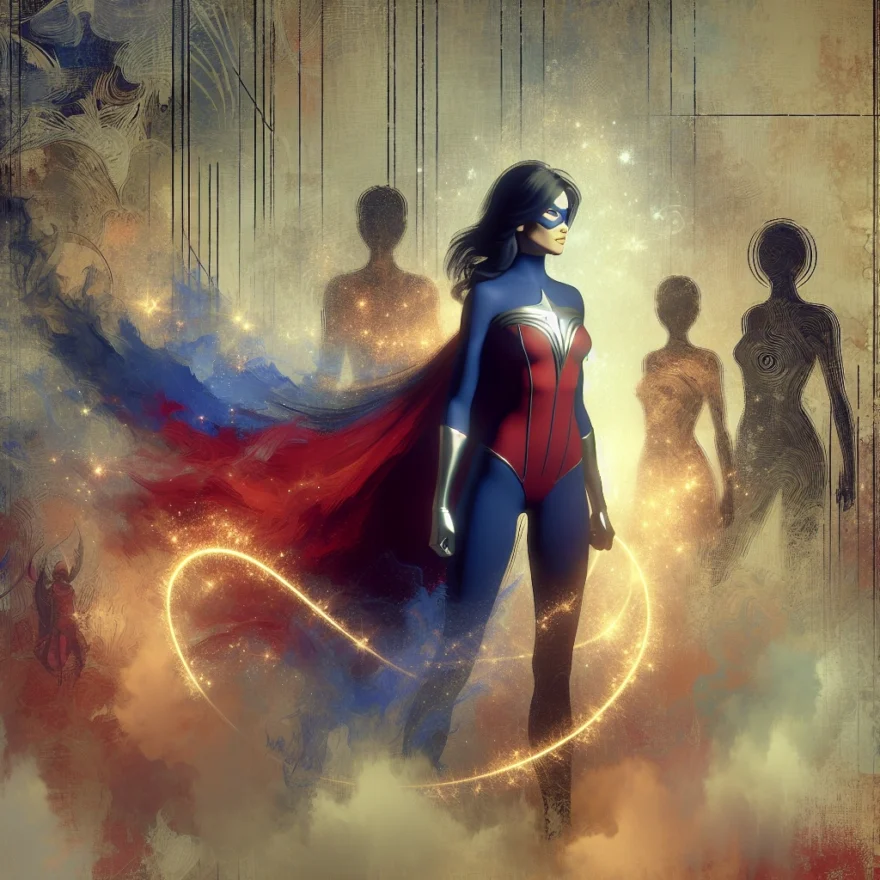
Introduction: The Enigma of Wonder Woman
Resilient, compassionate, and fiercely independent, Wonder Woman has long been a beacon of strength and hope in the world of comic books. Yet, beneath the iconic red, blue, and gold armor lies a web of secrets that is as intricate as it is fascinating. The history of this beloved character is shrouded in mystery, with storylines that have evolved and adapted over the years to reflect the changing times. But who is Wonder Woman, really? And how did she become one of the most enduring symbols of female empowerment?
Wonder Woman, or Diana Prince as she is known in her civilian life, is a character that has captivated audiences for decades. Her story is one of resilience and courage, a narrative that has been shaped by the societal and cultural shifts of the times. Yet, despite her global recognition and iconic status, there is still much about Wonder Woman that remains a mystery. The journey to unveil the truth about this enigmatic heroine is one filled with unexpected twists and turns, revealing a history that is as compelling as it is surprising.
From her inception during the Golden Age of comic books to her recent appearances on the big screen, Wonder Woman’s history is a testament to the evolving perceptions of women in society. As we delve into the origins and evolution of this iconic character, we will also explore the influence of feminism on her character, the symbolism behind her costume, and the impact of her legacy on pop culture. We will also delve into her role within the Justice League, her greatest enemies, and her love interests beyond Steve Trevor.
Join us as we take a deep dive into the secret history of Wonder Woman, uncovering the layers of intrigue that have shaped her story and defined her role as a symbol of strength, hope, and female empowerment. Prepare to have your perceptions challenged and your understanding deepened as we explore the untold truth about one of the most iconic superheroes of all time.
Table of contents
- Introduction: The Enigma of Wonder Woman
- The Birth of a Heroine: Wonder Woman’s Creation
- Behind the Scenes: The Mind of William Moulton Marston
- The Influence of Feminism on Wonder Woman’s Character
- The Evolution of Wonder Woman: From Comics to Screen
- The Secret Life of Diana Prince: Wonder Woman’s Alter Ego
- Wonder Woman’s Role in the Justice League
- The Iconic Wonder Woman Costume: Symbolism and Controversy
- Wonder Woman’s Greatest Enemies: A Look into Her Rogues Gallery
- Wonder Woman’s Love Interests: Beyond Steve Trevor
- The Legacy of Wonder Woman: Impact on Pop Culture
- Common Questions and Answers about Wonder Woman
The Birth of a Heroine: Wonder Woman’s Creation
It was in the midst of World War II, a time of global turmoil and uncertainty, that Wonder Woman first made her appearance. The year was 1941, and the world was in dire need of a symbol of hope and resilience. Enter William Moulton Marston, a psychologist with a Ph.D. from Harvard, a passion for feminist ideals, and a rather unconventional personal life. Marston, under the pseudonym Charles Moulton, created Wonder Woman as a new kind of superhero, one who would triumph not with fists or firepower, but with love.
Marston’s vision for Wonder Woman was heavily influenced by the women in his life, particularly his wife Elizabeth Holloway Marston and their live-in partner Olive Byrne. These two strong, independent women were the primary inspirations for Wonder Woman’s character. Marston’s goal was to create a feminist icon, a heroine who would use her intelligence, compassion, and understanding to solve problems, rather than resorting to violence. He believed that the world needed a symbol of feminine power and authority, and so, Wonder Woman was born.
Wonder Woman made her debut in All Star Comics #8 in December 1941, and her first feature in Sensation Comics #1, released in January 1942, was a hit. The character was a unique blend of Greek mythology and American ideals. Born as Princess Diana of Themyscira, she was the daughter of Hippolyta, the Queen of the Amazons, a race of warrior women. She was gifted with superhuman strength, speed, and agility by the Greek gods and chose to leave her home to fight for justice in “man’s world.”
The creation of Wonder Woman was not just about introducing another character into the comic book world. It was a deliberate attempt to shift the paradigm of heroism. Marston wanted to challenge the traditional, masculine concept of heroism and replace it with a new, feminine model. He believed that women were superior to men in terms of love, compassion, and fairness, and he wanted Wonder Woman to embody these qualities.
Wonder Woman was a radical character for her time, challenging gender norms and societal expectations. Her creation was a bold move, a statement of feminist ideals and a testament to the power of women. The birth of this iconic heroine marked a new era in comic books and popular culture, paving the way for future female superheroes and continuing to inspire and empower women around the world to this day.
Behind the Scenes: The Mind of William Moulton Marston
William Moulton Marston, the creator of Wonder Woman, was a man of many talents and intriguing ideas. Born in 1893, Marston was not only a psychologist but also a lawyer, inventor, and writer. His unique background and perspectives played a significant role in shaping the character of Wonder Woman.
Marston was deeply influenced by the feminist movement of his time, which sought to challenge traditional gender roles and promote women’s rights. He believed in the inherent power and strength of women and wanted to create a superhero who embodied these qualities. Wonder Woman, with her Amazonian origins and fierce determination, became the embodiment of Marston’s feminist ideals.
Interestingly, Marston was also a proponent of the concept of “loving submission,” which he believed was essential for maintaining harmonious relationships. This belief is reflected in Wonder Woman’s Lasso of Truth, which compels those caught in its grip to reveal their true selves. Marston believed that love and truth were inseparable and that only through understanding and acceptance could true harmony be achieved.
Marston’s unconventional personal life also played a role in shaping Wonder Woman’s character. He lived in a polyamorous relationship with his wife Elizabeth Holloway Marston and their partner Olive Byrne. Both women served as inspirations for Wonder Woman, with Elizabeth influencing her strong-willed nature and Olive inspiring her appearance.
Marston’s psychological background is evident in Wonder Woman’s use of psychology and empathy to resolve conflicts. He believed that understanding and compassion were powerful tools for creating a more peaceful world. Wonder Woman’s role as a diplomat and her commitment to justice and equality reflect Marston’s own values and aspirations.
Despite facing controversy and criticism, Marston’s creation of Wonder Woman was a groundbreaking achievement. He challenged societal norms and pushed the boundaries of what a female superhero could be. His belief in the power of love, truth, and women’s empowerment continues to resonate with audiences today, making Wonder Woman an enduring symbol of strength and inspiration.
The Influence of Feminism on Wonder Woman’s Character
Wonder Woman, as a character, has always been closely tied to the feminist movement. From her creation in 1941 by William Moulton Marston, Wonder Woman was intended to be a symbol of female empowerment and a champion for women’s rights.
Marston, a psychologist and a strong advocate for women’s rights, infused his creation with his own beliefs and values. He believed that women were inherently superior to men and that they had the potential to bring about a more peaceful and egalitarian society. Wonder Woman, with her strength, intelligence, and compassion, embodied these ideals.
Throughout the years, Wonder Woman’s character has evolved to reflect the changing feminist landscape. In the 1970s, during the second wave of feminism, Wonder Woman became a feminist icon. Her stories began to explore themes of gender equality, reproductive rights, and the struggle against patriarchal oppression.
Wonder Woman’s role as a feminist symbol was further solidified in the 1980s and 1990s when feminist scholars and writers delved deeper into her character. They analyzed her representation of female power and sexuality, and how she challenged traditional gender roles.
One of the most notable aspects of Wonder Woman’s character is her refusal to conform to societal expectations. She is a warrior, a leader, and a compassionate advocate for justice. She embodies the idea that women can be strong and independent, while also embracing their femininity.
Wonder Woman’s impact on feminism extends beyond the comic book pages. With the release of the 2017 film, directed by Patty Jenkins and starring Gal Gadot, Wonder Woman reached a wider audience and became a symbol of female empowerment in popular culture.
The film showcased Wonder Woman as a powerful and complex character, breaking box office records and proving that female-led superhero movies could be successful. It inspired a new generation of girls and women to embrace their strength and stand up for what they believe in.
Overall, the influence of feminism on Wonder Woman’s character cannot be understated. She has become an enduring symbol of female empowerment, challenging societal norms and inspiring generations of women to fight for equality. Wonder Woman’s journey from the pages of comic books to the big screen is a testament to the power of representation and the impact that fictional characters can have on real-world movements.
The Evolution of Wonder Woman: From Comics to Screen
Wonder Woman, one of the most iconic superheroes of all time, has undergone a remarkable evolution from her early appearances in comic books to her portrayal on the big screen. This evolution not only reflects the changing times but also highlights the enduring popularity and relevance of the character.
Wonder Woman made her debut in All Star Comics #8 in 1941, created by psychologist and writer William Moulton Marston. Originally, she was depicted as a powerful Amazonian princess from the hidden island of Themyscira, sent as an ambassador to “Man’s World” to promote peace and justice.
Over the years, Wonder Woman’s character has evolved to become a symbol of female empowerment and a feminist icon. In the 1970s, the television series starring Lynda Carter brought Wonder Woman to a wider audience, showcasing her strength, compassion, and dedication to fighting for justice.
In recent years, the character has experienced a resurgence in popularity with the release of the DC Extended Universe films. Gal Gadot’s portrayal of Wonder Woman in the 2017 standalone film and subsequent appearances in ensemble films like Justice League have introduced the character to a new generation of fans.
With each adaptation, Wonder Woman’s story has been reimagined and updated to resonate with contemporary audiences. The character has been given more complex storylines, exploring her origins and personal struggles, while still maintaining her core values of truth, compassion, and strength.
Wonder Woman’s evolution from comics to screen has not only allowed for more diverse and inclusive storytelling but has also opened up discussions about the representation of female superheroes in popular culture. Her success has paved the way for other female-led superhero films and has inspired a new wave of empowerment for women in the industry.
As Wonder Woman continues to captivate audiences, her journey from the pages of comic books to the silver screen serves as a testament to the enduring power of storytelling and the impact that a strong and inspiring character can have on society.
The Secret Life of Diana Prince: Wonder Woman’s Alter Ego
Wonder Woman, the iconic superheroine, has a secret life that goes beyond her crime-fighting adventures. Behind the scenes, she assumes the alter ego of Diana Prince, a seemingly ordinary woman living among us. This dual identity adds depth and complexity to Wonder Woman’s character, making her more relatable and intriguing to fans.
Diana Prince is portrayed as a strong and independent woman, much like her superhero persona. She is often depicted as an intelligent and skilled individual, working in various fields such as government agencies, the military, or as a freelance writer. Her alter ego allows her to navigate the human world while maintaining her connection to her Amazonian heritage.
One of the fascinating aspects of Diana Prince’s secret life is her ability to blend in effortlessly. She seamlessly transitions between her civilian identity and her superhero persona, using her intelligence and adaptability to keep her true identity hidden from those around her. This duality adds an element of mystery to Wonder Woman’s character, as she operates in plain sight without arousing suspicion.
Throughout the comic book series and adaptations, Diana Prince’s secret life has been explored in various ways. In some storylines, she uses her alter ego to gather information or work undercover, leveraging her connections and skills to protect humanity from hidden threats. In other instances, her civilian identity serves as a way for her to have a “normal” life and form relationships outside of her role as a superhero.
Wonder Woman’s alter ego also plays a significant role in her relationships with other superheroes. In the Justice League, Diana Prince serves as a diplomat and strategist, utilizing her intelligence and experience to contribute to the team’s missions. Her ability to blend in with humans allows her to interact with the world on a different level than her super-powered allies.
Moreover, Diana Prince’s secret life has been explored in popular media adaptations of Wonder Woman. In movies and television shows, her alter ego is often portrayed as a strong, independent woman who is not defined solely by her superhero persona. This portrayal highlights the importance of maintaining a balance between personal and professional life, even for someone as extraordinary as Wonder Woman.
Overall, the secret life of Diana Prince adds depth and intrigue to the character of Wonder Woman. It showcases her intelligence, adaptability, and ability to seamlessly navigate between her superhero and civilian identities. This duality not only makes her more relatable to readers and viewers but also emphasizes the importance of maintaining a sense of self in the face of extraordinary circumstances.
Wonder Woman’s Role in the Justice League
When it comes to the Justice League, Wonder Woman plays a crucial role in the team’s dynamic and success. As one of the founding members of the Justice League, Wonder Woman brings her unique set of skills, powers, and wisdom to the table.
Wonder Woman’s role in the Justice League is multifaceted. She serves as a strong and compassionate leader, guiding the team through difficult situations and making tough decisions. Her experience as an Amazonian princess and warrior gives her a strategic edge in battle, making her a formidable force against any threat.
In addition to her physical prowess, Wonder Woman also possesses a deep sense of justice and a strong moral compass. She is often the voice of reason within the team, advocating for truth, equality, and peace. Her unwavering commitment to these principles inspires her fellow teammates and helps unite them in their mission to protect the world from evil.
Wonder Woman’s presence in the Justice League also brings a much-needed representation of female power and empowerment. As one of the most iconic female superheroes, she serves as a role model for girls and women around the world. Her strength, resilience, and determination remind us that women can be just as capable and powerful as their male counterparts.
Furthermore, Wonder Woman’s unique background and mythology add an intriguing layer to the Justice League’s narrative. With her ties to Greek mythology and her status as an Amazonian princess, she brings a rich cultural and historical context to the team. This allows for fascinating storylines and interactions with other characters, adding depth and complexity to the overall narrative of the Justice League.
Overall, Wonder Woman’s role in the Justice League is vital. She brings a combination of strength, leadership, and compassion that complements the skills of her fellow teammates. Her presence not only enhances the team’s capabilities in battle but also adds diversity and representation to the superhero landscape. Wonder Woman is truly an integral part of the Justice League’s success.
The Iconic Wonder Woman Costume: Symbolism and Controversy
One of the most iconic elements of Wonder Woman is her costume. Designed by Harry G. Peter and introduced in 1941, the costume has become synonymous with the character and has undergone several changes and adaptations over the years.
The symbolism behind Wonder Woman’s costume is multi-faceted. The most striking aspect is her red, gold, and blue color scheme, which represents patriotism and justice. The red and blue colors are reminiscent of the American flag, emphasizing Wonder Woman’s role as a symbol of truth, freedom, and equality.
The golden eagle emblem on her chest is a symbol of power and strength, reflecting Wonder Woman’s status as a warrior princess. It also serves as a reminder of her connection to the Greek gods, particularly Zeus and Hera, who are often depicted with eagles in Greek mythology.
Another significant element of Wonder Woman’s costume is her tiara, which is both a fashion accessory and a weapon. The tiara is made of indestructible metal and can be used as a projectile, highlighting Wonder Woman’s resourcefulness and ability to adapt to any situation.
However, Wonder Woman’s costume has not been without controversy. In the early years of her existence, critics argued that her costume was too revealing and sexualized, objectifying the character and undermining her status as a powerful female superhero.
Over time, there have been modifications to the costume to address these concerns. In the 1960s, for example, the length of her skirt was increased to provide more coverage. In recent years, various artists and writers have also offered alternative costume designs that aim to strike a balance between empowerment and practicality.
Despite the controversy, Wonder Woman’s costume remains a symbol of female strength and empowerment. It has inspired countless cosplayers and has become an iconic image in popular culture. The costume has also played a significant role in the portrayal of Wonder Woman in various media adaptations, including the highly successful 2017 film starring Gal Gadot.
Overall, the symbolism and controversy surrounding Wonder Woman’s costume highlight the complexities of representing a powerful female character in popular culture. While the costume has evolved over time, its core elements continue to convey Wonder Woman’s values of justice, strength, and equality.
Wonder Woman’s Greatest Enemies: A Look into Her Rogues Gallery
Wonder Woman, the iconic superheroine, has faced a wide array of formidable adversaries throughout her storied history. From powerful gods to cunning villains, her rogues gallery is as diverse as it is dangerous. Let’s take a closer look at some of Wonder Woman’s greatest enemies:
Cheetah
One of Wonder Woman’s most enduring foes, Cheetah, is a character with a complex backstory. Originally an archaeologist named Dr. Barbara Ann Minerva, she becomes cursed by an ancient plant god, transforming her into a cheetah-like creature with enhanced strength and agility. Cheetah’s relentless pursuit of power and desire to surpass Wonder Woman makes her a formidable adversary.
Ares
Ares, the Greek god of war, has clashed with Wonder Woman on numerous occasions. As the embodiment of conflict and violence, Ares seeks to manipulate and control humanity’s destructive tendencies. His immense power and strategic mind pose a significant threat to Wonder Woman’s mission to promote peace and justice.
Circe
Circe, a powerful sorceress from Greek mythology, possesses the ability to transform her enemies into animals. Her magical prowess and cunning nature make her a formidable opponent for Wonder Woman. Circe often uses her powers to manipulate and deceive, testing the strength of Wonder Woman’s compassion and resolve.
Doctor Psycho
Doctor Psycho, also known as Edgar Cizko, is a telepathic supervillain with a deeply misogynistic worldview. He uses his psychic abilities to manipulate and control others, particularly women, in his quest for power. Wonder Woman’s unwavering commitment to equality and justice puts her at odds with Doctor Psycho’s twisted ideology.
Giganta
Giganta, originally a gorilla transformed into a human, possesses the ability to grow to enormous sizes. Her superhuman strength and durability make her a formidable physical threat to Wonder Woman. Giganta’s desire for power and revenge often leads to clashes with the Amazonian princess.
Maxwell Lord
Maxwell Lord, a charismatic businessman with telepathic powers, has a complex history with Wonder Woman. At times an ally, at others a manipulative adversary, Lord’s ability to control minds and his Machiavellian nature make him a dangerous opponent. His actions have had lasting consequences for Wonder Woman and the entire superhero community.
These are just a few examples of the many adversaries Wonder Woman has faced throughout her history. Each villain challenges her in unique ways, testing her strength, compassion, and commitment to justice. As Wonder Woman continues to evolve and inspire new generations, her rogues gallery will undoubtedly grow, ensuring that her battles remain as captivating as ever.
Wonder Woman’s Love Interests: Beyond Steve Trevor
Wonder Woman, the iconic superheroine, has had a long and storied history of love interests beyond her most well-known companion, Steve Trevor. These relationships have added depth and complexity to her character, showcasing different aspects of her personality and exploring the complexities of her romantic life. Let’s take a closer look at some of the significant love interests in Wonder Woman’s life:
1. Superman (Clark Kent)
One of the most intriguing love interests in Wonder Woman’s life is Superman, the Man of Steel. Their relationship has been explored in various comic book storylines, often delving into the complexities of two powerful heroes coming together. Their shared sense of justice and commitment to protecting the innocent create a strong bond between them.
2. Batman (Bruce Wayne)
Another notable love interest for Wonder Woman is Batman, the Dark Knight. Their relationship is characterized by a deep mutual respect and understanding. While their differing approaches to crime-fighting often create tension, their shared dedication to justice brings them together. The dynamic between Wonder Woman, Superman, and Batman has been a subject of fascination for fans, often referred to as the “Trinity” of DC Comics.
3. Trevor Barnes
Trevor Barnes, a journalist and author, is a love interest introduced in more recent Wonder Woman storylines. He is portrayed as a supportive and understanding partner who appreciates and admires Wonder Woman’s strength and compassion. Their relationship explores the challenges of balancing personal connections with the demands of being a superhero.
4. Nemesis (Tom Tresser)
Nemesis, a skilled spy and master of disguise, has also been romantically linked to Wonder Woman. Their relationship is characterized by a shared sense of duty and a deep understanding of each other’s roles as protectors of justice. Their connection showcases Wonder Woman’s ability to form relationships with individuals outside the superhero community.
5. Aquaman (Arthur Curry)
Wonder Woman and Aquaman, the King of Atlantis, have shared a close bond as members of the Justice League. While their relationship has primarily been portrayed as a strong friendship, there have been instances where a romantic connection has been hinted at or explored in alternate storylines.
These are just a few examples of the love interests that have played a significant role in Wonder Woman’s life. Each relationship adds depth and complexity to her character, highlighting different aspects of her personality and exploring the challenges of balancing personal connections with her responsibilities as a superhero.
The Legacy of Wonder Woman: Impact on Pop Culture
Wonder Woman is not just a beloved superhero; she is an iconic figure who has left an indelible mark on popular culture. Since her creation in 1941, Wonder Woman has become a symbol of strength, empowerment, and justice, inspiring generations of fans and transcending the boundaries of comic books. Let’s explore the lasting impact Wonder Woman has had on pop culture.
1. Merchandising and Branding: Wonder Woman’s image has been licensed and used on a wide range of merchandise, from action figures and clothing to lunchboxes and collectible items. The popularity of these products speaks to the enduring appeal of the character and her ability to resonate with fans of all ages.
2. Feminist Icon: Wonder Woman’s status as a feminist icon cannot be overstated. With her strong and independent personality, she has been a symbol of women’s empowerment for decades. Her portrayal as a warrior princess who fights for justice and equality has inspired countless women and girls to embrace their own strength and stand up for what they believe in.
3. Film and Television Adaptations: Wonder Woman has made a successful transition from the pages of comic books to the big and small screens. The 1970s television series starring Lynda Carter introduced the character to a wider audience and remains a beloved portrayal. In recent years, Gal Gadot’s portrayal of Wonder Woman in the DC Extended Universe films has garnered critical acclaim and further cemented the character’s place in pop culture.
4. Cultural References: Wonder Woman has become a cultural reference point, with her name and imagery being used in various contexts. From political speeches to advertising campaigns, her iconic status has made her a symbol of strength, courage, and resilience.
5. Inspiring Future Generations: Wonder Woman continues to inspire new generations of fans through comic books, animated series, and live-action adaptations. The character’s enduring popularity ensures that her legacy will live on, inspiring future creators and fans alike.
6. Breaking Stereotypes: Wonder Woman’s existence challenges traditional gender roles and stereotypes. By presenting a strong and capable female superhero, she has helped pave the way for more diverse and inclusive representations in the world of comics and beyond.
7. Social Impact: Wonder Woman has been involved in various social initiatives and campaigns, using her platform to raise awareness and support important causes. From promoting equality and women’s rights to advocating for environmental conservation, the character has become an advocate for positive change.
8. Cultural Diversity: Wonder Woman’s impact extends beyond her own character, as she has paved the way for more diverse superheroes and storylines. Her presence in the Justice League and interactions with other heroes have helped foster a more inclusive and diverse comic book universe.
Overall, Wonder Woman’s legacy in pop culture is undeniable. Her influence can be seen in the representation of female superheroes, the empowerment of women, and the breaking down of societal barriers. As she continues to evolve and inspire, Wonder Woman remains a symbol of hope, strength, and justice for generations to come.
Common Questions and Answers about Wonder Woman
Wonder Woman has captivated audiences for decades, and with the release of “The Secret History of Wonder Woman,” there are bound to be some questions about the iconic superheroine. Let’s delve into some common questions and provide answers to shed light on the enigmatic world of Wonder Woman.
1. Who created Wonder Woman?
Wonder Woman was created by William Moulton Marston, a psychologist and writer. He introduced the character in 1941, and she quickly became one of DC Comics’ most popular superheroes.
2. What inspired the creation of Wonder Woman?
Marston drew inspiration from various sources, including the suffragist movement and the feminist ideals of the early 20th century. He believed in the power of women and wanted to create a strong female character who could serve as a role model for young girls.
3. What is the significance of Wonder Woman’s Lasso of Truth?
The Lasso of Truth is one of Wonder Woman’s most iconic weapons. It symbolizes her commitment to justice and truth. When someone is bound by the lasso, they are compelled to tell the truth, making it a powerful tool in her crime-fighting arsenal.
4. Does Wonder Woman have any weaknesses?
Wonder Woman is incredibly powerful, but she does have a few weaknesses. Like other Kryptonian characters in the DC Universe, she is vulnerable to Kryptonite. Additionally, her strength and powers diminish if she is bound by a man, representing a metaphorical commentary on the limitations society places on women.
5. How has Wonder Woman evolved over the years?
Wonder Woman has undergone several transformations since her creation. Initially portrayed as a patriotic superheroine fighting alongside the Allied forces during World War II, she later became a symbol of female empowerment and a champion for justice and equality.
6. Has Wonder Woman ever been part of the Justice League?
Absolutely! Wonder Woman is a founding member of the Justice League, a team of superheroes dedicated to protecting the world from evil. Her leadership skills, combat prowess, and wisdom make her an invaluable asset to the team.
7. Who are Wonder Woman’s most notable enemies?
Wonder Woman has faced a range of formidable adversaries throughout her comic book history. Some of her most iconic foes include Ares, the god of war, Cheetah, a fierce feline-inspired villainess, and Circe, a powerful sorceress.
8. Does Wonder Woman have any romantic interests?
Wonder Woman has had various love interests over the years. The most well-known is Steve Trevor, an Air Force pilot who crash-landed on Themyscira, the island home of the Amazons. Other love interests include Superman and Batman, although these relationships are often depicted as more complicated.
9. How has Wonder Woman impacted popular culture?
Wonder Woman has left an indelible mark on popular culture. She has inspired countless women and girls to embrace their strength and stand up for what they believe in. Her symbol, the golden eagle, has become an iconic emblem of female empowerment.
10. Will there be more Wonder Woman movies?
Yes! Following the success of the 2017 film “Wonder Woman,” a sequel titled “Wonder Woman 1984” was released in 2020. There are also plans for future films featuring the beloved superheroine.