Introduction to the African Zebra Peacock Butterfly
Graceful, vibrant, and captivating, the African Zebra Peacock Butterfly is an exquisite species that calls the African continent home. This butterfly, scientifically known as Papilio dardanus, is a marvel of the insect world and a testament to the beauty and diversity of African wildlife.
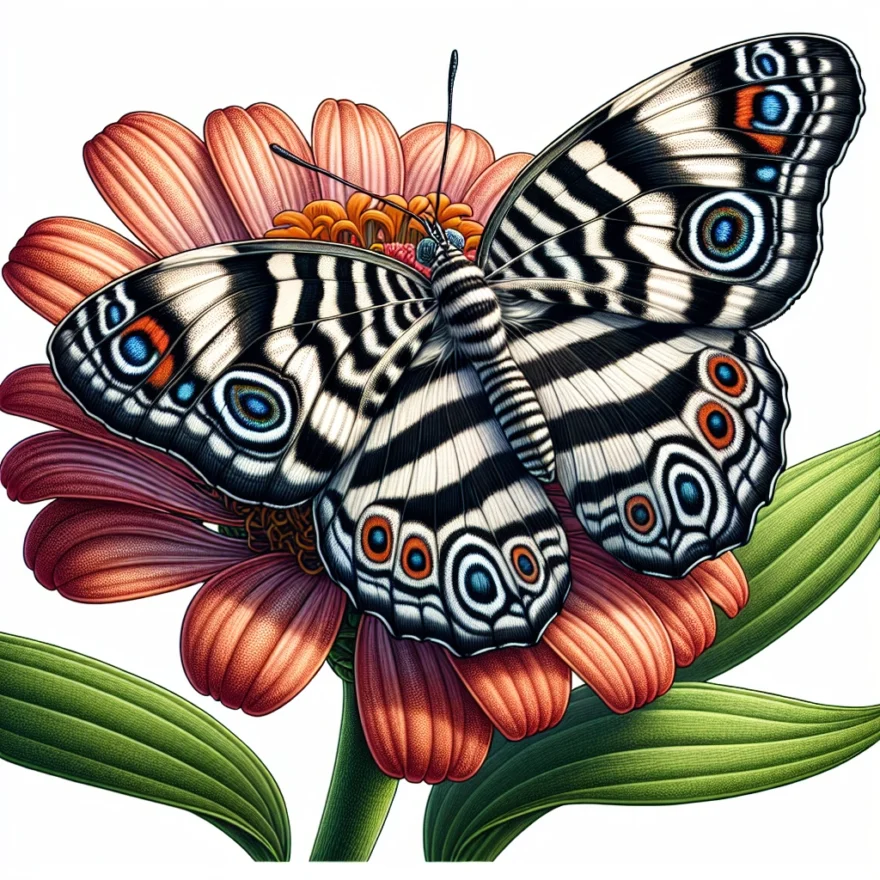
Known for its striking appearance, the African Zebra Peacock Butterfly is a sight to behold. With its distinctive black and white stripes, reminiscent of a zebra’s coat, and the eye-catching iridescent blue “eyes” or peacock-like markings on its wings, this butterfly never fails to draw attention. Yet, its beauty is not just skin-deep. The African Zebra Peacock Butterfly is a creature of fascinating habits and life cycle, contributing significantly to its ecosystem.
However, despite its beauty and importance, the African Zebra Peacock Butterfly remains a mystery to many. This is due, in part, to its preference for specific habitats and its elusive nature. It’s not a butterfly you’ll encounter casually in your backyard unless you happen to live in certain parts of Africa.
Through this detailed exploration, we will delve into the world of the African Zebra Peacock Butterfly, examining its habitat, physical characteristics, life cycle, feeding habits, predators, and its role in the ecosystem. We will also look at its conservation status, the threats it faces, and answer some common questions about this remarkable butterfly.
So, prepare to embark on a journey into the life of one of Africa’s most striking butterflies. Whether you’re an insect enthusiast, a nature lover, or simply curious, there’s much to learn and appreciate about the African Zebra Peacock Butterfly.
Table of contents
- Introduction to the African Zebra Peacock Butterfly
- Habitat of the African Zebra Peacock Butterfly
- Physical Characteristics and Identification
- Life Cycle of the African Zebra Peacock Butterfly
- Feeding Habits and Predators
- Role in the Ecosystem
- Conservation Status and Threats
- Fascinating Facts about the African Zebra Peacock Butterfly
- Common Questions and Answers about the African Zebra Peacock Butterfly
Habitat of the African Zebra Peacock Butterfly
Delving into the natural environment of the African Zebra Peacock Butterfly, this distinctive insect is primarily found in the tropical and subtropical climates of Sub-Saharan Africa. These regions offer the perfect blend of warmth, humidity, and abundant vegetation that these butterflies need to thrive.
The African Zebra Peacock Butterfly, scientifically known as Papilio demodocus, is not a species that is confined to one specific habitat. Instead, it displays a remarkable adaptability to various environments ranging from lowland forests and coastal regions to urban gardens and agricultural fields. This adaptability is a testament to the butterfly’s resilience and contributes significantly to its widespread distribution across Africa.
One of the most crucial aspects of the African Zebra Peacock Butterfly’s habitat is the presence of citrus trees. The butterfly’s larvae, or caterpillars, have a particular affinity for citrus leaves, which serve as their primary food source. This is why these butterflies are often found in and around citrus groves, plantations, and even in backyard gardens where citrus trees are grown.
It’s also worth noting that the African Zebra Peacock Butterfly is a sun-loving species. They are most active during the day, especially when the sun is at its peak. This is when they venture out to feed, mate, and lay eggs. Therefore, areas with ample sunlight are preferred habitats for these vibrant creatures.
Understanding the habitat of the African Zebra Peacock Butterfly not only gives us insight into its lifestyle and behaviors but also helps in the formulation of effective conservation strategies. As human activities continue to alter natural habitats, it is more important than ever to ensure that this beautiful butterfly species continues to have a place to call home.
Physical Characteristics and Identification
The African Zebra Peacock Butterfly, scientifically known as Graphium zebra, is a magnificent insect that captivates with its striking physical characteristics and unique patterns. This butterfly species is native to the African continent and is found in various regions, including forests, woodlands, and savannahs.
The African Zebra Peacock Butterfly is relatively large, with a wingspan ranging from 7 to 9 centimeters. Its wings are adorned with bold black and white stripes, resembling the distinctive patterns of a zebra. These striking markings serve as a form of camouflage, helping the butterfly blend into its natural habitat and evade potential predators.
One of the most distinguishing features of the African Zebra Peacock Butterfly is its long, slender tail extensions on its hindwings. These elegant tails give the butterfly a graceful appearance while in flight. The tails also play a crucial role in courtship rituals, as males use them to attract females during mating.
Another notable characteristic of this butterfly species is its vibrant blue coloration. The upper side of the wings displays a shimmering blue hue, which contrasts beautifully with the black and white stripes. The underside of the wings, on the other hand, showcases a more subdued combination of brown and gray tones, providing additional camouflage when the butterfly rests on tree trunks or leaves.
Furthermore, the African Zebra Peacock Butterfly has a slender body and long, delicate antennae. The antennae are used for sensory perception, helping the butterfly detect scents and navigate its surroundings.
Overall, the physical characteristics and unique patterns of the African Zebra Peacock Butterfly make it a truly remarkable species to behold. Its bold stripes, elegant tails, and vibrant blue coloration contribute to its distinct beauty and set it apart from other butterfly species.
Life Cycle of the African Zebra Peacock Butterfly
The life cycle of the African Zebra Peacock Butterfly is a fascinating journey that showcases the marvels of nature. From a tiny egg to a beautiful adult butterfly, this species undergoes a series of transformations known as metamorphosis. Let’s delve into the intricate details of its life cycle.
Egg Stage: The life cycle begins when a female African Zebra Peacock Butterfly lays her eggs on the undersides of leaves. These eggs are small, round, and pale yellow in color. They are usually laid in clusters, providing protection and increasing the chances of survival for the offspring.
Larval Stage: Once the eggs hatch, the larvae, commonly known as caterpillars, emerge. The caterpillars of the African Zebra Peacock Butterfly have a distinct appearance with black and white stripes resembling a zebra pattern. They are voracious eaters and primarily feed on the leaves of specific host plants.
Pupation Stage: After a period of intense feeding and growth, the caterpillar enters the pupation stage. It forms a chrysalis around its body, which serves as a protective casing. Inside the chrysalis, the caterpillar undergoes a remarkable transformation, breaking down its tissues and rearranging them to form the adult butterfly.
Adult Stage: Once the transformation is complete, the adult African Zebra Peacock Butterfly emerges from the chrysalis. Its wings are initially soft and crumpled but gradually expand and harden over a few hours. The adult butterfly is characterized by its striking black and white zebra-like patterns on its wings. It also features vibrant blue and orange spots, adding to its allure.
The adult butterfly spends its time feeding on nectar from flowers, engaging in courtship rituals, and reproducing. This stage is crucial for the survival and continuation of the species.
It is important to note that the duration of each stage in the life cycle can vary depending on factors such as temperature, humidity, and food availability. Generally, the entire life cycle of the African Zebra Peacock Butterfly takes about 4-6 weeks.
Witnessing the life cycle of the African Zebra Peacock Butterfly is a remarkable experience that highlights the wonders of nature’s intricate processes. From a tiny egg to a magnificent adult butterfly, each stage of its life holds its own unique beauty and significance.
Feeding Habits and Predators
The feeding habits and predators of the African Zebra Peacock Butterfly play a crucial role in its survival and overall ecosystem dynamics. Let’s delve into the fascinating details of how this beautiful butterfly finds its nourishment and the challenges it faces from its natural predators.
The African Zebra Peacock Butterfly, like other butterflies, primarily feeds on nectar from various flowering plants. Its long proboscis, a tubular mouthpart, allows it to reach deep into the flowers to extract the sweet nectar. This feeding behavior not only provides the butterfly with energy but also inadvertently aids in pollination, as it transfers pollen from one flower to another.
As an adult butterfly, the African Zebra Peacock has a varied diet, seeking out a diverse range of nectar sources. It is often attracted to brightly colored flowers that are rich in nectar, such as lantanas, verbena, and butterfly bushes. These flowers provide the necessary nutrients and energy for the butterfly’s activities, including mating and egg-laying.
While feeding on nectar, the African Zebra Peacock Butterfly must remain vigilant as it is vulnerable to predation. Several predators pose a threat to this species, including birds, reptiles, and other insects. Birds, with their keen eyesight and agile flight, are particularly adept at capturing butterflies mid-flight. Lizards and frogs also pose a threat, especially when the butterfly rests on leaves or other surfaces.
In addition to these vertebrate predators, the African Zebra Peacock Butterfly must also contend with a variety of insect predators. Praying mantises, spiders, and wasps are known to prey on butterflies, including the African Zebra Peacock. These predators often employ stealth and speed to capture their prey, taking advantage of a momentary lapse in the butterfly’s vigilance.
However, the African Zebra Peacock Butterfly has developed several defense mechanisms to evade its predators. Its vibrant black and white striped wings, resembling a zebra’s pattern, serve as a form of camouflage, blending in with the dappled sunlight and shadows of the forest understory. This helps to break up its silhouette and makes it harder for predators to spot the butterfly amidst the foliage.
In addition to camouflage, the African Zebra Peacock Butterfly possesses another fascinating adaptation known as “flash coloration.” When disturbed or threatened, the butterfly can suddenly expose its bright blue hindwings, startling its predator and giving it a chance to escape. This sudden display of color acts as a deterrent, confusing and distracting the predator long enough for the butterfly to make a quick getaway.
Overall, the feeding habits and predators of the African Zebra Peacock Butterfly are intricately intertwined. While it seeks out nourishment from nectar-rich flowers, it must always be on guard against potential threats. Its ability to adapt and utilize both camouflage and flash coloration showcases the remarkable strategies this butterfly has evolved to survive in its natural habitat.
Role in the Ecosystem
The African Zebra Peacock Butterfly plays a vital role in the ecosystem, contributing to the delicate balance of nature in its native habitat. As a pollinator, this beautiful butterfly helps in the reproduction of various plant species, making it an essential component of the ecosystem’s biodiversity.
When the African Zebra Peacock Butterfly feeds on nectar from flowers, it inadvertently transfers pollen from one flower to another. This process, known as pollination, enables the plants to produce seeds and fruits, ensuring their survival and reproduction. Without the pollination services provided by these butterflies, many plant species would struggle to reproduce and maintain their populations.
Furthermore, the African Zebra Peacock Butterfly serves as a food source for other organisms within the ecosystem. Birds, reptiles, and small mammals prey on the adult butterflies, while their eggs and caterpillars are consumed by various insects and spiders. This predation creates a food chain, with the butterfly acting as both predator and prey, contributing to the overall biodiversity and ecological balance of the ecosystem.
Additionally, the presence of the African Zebra Peacock Butterfly in an ecosystem can indicate the health and diversity of the surrounding environment. Butterflies are highly sensitive to changes in their habitats, including pollution, habitat loss, and climate change. Therefore, their presence and abundance can serve as an indicator of the overall ecological well-being of an area.
By understanding the role of the African Zebra Peacock Butterfly in the ecosystem, we can appreciate its importance and work towards conserving its habitat. Protecting the natural environment and promoting sustainable practices are crucial for ensuring the continued existence of this striking butterfly and the countless other species that depend on a healthy ecosystem for their survival.
Conservation Status and Threats
The African Zebra Peacock Butterfly, with its vibrant colors and striking patterns, is not only a beautiful insect but also an important species in its ecosystem. However, like many other butterfly species, it faces several conservation challenges and threats that need to be addressed for its survival.
One of the primary threats to the African Zebra Peacock Butterfly is habitat loss. As human populations expand and land is cleared for agriculture, urbanization, and infrastructure development, the butterfly’s natural habitat is being destroyed. This loss of habitat disrupts the butterfly’s life cycle and limits its ability to find suitable breeding and feeding grounds.
Another significant threat to the African Zebra Peacock Butterfly is climate change. Rising temperatures and changing weather patterns can disrupt the delicate balance of the butterfly’s ecosystem. It can affect the availability of nectar-rich flowers, alter the timing of its life cycle stages, and impact its ability to migrate or adapt to new environments.
Pesticide use is also a concern for the African Zebra Peacock Butterfly. In agricultural areas, the butterfly may come into contact with harmful pesticides, either through direct exposure or by consuming contaminated nectar or host plants. Pesticides can be toxic to butterflies and other beneficial insects, leading to population declines.
Furthermore, invasive species pose a threat to the African Zebra Peacock Butterfly. Some non-native plants can outcompete native host plants, reducing the availability of suitable food sources for the butterfly larvae. Invasive predators, such as certain bird species or insects, may also prey on the butterfly or its eggs, further impacting its population.
Conservation efforts are crucial to protect the African Zebra Peacock Butterfly and ensure its long-term survival. Creating protected areas and nature reserves can help preserve its natural habitat and provide safe breeding and feeding grounds. Additionally, promoting sustainable land-use practices, such as agroforestry and organic farming, can reduce the use of pesticides and minimize habitat destruction.
Public awareness and education also play a vital role in conserving the African Zebra Peacock Butterfly. By raising awareness about the importance of butterflies and their role in pollination, we can inspire people to take action to protect these beautiful creatures. Engaging local communities in conservation initiatives and supporting butterfly-friendly gardening practices can contribute to creating a more favorable environment for the butterfly.
In conclusion, the African Zebra Peacock Butterfly faces various conservation challenges and threats, including habitat loss, climate change, pesticide use, and invasive species. It is essential that we take proactive measures to protect this species and its habitat to ensure its survival for future generations.
Fascinating Facts about the African Zebra Peacock Butterfly
As we delve deeper into the world of the African Zebra Peacock Butterfly, we uncover a plethora of fascinating facts about this enchanting creature. Let’s explore some of these intriguing details:
- The African Zebra Peacock Butterfly (scientific name: Papilio nireus) is also known as the African Swallowtail or the Green-Banded Swallowtail.
- One of the most striking features of this butterfly is its vibrant coloration. The wings of the male are adorned with bold black and white stripes, resembling the pattern of a zebra. The female, on the other hand, displays a more subdued coloration with pale green and black markings.
- These butterflies are relatively large, with a wingspan ranging from 7 to 10 centimeters. Their impressive size and distinctive patterns make them easily recognizable in their natural habitat.
- The African Zebra Peacock Butterfly is endemic to sub-Saharan Africa, where it can be found in various countries including South Africa, Zimbabwe, Mozambique, and Tanzania.
- Unlike many other butterfly species, the African Zebra Peacock Butterfly is not particularly migratory. It tends to remain within its preferred habitat, which includes forests, woodlands, and savannas.
- During the mating season, male butterflies engage in elaborate courtship displays to attract females. These displays often involve aerial acrobatics and fluttering movements to showcase their vibrant wing patterns.
- Like most butterflies, the African Zebra Peacock undergoes a complete metamorphosis, transitioning through four distinct stages: egg, larva (caterpillar), pupa (chrysalis), and adult butterfly.
- As caterpillars, these butterflies have a voracious appetite and feed on a variety of host plants, including citrus trees, wild lime, and members of the Rutaceae family.
- Interestingly, the caterpillars of the African Zebra Peacock Butterfly possess a unique defense mechanism. When threatened, they extend a pair of bright orange, fleshy organs called osmeteria, which emit a pungent odor to deter predators.
- Adult butterflies primarily feed on nectar from flowers, using their long proboscis to extract the sweet liquid. They are particularly attracted to brightly colored flowers, such as those found in the Asteraceae and Lamiaceae families.
- These butterflies play an essential role in pollination, as they transfer pollen from one flower to another while feeding. This process helps to fertilize plants and ensure their reproduction.
- Unfortunately, like many other butterfly species, the African Zebra Peacock Butterfly faces various threats to its survival. Habitat loss, climate change, and pesticide use are some of the significant factors contributing to their declining populations.
- Conservation efforts are crucial to protect these beautiful butterflies and their habitats. Initiatives such as creating protected areas, promoting sustainable agriculture practices, and raising awareness about their importance can help safeguard their future.
The African Zebra Peacock Butterfly is truly a marvel of nature, captivating us with its striking appearance and fascinating behaviors. By understanding and appreciating these remarkable creatures, we can work towards their conservation and ensure that future generations can continue to marvel at their beauty.
Common Questions and Answers about the African Zebra Peacock Butterfly
Common Questions and Answers about the African Zebra Peacock Butterfly
As fascinating as the African Zebra Peacock Butterfly may be, it’s only natural to have some questions about this unique species. Below, we have compiled some common questions along with their answers:
1. What is the average lifespan of the African Zebra Peacock Butterfly?
The average lifespan of the African Zebra Peacock Butterfly is approximately 2 to 4 weeks. However, this can vary depending on various factors such as environmental conditions and predators.
2. How can I identify the African Zebra Peacock Butterfly?
The African Zebra Peacock Butterfly can be identified by its striking black and white striped wings, resembling the patterns of a zebra. It also features vibrant blue and orange markings on its hindwings, resembling the feathers of a peacock.
3. What is the role of the African Zebra Peacock Butterfly in the ecosystem?
The African Zebra Peacock Butterfly plays a crucial role in pollination. As they feed on nectar, they inadvertently transfer pollen from one flower to another, aiding in the reproduction of various plant species.
4. Are there any threats to the conservation of the African Zebra Peacock Butterfly?
Yes, the African Zebra Peacock Butterfly faces several threats to its conservation. Loss of habitat due to deforestation, climate change, and pollution are some of the major challenges that this species encounters.
5. Can the African Zebra Peacock Butterfly be kept as a pet?
While the African Zebra Peacock Butterfly is undoubtedly captivating, it is not recommended to keep them as pets. Butterflies have specific environmental requirements and need to be able to fly freely in their natural habitats.
6. What are some interesting facts about the African Zebra Peacock Butterfly?
– The African Zebra Peacock Butterfly is known for its exceptional mimicry, imitating the appearance of toxic butterflies to deter predators.
– They are primarily found in sub-Saharan Africa, particularly in countries like Kenya, Tanzania, and Uganda.
– The wingspan of the African Zebra Peacock Butterfly can reach up to 6 inches, making it one of the largest butterfly species in Africa.
7. How does the African Zebra Peacock Butterfly protect itself from predators?
The African Zebra Peacock Butterfly employs various defense mechanisms to protect itself from predators. Its bright colors and patterns serve as warning signs to potential threats, indicating that it may be toxic or unpalatable.
8. What is the significance of the African Zebra Peacock Butterfly in local culture?
The African Zebra Peacock Butterfly holds cultural significance in some African communities. It is often associated with beauty, transformation, and the cycle of life. In certain traditions, the butterfly is seen as a symbol of good luck and positive change.
9. How can we contribute to the conservation of the African Zebra Peacock Butterfly?
There are several ways to contribute to the conservation of the African Zebra Peacock Butterfly:
- Support conservation organizations working to protect butterfly habitats.
- Plant native flowers and create butterfly-friendly gardens to provide food and shelter.
- Spread awareness about the importance of butterflies in the ecosystem and the need for their conservation.
10. Can the African Zebra Peacock Butterfly be found in other parts of the world?
No, the African Zebra Peacock Butterfly is endemic to sub-Saharan Africa and is not found in any other part of the world.