Introduction
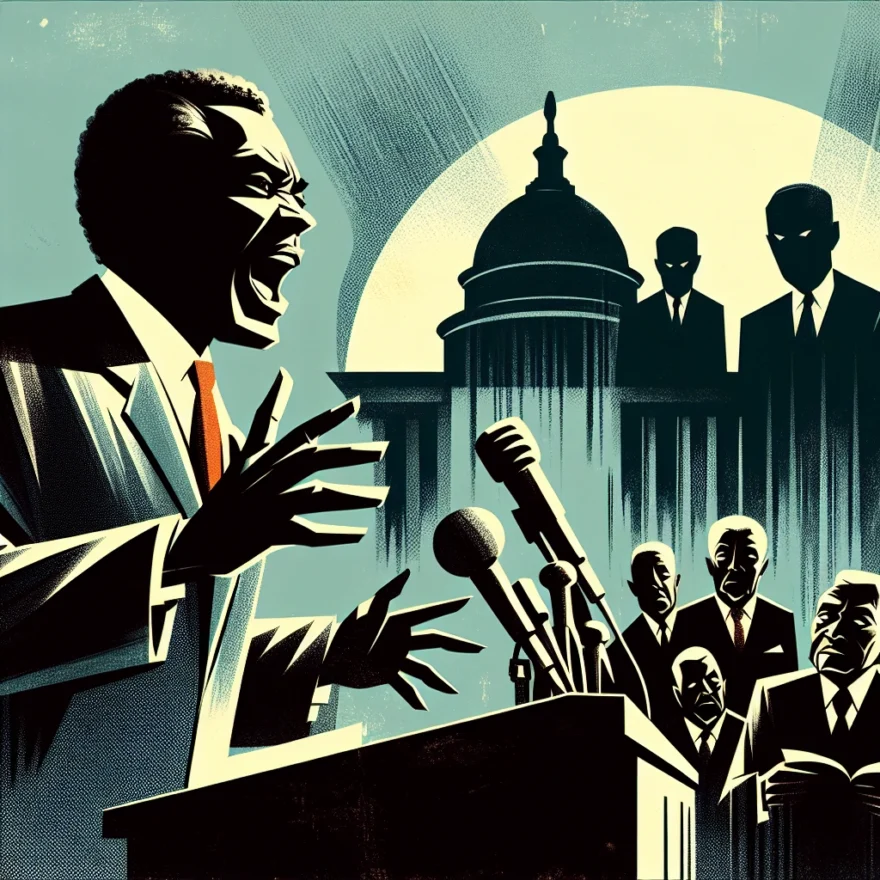
The death of Malcolm X, a prominent figure in the American civil rights movement, has been a subject of controversy and speculation since the moment it occurred on February 21, 1965. The charismatic and influential leader was gunned down in a hail of bullets while delivering a speech at the Audubon Ballroom in New York City. The official narrative points to his assassination being the result of internal disputes within the Nation of Islam, a religious and social movement Malcolm X had been a part of before a bitter fallout. However, over time, several inconsistencies and suspicious circumstances surrounding his death have given rise to theories suggesting a deeper, more sinister plot involving government agencies.
These theories are not just the product of wild conjecture or sensationalism. They are rooted in the turbulent socio-political climate of the time, the contentious relationship between Malcolm X and the U.S. government, and a series of strange events leading up to and following his death. This article aims to delve into these aspects, exploring the official account of Malcolm X’s assassination, the conspiracy theories suggesting government involvement, and the recent developments that have added new layers to this enduring mystery.
By examining eyewitness accounts, court proceedings, and recently declassified files, we will attempt to piece together a comprehensive picture of this tragic event. We will also address common questions that readers may have regarding the circumstances of Malcolm X’s death. The goal is not to definitively prove or disprove any particular theory, but rather to provide a nuanced understanding of why the death of Malcolm X remains a topic of debate and investigation even after half a century.
Table of contents
Who was Malcolm X?
Known as one of the most influential African American leaders of the 20th Century, Malcolm X was a prominent human rights activist, advocate for Black empowerment, and a charismatic public speaker. Born on May 19, 1925, in Omaha, Nebraska, as Malcolm Little, his life was shaped by racial prejudice from an early age. His father, an outspoken Baptist minister and supporter of Black Nationalist leader Marcus Garvey, was reportedly killed by white supremacists when Malcolm was just six years old.
Malcolm X’s early life was tumultuous, marked by frequent moves, institutionalization, and criminal activities. While in prison, he was introduced to the teachings of the Nation of Islam (NOI), a Black Muslim group that combined elements of traditional Islam with Black political and social ideas. He quickly rose through the ranks to become one of the group’s most influential leaders, adopting the surname ‘X’ to represent his lost African ancestry.
As a leader in the NOI, Malcolm X preached a message of self-reliance, Black pride, and resistance against racial oppression. His fiery speeches and sharp critiques of American racism made him a controversial figure, but they also inspired many Black Americans to fight for their rights. However, his relationship with the NOI became strained over ideological differences and personal conflicts, leading to his departure from the group in 1964.
After leaving the NOI, Malcolm X embarked on a spiritual journey that took him to Mecca, where he embraced Sunni Islam and adopted a more inclusive perspective on race. He returned to the United States with a renewed sense of purpose, advocating for Black unity, human rights, and self-determination. His evolving political and religious views, along with his increasing international stature, made him a target of various forces, leading to his untimely death on February 21, 1965.
Despite his controversial reputation, Malcolm X’s legacy as a champion of Black dignity, self-respect, and human rights remains influential to this day. His life and death continue to spark debate and intrigue, with many unanswered questions surrounding the circumstances of his assassination.
The Assassination: Official Story
Malcolm X, born Malcolm Little, was a prominent civil rights activist and one of the most influential figures in the fight against racial inequality in the United States during the 1960s. His outspoken views on black empowerment and his advocacy for the rights of African Americans made him a target for those who opposed his message.
On February 21, 1965, Malcolm X was assassinated while giving a speech at the Audubon Ballroom in New York City. The official story surrounding his death is that he was killed by three members of the Nation of Islam, a religious and political organization he had been a part of but later separated from due to ideological differences.
The three men, Talmadge Hayer, Norman 3X Butler, and Thomas 15X Johnson, were apprehended at the scene and later convicted of the murder. Hayer, who was caught by the crowd as he tried to escape, confessed to shooting Malcolm X and implicated Butler and Johnson as his accomplices.
The official narrative suggests that the assassination was the result of a personal vendetta against Malcolm X by members of the Nation of Islam. According to this account, Malcolm X’s departure from the organization and his criticism of its leader, Elijah Muhammad, had angered certain individuals within the Nation of Islam, leading them to plan and carry out the assassination.
However, many have questioned the validity of the official story, pointing to several inconsistencies and suspicious circumstances surrounding the assassination. Some believe that the government may have been involved in Malcolm X’s death, viewing him as a threat to the established order and fearing the influence he had over the civil rights movement.
While the official story places the blame solely on the Nation of Islam members, there are those who argue that the FBI and other government agencies played a role in the assassination. They point to the fact that the FBI had been monitoring Malcolm X and had even infiltrated the Nation of Islam with undercover agents.
Furthermore, it is known that the FBI had a program called COINTELPRO (Counter Intelligence Program) which aimed to disrupt and discredit various civil rights organizations, including the Nation of Islam. Some speculate that the FBI may have used this program to manipulate and incite violence within the Nation of Islam, ultimately leading to the assassination of Malcolm X.
Despite these suspicions, the official narrative has remained largely unchanged. The three men convicted of Malcolm X’s murder served lengthy prison sentences, and the case was considered closed for many years.
However, in recent years, there has been a renewed interest in the case, prompting a reopening of the investigation. New evidence has come to light, including the confession of a former undercover NYPD officer, Raymond Wood, who claimed that he was coerced into luring two of Malcolm X’s security members into committing crimes that resulted in their arrests just days before the assassination.
This revelation has raised further questions about the involvement of government agencies in Malcolm X’s death and has fueled the belief that there may have been a larger conspiracy at play.
While the exact circumstances surrounding Malcolm X’s assassination may never be fully known, the official story leaves room for doubt. The possibility of government involvement and a larger conspiracy continues to be a subject of debate and investigation, ensuring that the legacy of Malcolm X and the quest for justice in his death will endure for years to come.
The Conspiracy Theory: Government Involvement
Many conspiracy theories have emerged surrounding the death of Malcolm X, suggesting government involvement in his assassination. These theories propose that powerful entities within the U.S. government wanted to silence Malcolm X due to his influential role in the civil rights movement and his advocacy for black empowerment.
According to the conspiracy theory, the government saw Malcolm X as a threat to national security and took measures to eliminate him. Some believe that the FBI, specifically its counterintelligence program known as COINTELPRO, played a significant role in orchestrating the assassination.
COINTELPRO was a covert operation established by the FBI in the 1950s to disrupt and undermine various political organizations, including those advocating for civil rights. The program targeted individuals and groups deemed subversive, often using illegal surveillance, infiltration, and other tactics to neutralize their activities.
Conspiracy theorists argue that COINTELPRO agents infiltrated Malcolm X’s inner circle, gaining access to information about his movements and plans. They claim that the government used this information to facilitate the assassination.
Furthermore, some theorists believe that the government may have collaborated with other groups or individuals to carry out the assassination. They point to the presence of multiple gunmen during the attack as evidence of a larger conspiracy.
While the official narrative attributes Malcolm X’s assassination to three members of the Nation of Islam, conspiracy theorists argue that these individuals may have been manipulated or coerced by government agents to carry out the act.
It is important to note that the conspiracy theory of government involvement in Malcolm X’s assassination remains speculative and lacks concrete evidence. However, it highlights the deep mistrust and suspicion that existed between marginalized communities and the government during this time.
Despite the lack of definitive proof, the theory persists due to the historical context of government surveillance and interference in civil rights movements. It reflects a broader pattern of distrust in official narratives and a desire to uncover hidden truths.
Eyewitness Accounts
As with any controversial event, the death of Malcolm X has been subject to various eyewitness accounts, each providing a different perspective on what truly happened on that fateful day. These accounts have played a significant role in shaping the narrative surrounding his assassination and have added to the suspicions of a government conspiracy.
One of the most prominent eyewitnesses was Malcolm X’s wife, Betty Shabazz, who was present at the Audubon Ballroom on February 21, 1965. She recounted the events leading up to the shooting, describing a chaotic scene where she saw multiple gunmen firing at her husband. Her testimony suggested a coordinated attack rather than a lone assassin.
Another key witness was Leon Davis, a member of the Nation of Islam who was present at the scene. Davis claimed that he saw two men shooting Malcolm X from close range. He identified one of them as Talmadge Hayer, one of the men later convicted for the assassination. Davis’s account contradicted the official narrative that Hayer acted alone.
Norman 3X Butler, also known as Muhammad Abdul Aziz, was another eyewitness who provided a different perspective. He maintained that he was innocent of the crime and that he was not involved in the assassination. Butler’s account raised questions about the accuracy of the trial and whether the right individuals were held accountable.
Furthermore, there were numerous other individuals present in the ballroom during the shooting, each with their own recollections of the events. Some claimed to have seen multiple gunmen, while others reported seeing suspicious individuals behaving strangely before the shooting took place.
These eyewitness accounts, while sometimes conflicting, raised doubts about the official version of events and fueled the belief that there was more to Malcolm X’s assassination than meets the eye. They provided a basis for the conspiracy theories that emerged in the aftermath of his death.
The Trial and Convictions
After the assassination of Malcolm X, three men were arrested and charged with his murder: Talmadge Hayer (also known as Thomas Hagan), Norman 3X Butler (also known as Muhammad Abdul Aziz), and Thomas 15X Johnson (also known as Khalil Islam). The trial began on January 7, 1966, and lasted for nearly two months.
The prosecution argued that Hayer was the only shooter, while Butler and Johnson were accomplices. Hayer confessed to his involvement in the assassination and provided detailed accounts of the planning and execution of the crime. However, both Butler and Johnson maintained their innocence throughout the trial.
Despite the lack of physical evidence linking Butler and Johnson to the murder, they were convicted alongside Hayer. On March 10, 1966, all three men were found guilty of first-degree murder and conspiracy to commit murder. Hayer received a maximum sentence of life imprisonment, while Butler and Johnson were sentenced to life with the possibility of parole.
The trial and subsequent convictions were met with skepticism by many who believed that the true culprits behind Malcolm X’s assassination had not been brought to justice. Critics argued that the evidence against Butler and Johnson was weak and that their convictions were politically motivated.
Over the years, there have been calls for a reevaluation of the trial and the convictions. Advocates for Butler and Johnson have argued that new evidence and witness testimonies should be considered to determine their actual involvement in the assassination.
It is worth noting that Talmadge Hayer, who admitted his role in the assassination, later recanted his testimony and claimed that Butler and Johnson were innocent. In a sworn affidavit in 1977, Hayer stated that he had falsely implicated Butler and Johnson under pressure from law enforcement.
Despite these doubts and the conflicting accounts, the convictions of Butler and Johnson have remained in place. The legal proceedings surrounding Malcolm X’s assassination have raised questions about the integrity of the trial and whether all parties involved were held accountable for their actions.
Reopening of the Case: New Evidence
After decades of speculation and controversy surrounding the assassination of Malcolm X, the case was reopened in the early 1990s. This reopening brought forth new evidence that shed light on the suspicious circumstances surrounding his death.
One of the key pieces of new evidence was a deathbed confession by a former member of the Nation of Islam, named Raymond Wood. In a letter written in 2011, Wood claimed that he was coerced by the New York Police Department (NYPD) and the FBI to infiltrate Malcolm X’s security team and provide them with information. According to Wood, he was specifically instructed to ensure that Malcolm X’s security detail was understaffed and that the guards were not armed on the day of the assassination.
This revelation raised serious questions about the official story of the assassination and suggested the involvement of government agencies in a conspiracy to silence Malcolm X. Wood’s confession also implicated several high-ranking officials in the NYPD and the FBI.
In addition to Wood’s confession, new ballistic evidence emerged that contradicted the original findings of the investigation. The bullets recovered from Malcolm X’s body did not match the gun allegedly used by the convicted assassins. This discrepancy further fueled doubts about the official narrative.
Furthermore, the reopening of the case allowed for a thorough examination of the FBI’s Counterintelligence Program (COINTELPRO) and its targeting of civil rights activists, including Malcolm X. It was revealed that the FBI had extensively monitored and infiltrated Malcolm X’s organization, gathering intelligence and seeking to disrupt his activities.
With the new evidence and revelations, it became increasingly clear that there were serious flaws in the original investigation and that a government conspiracy may have been at play. The reopening of the case not only challenged the official narrative but also raised broader questions about the extent of government surveillance and interference in the civil rights movement.
Despite the compelling new evidence, no further legal action was taken, and the convictions of the three men accused of assassinating Malcolm X were not overturned. Nevertheless, the reopening of the case brought much-needed attention to the suspicious circumstances surrounding his death and highlighted the need for a more thorough and unbiased investigation.
The Role of the FBI and COINTELPRO
Throughout history, the role of the FBI and its controversial counterintelligence program, COINTELPRO, has been a subject of intense scrutiny. When it comes to the suspicious circumstances surrounding the death of Malcolm X, their involvement has been a topic of great debate.
COINTELPRO was a covert operation initiated by the FBI in the 1950s with the aim of infiltrating and disrupting various civil rights and political organizations. Its primary objective was to undermine and neutralize perceived threats to the government’s interests.
Many conspiracy theorists believe that the FBI had a hand in Malcolm X’s assassination. They argue that the agency saw him as a charismatic and influential figure who posed a significant challenge to the status quo, particularly with his advocacy for black empowerment and his criticism of the government’s treatment of African Americans.
One of the key pieces of evidence cited by those who support the FBI’s involvement is the fact that several members of Malcolm X’s security detail were FBI informants. This raises questions about whether the agency had prior knowledge of the assassination plot and intentionally allowed it to happen.
Additionally, there are claims that the FBI had been closely monitoring Malcolm X and his activities in the months leading up to his death. It is alleged that they had infiltrated his organization and were gathering intelligence on his movements and plans.
Furthermore, the FBI had a documented history of targeting and surveilling black activists during this time period. They employed tactics such as wiretapping, harassment, and spreading disinformation to disrupt their activities. Given this context, it is not far-fetched to consider the possibility of their involvement in Malcolm X’s assassination.
However, it is important to note that the official investigation into Malcolm X’s death did not find any direct evidence linking the FBI to the assassination. The three men convicted for the crime were members of the Nation of Islam, a religious and political organization that Malcolm X had left a year before his death.
Nevertheless, the lack of conclusive evidence does not discount the possibility of government involvement. It is worth considering that the FBI’s covert operations were designed to leave no trace of their involvement, making it difficult to definitively prove their culpability.
It is also worth mentioning that the FBI’s actions were not limited to Malcolm X alone. COINTELPRO targeted various other civil rights leaders and organizations, including Martin Luther King Jr., the Black Panther Party, and the American Indian Movement. This pattern of surveillance and disruption raises serious questions about the agency’s motives and methods.
Ultimately, the role of the FBI and COINTELPRO in the death of Malcolm X remains a subject of speculation and controversy. While there is no concrete evidence to confirm their direct involvement, the circumstantial evidence and historical context suggest that their actions cannot be dismissed outright.
As with many unexplained mysteries, the truth may never be fully revealed. However, it is crucial to continue examining and questioning the official narrative to ensure a comprehensive understanding of the events surrounding Malcolm X’s untimely death.
Common Questions and Answers
Common Questions and Answers
As the suspicious circumstances surrounding the death of Malcolm X continue to intrigue and captivate the public, it’s natural for questions to arise. Here are some common questions and their answers:
Q: Was Malcolm X assassinated or was it a government conspiracy?
A: The official story is that Malcolm X was assassinated by members of the Nation of Islam due to ideological differences. However, there is a strong conspiracy theory suggesting that the government was involved in his death, possibly due to his growing influence and activism.
Q: What evidence supports the conspiracy theory?
A: Eyewitness accounts, inconsistencies in the official story, and the emergence of new evidence have fueled the conspiracy theory. Many believe that the government had a vested interest in silencing Malcolm X, as his message of black empowerment posed a threat to the status quo.
Q: Were there any convictions in relation to Malcolm X’s death?
A: Yes, three members of the Nation of Islam were convicted for their involvement in the assassination. However, doubts remain about the full extent of their guilt and whether they were acting alone or as part of a larger conspiracy.
Q: Why was the case reopened?
A: In 2020, new evidence came to light, including a deathbed confession from a former NYPD officer who claimed to have been pressured by his superiors to frame two of the convicted men. This led to calls for the case to be reopened and reexamined.
Q: What was the role of the FBI and COINTELPRO?
A: The FBI had been monitoring Malcolm X for years through its COINTELPRO program, which aimed to disrupt and discredit various civil rights leaders. While there is no concrete evidence linking the FBI to his assassination, their surveillance activities raise suspicions.
Q: Why is the death of Malcolm X still significant today?
A: Malcolm X was a prominent figure in the civil rights movement and his ideas continue to resonate with many today. The circumstances surrounding his death highlight the ongoing struggle for justice and the need to question official narratives.
Q: Will we ever know the full truth?
A: It is difficult to say. While new evidence and investigations may shed further light on the case, the full truth may never be known. The complexity of the circumstances and the passage of time make it challenging to uncover all the details surrounding Malcolm X’s death.
As the investigation into the death of Malcolm X continues, it is crucial to keep asking questions, seeking the truth, and honoring his legacy as a powerful advocate for equality and justice.
Conclusion
After examining the various aspects surrounding the death of Malcolm X, it becomes clear that there are indeed suspicious circumstances that raise questions about the official narrative. While the official story suggests that Malcolm X was assassinated by members of the Nation of Islam, many believe that there is more to the story, pointing towards potential government involvement.
Malcolm X was a prominent civil rights activist and a vocal advocate for the rights of African Americans. His powerful speeches and unwavering commitment to the cause made him a target for those who opposed his message of equality and empowerment. It is important to understand his background and the impact he had on society to fully grasp the significance of his death.
The official story surrounding Malcolm X’s assassination is that he was killed by three members of the Nation of Islam during a speech at the Audubon Ballroom in New York City on February 21, 1965. These individuals were said to have been motivated by their disagreement with Malcolm X’s departure from the Nation of Islam and his criticism of its leader, Elijah Muhammad.
However, the conspiracy theory suggests that the government played a role in Malcolm X’s death. This theory is supported by various pieces of evidence and eyewitness accounts that contradict the official narrative. Eyewitnesses have claimed to have seen additional individuals involved in the shooting, raising doubts about the lone gunman theory.
The trial and convictions that followed the assassination also raise questions. While three members of the Nation of Islam were convicted for the murder, many believe that they were merely scapegoats and that the true culprits were never brought to justice. The reopening of the case in recent years has uncovered new evidence that further supports the notion of a government conspiracy.
One significant aspect of the conspiracy theory is the role of the FBI and its covert program known as COINTELPRO. This program aimed to disrupt and discredit various civil rights organizations and leaders, including Malcolm X. The FBI’s surveillance and harassment of Malcolm X and other activists raise suspicions about their involvement in his assassination.
Common questions that arise when discussing the suspicious circumstances surrounding Malcolm X’s death include: Why would the government want to silence him? What evidence supports the conspiracy theory? Why was the case reopened after so many years? These questions and more are crucial in understanding the complexity of the situation.
In conclusion, while the official story of Malcolm X’s assassination points to members of the Nation of Islam as the culprits, the presence of suspicious circumstances and evidence suggesting government involvement cannot be ignored. The reopening of the case and the uncovering of new evidence have shed light on the potential conspiracy surrounding his death. It is essential that we continue to seek the truth and ensure that justice is served for Malcolm X and his legacy.