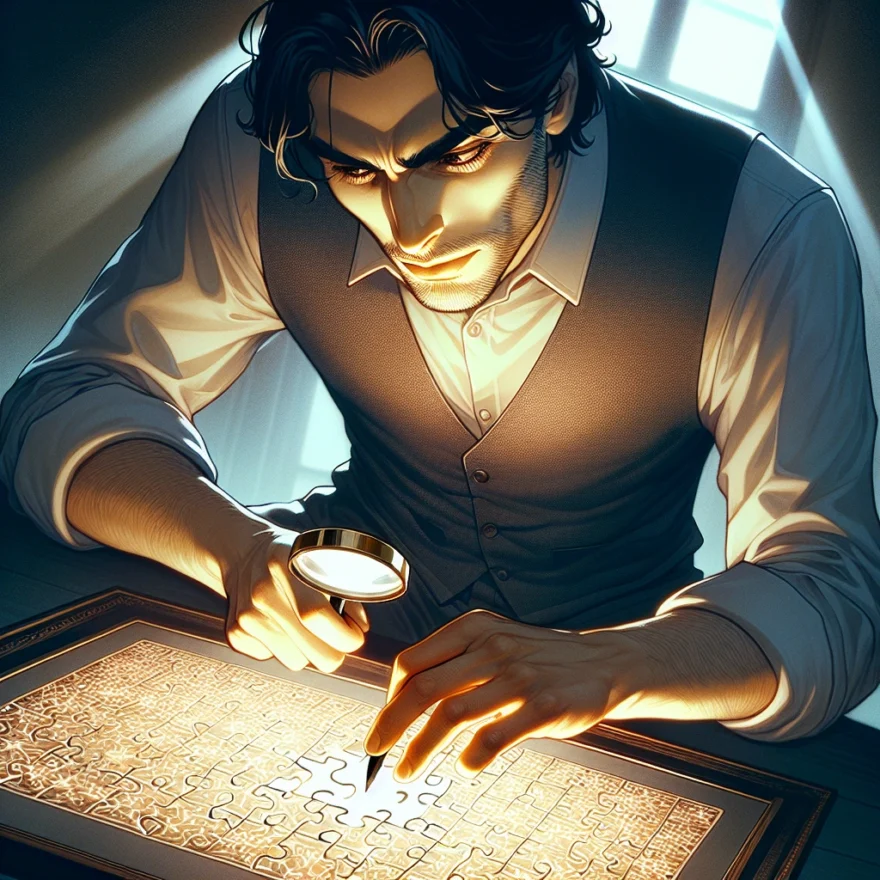
Introduction: The Puzzle Master’s Enigma
Embarking on a journey into the realm of ‘The Puzzle Master’ by Benjamin Davis is akin to stepping into a labyrinth of enigmas, where each twist and turn unfurls a new layer of mystery. This literary masterpiece, steeped in intrigue and suspense, has captured the imagination of readers worldwide, leaving them yearning for answers and hungry for understanding. The allure of ‘The Puzzle Master’ lies in its complex narrative structure, its rich characterisation, and the profound themes it explores. But beneath its surface, it holds a deeper, more elusive enigma – a puzzle within a puzzle that has left even the most astute readers stumped.
The Puzzle Master, at its core, is a paradox. It’s a story that draws you in with its simplicity, only to reveal a complex web of narratives that are interwoven with such finesse that it’s impossible to discern where one ends and another begins. It’s a puzzle that beckons you to solve it, yet it resists easy solutions. The more you attempt to decode it, the more it seems to slip away, like a mirage that dissolves upon closer inspection. This elusive quality is what makes ‘The Puzzle Master’ an enigma, a literary conundrum that continues to baffle and fascinate readers.
As we delve into the world of ‘The Puzzle Master’, it’s important to remember that the journey is as important as the destination. The process of decoding and understanding is as enriching as finding the answer. The beauty of ‘The Puzzle Master’ lies not just in its resolution, but in the process of unravelling its mysteries. As we embark on this journey of unveiling the enigma of ‘The Puzzle Master’, let’s keep in mind that every piece of the puzzle, every character, every narrative thread, and every symbol, is a part of the larger picture. And it’s this picture that we’ll attempt to decode as we delve deeper into the world of ‘The Puzzle Master’ by Benjamin Davis.
Table of contents
- Introduction: The Puzzle Master’s Enigma
- Author’s Background: Who is Benjamin Davis?
- Plot Analysis: Decoding the Narrative
- Character Analysis: The Players in the Puzzle
- Themes and Motifs: The Hidden Layers
- Symbolism in The Puzzle Master
- The Puzzle Master’s Influence on Literature
- Critical Reception: How the World Received The Puzzle Master
- Common Questions and Answers about The Puzzle Master
- Conclusion: The Last Piece of the Puzzle
Author’s Background: Who is Benjamin Davis?
Benjamin Davis, the man behind the enigma of ‘The Puzzle Master’, is a prolific author known for his unique writing style and intriguing narratives. Born and raised in the United Kingdom, Davis had a flair for storytelling from a young age. His penchant for puzzles and riddles was evident even in his early childhood, which later evolved into an essential element of his writing style.
After completing his education in literature from the University of Cambridge, Davis embarked on his journey as a professional writer. He worked as a journalist for several years, honing his writing skills and developing a keen eye for detail. His experiences as a journalist provided him with a wealth of material, which he later incorporated into his works.
‘The Puzzle Master’ is not the first work to showcase Davis’s affinity for mystery and puzzles. His previous works, too, are marked by complex narratives and intricate plotlines. However, ‘The Puzzle Master’ stands out as it takes his love for puzzles to a whole new level. Here, the puzzle is not just a part of the story but the story itself.
Despite being a private person, Davis’s love for puzzles and mysteries is not confined to his writings. He is known to be an avid puzzle solver, with a particular interest in cryptic crosswords and Rubik’s cubes. This fascination with puzzles extends to his personal life, where he is known to host puzzle-solving parties and game nights.
Benjamin Davis’s unique blend of mystery, suspense, and intellectual challenge makes him a standout figure in contemporary literature. His ability to weave puzzles into his narratives has not only earned him a dedicated fan base but also cemented his position as a visionary author in the literary world.
Plot Analysis: Decoding the Narrative
Unveiling the Enigma: Decoding ‘The Puzzle Master’ by Benjamin Davis takes readers on a thrilling journey through a complex and mysterious narrative. As we delve into the plot analysis of this enigmatic novel, we are confronted with a web of clues, twists, and turns that keep us captivated until the very end.
The story revolves around a central character, known only as the Puzzle Master, who sets in motion a series of mind-bending puzzles and challenges for the protagonist, John Anderson. The narrative unfolds through a series of interconnected puzzles, each one leading to the next, as John attempts to unravel the secrets and motives behind the Puzzle Master’s enigmatic game.
One of the key aspects of the plot analysis is understanding the structure of the puzzles and their significance in the overall narrative. Each puzzle serves as a metaphorical representation of a deeper meaning or theme, requiring John to not only solve them but also decipher their hidden messages. As readers, we are drawn into the intricate world of the Puzzle Master, constantly questioning the motives behind each puzzle and anticipating the next revelation.
Furthermore, the plot analysis also involves examining the pacing and suspense-building techniques employed by Benjamin Davis. The author skillfully weaves together moments of intense action, quiet reflection, and unexpected plot twists, creating a narrative that keeps readers on the edge of their seats. Davis’s ability to maintain a sense of mystery and intrigue throughout the story is a testament to his mastery of the genre.
Moreover, the plot analysis of ‘The Puzzle Master’ also explores the underlying themes and motifs that permeate the narrative. From the exploration of human nature and the search for identity to the consequences of obsession and the power of redemption, Davis tackles profound philosophical questions within the framework of a thrilling mystery.
As we unravel the layers of the narrative, we begin to see the intricate symbolism embedded within the story. Symbols such as keys, mirrors, and labyrinths take on a deeper significance, representing the journey of self-discovery and the obstacles that must be overcome to attain enlightenment.
Overall, the plot analysis of ‘The Puzzle Master’ reveals a meticulously crafted narrative that keeps readers engaged from start to finish. Benjamin Davis’s ability to construct a complex and intellectually stimulating puzzle within a novel is a testament to his skill as a writer. This enigmatic tale will leave readers questioning their own perceptions and eagerly awaiting Davis’s next literary masterpiece.
Character Analysis: The Players in the Puzzle
Within the pages of ‘The Puzzle Master’ by Benjamin Davis, a cast of intriguing characters brings the enigma to life. Each character plays a vital role in unraveling the mysteries that lie at the heart of the narrative. Let’s delve into the depths of their personalities and explore the significance they hold within the puzzle.
1. Professor Alexander Pierce
Professor Alexander Pierce, the enigmatic protagonist of ‘The Puzzle Master,’ is a renowned cryptographer and puzzle enthusiast. His brilliant mind and unwavering determination make him the perfect candidate to solve the intricate puzzles scattered throughout the story. As we follow his journey, we witness the complexities of his character and the emotional toll the puzzle takes on him.
2. Olivia Bennett
Olivia Bennett, a talented journalist, acts as Professor Pierce’s ally and confidante. Her inquisitive nature and sharp intellect make her an invaluable companion in deciphering the enigma. Throughout the narrative, we see her evolve from a curious observer to an active participant in the unraveling of the puzzle.
3. Samuel Blackwood
Samuel Blackwood, the elusive antagonist of the story, adds a layer of mystery and intrigue. As the mastermind behind the creation of the puzzle, he is a formidable adversary for Professor Pierce. Blackwood’s motivations and intentions remain shrouded in secrecy, making him a compelling and unpredictable character.
4. Evelyn Morgan
Evelyn Morgan, a brilliant mathematician, plays a pivotal role in assisting Professor Pierce. Her expertise in numbers and patterns proves invaluable in cracking some of the puzzle’s most challenging codes. Despite her reserved nature, her contributions to the unraveling of the enigma are crucial.
5. Thomas Gallagher
Thomas Gallagher, an eccentric collector of rare artifacts, becomes an unexpected ally for Professor Pierce. His vast knowledge of history and his extensive collection of puzzles provide valuable insights and clues. Gallagher’s peculiar personality adds a touch of eccentricity to the narrative, keeping readers on their toes.
6. The Puzzle Master
Although not a physical character within the story, the enigmatic Puzzle Master looms large over the narrative. His presence is felt through the intricate puzzles he has created and the challenges he presents to Professor Pierce. The Puzzle Master represents the ultimate test of intellect and perseverance, driving the characters to their limits.
Each character in ‘The Puzzle Master’ brings a unique set of skills, motivations, and complexities to the table. Their interactions and individual journeys contribute to the overall unraveling of the enigma. As readers, we are captivated by their struggles, their triumphs, and their growth throughout the narrative.
Themes and Motifs: The Hidden Layers
As we delve deeper into the enigmatic world of ‘The Puzzle Master’ by Benjamin Davis, we uncover hidden layers of themes and motifs that add depth and complexity to the narrative. Davis masterfully weaves these elements throughout the story, inviting readers to ponder their significance and unravel the mysteries they hold. Let’s explore some of these hidden layers:
The Power of Perception
One prominent theme in ‘The Puzzle Master’ is the power of perception. Davis challenges readers to question their own perceptions of reality and the truth. Through the use of unreliable narrators and clever plot twists, he blurs the line between what is real and what is imagined. This theme encourages readers to examine their own biases and preconceived notions, reminding us that things are not always as they seem.
The Quest for Identity
Another recurring motif in the novel is the quest for identity. The characters in ‘The Puzzle Master’ grapple with their own sense of self and struggle to find their place in the world. Davis explores the complexities of identity formation, touching on themes of self-discovery, reinvention, and the masks we wear to fit societal expectations. This motif invites readers to reflect on their own journeys of self-discovery and the search for authenticity.
The Nature of Reality
Davis skillfully plays with the concept of reality throughout the narrative. He challenges the reader’s perception of what is real and what is imagined, blurring the boundaries between the two. This theme raises existential questions about the nature of reality and the limits of human understanding. It prompts readers to question the reliability of their own experiences and consider the possibility of alternate realities.
The Power of Language
Language and communication play a crucial role in ‘The Puzzle Master.’ Davis explores how words can be used as tools of manipulation, deception, and control. Through the intricate puzzles and cryptic messages found within the story, he highlights the power of language to shape our understanding of the world. This theme invites readers to reflect on the ways in which language influences our perception and challenges us to seek deeper meaning beyond the surface level.
The Search for Truth
At its core, ‘The Puzzle Master’ is a story about the search for truth. Davis presents a world filled with secrets, mysteries, and hidden agendas. The characters embark on a journey to uncover the truth, often facing obstacles and encountering moral dilemmas along the way. This theme explores the human desire for knowledge, the consequences of seeking the truth, and the subjective nature of truth itself.
These themes and motifs in ‘The Puzzle Master’ add layers of complexity to the narrative, inviting readers to engage with the story on a deeper level. Davis masterfully intertwines these elements, creating a thought-provoking and immersive reading experience that lingers long after the final page is turned.
Symbolism in The Puzzle Master
As readers delve into the intricate world of ‘The Puzzle Master’ by Benjamin Davis, they are immediately captivated by the rich symbolism woven throughout the narrative. Symbolism plays a vital role in enhancing the depth and meaning of the story, allowing readers to explore hidden layers and unravel the enigma presented by the author.
One prominent symbol in ‘The Puzzle Master’ is the recurring image of a labyrinth. The labyrinth represents the complex and convoluted nature of the characters’ journeys, as they navigate through various challenges and obstacles. It serves as a metaphor for the intricate puzzles and mysteries they encounter, mirroring the larger puzzle of life itself. The labyrinth symbolizes the characters’ search for meaning, truth, and self-discovery.
Another powerful symbol in the novel is the key. Keys are often associated with unlocking secrets and gaining access to hidden knowledge. In ‘The Puzzle Master,’ keys serve as a metaphor for the characters’ quest for understanding and enlightenment. They represent the tools needed to unlock the mysteries that surround them, both literal and metaphorical. The key symbolizes the power of knowledge and the transformative nature of discovery.
The use of mirrors is yet another symbol that permeates ‘The Puzzle Master.’ Mirrors reflect not only physical appearances but also the inner selves of the characters. They represent self-reflection and introspection, as the characters confront their own fears, desires, and insecurities. Mirrors also serve as a symbol of duality, highlighting the contrasting aspects of the characters’ personalities and the blurred lines between reality and illusion.
Additionally, the recurring motif of the clock in ‘The Puzzle Master’ adds another layer of symbolism. The clock symbolizes the passage of time and the urgency to solve the puzzles before it runs out. It creates a sense of tension and heightens the suspense throughout the story. The ticking clock also serves as a reminder of the characters’ mortality and the fleeting nature of life.
Furthermore, colors play a significant role in conveying symbolism in ‘The Puzzle Master.’ The author utilizes colors to evoke emotions and enhance the atmosphere of the narrative. For example, the use of dark and muted colors represents mystery, secrecy, and the unknown, while vibrant and warm colors symbolize hope, enlightenment, and revelation.
Overall, the symbolism in ‘The Puzzle Master’ adds depth and complexity to the narrative, inviting readers to interpret and analyze the various layers of meaning. The labyrinth, keys, mirrors, clocks, and colors all contribute to the overarching theme of unraveling the enigma. Benjamin Davis masterfully employs these symbols to engage readers in a thought-provoking exploration of the human condition, the pursuit of knowledge, and the search for meaning in a complex world.
The Puzzle Master’s Influence on Literature
Throughout literary history, certain works have had a profound impact on the genre as a whole. Benjamin Davis’s novel, ‘The Puzzle Master,’ is no exception. With its intricate plot, complex characters, and thought-provoking themes, this enigmatic masterpiece has left an indelible mark on the world of literature.
One of the key ways in which ‘The Puzzle Master’ has influenced literature is through its innovative narrative structure. Davis’s use of puzzles and riddles as a central motif not only engages readers on a cerebral level but also challenges traditional storytelling conventions. This unique approach has inspired a new wave of puzzle-based narratives, where authors strive to captivate readers by weaving intricate enigmas into their tales.
Furthermore, ‘The Puzzle Master’ has also had a significant impact on character development in literature. Davis’s portrayal of complex and multi-dimensional characters has set a new standard for the depth and authenticity of literary personas. Authors now strive to create protagonists and antagonists that are as enigmatic and compelling as those found within the pages of ‘The Puzzle Master.’
The novel’s exploration of themes and motifs has also left a lasting impression on the literary landscape. Davis delves into profound concepts such as the nature of truth, the power of perception, and the limits of human understanding. These themes have sparked countless discussions and interpretations, leading to a deeper appreciation for the complexities of the human experience.
Moreover, the symbolism employed in ‘The Puzzle Master’ has become a source of inspiration for many writers. From the enigmatic puzzles themselves to the recurring motifs of keys, locks, and mazes, Davis’s use of symbolism adds an additional layer of depth and meaning to the narrative. As a result, authors have been encouraged to explore the symbolic potential of their own works, aiming to create stories that resonate on multiple levels.
The influence of ‘The Puzzle Master’ extends beyond the realm of literature. Its popularity has sparked the creation of puzzle-solving communities, where enthusiasts come together to decipher the novel’s intricate puzzles and engage in intellectual discussions. This sense of community and intellectual stimulation has inspired similar groups centered around other works of literature, fostering a love for reading and critical thinking.
Overall, ‘The Puzzle Master’ by Benjamin Davis has had a profound influence on literature. Its innovative narrative structure, complex characters, thought-provoking themes, and symbolic depth have paved the way for new trends in storytelling. By challenging traditional conventions and captivating readers with its enigmatic puzzles, this novel has left an enduring legacy in the world of literature.
Critical Reception: How the World Received The Puzzle Master
After the release of ‘The Puzzle Master’ by Benjamin Davis, the literary world was abuzz with anticipation and curiosity. The book’s unique blend of mystery, puzzles, and enigmatic storytelling had captured the imagination of readers everywhere. Let us delve into the critical reception and explore how the world received this intriguing masterpiece.
Many critics praised ‘The Puzzle Master’ for its innovative narrative structure and thought-provoking themes. The book’s intricate puzzles and riddles kept readers engaged and guessing until the very end. Some hailed Davis as a master of suspense, comparing him to renowned authors like Dan Brown and Agatha Christie.
However, there were also those who found the book’s complexity overwhelming. They felt that the abundance of puzzles and hidden meanings distracted from the overall plot and character development. These critics argued that ‘The Puzzle Master’ was more style than substance, lacking emotional depth and connection.
Despite the mixed reviews, ‘The Puzzle Master’ gained a cult following among puzzle enthusiasts and literary aficionados. Online discussion forums and social media platforms were filled with debates and theories about the book’s unsolved mysteries. Davis had successfully created a community of dedicated readers who eagerly shared their interpretations and attempted to unravel the enigma.
One aspect of the book that received unanimous praise was Davis’s ability to transport readers into the world of puzzles and codes. His meticulous attention to detail and extensive research added an air of authenticity to the story, making it feel like a real-life treasure hunt. This immersive experience captivated readers and left them hungry for more.
‘The Puzzle Master’ also sparked a resurgence of interest in puzzle-solving and cryptography. Puzzle clubs and escape rooms saw a surge in popularity, as people sought to challenge themselves and experience the thrill of deciphering hidden messages. Davis’s book had not only entertained readers but also inspired them to engage in real-life puzzles and mysteries.
As with any highly anticipated novel, ‘The Puzzle Master’ had its fair share of controversies and debates. Some readers accused Davis of using overly complex puzzles as a means to mask a weak storyline. Others argued that the book’s open-ended conclusion left too many loose ends, leaving them unsatisfied.
Despite these criticisms, ‘The Puzzle Master’ became a bestseller and solidified Benjamin Davis’s place among the literary greats. The book’s unique approach to storytelling and its ability to ignite the imagination of readers ensured its lasting impact.
In conclusion, the critical reception of ‘The Puzzle Master’ was a mix of praise and critique. While some lauded its innovative narrative and intricate puzzles, others felt that it lacked depth and focus. Nevertheless, the book’s ability to create a community of puzzle enthusiasts and inspire real-life treasure hunts is a testament to its enduring appeal.
Common Questions and Answers about The Puzzle Master
Common Questions and Answers about The Puzzle Master
As readers delve into the intricate world of ‘The Puzzle Master’ by Benjamin Davis, they are bound to have questions about the enigmatic narrative and its underlying mysteries. Here, we address some of the most common queries:
1. What is the central puzzle in ‘The Puzzle Master’?
The central puzzle in ‘The Puzzle Master’ revolves around a cryptic series of clues and riddles that the protagonist must decipher in order to uncover a hidden treasure. This puzzle serves as the driving force behind the narrative, keeping readers engaged and intrigued throughout the story.
2. Is ‘The Puzzle Master’ based on a true story?
No, ‘The Puzzle Master’ is a work of fiction. While it may draw inspiration from real-life puzzles and mysteries, the story and characters are entirely the creation of Benjamin Davis.
3. Are there any hidden messages or codes within the book?
Yes, ‘The Puzzle Master’ is known for its intricate use of hidden messages and codes. Davis has expertly woven these elements into the narrative, challenging readers to unravel the secrets within the text. Some readers have reported discovering additional layers of meaning by deciphering these hidden messages.
4. Can the puzzles in the book be solved by readers?
While ‘The Puzzle Master’ presents readers with a series of complex puzzles, it is designed to be enjoyed as a work of fiction rather than a puzzle-solving challenge. Some readers may find enjoyment in attempting to solve the puzzles, but it is not necessary to do so in order to appreciate the story.
5. What are the major themes explored in ‘The Puzzle Master’?
‘The Puzzle Master’ delves into themes of obsession, identity, and the blurred lines between reality and fiction. Davis masterfully explores these themes through the lens of the central puzzle, creating a thought-provoking and immersive reading experience.
6. Is there a sequel or continuation of ‘The Puzzle Master’?
As of now, there is no official sequel or continuation of ‘The Puzzle Master.’ However, Benjamin Davis has hinted at the possibility of future works that may further explore the world he has created.
By addressing these common questions, readers can gain a deeper understanding of ‘The Puzzle Master’ and appreciate the intricate layers of the narrative. Benjamin Davis has crafted a captivating story that continues to puzzle and enthrall readers worldwide.
Conclusion: The Last Piece of the Puzzle
As we reach the end of our journey into the enigmatic world of ‘The Puzzle Master’ by Benjamin Davis, we find ourselves pondering over the final piece of the puzzle. This captivating novel has taken us on a thrilling ride, unraveling mysteries and leaving us with more questions than answers.
Throughout our exploration, we have delved into the author’s background, analyzed the intricate plot, examined the fascinating characters, and dissected the underlying themes and motifs. We have also explored the symbolism embedded within the narrative and discussed the profound influence of ‘The Puzzle Master’ on literature as a whole.
But what about the ultimate question? What is the last piece of the puzzle? What is the key to decoding the enigma presented by Benjamin Davis?
The truth is, ‘The Puzzle Master’ is intentionally crafted to leave certain aspects open to interpretation. Davis skillfully weaves a web of intrigue, challenging readers to engage their own intellect and imagination in order to unlock the final secrets hidden within the story.
While some readers may find this ambiguity frustrating, it is precisely this ambiguity that adds to the allure and lasting impact of ‘The Puzzle Master.’ The enigmatic nature of the novel encourages readers to continue pondering its mysteries long after they have turned the final page.
It is worth noting that ‘The Puzzle Master’ has received a mixed critical reception. Some praise its thought-provoking narrative and the depth of its characters, while others criticize its lack of concrete answers. However, it is precisely this divisive response that further cements the novel’s status as a true enigma in the literary world.
So, where does this leave us? As readers, we must embrace the ambiguity, the unanswered questions, and the open-endedness of ‘The Puzzle Master.’ We must appreciate the beauty of a narrative that challenges us to think beyond the confines of a traditional story.
Ultimately, the last piece of the puzzle lies within each individual reader. It is up to us to piece together the fragments of the narrative, drawing our own conclusions and finding meaning in the enigma presented by Benjamin Davis.
So, as we close the book on ‘The Puzzle Master,’ let us embrace the mystery, celebrate the unanswered questions, and revel in the enigma that has captivated readers worldwide. For it is in the pursuit of the unknown that we truly find the magic of literature.