The Intrigue of the Jazz Age
As the 1920s dawned in America, a new era of prosperity, cultural dynamism, and social change swept across the nation. This period, known as the Jazz Age, was a time of tremendous growth and transformation. The economy was booming, the arts were flourishing, and societal norms were being challenged and reshaped. Yet, beneath the surface of this glittering epoch, a dark underbelly thrived. Prohibition, the nationwide constitutional ban on the production, importation, transportation, and sale of alcoholic beverages, had taken effect in 1920. While it was intended to curb the social problems associated with alcohol, it instead led to the rise of illegal speakeasies and a booming black market for liquor.
It was during this era of flappers and speakeasies, of jazz and bootleggers, that the story of the Ghosts of Eden Park unfolds. This tale of murder, betrayal, and high-stakes court drama took place in Cincinnati, a city that, at the time, was one of the largest and wealthiest in America. The city was a hub of the bootlegging industry, with its close proximity to the Ohio River making it an ideal location for the illicit trade. Amid this backdrop of wealth and corruption, one man would rise to become the most powerful bootlegger in the nation, and his downfall would captivate the nation and leave a haunting legacy that lingers to this day.
Yet, the Jazz Age was more than just a backdrop for this story. It was a time that shaped the characters, the events, and the outcome of this tale. From the flapper fashion of Imogene Remus to the high-flying lifestyle of George Remus, the Jazz Age left its indelible mark on the Ghosts of Eden Park. It was a time of excess and recklessness, of ambition and desire, and these elements are woven throughout the story, adding to its intrigue and allure.
As we delve into the story of the Ghosts of Eden Park, we will explore not only the events themselves but also the era in which they took place. The Jazz Age, with all its glamour and grit, is as much a character in this story as George and Imogene Remus. It was an era that shaped the world and the people in it, and its influence can be seen in the events that unfolded in Eden Park.
Table of contents
The Ghosts of Eden Park: An Overview
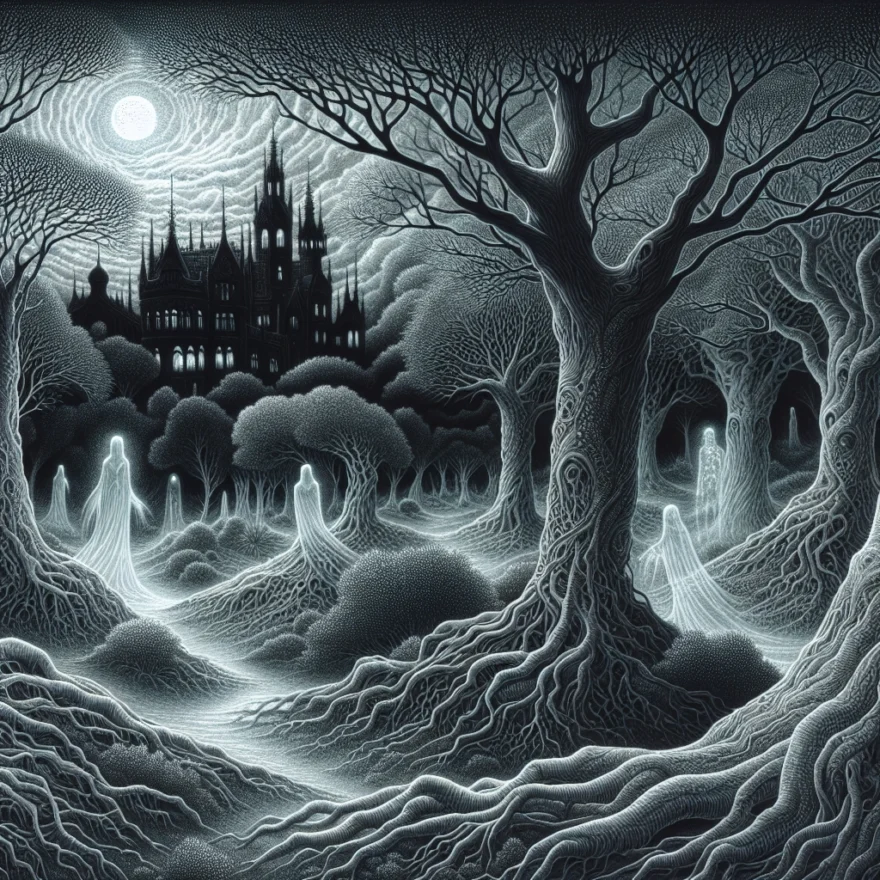
Eden Park, located in Cincinnati, Ohio, is a place of tranquility and beauty by day. Its lush greenery, serene Mirror Lake, and stunning views of the Ohio River Valley draw visitors from near and far. But as dusk falls, a different, more chilling atmosphere takes over. Whispered tales of spectral figures, eerie sounds, and unexplained phenomena have long been associated with the park, earning it a reputation as one of the city’s most haunted locales. The ghosts said to haunt this park are not just any spirits; they are remnants of a turbulent era marked by prohibition, wealth, crime, and tragedy.
At the heart of these ghostly tales is the story of George Remus, a prominent bootlegger during the Prohibition era, and his wife Imogene. The couple lived in a magnificent mansion near Eden Park, which was the epicenter of their extravagant lifestyle and scandalous affairs. George Remus, once a successful lawyer, had found a more lucrative business in bootlegging. His empire grew so vast that he was dubbed the ‘King of the Bootleggers.’ However, his reign was not without its trials and tribulations, many of which revolved around his tumultuous relationship with his wife, Imogene.
Imogene Remus, a woman of beauty and charisma, was as enigmatic as she was captivating. Her life, filled with luxury, infidelity, and ultimately, a tragic end, is deeply intertwined with the hauntings of Eden Park. Her untimely death at the hands of her husband in the park on a cool October morning in 1927 is the pinnacle of this chilling tale.
The story of the Remus couple, filled with greed, betrayal, and murder, has left an indelible mark on Eden Park. Visitors and locals alike report sightings of a ghostly woman in 1920s attire near the gazebo and the spring house, believed to be the spirit of Imogene. Others recount hearing phantom gunshots or splashes in Mirror Lake, echoing the fateful events of that October morning.
These stories, while fascinating, are just the tip of the iceberg. The mystery of the Ghosts of Eden Park is a deep, intricate web of historical facts, speculation, and paranormal claims. To truly understand it, we must delve into the lives of the key players, the era they lived in, and the events that led to their downfall.
George Remus: The King of the Bootleggers
The Jazz Age was a time of excitement, glamour, and excess. It was an era marked by the emergence of new music, vibrant fashion, and a spirit of rebellion against the constraints of the past. But amidst the glitz and glamour, there was a darker side lurking beneath the surface – the world of organized crime and bootlegging.
One of the most prominent figures of this underworld was George Remus, a man who would come to be known as the “King of the Bootleggers.” Born in Germany in 1876, Remus immigrated to the United States and eventually settled in Cincinnati, Ohio. It was here that he would build his empire and become one of the most powerful and notorious figures of the Prohibition era.
Remus, a former pharmacist turned lawyer, saw an opportunity to capitalize on the prohibition of alcohol in the United States. He quickly recognized that there was a huge demand for alcohol, and he was determined to meet that demand. Through a combination of cunning, resourcefulness, and a willingness to bend or break the law, Remus built a vast bootlegging operation that spanned multiple states.
Remus was known for his extravagant lifestyle, which included lavish parties, expensive cars, and opulent mansions. He flaunted his wealth and power, becoming a symbol of defiance against the government and the temperance movement. His empire grew rapidly, and he soon controlled a significant portion of the illegal alcohol trade in the Midwest.
But Remus’s reign as the “King of the Bootleggers” would not last forever. In 1922, he caught the attention of federal agents who were determined to bring him down. They embarked on an extensive investigation, gathering evidence of Remus’s illegal activities and building a case against him.
Finally, in 1925, Remus was arrested and charged with violating the Volstead Act, which enforced the prohibition of alcohol. The trial that followed would become one of the most sensational and widely publicized trials of the time, earning the title of the “Trial of the Century.”
Remus’s trial was a spectacle, with the media covering every detail and the public captivated by the drama unfolding in the courtroom. Despite mounting evidence against him, Remus chose to represent himself and put on a show for the jury. He cross-examined witnesses, delivered impassioned speeches, and even managed to have his estranged wife, Imogene, take the stand.
Ultimately, Remus’s efforts to defend himself proved unsuccessful. He was found guilty and sentenced to serve time in prison. However, his story did not end there. While in prison, Remus hatched a plan to escape and seek revenge against his former associate, Franklin Dodge, whom he believed had betrayed him.
Remus’s escape attempt was unsuccessful, and he was ultimately released from prison in 1927. However, his life after prison was far from glamorous. He lived in relative obscurity, and his once vast fortune had dwindled away.
The story of George Remus, the “King of the Bootleggers,” is a captivating tale of wealth, power, and downfall. It offers a glimpse into the dark underbelly of the Jazz Age and the lengths that some were willing to go to defy the law. The ghosts of Eden Park still whisper his name, a haunting reminder of a bygone era.
The Scandalous Affair
The Jazz Age was a time of glamour, excess, and secret indulgences. It was an era that captivated the imagination of the American public, as people sought to escape the realities of post-war life. One of the most intriguing stories from this era is the tale of the Ghosts of Eden Park.
At the heart of this story is George Remus, a charismatic and wealthy lawyer turned bootlegger. During Prohibition, Remus became known as the King of the Bootleggers, amassing a fortune through his illegal activities. He lived a lavish lifestyle, throwing extravagant parties and rubbing shoulders with the elite of society.
But it was Remus’ scandalous affair that truly captured the public’s attention. He met and fell in love with a beautiful showgirl named Imogene, who became his second wife. Imogene was young, vibrant, and captured the hearts of many men, including Remus’ own business partner, Franklin Dodge.
The affair between Imogene and Dodge was a closely guarded secret, but rumors began to circulate within the circles of the wealthy and powerful. Remus, ever the astute businessman, suspected that something was amiss and hired private detectives to follow his wife.
What the detectives uncovered was a shocking revelation. They discovered that Imogene and Dodge were not only involved romantically, but they were also conspiring to betray Remus and take control of his empire. The affair had turned into a plot to bring down the King of the Bootleggers.
Remus, consumed by rage and betrayal, decided to take matters into his own hands. On a fateful day in October 1927, he confronted Imogene and Dodge at their Cincinnati home. In a fit of rage, Remus shot Imogene in cold blood, ending her life and forever altering the course of his own.
The murder of Imogene Remus sent shockwaves through the nation. It became known as the Crime of the Century, captivating the public’s attention and dominating newspaper headlines. The trial that followed was a spectacle, with Remus defending himself in court and captivating the jury with his theatrical antics.
In the end, Remus was found guilty of murder and sentenced to life in prison. However, his story doesn’t end there. From behind bars, he continued to manipulate and scheme, eventually securing his release after serving only a few years of his sentence.
The scandalous affair and murder of Imogene Remus remains a haunting tale from the Jazz Age. It serves as a reminder of the dark underbelly of the Roaring Twenties, where wealth, power, and desire could lead to deadly consequences. The Ghosts of Eden Park continue to linger in the shadows, reminding us of the secrets and mysteries that lie beneath the surface of our glamorous past.
The Murder of Imogene Remus
As we delve deeper into the enigmatic world of “The Ghosts of Eden Park,” one event that stands out is the tragic murder of Imogene Remus. Imogene, the wife of notorious bootlegger George Remus, met a gruesome fate that would send shockwaves through the Jazz Age society.
Imogene Remus was a woman of beauty and charm, known for her extravagant lifestyle and lavish parties. She was often seen at the side of her husband, George Remus, who had established himself as the “King of the Bootleggers” during the Prohibition era.
The Remus’ marriage, however, was far from picture-perfect. Imogene had become entangled in a scandalous affair with a local prosecutor, Franklin Dodge. The affair was an open secret within their social circle, adding fuel to the already intense drama surrounding the Remus empire.
On the fateful night of October 6, 1927, Imogene’s life came to a tragic end. George, suspecting his wife’s infidelity, confronted her at their lavish Cincinnati estate. In a fit of rage and jealousy, he shot Imogene multiple times, ending her life in a horrifying act of violence.
The murder sent shockwaves through the city, and the trial that followed would captivate the nation. George Remus, the man who had built an empire on illegal alcohol, now stood accused of the murder of his own wife.
The trial of George Remus became known as the “Trial of the Century.” It was a sensational affair, with the media and public eagerly following every twist and turn of the case. The courtroom was filled with high-profile lawyers, witnesses, and spectators, all eager to witness the downfall of the infamous bootlegger.
Despite the overwhelming evidence against him, George Remus mounted an audacious defense, claiming temporary insanity at the time of the murder. His lawyers argued that his mind had been driven to madness by the betrayal of his wife and the pressures of his illegal empire.
The trial lasted for weeks, with the jury deliberating for just over four hours before reaching a verdict. In a stunning turn of events, George Remus was acquitted of the murder of Imogene Remus. The jury believed his defense of temporary insanity, and he walked away a free man.
The aftermath of the trial was filled with controversy and speculation. Some believed that George Remus had orchestrated the entire affair, using his connections and wealth to manipulate the jury. Others saw it as a triumph of justice, a testament to the power of the legal system.
Regardless of the verdict, the murder of Imogene Remus remains one of the most haunting and mysterious chapters in the story of “The Ghosts of Eden Park.” It serves as a stark reminder of the dark side of the Jazz Age, a time of excess, scandal, and tragedy.
The Trial of the Century
As the scandalous affair surrounding George Remus and Imogene Remus unfolded, it quickly became clear that the trial would be nothing short of extraordinary. Dubbed as the “Trial of the Century,” it captivated the nation and dominated headlines during the Jazz Age.
The trial took place in Cincinnati, Ohio, in the year 1922. The courtroom was packed with spectators, reporters, and curious onlookers eager to witness the legal battle that would determine the fate of George Remus.
The prosecution argued that Remus had meticulously planned and executed the murder of his wife’s lover, Frank Gibbons, in a fit of jealousy. The defense, on the other hand, painted Remus as a victim of circumstance, driven to desperate measures due to his wife’s infidelity and the pressures of Prohibition.
Throughout the trial, the courtroom was filled with dramatic testimonies, shocking revelations, and intense cross-examinations. Witnesses were called to testify about Remus’ behavior leading up to the murder, his relationship with Imogene, and his involvement in bootlegging.
One of the most memorable moments of the trial came when Remus took the stand in his own defense. His charismatic and persuasive demeanor captivated the jury and the audience alike. Remus claimed that he had acted in self-defense, fearing for his own life when he shot Gibbons.
The trial also shed light on the corrupt practices of law enforcement and government officials during the Prohibition era. Remus alleged that he had been working closely with federal agents and politicians, who turned a blind eye to his bootlegging activities in exchange for bribes.
After weeks of intense courtroom battles, the trial reached its climax with the closing arguments. The prosecution painted Remus as a cold-blooded killer, while the defense argued that he was a victim of circumstance.
Ultimately, the jury delivered their verdict, finding George Remus guilty of second-degree murder. He was sentenced to serve a 20-year prison term.
The trial of George Remus became a symbol of the excesses and contradictions of the Jazz Age. It revealed the dark underbelly of the Roaring Twenties, where wealth, power, and corruption coexisted with prohibition and moral righteousness.
Despite his conviction, Remus’ story did not end with the trial. He would go on to make headlines once again, escaping from prison and leading a life of intrigue and mystery.
The Verdict and Aftermath
After a sensational trial that captivated the nation, the verdict was finally reached in the case of George Remus. On October 18, 1927, the jury found Remus guilty of second-degree murder for the killing of his wife, Imogene. The courtroom erupted in a mix of shock and relief as the long-awaited decision was announced.
The guilty verdict marked the end of a dramatic chapter in the history of the Jazz Age. Remus, once known as the “King of the Bootleggers,” had fallen from grace in a spectacular fashion. His empire of illegal alcohol had crumbled, and now he faced the consequences for his actions.
The aftermath of the trial was filled with both triumph and tragedy. Remus was sentenced to serve a term of 20 years in the Ohio State Penitentiary. However, his story did not end there. Despite being behind bars, Remus continued to make headlines.
During his time in prison, Remus managed to maintain a certain level of notoriety. He became known for his legal maneuverings and attempts to secure his release. He filed numerous appeals, claiming that he had been unfairly convicted. However, all of his efforts proved unsuccessful, and he remained incarcerated.
While Remus languished in prison, the Jazz Age began to fade away. The roaring parties and extravagant lifestyles of the 1920s gave way to the economic hardships of the Great Depression. The era of Prohibition came to an end, and the illicit activities that had once defined Remus’ empire became a distant memory.
Remus was eventually released from prison in 1932, after serving only six years of his 20-year sentence. His release was granted on the grounds of his failing health. However, his newfound freedom did not bring him the happiness he had hoped for.
After his release, Remus attempted to rebuild his life, but he struggled to regain his former wealth and influence. He made several unsuccessful attempts to reenter the bootlegging business, but the landscape had changed, and he could not recapture his former glory.
Remus lived out the rest of his days in relative obscurity. He passed away on January 20, 1952, at the age of 77. His story, once the talk of the nation, faded into the annals of history.
Today, the legacy of George Remus and the ghosts of Eden Park continue to intrigue and captivate. The tale of Remus’ rise and fall, the scandalous affair, and the murder of Imogene Remus, all set against the backdrop of the Jazz Age, is a testament to the allure and dark underbelly of a bygone era.
While the ghosts of Eden Park may linger in the shadows, their story serves as a reminder of the complexities of human nature and the enduring fascination with tales of mystery and intrigue.
Common Questions about The Ghosts of Eden Park
As the story of The Ghosts of Eden Park captivates readers, it’s only natural for questions to arise. Here, we address some of the most common questions surrounding this intriguing mystery:
1. What is The Ghosts of Eden Park?
The Ghosts of Eden Park is a book written by Karen Abbott that delves into the fascinating and scandalous events that unfolded during the Jazz Age in Cincinnati, Ohio. The book focuses on the life of George Remus, a notorious bootlegger, and the murder of his wife, Imogene Remus.
2. Who was George Remus?
George Remus was a prominent figure during the Prohibition era in the 1920s. He was known as the “King of the Bootleggers” and amassed a fortune through his illegal alcohol trade. His extravagant lifestyle and flamboyant personality made him a captivating character of the time.
3. What was the scandalous affair mentioned?
The scandalous affair refers to the romantic relationship between George Remus’ wife, Imogene, and a Prohibition agent named Franklin Dodge. Their affair became public knowledge and added fuel to the already fiery story surrounding Remus and his empire.
4. What happened to Imogene Remus?
Imogene Remus was tragically murdered by her husband, George Remus, in a fit of jealousy. This shocking event sent shockwaves through the community and led to one of the most sensational trials of the time.
5. Tell me more about the Trial of the Century.
The Trial of the Century refers to the legal proceedings following the murder of Imogene Remus. The trial captured national attention and was marked by dramatic courtroom moments and intense media coverage. It showcased the power of Remus’ defense team and the lengths they went to secure his freedom.
6. What was the verdict and what happened afterward?
Despite the overwhelming evidence against him, George Remus was acquitted of the murder charges by successfully pleading insanity. However, his victory was short-lived as he was later convicted of multiple counts of bootlegging. He served time in prison before being released and fading into obscurity.
These are just a few of the common questions that arise when exploring The Ghosts of Eden Park. The book offers a captivating look into a bygone era filled with mystery, scandal, and the allure of the Jazz Age.